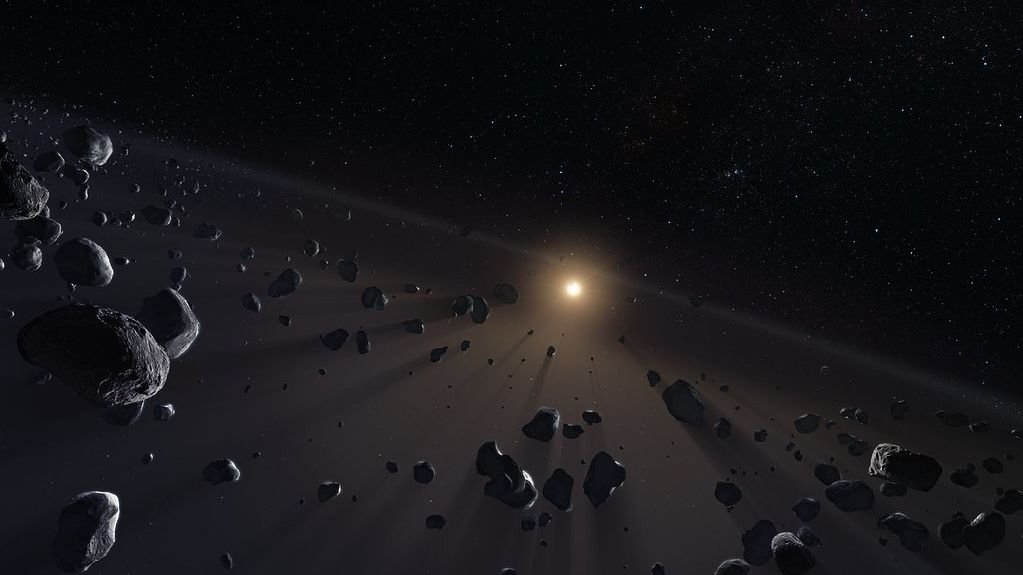
Something strange is lurking at the outer edges of our solar system. For years, astronomers assumed they had a reasonably good picture of what lies beyond Neptune. Turns out, the universe had other plans.
New data is pointing to the possibility of a second ring of icy, distant objects far beyond the Kuiper Belt we already know. It’s the kind of discovery that quietly rewrites everything, and the implications are genuinely mind-bending. Let’s dive in.
What Is the Kuiper Belt, Anyway?
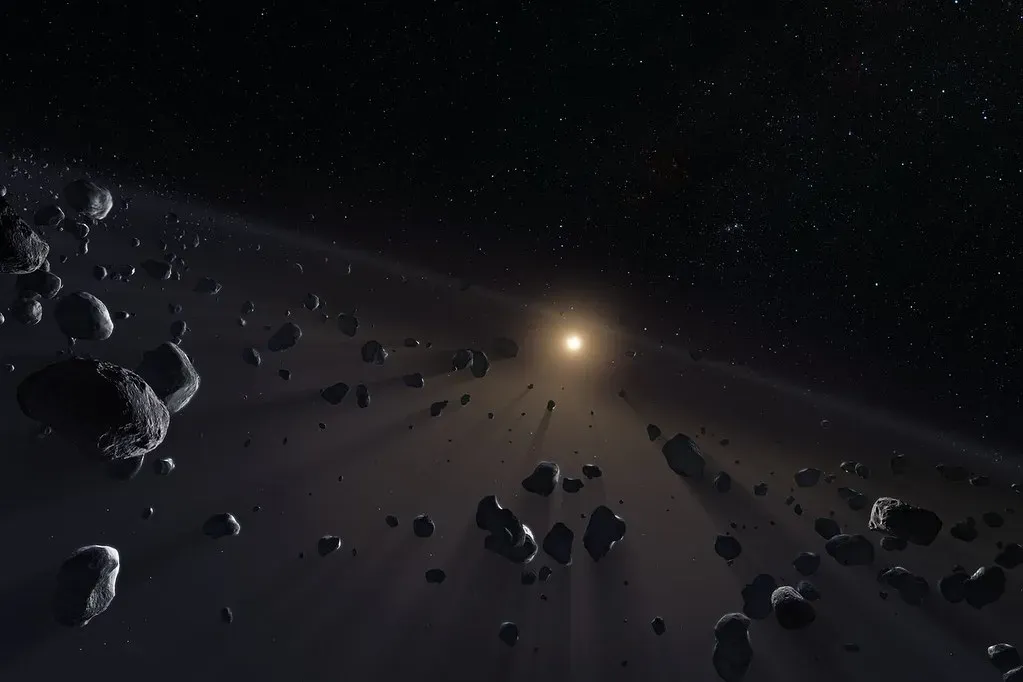
Before we get into the new stuff, here’s a quick refresher. The Kuiper Belt is a vast, doughnut-shaped region of the solar system extending from roughly the orbit of Neptune outward to about 50 astronomical units from the Sun. It’s packed with frozen remnants from the early solar system, including dwarf planets like Pluto and Eris, as well as countless smaller icy bodies.
Think of it like the solar system’s attic. Dusty, cold, and full of things that never quite got cleaned up during the solar system’s formation billions of years ago. Scientists have studied this region for decades, and most assumed the Kuiper Belt simply faded out and gave way to the much more distant and diffuse Oort Cloud. That assumption may now be outdated.
The Discovery That Changed Everything
Here’s the thing that makes this so exciting. Data collected by NASA’s New Horizons spacecraft, which famously flew past Pluto in July 2015 and has been venturing deeper into space ever since, began picking up unexpected signals suggesting the density of small objects does not drop off the way scientists predicted.
Instead of a clean fade-out around 50 astronomical units, there appear to be more objects further out, potentially forming a second distinct belt. Researchers analyzing the data noticed the dust and particle counts were not declining as models had forecast. That’s the kind of anomaly that keeps planetary scientists up at night, in the best possible way.
Where Exactly Is This Second Belt?
If this second Kuiper Belt is confirmed, it would be located somewhere in the range of 60 to 80 astronomical units from the Sun. To put that in perspective, one astronomical unit is the distance from Earth to the Sun, roughly 93 million miles. So we’re talking about a region almost impossibly far away by human standards.
Honestly, it’s hard to even wrap your head around those distances. Even traveling at the speed of light, it would take light from the Sun around ten hours just to reach the inner edge of this suspected structure. New Horizons itself, launched back in January 2006, has been flying at roughly 36,000 miles per hour and is only now beginning to probe this territory.
What Could Be Out There?
Scientists believe this potential second belt could contain icy bodies, small planetesimals, and perhaps even objects we have never categorized before. Some researchers have suggested the population of objects in this outer region might be remnants from the solar system’s turbulent early years, flung outward during the gravitational shuffling of the giant planets.
There is also the intriguing possibility that some of these objects could be interstellar in origin, captured by our solar system’s gravity over billions of years. I think that possibility alone should be enough to make anyone stare up at the night sky with a whole new sense of awe. The line between our solar system and deep interstellar space may be far less clear than we once imagined.
The Role of New Horizons in This Finding
New Horizons deserves enormous credit here. The spacecraft, managed by NASA’s Johns Hopkins Applied Physics Laboratory, has traveled over 5 billion miles from Earth and continues to send back data even now in 2026. Its instruments are sensitive enough to detect levels of dust and small particles that ground-based observatories simply cannot measure at these distances.
The mission was already historic after the Pluto flyby, but the extended mission into the Kuiper Belt and beyond has proven to be just as scientifically valuable. The spacecraft has a limited operational window, with power from its radioisotope thermoelectric generator gradually decreasing. Every data point it sends back right now is precious, and scientists are working urgently to make the most of it before the mission eventually goes dark.
What Other Observations Support This Theory?
New Horizons is not alone in hinting at something unusual out there. Ground-based surveys and wide-field telescope projects have independently identified distant trans-Neptunian objects with orbital characteristics that seem to cluster in ways difficult to explain with our current models. Some of these orbits suggest gravitational influences from an unseen massive structure, which would be consistent with a denser ring of material.
There is also growing interest from observatories using infrared detection, since cold, icy objects are far easier to spot in infrared wavelengths than in visible light. The Vera C. Rubin Observatory in Chile, which began full science operations recently, is expected to dramatically expand our catalog of outer solar system objects in the coming years. It’s genuinely possible we are at the very beginning of a much larger revelation.
Why This Discovery Matters Beyond Just Astronomy
Let’s be real, discoveries like this matter far beyond just the astronomy community. A second Kuiper Belt would fundamentally change how we model the formation of planetary systems, both our own and those around other stars. It suggests the solar system is far more complex and layered than the tidy diagrams in school textbooks ever showed us.
There is something almost philosophical about it too. The idea that even after centuries of looking up at the sky, after sending spacecraft to the very edge of known solar territory, we are still finding entirely new structures out there. It is a powerful reminder of how much remains unknown. The universe, it seems, is extraordinarily patient about revealing its secrets, and we are only just beginning to ask the right questions. What do you think: does the idea of a hidden second belt at the edge of our solar system change the way you see the night sky? Drop your thoughts in the comments.