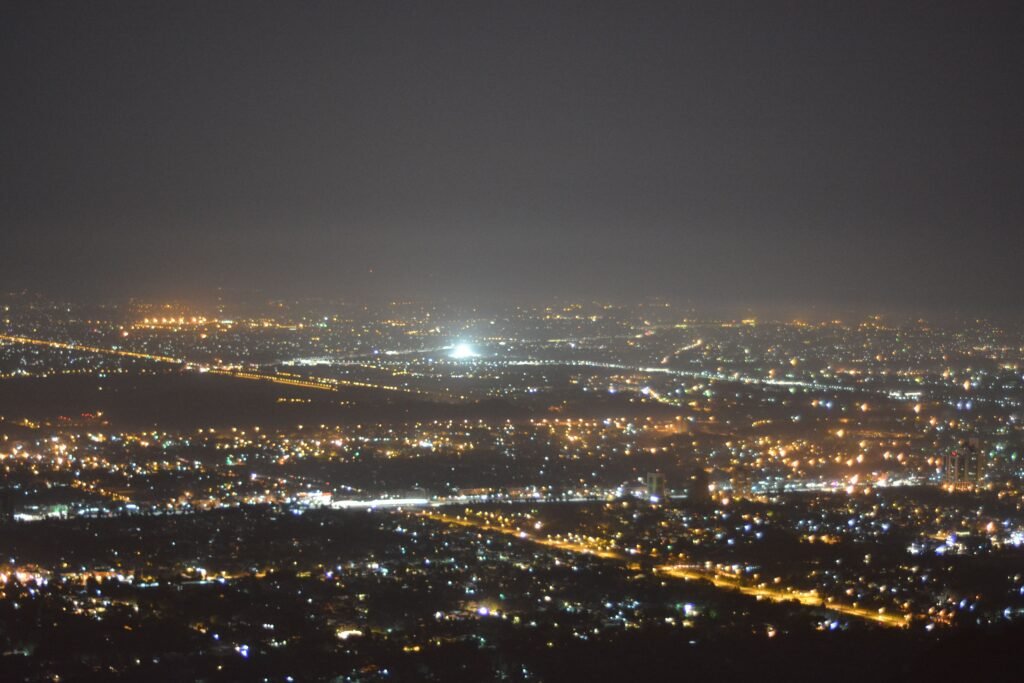
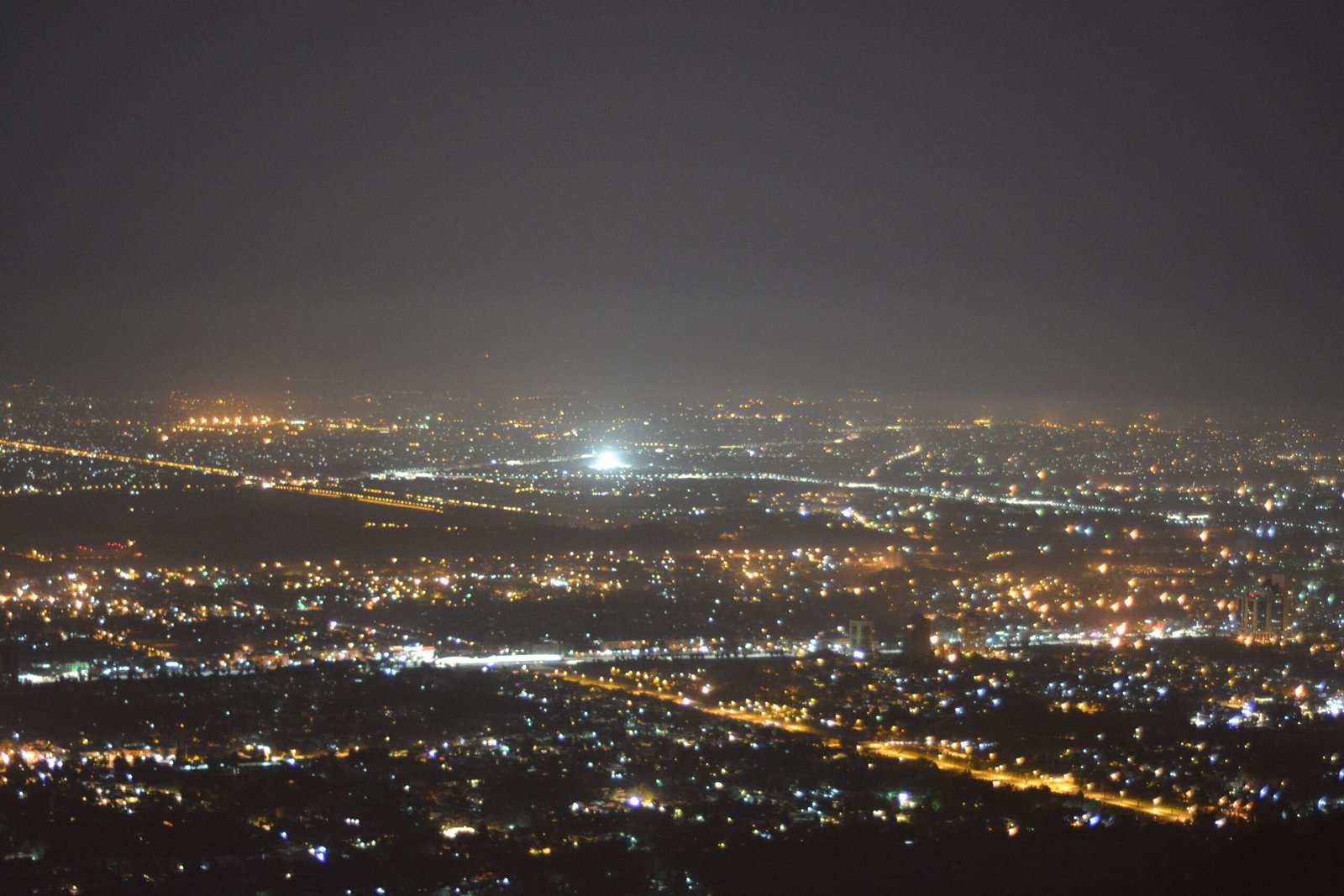
A Dynamic Nightscape Emerges from Daily Data (Image Credits: Upload.wikimedia.org)
Artificial lights have transformed Earth’s nights, casting a persistent glow that now reaches further than ever before. A comprehensive study published in Nature analyzed over 1.16 million daily satellite images and documented a 16 percent net increase in global nighttime radiance from 2014 to 2022.[1][2] This rise, however, masked a more complex picture of brightening and dimming driven by human activity, policy, and crises. Researchers highlighted how these dynamic patterns challenge assumptions of steady growth in light pollution.
A Dynamic Nightscape Emerges from Daily Data
The study marked a shift from annual composites to daily observations, capturing abrupt and gradual changes across 15.16 million square kilometers of land.[1] Led by Zhe Zhu of the University of Connecticut, the team processed data from NASA’s Black Marble product using the VIIRS Day/Night Band sensor on Suomi NPP and NOAA satellites. They detected volatility never seen before: each changed location experienced an average of 6.6 light shifts over the period.
Abrupt changes covered 2.05 million square kilometers, while gradual ones spanned 19.04 million – five and a half times the area lit in 2014.[1] Brightening dominated abrupt events at 65 percent, but dimming areas expanded yearly. Zhu described the planet’s nightscape as “highly volatile,” with lights expanding, contracting, and shifting in unexpected ways.[2]
Global Brightening Offset by Pockets of Darkness
Net radiance rose 16 percent worldwide, as 34 percent gains in brightening areas countered 18 percent losses from dimming zones.[1][3] Asia led the charge, with China and India showing massive expansions tied to urbanization. Sub-Saharan Africa and Southeast Asia experienced dramatic surges from rural electrification and infrastructure growth, including nations like Somalia, Burundi, and Cambodia.[2]
Europe bucked the trend with a four percent net decrease. France dimmed by 33 percent, the United Kingdom by 22 percent, and the Netherlands by 21 percent, thanks to LED transitions and strict policies.[3] The United States posted a modest six percent gain, but oil-rich regions like the Permian Basin flickered wildly with gas flaring.
| Region | Net Change (2014-2022) | Main Driver |
|---|---|---|
| Sub-Saharan Africa | Strong brightening | Rural electrification |
| Southeast Asia | Dramatic surge | Urbanization |
| Europe (e.g., France) | -33% | LEDs, policies |
| United States | +6% | Mixed: tech growth, efficiency |
Forces Shaping the Glow: From Cities to Conflicts
Urban expansion fueled most gradual brightening, as seen in Guangzhou, China, and Charlotte, North Carolina.[1] Rural projects lit up Vietnam’s agriculture and African villages. Abrupt brightening often followed non-residential development, while dimming stemmed from reduced gas flaring – 46 percent of sudden drops.
- Conflicts dimmed Kyiv, Ukraine, aligning with the 2022 invasion.
- Hurricanes darkened Puerto Rico.
- Economic collapse in Venezuela cut lights by 26 percent.
- Paris implemented policy-driven reductions.
- Middle East oil fields toggled with production.
Christopher Kyba of Ruhr University Bochum noted, “Although there has been a total increase of 16 percent worldwide, that does not mean that lighting is increasing everywhere. In areas where lighting increased, we found global emissions rose by 34 percent. This was offset by an 18 percent decrease in emissions from other areas.”[3] France’s efforts stood out as “extraordinary,” he added.[2]
Consequences for Stars, Wildlife, and Policy
Astronomers face growing challenges, as light pollution drowns starry skies faster than satellites alone suggest. Citizen science reports show ground-level skyglow brightening 7-10 percent annually, outpacing the 16 percent satellite figure due to scattered light.[3] This volatility complicates predictions for observatories.
Ecological disruptions loom large: nocturnal animals suffer disrupted rhythms from erratic lights. Energy insights emerge too, with dimming signaling efficiency gains or crises. John Barentine emphasized the need for large-scale action: “Artificial light at night is a pollutant that effortlessly crosses jurisdictional boundaries,” limiting local fixes.[3]
Key Takeaways
- 16% net global increase hides 34% brightening vs. 18% dimming.
- Daily data exposes 6.6 average shifts per changed site.
- Europe dims via policy; developing regions brighten rapidly.
Earth’s nights reflect humanity’s pulse – booming growth, deliberate restraint, and sudden setbacks. As satellites continue monitoring, these patterns offer a roadmap for balancing progress with darker skies. What steps can communities take next? Tell us in the comments.