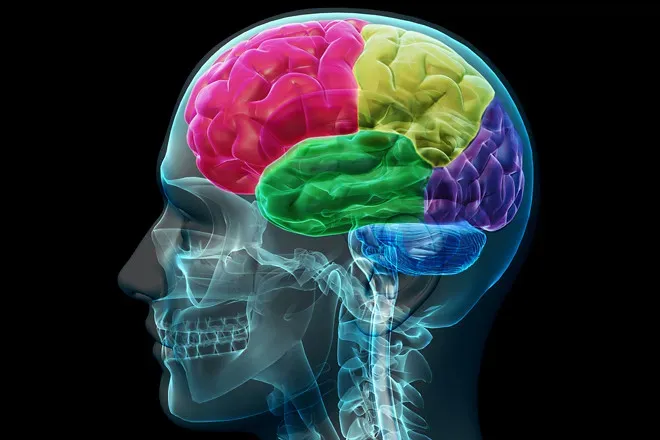

You carry around the most complex object in the known universe every single day – tucked inside your skull, weighing barely more than a bag of flour, quietly running the entire show. It fires electrical signals, stores lifetimes of memory, feels heartbreak and joy, and somehow conjures the experience of being you. That, alone, should stop you in your tracks.
Your brain is a three-pound organ that quietly runs everything you do, from breathing and movement to emotions, creativity, and memory. Despite its small size, it generates about 20 watts of electrical power and processes vast amounts of information every second. Scientists in 2026 are still uncovering how this remarkable structure works, and honestly, every new discovery raises twice as many new questions.
What you are about to explore goes far beyond the textbook basics. From the brain’s mind-bending neural architecture to the strange glow it emits without you knowing, this is a journey inward – into the universe you carry within you. Let’s dive in.
A Network Beyond Imagination: Your Brain’s Staggering Scale
Let’s be real – numbers often feel abstract. But the scale of your brain is so extreme it genuinely belongs in the same conversation as outer space. Your human brain has 86 billion neurons connected by roughly 100 trillion synapses, making it one of the most complex objects in the known universe. Think about that for a moment. A trillion is a number most of us cannot even picture clearly.
In a human, there are more than 125 trillion synapses just in the cerebral cortex alone. That’s roughly equal to the number of stars in 1,500 Milky Way galaxies. Your brain isn’t just complex – it’s cosmically complex. Every second, the brain performs up to a quadrillion synaptic operations, with signals traveling as fast as 100 meters per second along myelinated axons. That’s faster than most cars on a motorway, and it’s happening inside your head right now.
The Hungry Machine: How Your Brain Consumes Energy
Here’s something that surprises almost everyone. Your brain is a relentless energy hog – yet most of us never feel it burning. Despite weighing only about 2% of the body, the brain requires a constant flow of oxygen and glucose. Even brief disruptions in energy supply can affect thinking and coordination. Starve the brain of blood for just a few minutes, and the consequences can be catastrophic and permanent.
Neuroscience research shows the brain operates as an energy-intensive prediction machine. It receives about 15% of total blood flow, translating to roughly 750 milliliters per minute, ensuring neurons can fire without interruption. Think of it like a city that never sleeps – the power grid has to stay on, no matter what. The human brain is estimated to perform around one exaFLOP of computations per second. This rivals the fastest supercomputers but at a fraction of the energy cost. Nature engineered something truly extraordinary here.
Memory That Rivals Modern Technology – and Then Some
You’ve probably heard someone complain about running out of storage on their phone. Your brain doesn’t have that problem. Estimates suggest the human brain can store around 2.5 petabytes of information. This is comparable to several million hours of high-definition video. That’s a number so large it’s almost funny to compare it to a smartphone’s 256 gigabytes.
Memory consolidation is closely tied to sleep, especially during REM cycles. During sleep, the hippocampus repeatedly replays daily experiences, strengthening neural connections in the cortex by up to 300%. So when you skip sleep to “save time,” you’re actually sabotaging the very process that makes learning stick. A single night without sleep makes it harder to form memories and cuts new learning capacity by 40%. That’s not a small dip. That’s nearly half your learning ability, gone overnight.
Neuroplasticity: Your Brain’s Remarkable Power to Reinvent Itself
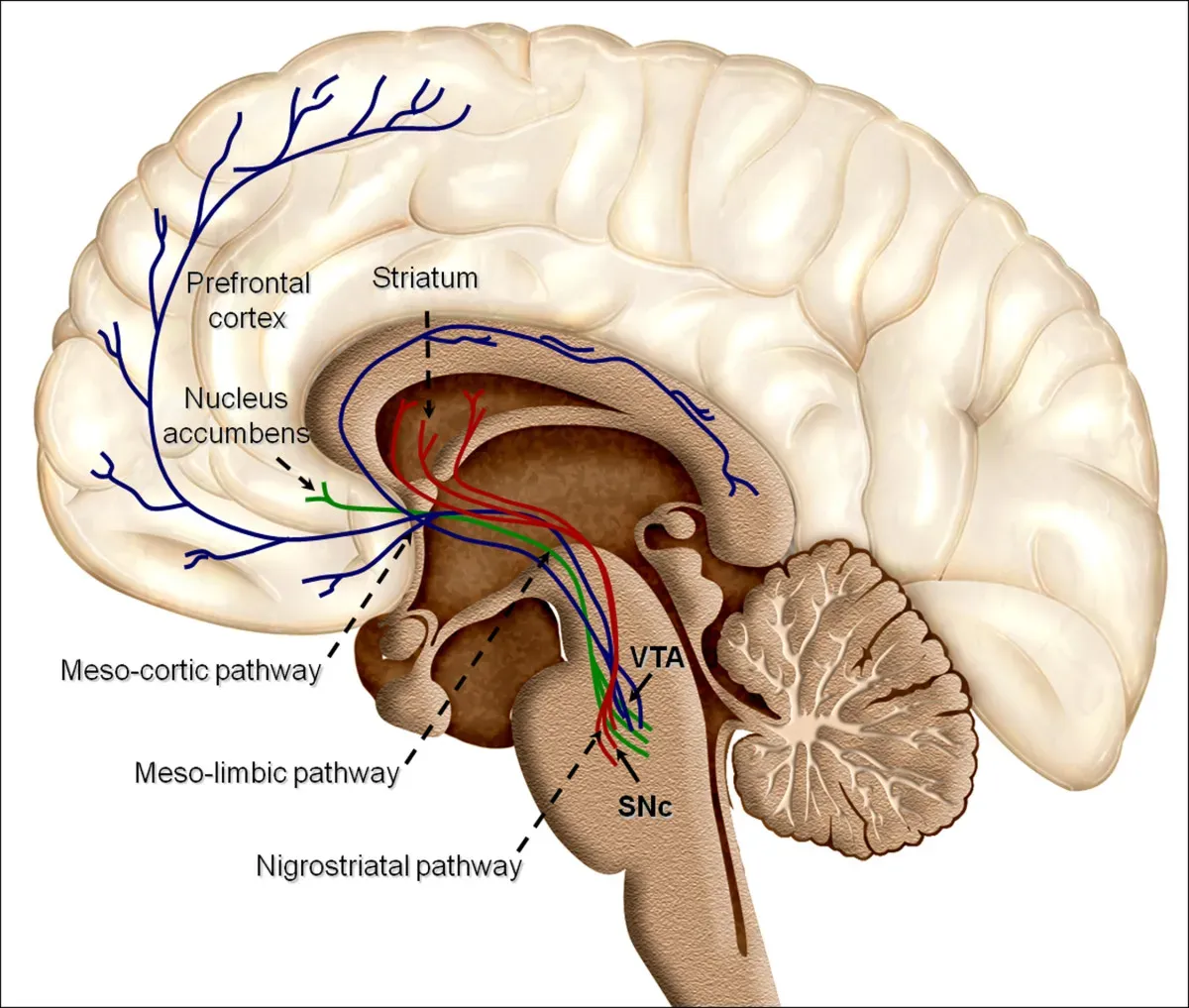
One of the most thrilling discoveries in modern neuroscience is that your brain is not a fixed, unchanging structure. Far from it. Recent human brain studies reveal a structure that is not fixed but constantly changing, rewiring itself in response to learning, injury, and age. The old idea that your brain is essentially “done” by your mid-twenties has been completely overturned.
Neuroplasticity occurs through cellular changes due to learning and memorizing, but also within large-scale changes of cortical remapping in response to injury. This is why stroke survivors can sometimes relearn entire skill sets – the brain literally reroutes itself. Human brain studies confirm that neuroplasticity peaks in early childhood, when the brain rewires up to a thousand times faster than in adulthood. Language, music, and sensory systems are especially sensitive during these early years. Still, neuroplasticity never fully stops. Your habits, your practice, your curiosity – they all reshape your brain, every single day.
The Emotional Brain: Where Fear, Joy, and Instinct Live
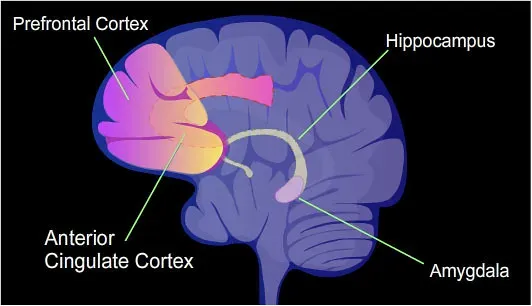
You’ve probably experienced a moment where your heart was pounding before your brain even understood what was happening. That’s not random. That’s the architecture of your emotional circuitry working exactly as designed. Emotion processing often occurs faster than conscious thought. The amygdala can detect threats milliseconds before the prefrontal cortex evaluates them, explaining instinctive reactions. Your ancient alarm system fires before your rational self can even ask, “wait, should I be scared right now?”
Emotions are not governed by a single “emotional center” in the brain. Instead, they arise from a complex network of brain regions working in harmony. Understanding what part of the brain controls emotions requires exploring several key structures, including the amygdala, prefrontal cortex, and limbic system. Think of it less like a single control room and more like a parliament of regions, constantly negotiating. The prefrontal cortex thinks relatively slowly and carefully, with conscious, labor-intensive efforts to figure things out. The amygdala reacts automatically, impulsively, and extremely fast, and its operation is mostly unconscious. The tension between these two systems is essentially the tension between reason and gut feeling – a battle you fight daily.
The Brain That Glows: Strange and Stunning Scientific Discoveries
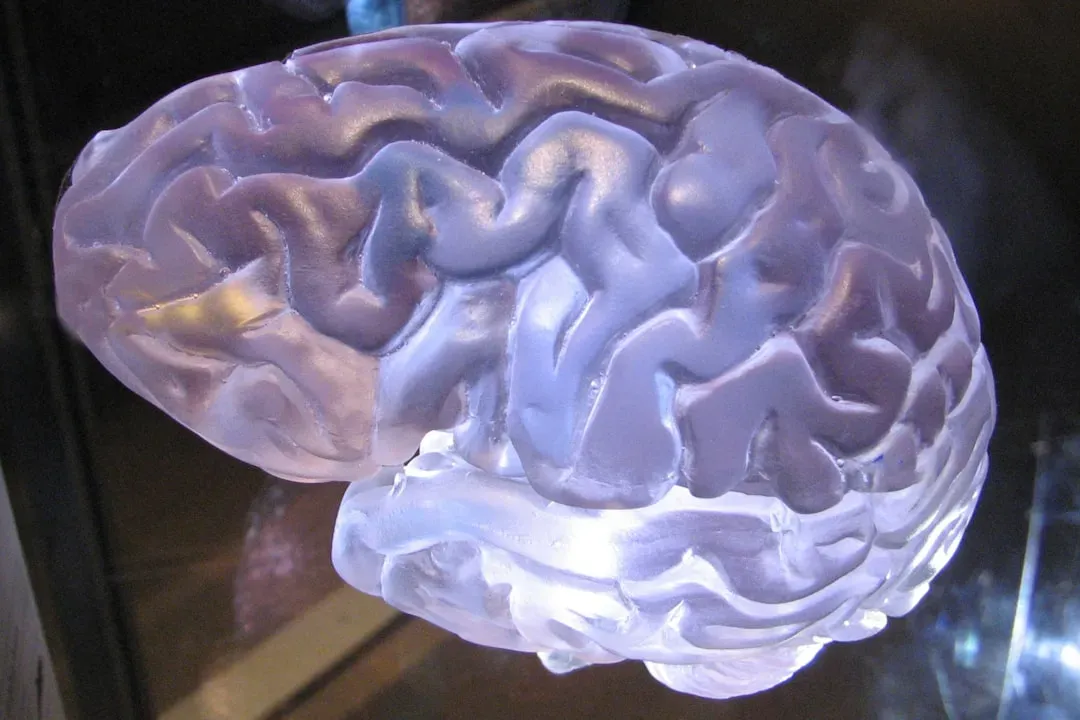
I know it sounds crazy, but your brain literally produces light. Not in a way you can see in a mirror, of course, but at a measurable physical level that scientists have now confirmed. Did you know that your brain glows? Living tissues emit light called biophotons as a by-product of consuming energy, and the brain consumes a whole lot of energy. In a recent experiment, scientists detected biophotons emitted by the human brain from outside the skull for the first time. Whether these photons play any actual role in how we think remains an open question.
The discoveries just keep coming. Because of a quirk of biology, there’s no light on Earth that can activate only green-light-detecting cells. But researchers were able to do just that by lasering the eyes of five participants to create an impossible new color the scientists called “olo” – a wildly saturated blue-green that exists beyond our normal visual range. Your brain doesn’t just perceive the world – it actively constructs it. A new neural implant is so small it can rest on a grain of salt, yet it can track and wirelessly transmit brain activity for over a year. It’s powered by laser light that safely passes through tissue and communicates using tiny infrared signals. We are in a genuinely remarkable era of brain science.
Consciousness: The Greatest Mystery Your Brain Has Ever Created
Here’s where things get genuinely philosophical. Your brain can explore galaxies, write symphonies, and feel the warmth of love. How? Nobody fully knows. The greatest mystery about the brain is how it creates consciousness. How does the activity of tens of billions of neurons create your experience of the world? This isn’t just a question for philosophers anymore – it’s one of the hardest scientific problems of our time.
Scientists have many theories of consciousness, and two recently went head-to-head in a scientific face-off. The results were extremely mixed, challenging some of the central tenets of both theories and highlighting just how much mystery remains in the quest to understand our mind. It’s a humbling reminder that the organ doing the searching is also the object being searched. Several hundred-million-dollar research projects failed to fully map the structure of the brain. The function of the brain is even more complex than its structure, with consciousness as the greatest mystery. We’re still, in many ways, just getting started.
The Future of Brain Science: Where Research Is Taking Us
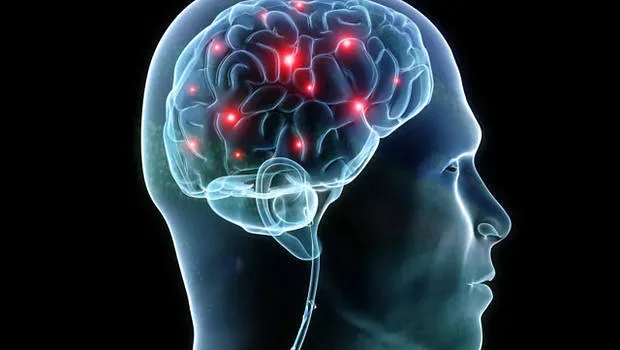
The pace of discovery in 2025 and heading into 2026 has been nothing short of breathtaking. Scientists aren’t just observing the brain anymore – they’re beginning to repair and interact with it in ways that were once purely science fiction. Every year, neuroscience advances, but 2025 felt like a turning point. Instead of merely watching how the brain works, scientists are increasingly learning how to repair, support, or even augment human cognition. That shift in ambition is enormous.
Artificial intelligence played a growing role in neuroscience in 2025, particularly in imaging. SmartEM, a machine-learning-based imaging technique, revealed previously hidden cortical microcircuits with unprecedented detail. These insights could accelerate progress in targeted neuromodulation, brain-computer interfaces, and neuroprosthetic development. Honestly, it feels like we are standing at the edge of a new continent, just beginning to draw the map. As human brain studies continue to integrate AI, genetics, and high-resolution imaging, future therapies will likely focus on precision rather than broad treatment. Protecting brain health early and supporting adaptability later may become central to healthcare. The brain, it seems, is finally beginning to reveal its secrets – slowly, astoundingly, one discovery at a time.
Conclusion
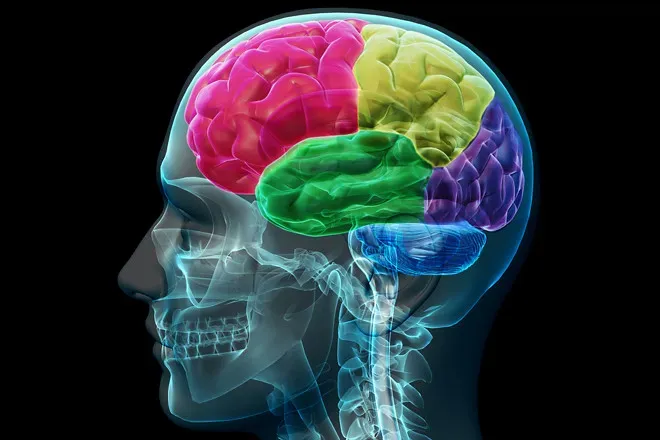
The human brain is, without question, the most extraordinary structure ever produced by nature. It hums, glows, rewires itself, conjures emotions from nowhere, and somehow births the experience of being alive. The deeper scientists look, the more they find – and the more they realize how much still lies undiscovered in the vast, folded territory between your ears.
What’s most inspiring is not just the scale of what we know, but the honesty about what we don’t. Consciousness remains a mystery. Memory still holds surprises. Neuroplasticity continues to defy expectations about aging and recovery. Every new technology, from AI-assisted imaging to grain-of-salt implants, peels back another layer of this biological cosmos.
You are not just a person with a brain. You are a brain experiencing itself. And that, perhaps, is the most remarkable fact of all. So next time you feel an instinct, recall a memory, or catch yourself lost in thought – pause for just a moment. There’s a universe in there, and it’s still very much uncharted. What part of your own brain do you think science will surprise you with next?