
Every now and then, reality slips and shows us a seam. A result no one can explain, a pattern that shouldn’t be there, a coincidence so precise it feels like someone, or something, nudged the universe with a fingertip. Science has explained an incredible amount about our world, but some stubborn puzzles keep whispering that we might be missing a deeper layer of how things truly work.
This isn’t about making up wild stories or pretending we know what we don’t. It’s about standing at the edge of what’s known, looking out into the dark, and admitting: there are some things we just can’t wrap our heads around yet. These twelve phenomena aren’t proof of anything mystical, but they are strong, unsettling hints that reality might be far stranger, and far richer, than the everyday world we think we know.
The Bizarre Rules of Quantum Entanglement
Imagine two coins on opposite sides of the galaxy that somehow always land on matching sides when you flip them at the exact same moment. That’s roughly how quantum entanglement feels: particles that are mysteriously linked, such that measuring one instantly affects the state of the other, no matter how far apart they are. Experiments have repeatedly confirmed this “spooky” connection, and modern tests have closed many of the loopholes that skeptics pointed to for decades.
The weird part is not just that it happens, but that it seems to violate our common-sense idea of cause and effect traveling through space. Our current theories say no information can move faster than light, yet entangled particles behave as if they share a single, underlying reality outside of space and time. Some physicists suspect what we see in space might be like shadows on a wall, with entanglement hinting at a deeper hidden structure connecting everything behind the scenes.
The Double-Slit Experiment and the Role of Observation
The double-slit experiment is the kind of thing that sounds simple until it breaks your brain. Fire tiny particles like electrons at a barrier with two narrow slits, and you get an interference pattern on a screen, as if each particle were a wave going through both slits at once. But when you set up a detector to check which slit the particle goes through, the interference pattern disappears and the particles behave like little solid bullets.
In other words, the mere act of “observing” changes what happens. No one has a fully satisfying explanation for why this is the case. Is it really about consciousness, or just about interactions at the quantum level? We don’t know yet. But the fact that reality seems to play by different rules depending on whether it’s being “watched” suggests that the way we normally think of an objective, fully independent world might be missing some crucial ingredient.
Near-Death Experiences and Consciousness at the Edge
People who have been clinically close to death often report experiences that stubbornly refuse to be filed away as simple hallucinations. They describe vivid perceptions, a sense of leaving the body, encounters with deceased relatives, intense feelings of peace, and a life review that seems to compress time. Some recall specific details of medical procedures or conversations that they logically shouldn’t have been able to perceive in their physical state.
Doctors and neuroscientists have proposed explanations involving brain chemistry, lack of oxygen, and the brain’s final surge of activity. These theories are plausible, but they don’t neatly account for the clarity and consistency of some reports, especially when awareness appears to outlast measurable brain function. While this doesn’t prove anything supernatural, it does raise a haunting question: is consciousness just a by-product of the brain, or does it tap into something deeper that we haven’t yet mapped?
Déjà Vu and the Feeling of Remembering the Future

That eerie jolt when you feel like you’ve lived a moment before is so common that nearly everyone has a story about it, yet we still don’t fully understand why it happens. Déjà vu doesn’t just feel like recognition; sometimes it feels like the script is unfolding exactly as remembered, down to tiny details. For a brief moment, you’re certain this has all happened already, even though you know it hasn’t.
There are neurological theories involving a misfiring in the brain’s memory circuits, where the present gets incorrectly flagged as a memory. That makes sense on paper, but it doesn’t quite capture how emotionally intense and precise déjà vu can feel. It’s as if time folds over itself for a second, and you glimpse a glitch in the unfolding of events. Even if the cause is purely in the brain, the experience itself hints that our perception of time might be less solid and linear than we like to think.
Synchronicity and Uncanny Coincidences

Everyone has had coincidences, but sometimes they pile up so neatly it feels like the universe is winking at you. You think of a friend you haven’t seen in years, and they text you out of nowhere. You’re struggling with a big life decision, and suddenly books, conversations, and random signs start lining up around that exact topic within hours. Statistically, some of this is bound to happen, given how many events constant life generates.
But there are cases that feel so absurdly tailored, so personally meaningful, that they push people to suspect there might be an underlying pattern at work, not just blind randomness. Psychologists interpret this as the brain’s drive to find meaning, connecting unrelated events into a story. Mathematicians point to the sheer power of large numbers. Still, when you’re in the middle of a string of synchronicities, it’s hard not to feel like something in reality is quietly responding to the inner state of your life, the way a hidden script might adjust to the main character’s thoughts.
Dark Matter and Dark Energy: The Invisible Majority
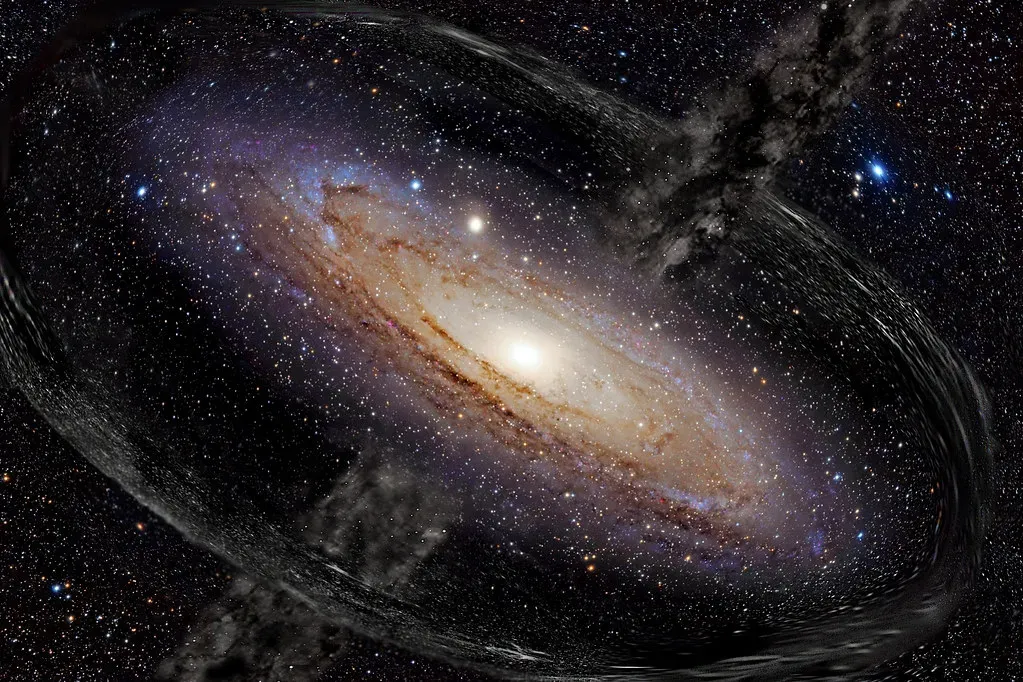
When astronomers looked closely at how galaxies move, they found something deeply unsettling: the visible matter isn’t enough to hold them together. Stars orbit so fast that galaxies should be flying apart, yet they don’t. The explanation that currently fits the data is that there’s a huge amount of invisible “dark matter” providing extra gravity. On top of that, distant observations of the universe suggest it’s not just expanding, it’s speeding up, driven by a mysterious “dark energy.”
Add it all up, and the shocking conclusion is that the stuff we can actually see – stars, planets, gas, dust, you, me – makes up only a tiny fraction of what’s out there. The vast majority of the universe appears to be made of something we neither see nor properly understand. That’s not just a gap in knowledge; it’s a sign that our entire picture of reality is based on the visible tip of a very deep and very strange iceberg.
Placebo Effects and the Power of Belief Over the Body

In clinical trials, some patients given a sugar pill instead of real medication still show real, measurable improvements. Pain decreases, symptoms ease, even certain biological markers change. They’re not “faking it.” Something about belief, expectation, and the context around treatment can trigger the body’s own healing responses in surprisingly strong ways. There are also reverse cases, where negative expectations seem to worsen outcomes, known as nocebo effects.
We know the mind and body are connected, but the placebo effect pushes that idea into uncomfortable territory. If belief alone can mimic the effects of real drugs in some situations, then our understanding of causality in medicine might be missing a layer. It raises the possibility that consciousness isn’t just experiencing physical processes, but actively shaping them in subtle, poorly understood ways, as if our inner world and the outer world are more intertwined than we like to admit.
Time Slips and Missing Time Experiences

Scattered among folklore, personal reports, and a few odd incident logs are stories of people who seem to “lose” chunks of time with no clear explanation. They might be driving a familiar route, then suddenly realize they’ve arrived far sooner than possible, with little or no memory of the journey. Others report entering a place and briefly seeing it as if in another era, only for reality to snap back a moment later. These accounts are usually brushed off as daydreaming, micro-sleeps, or simple confusion.
Those explanations probably cover most cases, but some reports are oddly detailed and consistent across cultures. Memory is notoriously unreliable, which complicates everything, but the idea that our experience of time can fragment or stutter like a skipping record is hard to shake. Even in physics, time is not as straightforward as it feels; relativity shows that time can stretch and compress depending on speed and gravity. These everyday “time slips” might not be paranormal, but they do serve as unnerving reminders that our sense of a smooth, continuous timeline is mostly a mental construction.
Whales, Birds, and the Mystery of Animal Navigation

Every year, birds, whales, sea turtles, and even tiny insects travel staggering distances with insane precision. Some birds migrate thousands of miles and still return to the same patch of forest. Sea turtles cross entire oceans and then come back to the very beach where they were born. Research suggests many species can sense Earth’s magnetic field, using it like a built-in compass. Yet we still don’t fully understand how their bodies do this with such accuracy, or how their brains turn that signal into complex maps.
Some experiments indicate animals might even use quantum-level effects in their biology to detect magnetic fields, which is wild if you think about it. If that turns out to be true, it would mean that living creatures routinely use quantum phenomena in ways humans barely grasp. Animal navigation then looks less like just a neat natural trick and more like a quiet hint that life itself may be tuned into layers of the physical world that our everyday senses never touch.
The Hard Problem of Consciousness
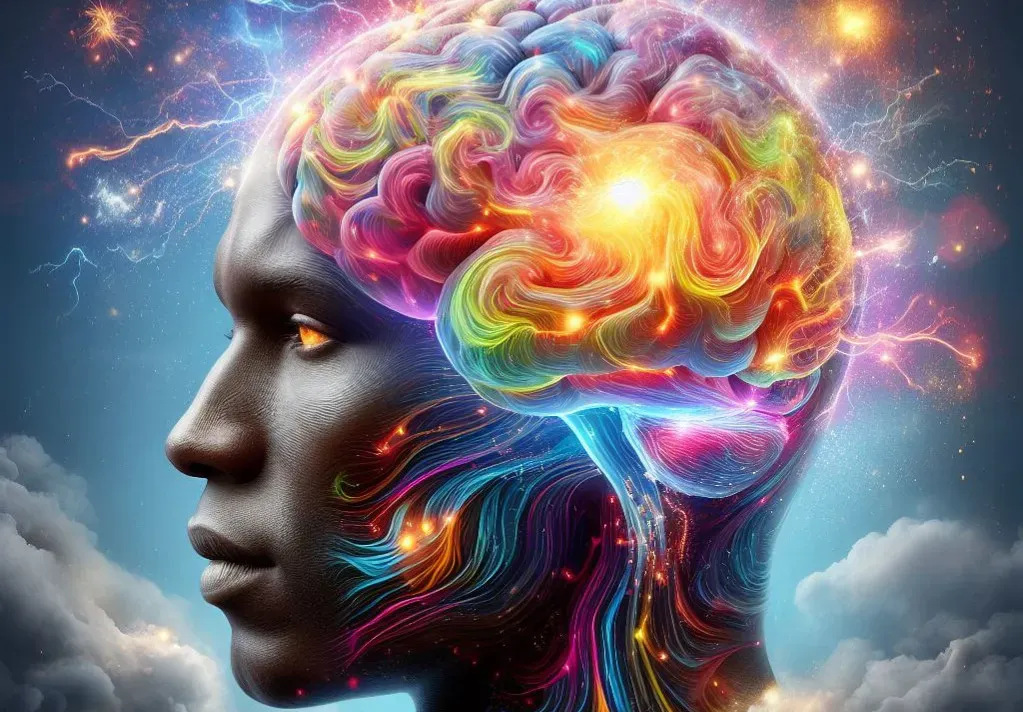
Neuroscience has made huge strides in mapping which brain regions light up during certain thoughts, emotions, or sensations. We can see correlations between neural activity and experience. But there’s a deeper question that refuses to go away: why should specific electrical and chemical patterns feel like anything from the inside? How does grey matter generate the raw experience of pain, the color red, or the taste of coffee, instead of just functioning like a silent computer?
This is often called the “hard problem” of consciousness, and so far, no theory has convincingly bridged that gap. Some thinkers argue that our current physical theories are simply not built to explain subjective experience. A few even suggest that consciousness might be a fundamental aspect of reality, not something that emerges only when matter gets complicated enough. If that’s even partially true, then our current picture of the world is missing a key dimension, like trying to explain a movie using only the script and never acknowledging the actual images on the screen.
The Fine-Tuning of the Universe
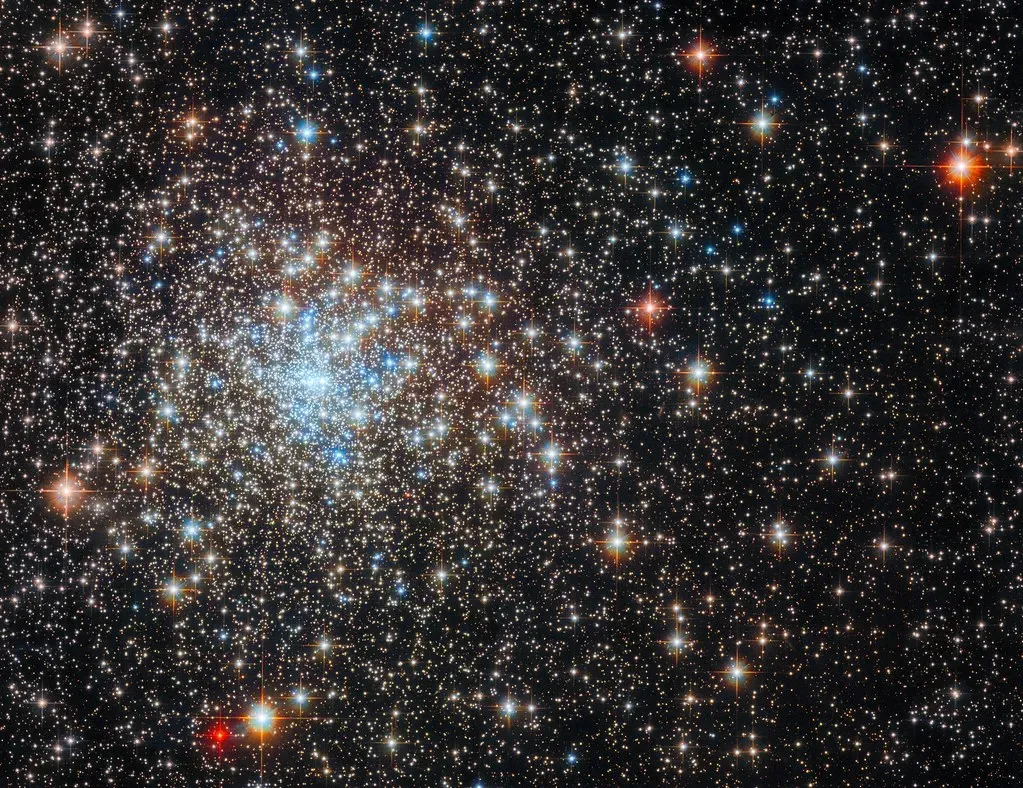
When physicists plug in the basic numbers that describe our universe – things like the strength of gravity, the charge of the electron, or the rate of cosmic expansion – they find that if many of these values were even slightly different, complex structures could not form. Stars would never ignite, or they’d burn out too quickly. Atoms would be unstable. Chemistry as we know it would fail, and life, at least in any form we can imagine, would be impossible. The universe seems oddly balanced on a knife-edge that allows complexity and consciousness to exist.
Several explanations have been proposed, including the idea that there might be many universes with different settings, and we simply live in one where the conditions happen to allow observers to exist. Others suspect some underlying principle or unknown physics forces these parameters into their current range. Either way, the sense that reality appears “tuned” for life has led many people, including some scientists, to wonder if what we call physical laws are just surface rules emerging from a deeper, unseen order.
The Simulation Hypothesis and Digital Echoes in Physics
As technology advances, the idea that reality might be a simulation has moved from late-night dorm talk into serious philosophical and scientific discussion. The logic goes like this: if advanced civilizations can one day simulate universes with conscious beings inside, and if they do this many times, then statistically there could be far more simulated worlds than base-level “real” ones. If that’s the case, the odds of us living in the original, physical reality might be smaller than we’d like to think.
While this remains speculative, there are features of physics that feel eerily like a digital system, such as quantized energy levels, information-like behavior at black hole horizons, and the way quantum mechanics seems to limit what can be known. None of this proves anything about simulations, but it does keep the door open to the idea that the universe might operate more like a vast information-processing structure than a simple mechanical clock. If so, what we experience as solid reality could be just one thin layer of an incomprehensibly larger architecture.
Conclusion: Living with Mystery in an Unfinished Picture
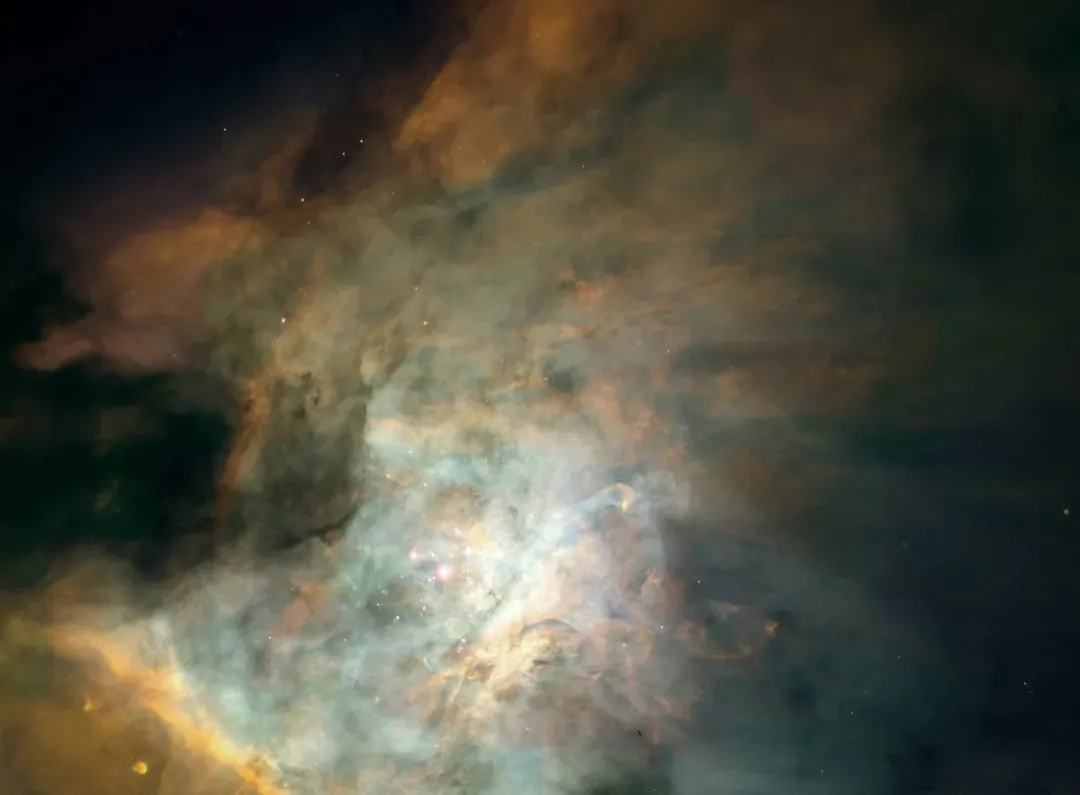
Looking at these twelve phenomena side by side, a pattern quietly emerges. They cut across physics, biology, psychology, and cosmology, yet they all poke holes in the neat, everyday story that reality is just a pile of particles bumping into each other. Instead, they hint at hidden connections, deeper structures, and gaps in our understanding where something important is clearly missing. The world feels less like a solved puzzle and more like a half-finished mural, with faint outlines of shapes we can’t quite make out yet.
We don’t have to jump to supernatural explanations, and we shouldn’t pretend uncertainty is the same as proof of anything beyond what we know. But we also shouldn’t ignore the shiver that runs through these mysteries, the sense that our current theories are brilliant and still somehow incomplete. Maybe the most honest response is curiosity: to admit that we are still at the beginning of understanding what reality really is. When you step back and take it all in, which of these mysteries makes you most suspect that there’s a hidden layer of reality just out of reach?