
What if everything you learned about our solar system in school was slightly wrong? Not completely wrong, just… incomplete. For decades, textbooks told us there were nine planets orbiting our Sun. Then Pluto got kicked out of the club. That left eight. Tidy, quiet, settled. Except, here’s the thing, it may not be settled at all.
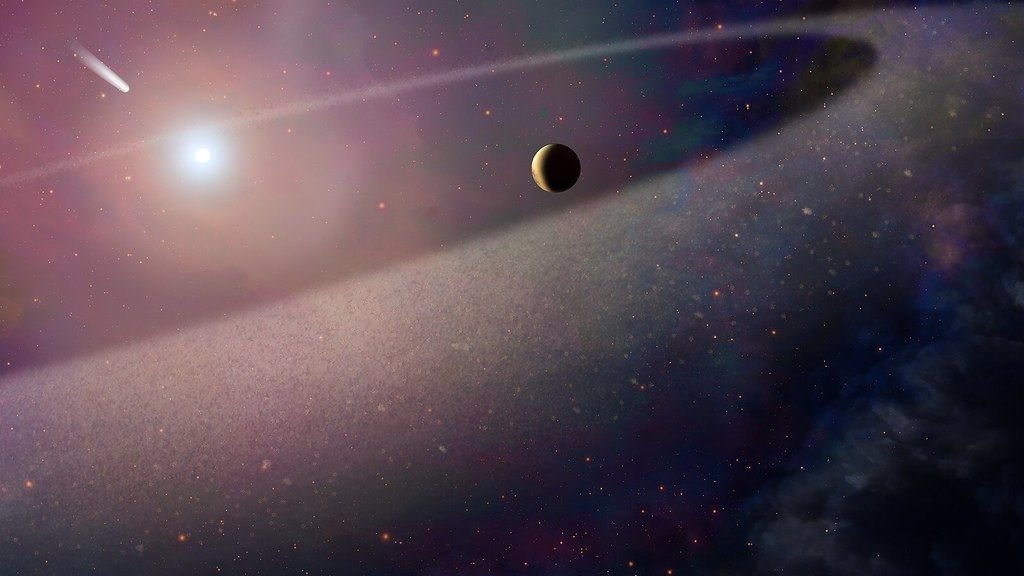
Deep beyond Neptune, in a frozen darkness so remote that sunlight arrives as barely a flicker, scientists believe there could be something enormous lurking. A giant, shadowy world that has never been seen directly but keeps leaving cosmic fingerprints all over the outer solar system. The case for a ninth planet is building, the debates are getting louder, and right now, in 2026, we might be closer than ever to finding out the truth. Let’s dive in.
The Idea That Refuses to Die: What Is Planet Nine?
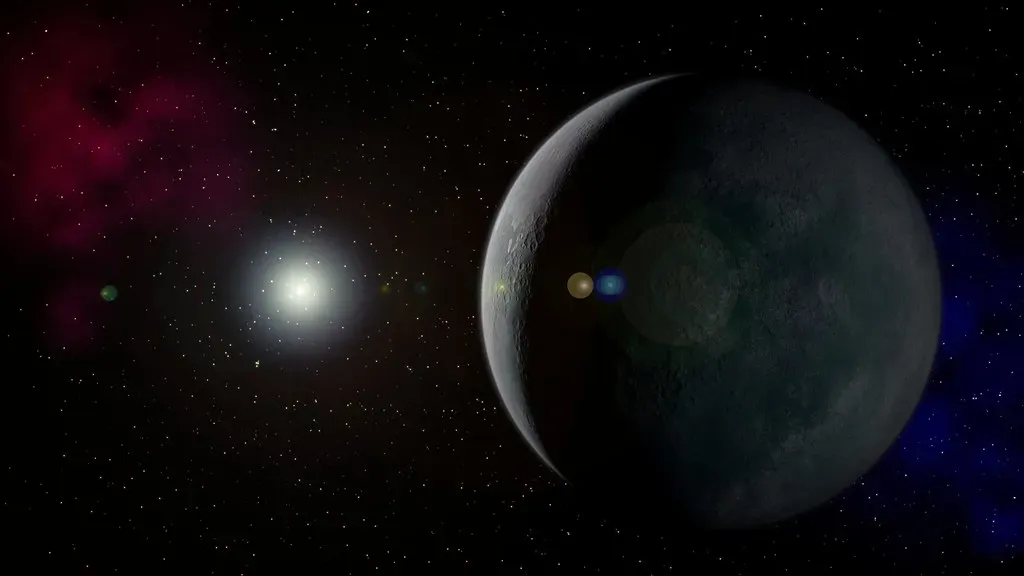
You might think the idea of a hidden planet sounds like science fiction. Honestly, even some astronomers thought so at first. Planet Nine has not yet been discovered, and there is real debate in the scientific community about whether it exists at all. Yet the hypothesis refuses to go away, precisely because the evidence behind it keeps stacking up in intriguing ways.
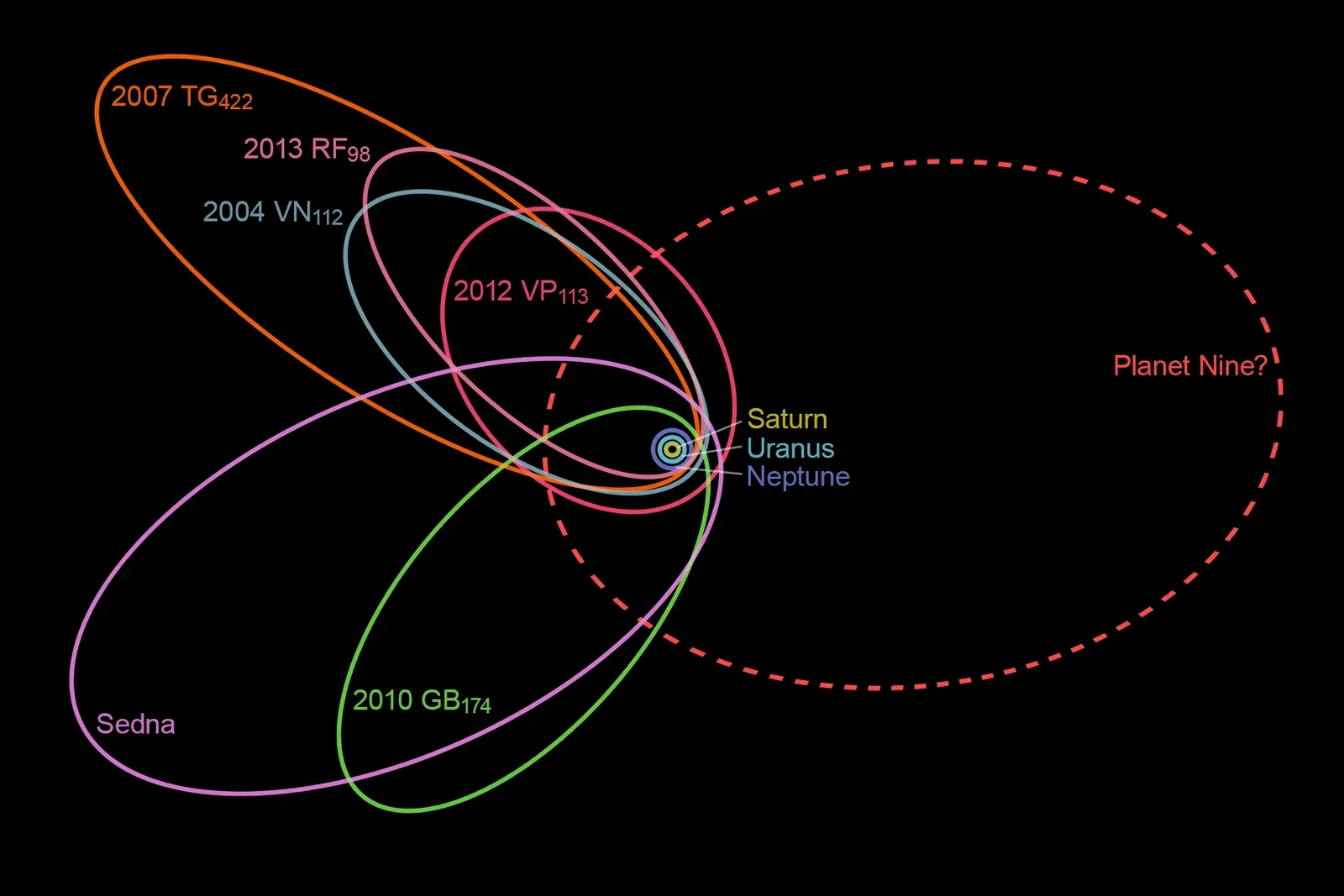
Because Pluto was reclassified as a dwarf planet and no longer considered our solar system’s ninth planet, Caltech astronomers referred to their hypothesized world as “Planet Nine” when they announced it in 2016. Astronomers studying the Kuiper Belt had noticed that some dwarf planets and other small, icy objects in that region tend to follow orbits that cluster together. By analyzing those orbits, the Caltech team predicted the possibility that a large, previously undiscovered planet may be hiding far beyond Pluto. Think of it like noticing that every leaf on a pond keeps drifting to the same corner, and wondering what invisible current is responsible.
The Gravitational Clues Hidden in the Kuiper Belt
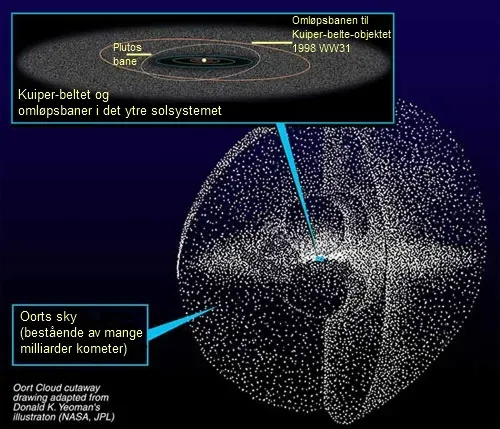
So what exactly is making scientists so suspicious? The answer lies in one of the strangest neighborhoods in our solar system. Planet Nine is a hypothetical ninth planet in the outer region of the solar system. Its gravitational effects could explain the peculiar clustering of orbits for a group of extreme trans-Neptunian objects, bodies beyond Neptune that orbit the Sun at distances averaging more than 250 times that of the Earth. These extreme trans-Neptunian objects tend to make their closest approaches to the Sun in one sector, and their orbits are similarly tilted.
Scientists noticed that small icy bodies called Kuiper Belt Objects, which orbit far beyond Neptune, seem to be clustered together in unusual ways. Their orbits are aligned in patterns that shouldn’t exist by chance alone. To put that in simple terms, imagine rolling a hundred dice and having them all land on the same number. You wouldn’t assume that was random. You’d assume something was influencing the outcome. That is precisely the kind of thinking driving the Planet Nine hypothesis forward.
Batygin and Brown: The Astronomers Who Stirred the Cosmic Pot

The modern Planet Nine story really begins with two Caltech astronomers who started as skeptics. Caltech researchers found evidence of a giant planet tracing a bizarre, highly elongated orbit in the outer solar system. The object, nicknamed Planet Nine, has a mass about ten times that of Earth and orbits about twenty times farther from the Sun on average than Neptune. In fact, it would take this new planet between 10,000 and 20,000 years to make just one full orbit around the Sun. Konstantin Batygin and Mike Brown discovered the planet’s existence through mathematical modeling and computer simulations, but they have not yet observed the object directly.
Although Brown and Batygin have always accepted the possibility that Planet Nine might not exist, they say that the more they examine the orbital dynamics of the solar system, the stronger the evidence supporting it seems. That kind of cautious confidence, honestly, is what makes this story so compelling. These are not sensationalists. They are scientists who built a case piece by piece and found themselves increasingly convinced by their own math. Brown notes that the putative ninth planet, at roughly 5,000 times the mass of Pluto, is sufficiently large that there should be no debate about whether it qualifies as a true planet. Unlike the class of smaller objects now known as dwarf planets, Planet Nine would gravitationally dominate its neighborhood of the solar system.
New Discoveries Fueling the Fire in 2025
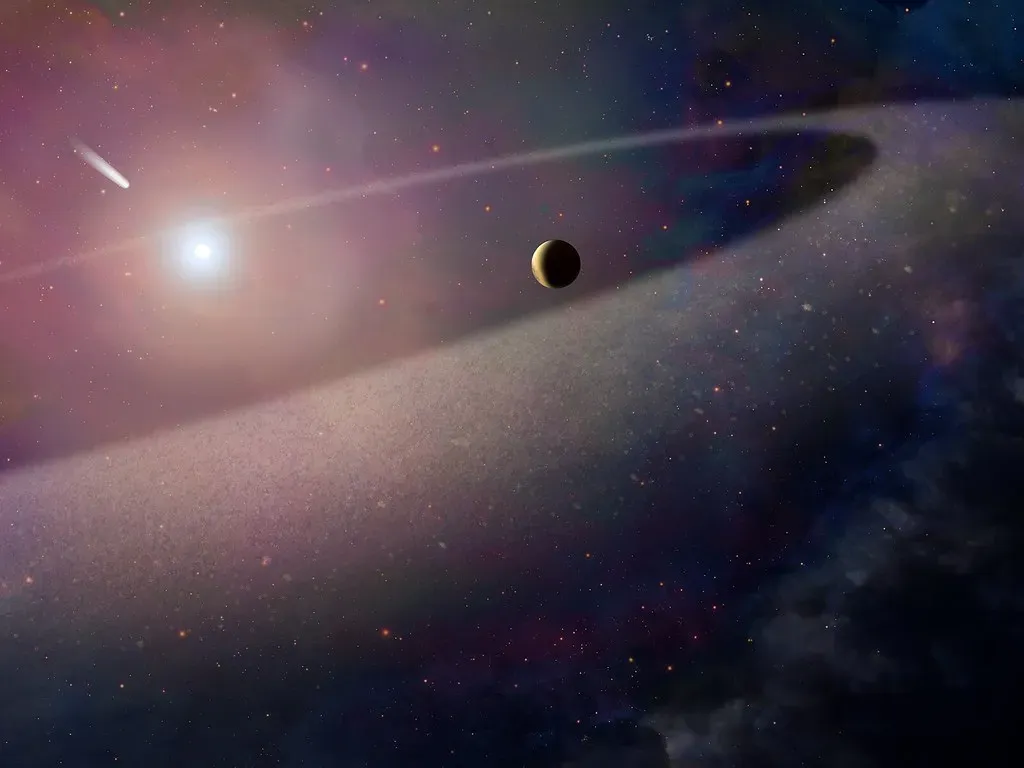
The story took a dramatic turn in 2025, when a series of fresh discoveries poured fuel onto the debate. Astronomers used a telescope in Hawaii to find a new object on the outer edges of our solar system, helping to fuel evidence of a long-standing theory about Planet Nine. For years, scientists have theorized about a ninth planet beyond Neptune because of the orbital patterns of smaller objects in the Kuiper Belt, a region of icy objects beyond Neptune.
In 2025, astronomers reported a Sedna-like trans-Neptunian object nicknamed “Ammonite,” whose longitude of perihelion lies opposite that of previously known sednoids, filling a perihelion gap and remaining stable over 4.5 billion years in simulations. These findings show that, if a distant planet exists, it favors a more remote orbit around 500 AU than closer configurations. Then, separately, researchers hunting for Planet Nine using old satellite data made a remarkable find. The best candidate yet for the elusive Planet Nine was spotted in two deep infrared surveys taken 23 years apart. If this mystery object really is Planet Nine, it would have a mass greater than Neptune, and currently be about 700 times farther from the Sun than Earth is. That is a staggering distance, farther than most people can truly imagine.
What Would Planet Nine Actually Look Like?
Let’s get into the fun part. If Planet Nine is real, what kind of world would you be dealing with? This hypothetical Neptune-sized planet would circle our Sun on a highly elongated path, far beyond Pluto. It could have a mass about five to ten times that of Earth and orbit about twenty to thirty times farther from the Sun on average than Neptune. It would take between 10,000 and 20,000 Earth years to make one full orbit around the Sun.
More recent research has refined these estimates significantly. Later simulations by Amir Siraj and colleagues in 2025 refined estimates of the planet’s mass to roughly 4.4 times that of Earth. Meanwhile, analysis of far-infrared data from the AKARI space telescope identified two candidate objects emitting the expected thermal signature and located where a hypothesized Planet Nine, with a mass five to ten times that of Earth and an orbit 400 to 800 AU from the Sun, should be. I think what’s particularly fascinating here is that different research teams, using completely different methods, keep arriving at broadly similar conclusions. That’s not nothing.
The Skeptics Make Their Case
Let’s be real. Not everyone is convinced, and that healthy skepticism is an important part of the story. Some astronomers question the Planet Nine conclusion and instead assert that the clustering of the extreme trans-Neptunian objects’ orbits is due to observational biases stemming from the difficulty of discovering and tracking these objects during much of the year. In other words, maybe we only think the orbits are weird because we’ve only been looking in certain places.
A new dwarf planet discovery in 2025 complicated things further. A new dwarf planet candidate, approximately 700 km across and named 2017 OF201, was identified in the outer solar system with an extremely elongated orbit extending into the Oort cloud. Its orbital characteristics do not align with the clustering expected from the Planet Nine hypothesis, potentially weakening support for the existence of a large, unseen planet beyond Neptune. Scientists emphasized more data is needed, though astronomer Samantha Lawler stated that this discovery and others like it mean that the original argument for Planet Nine is “getting weaker and weaker.” It’s hard to say for sure who’s right yet, which is exactly what makes 2026 such a pivotal year.
The Vera Rubin Observatory: Humanity’s Best Shot at an Answer
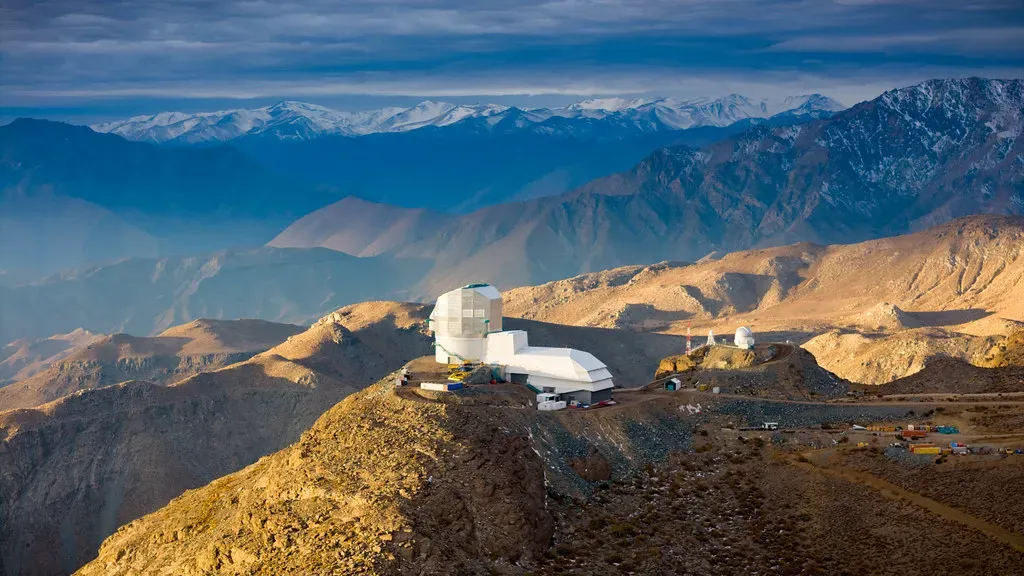
Here is where the story becomes genuinely exciting in real time, right now. The NSF-DOE Vera C. Rubin Observatory released its first images publicly on June 23, 2025, marking a major milestone for the telescope built to run the decade-long Legacy Survey of Space and Time. Already, the results have been remarkable. The trans-Neptunian objects found in the broad zone of the solar system beyond the orbit of Neptune include two icy bodies with extremely elongated orbits. The Rubin team says these two objects reach distances roughly 1,000 times farther out from the Sun than Earth, placing them among the thirty most distant known celestial objects of their kind.
The Vera Rubin Observatory boasts an 8.4-meter telescope and the largest camera ever built for astronomy research. The camera will scan the Southern Hemisphere sky every night over the next decade and is expected to access around ten billion objects. Planet Nine’s estimated brightness and distance fall within the observatory’s capabilities. If Planet Nine is real, this observatory has around a 70 to 80 percent chance of finding it. Those are genuinely thrilling odds for a question that has kept astronomers up at night for nearly a decade. The hunt, it seems, is entering its most decisive chapter yet.
Conclusion: The Cosmos Keeps Its Secrets – For Now
The story of Planet Nine is, at its core, a story about how much we still don’t know about the cosmic neighborhood we call home. A world potentially five to ten times the mass of Earth may have been silently orbiting our Sun for billions of years, completely invisible to human civilization until this very moment in history. That thought alone is enough to make you stop and stare at the night sky a little longer.
The long-standing mystery of Planet Nine involves a hypothetical planet believed to orbit our Sun at a distance of 250 to 1,000 AU. Though it has never been directly observed, the odd orbits of several trans-Neptunian objects hint at its presence. Whether Planet Nine turns out to be real, a cosmic ghost conjured by incomplete data, or something else entirely, the search has already transformed our understanding of the outer solar system. And right now, in 2026, with Rubin’s eye scanning the southern sky night after night, an answer may be closer than it has ever been.
The universe has always rewarded those who refused to stop asking questions. So here’s one worth sitting with: if a planet the size of a small Neptune has been silently circling our own Sun all along, what else might we be missing? What do you think – is Planet Nine really out there, or is the cosmos playing tricks on us? Tell us in the comments.