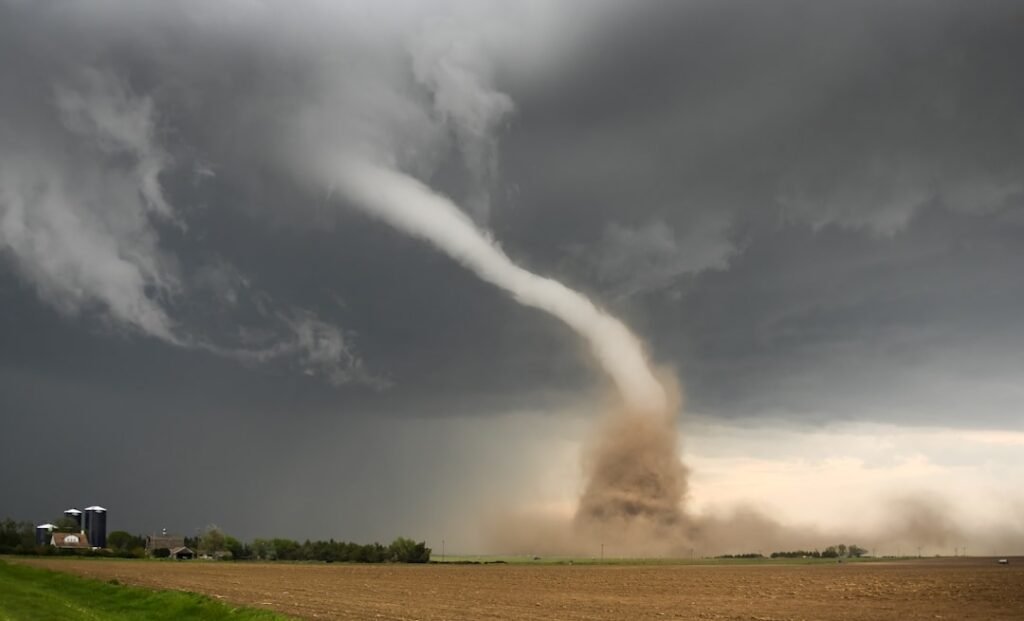

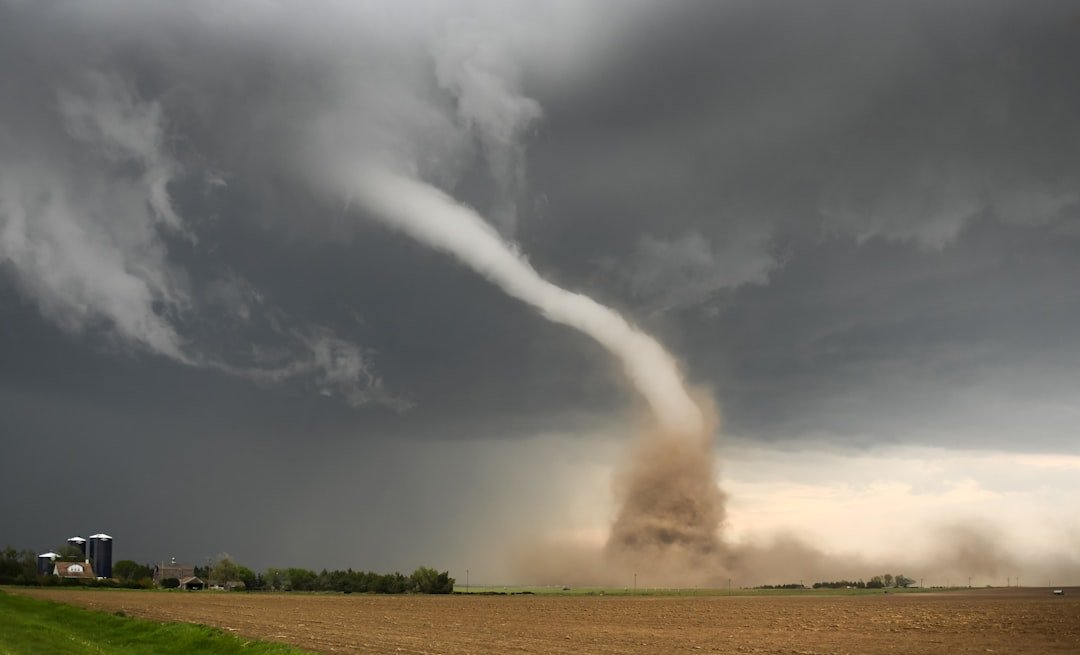
Marginal Risk Kicks Off in Kansas Today (Image Credits: Unsplash)
The Plains – Forecasters at the Storm Prediction Center issued a Marginal risk for severe thunderstorms across parts of Kansas on Tuesday afternoon, signaling the start of a multi-day weather event.[1] Pockets of heavy storms will persist through Friday, with hail positioned as the primary danger amid returning moisture and building warmth.[2] Communities from the central Plains eastward prepare as isolated severe activity could expand coverage into the Midwest.
Marginal Risk Kicks Off in Kansas Today
Isolated severe thunderstorms developed potential across Kansas late Tuesday into early evening. The outlook highlighted hail and locally severe wind gusts as key concerns in areas covering more than 31,000 square miles.[1] Population centers such as Salina, Hutchinson, Garden City, Dodge City, and Hays fell within the risk zone, where storms could intensify quickly under favorable atmospheric conditions.
This initial activity marked the onset of an active pattern. Warmth and moisture surged back into the region, setting the stage for repeated storm development. Residents reported staying indoors as radar showed scattered cells building strength.
Day 2 Expands to Missouri Valley and Southern Plains
Wednesday’s forecast elevated the Marginal risk to parts of the Lower and Mid Missouri Valley, stretching into the Central and Southern Plains. Coverage spanned over 91,000 square miles, affecting roughly 1.9 million people.[3] Cities like Lincoln in Nebraska, Amarillo in Texas, St. Joseph and Leavenworth in Missouri, and Manhattan in Kansas prepared for isolated large hail and strong wind gusts.
Storms expected to form along a southward-moving cold front in northern Kansas during late afternoon. Coverage increased into the evening hours, with potential supercell development supported by strong wind shear and steep lapse rates. Southwest Kansas and the Texas Panhandle faced marginal threats east of a dryline, where weak instability still allowed for damaging winds and hail.
Main Hazards: Hail Dominates the Outlook
Hail emerged as the leading threat throughout the period. Forecasters emphasized large hail potential in isolated storms, capable of accumulating on roads and damaging property.[2] Wind gusts followed closely, with severe speeds possible in stronger cells.
Isolated tornadoes could not be ruled out, particularly where supercells formed. The combination of 40-knot shear layers and high lapse rates created environments ripe for rotation. Heavy rain added flash flooding risks in slower-moving storms.
- Large hail: Primary concern, especially in supercells.
- Damaging wind gusts: Widespread in storm cores.
- Isolated tornadoes: Low probability but possible.
- Heavy rainfall: Localized flooding threats.
- Lightning: General hazard with all thunderstorms.
Areas on High Alert
The central Plains bore the brunt initially, with Kansas at the epicenter. Risks extended into Nebraska, Missouri, and Texas Panhandle by midweek. Midwest fringes, including Iowa and eastern Kansas, watched for spillover activity.
Population centers faced direct impacts. Lincoln and St. Joseph positioned for evening storms on Day 2. Amarillo monitored dryline activity, while Salina and Hutchinson dealt with ongoing vigilance from Day 1.
| Day | Risk Level | Key Areas | Main Threats |
|---|---|---|---|
| Day 1 (Tue-Wed) | Marginal | Kansas (Salina, Hutchinson) | Hail, wind gusts |
| Day 2 (Wed-Thu) | Marginal | MO Valley, Plains (Lincoln NE, Amarillo TX) | Large hail, strong winds |
| Day 3+ | Potential expansion | Central Plains eastward | Hail primary |
Staying Safe Amid the Storms
Officials urged proactive measures. Residents secured outdoor items and monitored local alerts via National Weather Service apps. Driving became hazardous with sudden hail and reduced visibility.
Power outages loomed possible from wind damage. Farmers protected crops, as hail posed significant agricultural risks in spring planting season. Emergency services readied for response.
Key Takeaways
- Hail stands out as the top threat; seek shelter indoors immediately.
- Monitor SPC outlooks daily for updates on risk areas.
- Have a severe weather plan: know your safe room and stay informed.
This active weather system underscored the volatile spring pattern across the Plains and Midwest. As storms evolved, timely information proved essential for minimizing impacts. What steps have you taken to prepare? Share in the comments below.