
You don’t have to look to the stars to find life that feels genuinely out of this world. Some of the most jaw-dropping, biology-defying, reality-bending creatures in the universe aren’t on distant exoplanets. They’re right here, in the oceans, forests, and microscopic corners of the very planet you call home.
From ancient seas teeming with alien-like predators to today’s deep ocean trenches hiding living nightmares, these creatures challenge everything we thought we knew about life on Earth. What makes them truly extraordinary isn’t just their unusual appearance – it’s their incredible adaptations, evolutionary innovations, and the remarkable ways they’ve solved the challenges of survival. So, if you’ve ever thought alien life would have to come from somewhere else, prepare to have your mind completely changed. Let’s dive in.
The Deep Ocean Is Basically Another Planet
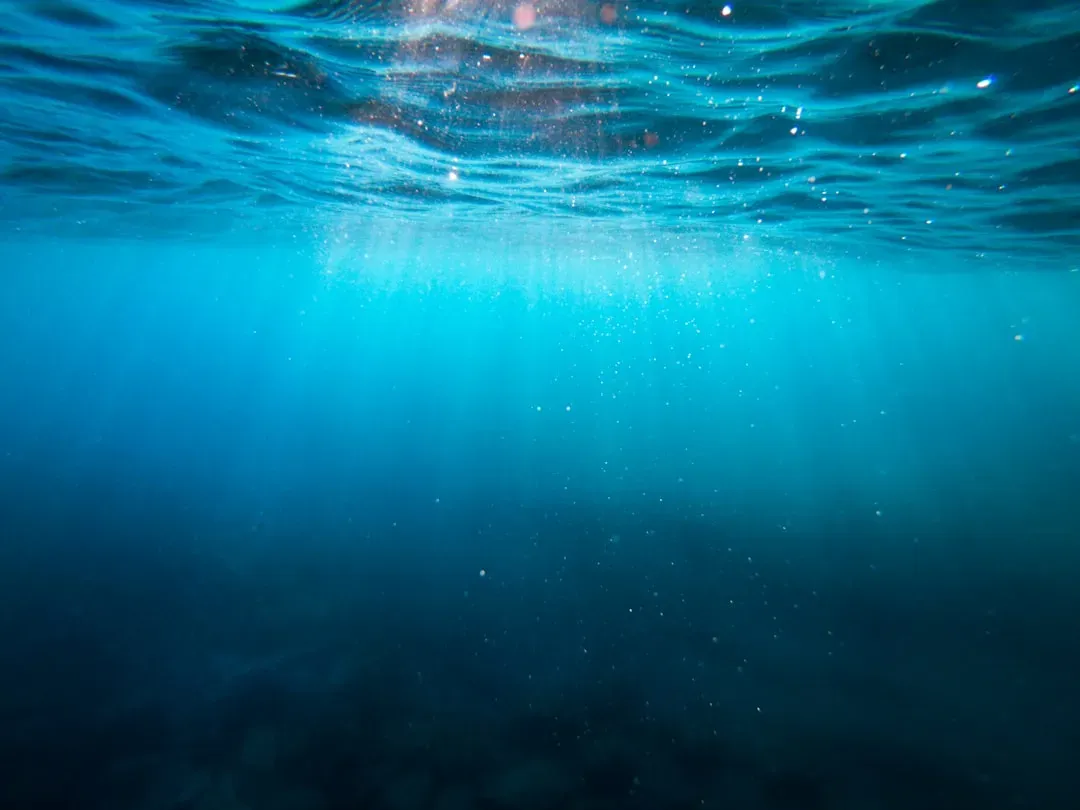
Here’s the thing – we talk about space exploration like it’s the final frontier, yet only roughly five percent of the ocean has ever been explored, making it one of the most mysterious places on Earth. That means the vast majority of our own planet remains uncharted, unseen, and absolutely teeming with life we can barely imagine. Honestly, that should stop everyone in their tracks for a moment.
Scientists define the deep sea as encompassing all ocean waters below 656 feet (200 meters). In these regions, sunlight filtering through the water from above begins to dwindle, giving way to a realm of complete darkness, frigid temperatures, and crushing pressure. Think of it like this: the deep sea is less like ocean and more like a completely separate world operating by entirely different rules – one that evolution has been quietly and ruthlessly crafting for millions of years.
The Octopus: Nine Brains, Blue Blood, and Behavior Science Can’t Fully Explain
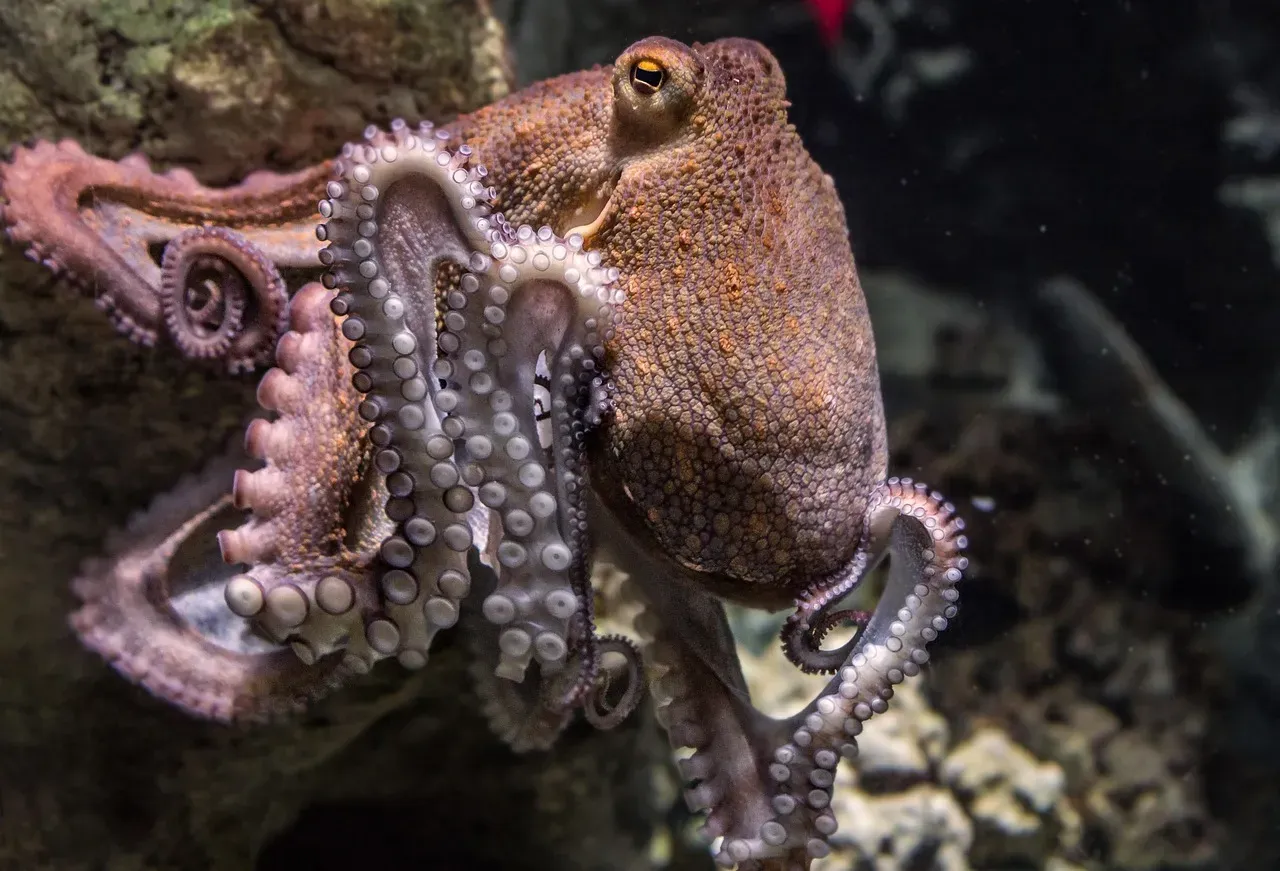
With remarkable intelligence, the ability to blend seamlessly into their surroundings, and features that seem almost alien, octopuses stand apart from all other creatures. What makes them even more astonishing is their unusual biology – they possess not just one brain, but nine, and three hearts instead of one. Let’s be real – if you described an octopus to someone without showing them a picture, they’d think you were making it up.
Unlike vertebrates with centralized brains, octopuses possess a distributed nervous system where much of the “thinking” happens outside the head. The common octopus has around 500 million neurons, with nearly two-thirds located in its arms rather than in the central brain. This means each arm can sense, taste, and respond independently while still communicating with the central brain. And if that wasn’t unsettling enough, octopuses can bypass the need for genetic mutations and consciously give their RNA new instructions to alter their physiology almost immediately – while other species abandoned this ability hundreds of millions of years ago.
Tardigrades: The Microscopic Survivors That Defy All Known Limits
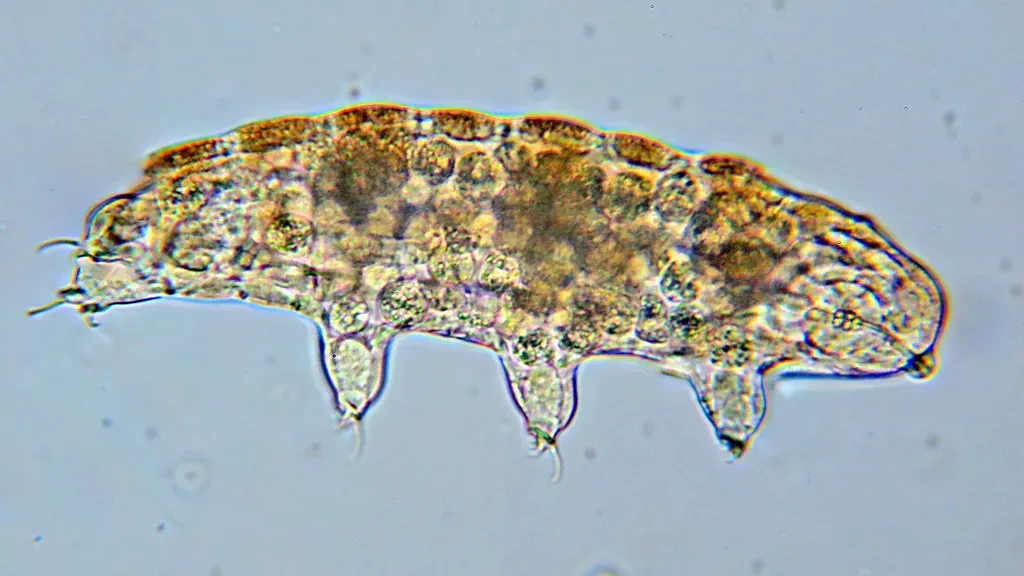
Tardigrades are among the most resilient animals known, with individual species able to survive extreme temperatures, extreme pressures, air deprivation, radiation, dehydration, and starvation – conditions that would quickly kill most other forms of life. Tardigrades have even survived exposure to outer space. That’s not hyperbole. These tiny creatures, no bigger than a grain of sand, actually went to space and came back.
Tardigrades can withstand temperatures from near absolute zero up to 151 degrees Celsius, pressures ranging from vacuum up to 6,000 times normal sea-level pressure on Earth, and radiation doses up to 1,000 times higher than any other known animal. They can also survive with almost no water, going into a dormant state called a tun, during which nearly all the water in their bodies is replaced by sugar. I think if scientists ever discovered these creatures on another planet, we’d immediately declare them extraterrestrial. The only reason we don’t is because they were here first.
The Anglerfish: Horror and Beauty Fused Into One Terrifying Package
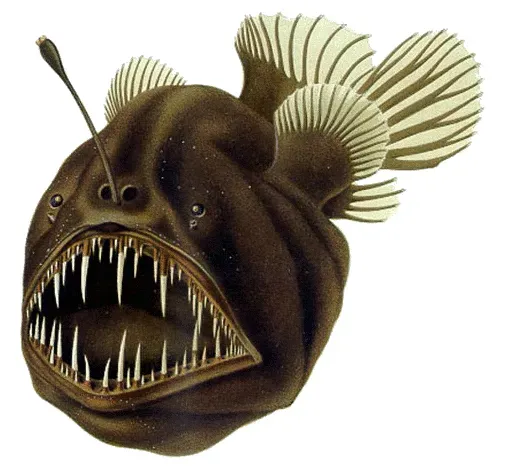
The anglerfish appears to have stepped out of the deep sea and into the pages of a sci-fi horror novel. Characterized by its grotesque appearance, it lures prey with a bioluminescent lure that protrudes from its head. This feature, coupled with a mouth full of razor-sharp teeth, provides the anglerfish a frightening yet fascinating profile reminiscent of alien predators. Picture every scary movie monster you’ve ever seen. Now make it glow in the dark and give it teeth the size of its own skull. That’s basically the anglerfish.
The anglerfish’s strangest feature is its parasitic mating strategy. The male sinks his teeth into the female, and in return, she slowly absorbs him. His eyes disappear into her abdominal wall, and then the rest of him follows, until all that is left are his testes. Their otherworldly traits extend to their reproductive habits, as males permanently fuse to females, becoming little more than a living appendage. Honestly, nature out here writing science fiction.
The Immortal Jellyfish: A Creature That Can Cheat Death
Native to the warm waters of the Mediterranean Sea, Turritopsis dohrnii, better known as the “immortal jellyfish,” possesses one of the most astonishing biological tricks known to science. When faced with injury, starvation, or old age, it performs a feat called transdifferentiation – essentially turning back time. It reverts its adult cells into a juvenile state, regenerating its body completely. Think of it like a butterfly somehow reversing itself back into a caterpillar, then growing into a butterfly all over again. Endlessly.
Turritopsis dohrnii is known as the “immortal jellyfish” because it can, theoretically, live forever. When facing stress, disease, or old age, it reverses its life cycle, transforming back into a juvenile polyp – the equivalent of a human adult turning back into a baby. This process, called transdifferentiation, allows its adult cells to reprogram themselves into young cells. In theory, it can repeat this cycle indefinitely, making it biologically immortal. Scientists are studying this jellyfish intensely, hoping its secrets might one day unlock new understanding of human aging.
The Axolotl: The Creature That Simply Refuses to Grow Up
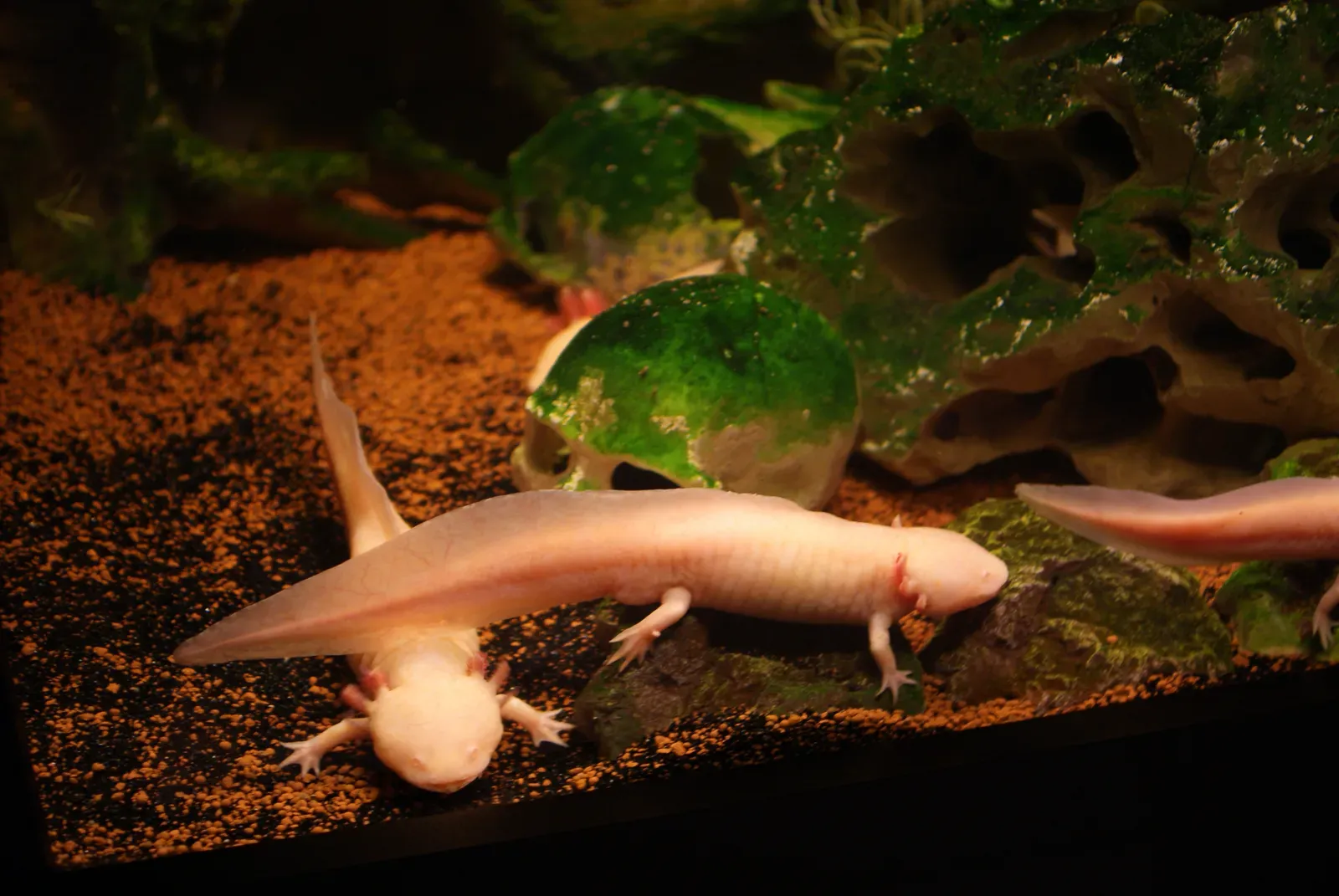
This Mexican salamander never grows up, biologically speaking. Known as the “Peter Pan” of the animal kingdom, the axolotl retains its juvenile features throughout its life, a process known as neoteny. With their wide smiles, frilly gills, and the ability to regenerate entire limbs, these creatures undeniably give off an otherworldly vibe. They look like something a child would dream up – oddly adorable, impossibly alien, and scientifically extraordinary.
The axolotl, or Ambystoma mexicanum, is a salamander that can regenerate almost any part of its body. It can regrow its limbs, tail, spinal cord, heart, lungs, eyes, and even its brain. It does this by activating stem cells, which are cells that can turn into any type of cell. It can also prevent scarring and infection, and restore the full function and appearance of the regenerated part. Sadly, axolotls are critically endangered in the wild, victims of habitat loss and pollution. The cruelest irony – an animal that can regenerate almost anything, now unable to regenerate its own wild population without our help.
The Mantis Shrimp: A Weaponized Rainbow With Vision Beyond Imagination
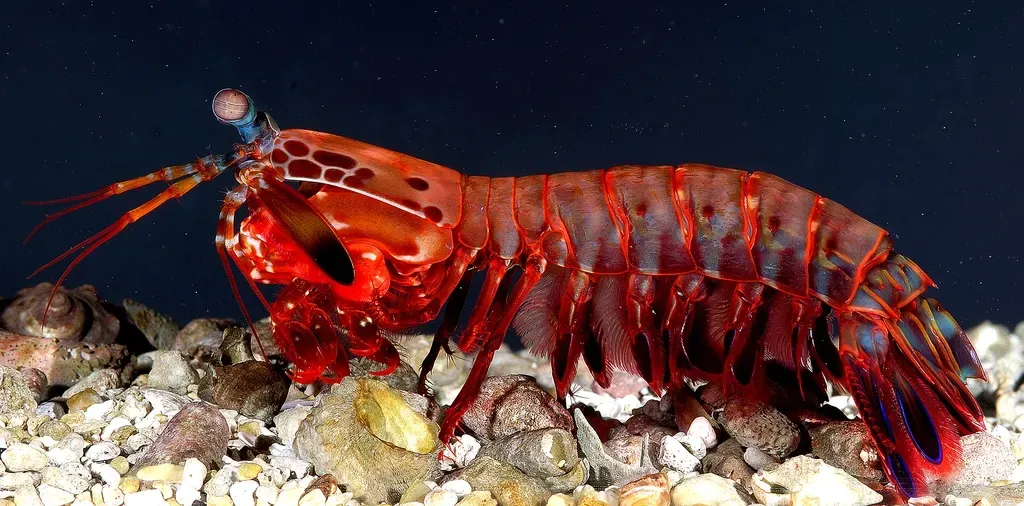
The mantis shrimp is a vivid, murderous sea creature with incredible strength and complex vision. Sporting the most advanced eyes in the animal kingdom, it can see polarized light and detect colors that humans can’t even comprehend. Known for their deadly punches, which can deliver a force equal to a bullet shot, mantis shrimp appear as vibrant warriors from an alien seabed. Imagine a creature that looks like it was painted by an artist on a cosmic fever dream, then handed the most devastating fists in nature.
This tiny predator can deliver a punch so fast it vaporizes water. Its club-like appendages accelerate at over 50 miles per hour, creating a shockwave that reaches temperatures nearly as hot as the surface of the sun. The strike can shatter aquarium glass and crack open crab shells in an instant. Scientists call this phenomenon cavitation – tiny bubbles forming and collapsing with explosive force. The mantis shrimp’s polarized vision, with sixteen types of photoreceptors compared to our three, has even inspired cameras that can detect cancer invisible to the human eye. A creature that punches like a bullet and sees like a supercomputer. Welcome to Earth.
New Discoveries Keep Rewriting the Rules of What Life Can Be
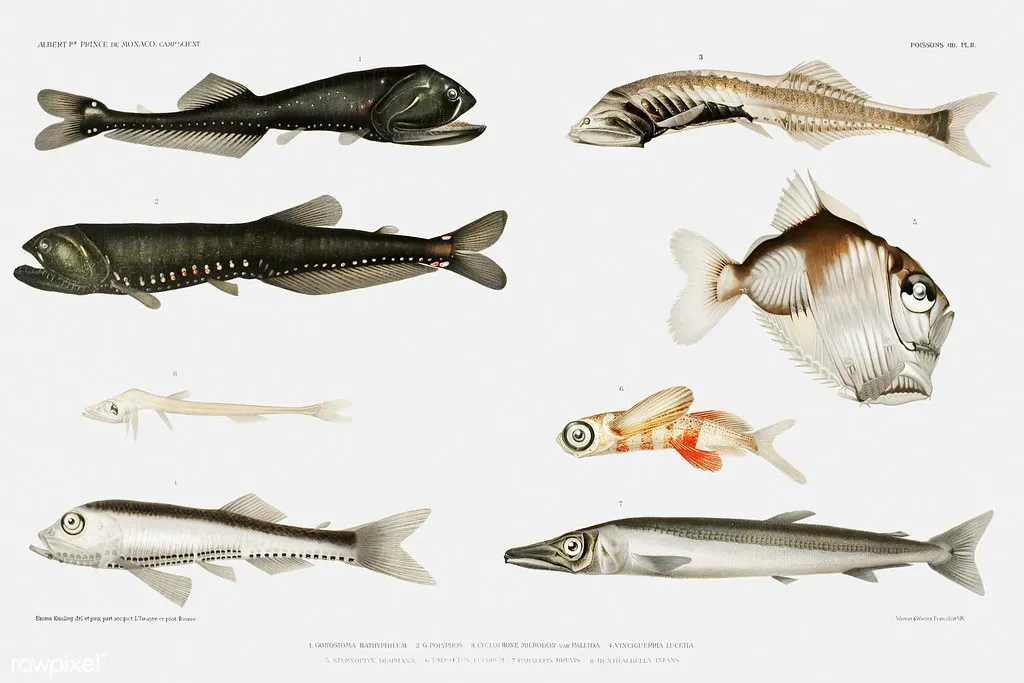
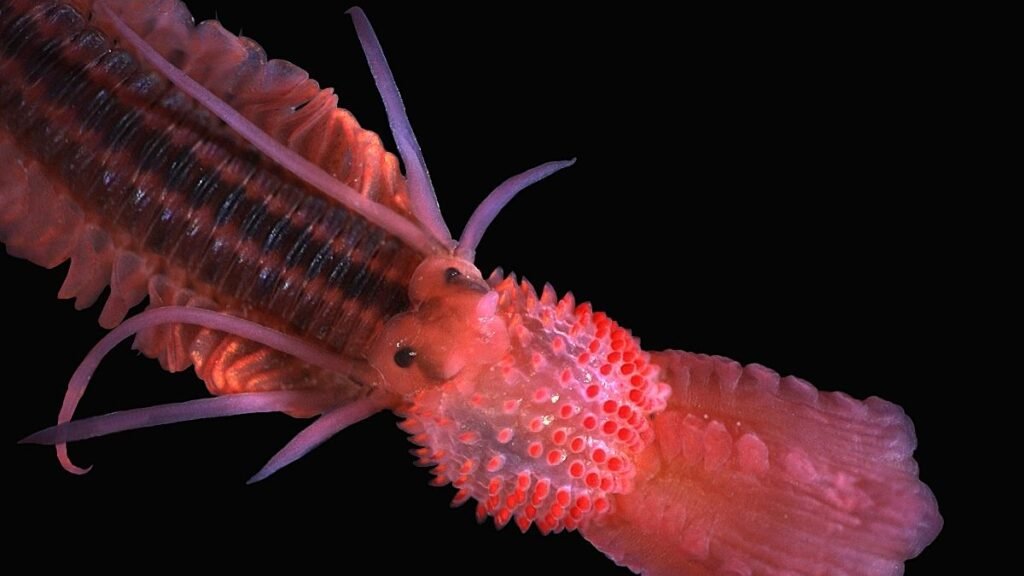
In the Clarion-Clipperton Zone of the Pacific Ocean between Mexico and Hawaii, marine scientists have discovered animals humanity has never seen before – creatures who live very different lives in the permanent darkness of the abyssopelagic. These areas are the Earth’s least explored, and it’s estimated that only one out of ten animal species living down here has been described by science. Every single expedition into the deep comes back with something that rewrites the rule book.
Researchers are discovering life forms that defy traditional biological understanding, such as extremophiles thriving in hostile environments. These organisms not only reveal the resilience of life on Earth but also provide crucial insights into the potential for life on other planets, like Jupiter’s Europa or Saturn’s Enceladus, where similar extreme conditions might exist beneath icy surfaces. It’s a humbling thought: in searching for alien life across the cosmos, we may have been overlooking the aliens that were already here, swimming beneath our feet all along.
Conclusion: The Alien Life You Were Looking For Was Always Here
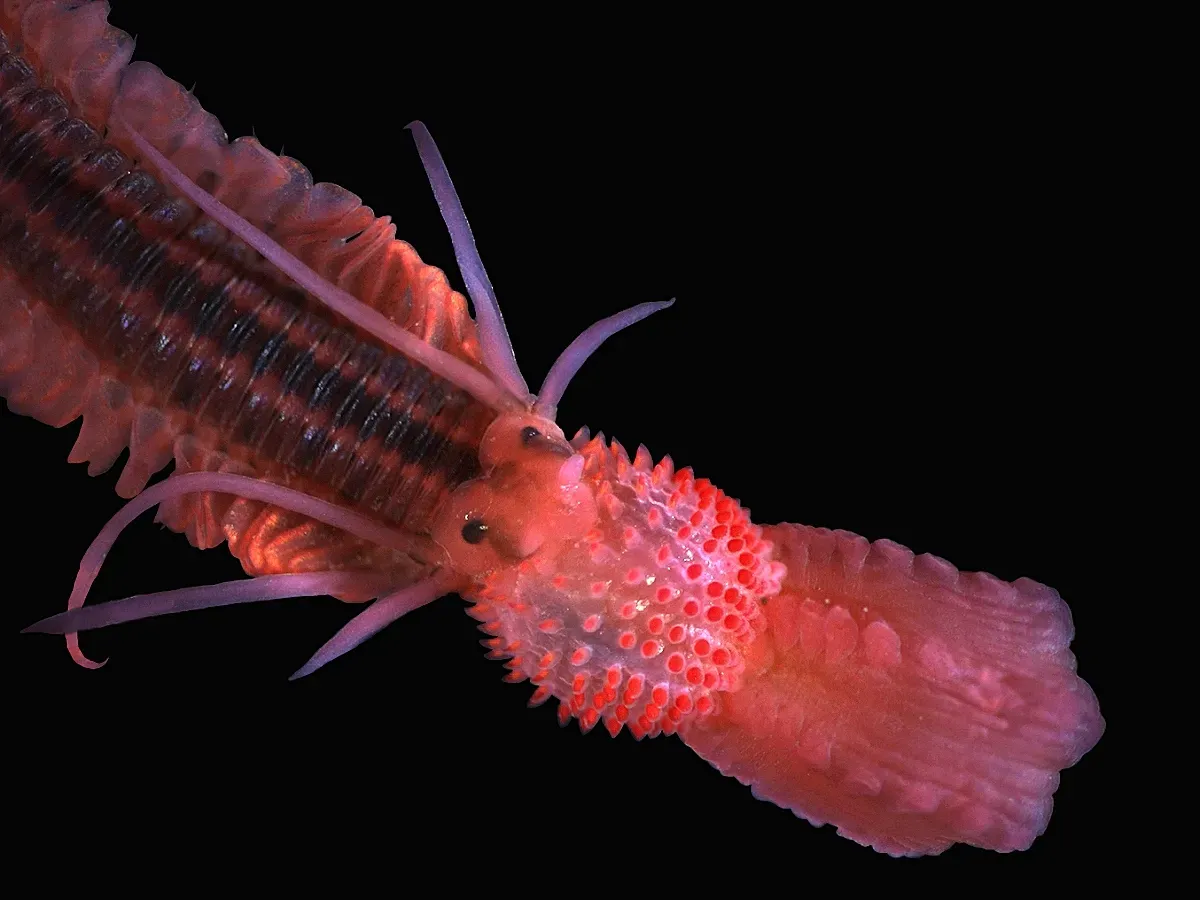
We spend enormous energy scanning the stars for signs of life beyond Earth. Yet the creatures on this very planet – from a jellyfish that reverses its own aging, to a shrimp that punches with the heat of the sun, to a microscopic animal that survives in the vacuum of space – are every bit as extraordinary as anything science fiction ever conjured. Each of these creatures, whether extinct or still living, tells a story of adaptation, survival, and evolution’s endless creativity. They remind us that our planet’s biodiversity extends far beyond the familiar animals we see in zoos and nature documentaries.
The real question isn’t whether alien life exists somewhere out there. The real question is whether we’re paying enough attention to the alien life that already exists right here. Our significant task should be to protect and preserve the variety of species, however weirdly they look or live. Because losing any one of these creatures would be like losing a chapter of the universe’s greatest story – one written not in ink, but in DNA, pressure, darkness, and time.
What creature from this list surprised you the most? Tell us in the comments below.