The idea of life existing somewhere other than Earth has fascinated humans for centuries. Most of the attention goes to Mars, maybe Europa, perhaps some distant exoplanet. Venus, though? That scorching, sulfuric hellscape? Honestly, most people would laugh at the suggestion.
Yet here we are in 2026, and scientists are genuinely, seriously reconsidering whether Earth’s twin neighbor might harbor something extraordinary – not on its surface, but drifting high up in its thick, turbulent atmosphere. What they’ve found is stranger and more compelling than almost anyone expected. Let’s dive in.
Venus Was Not Always the Nightmare It Is Today
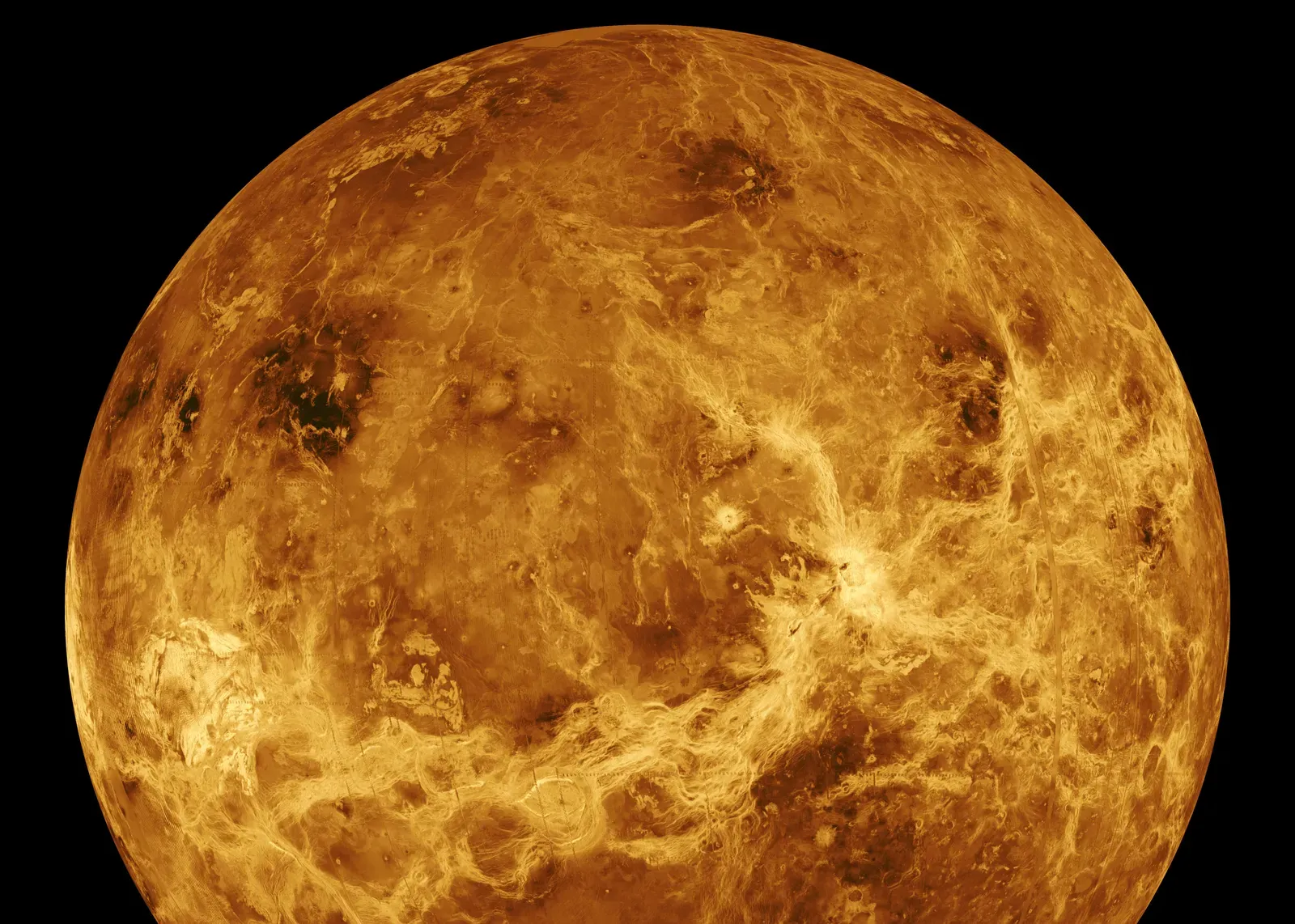
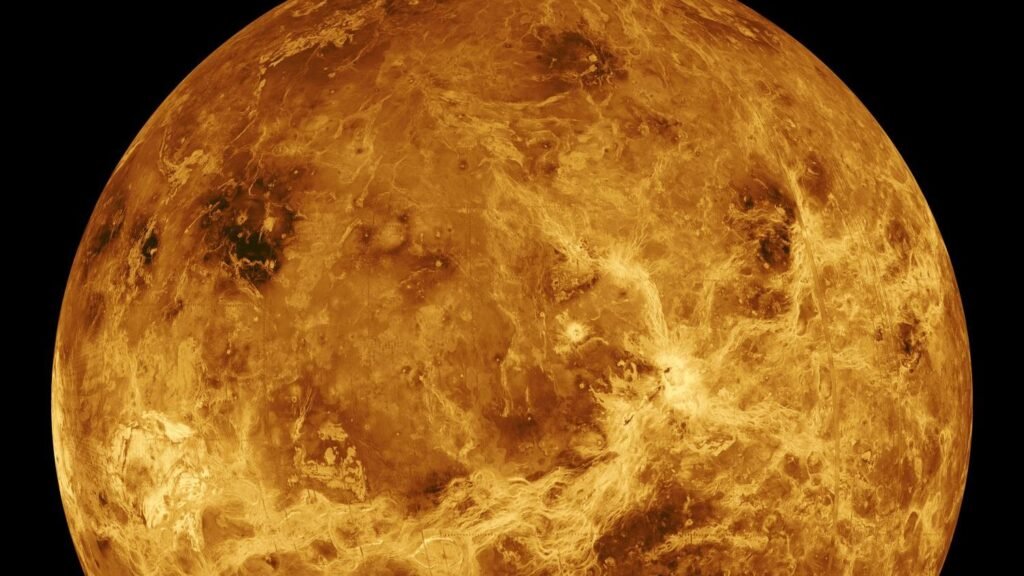
Let’s be real – Venus today is not exactly welcoming. Surface temperatures hover around 465 degrees Celsius, atmospheric pressure crushes like the deep ocean, and clouds are laced with sulfuric acid. It’s the kind of place that makes even the most adventurous planetary scientists wince.
However, current modeling and geological evidence strongly suggest that Venus may have once had liquid water oceans and a far more temperate climate, possibly for billions of years. That’s a staggering window of time. Long enough, many researchers argue, for life to have emerged.
If life did arise during that earlier, kinder era, it may not have simply vanished when conditions turned hostile. Some scientists now theorize that microbial life could have gradually migrated upward into the cloud layers, adapting over millions of years to the unique chemistry found there. It sounds almost too cinematic, but the science behind it is surprisingly credible.
The Venusian Cloud Layer Is Surprisingly Habitable in Some Ways
Here’s the thing that catches most people off guard: the upper atmosphere of Venus, specifically the cloud deck sitting roughly 48 to 60 kilometers above the surface, actually has temperatures and pressures that are remarkably Earth-like. We’re talking temperatures between roughly 0 and 60 degrees Celsius in certain zones. That’s not brutal at all.
The pressure at those altitudes also falls within ranges that terrestrial life can tolerate. Imagine floating in a dense, acidic fog – it’s still deeply hostile by our standards, but compared to the surface below, it’s practically a resort.
The catch, of course, is the sulfuric acid. Concentrated acid clouds are the defining challenge for any proposed life form in this environment. Researchers are now studying whether certain biochemistries, possibly radically different from our own, could survive and even thrive in such conditions. It’s a bold frontier, but not a scientifically irresponsible one.
The Phosphine Detection That Changed Everything
Back in September 2020, a team led by astronomer Jane Greaves announced the detection of phosphine gas in the Venusian atmosphere, and the scientific world briefly lost its collective mind. Phosphine on Earth is almost exclusively associated with biological processes or industrial production. Neither obvious industrial source exists on Venus.
The detection itself became intensely controversial, with follow-up analyses questioning both the methodology and the signal strength. Some researchers argued the original detection overestimated the phosphine concentration significantly. Others defended the findings or proposed alternative, non-biological chemical pathways.
What matters, regardless of how the phosphine debate ultimately resolves, is that it forced the scientific community to take Venusian atmospheric habitability seriously in a way they hadn’t before. It cracked open a door that had been firmly shut for decades. And once that door was open, other lines of inquiry started rushing through.
Unexplained Dark Patches in the Clouds Have Scientists Puzzled
For decades, astronomers observing Venus in ultraviolet wavelengths have noticed peculiar dark streaks and patches drifting through the cloud layers. These patches absorb ultraviolet light in ways that remain, even now, without a fully satisfying chemical explanation. That’s an unusual scientific loose end for a planet we’ve been studying since the 1960s.
Some researchers have proposed that these absorbers could be sulfur-based compounds produced through standard atmospheric chemistry. That’s a reasonable and responsible first assumption. The problem is that no single inorganic candidate has convincingly explained the full absorption signature across all the observations collected over the years.
A small but growing group of scientists, including researchers publishing in the journal Astrobiology, have suggested that certain microorganisms adapted to the acid-rich environment could theoretically produce exactly this kind of UV absorption. Life, essentially, as an absorber of solar energy floating in chemical soup. It’s hard to say for sure, but the hypothesis is far from fringe at this point.
New Research Proposes a Biological Framework for Venusian Microbes
A 2026 study highlighted by Phys.org pushed the conversation further by developing a detailed model of what Venusian atmospheric life might actually look like biochemically. The researchers explored how microorganisms might use sulfuric acid as a solvent rather than fighting against it, potentially representing a completely alien biochemistry unlike anything on Earth.
The study also examined how such organisms could theoretically manage their buoyancy within the cloud layers, rising and sinking to access energy sources and avoid the harshest extremes of the atmosphere. Think of it like a microbial hot air balloon strategy, constantly adjusting altitude for survival. Elegant, in a strange way.
Importantly, the researchers weren’t claiming life definitely exists there. The framing was careful and appropriately scientific. What they argued is that the physical and chemical constraints do not actually rule out life as confidently as previously assumed, and that dedicated missions with the right instruments could, in principle, detect biological signatures if they’re present.
What It Would Take to Actually Find Life on Venus
Detecting life in the Venusian atmosphere would require a mission unlike anything currently in operation. A spacecraft would need to descend into the cloud layers, collect atmospheric samples, and analyze them for chemical complexity, organic molecules, or isotopic signatures consistent with biological activity. That’s an enormously difficult engineering challenge.
Several proposed missions have been in development in recent years. NASA’s DAVINCI mission, designed to descend through the Venusian atmosphere, is one of the most discussed. The European Space Agency’s EnVision orbiter, planned for later this decade, will study the Venusian environment in unprecedented detail, though it won’t directly sample the clouds.
Honestly, the instrumentation required to unambiguously detect biology, as opposed to exotic chemistry, is still being refined. We don’t yet have a universally accepted biosignature test that could survive the Venusian environment and return a clear positive or negative answer. That gap between ambition and capability is frustrating, but it’s real, and the scientific community is working hard to close it.
Why This Matters Far Beyond Venus
If life were ever confirmed in the clouds of Venus, it would be, without exaggeration, the most significant discovery in the history of science. Full stop. It would mean that life is not a fluke of one uniquely lucky planet but something that emerges wherever conditions permit, even briefly or partially.
Venus and Earth formed from similar materials in the same region of the solar system. If life took hold independently on both planets, the implications for the broader universe are staggering. The number of potentially inhabited worlds across the galaxy would jump from a theoretical hope to a statistical likelihood.
There’s also something philosophically unsettling and wonderful about the idea that life might be floating right next door in the sulfuric clouds of a planet we’ve too quickly dismissed. Space exploration has a habit of humbling our assumptions. Venus might be about to do exactly that again.
Conclusion: A Planet Worth Looking at Twice
Venus has spent decades being treated as the solar system’s cautionary tale, a reminder of how wrong things can go for a planet. The emerging science suggests we may have misjudged it badly.
The case for atmospheric life on Venus is not proven, and responsible scientists are the first to acknowledge that. The evidence is circumstantial, the models are theoretical, and the detection challenges are immense. Yet the accumulation of unexplained phenomena, from dark UV absorbers to phosphine traces to newly modeled biochemical pathways, is growing harder to dismiss with a shrug.
I think there’s something deeply compelling about the possibility that Earth isn’t as alone as it looks. The next decade of Venus missions could rewrite everything. What do you think – would confirmation of life on Venus change the way you see our place in the universe? Share your thoughts in the comments below.