

We’ve all met someone who seems to think on a different level: the kid who solved math problems years ahead of their grade, the colleague who connects ideas in seconds, or the artist who creates something so original it almost feels alien. It can be both inspiring and a little unsettling. Are these people just born different, or is there something happening in their brains and their lives that we can actually understand?
Over the years, I’ve become less interested in the label “genius” and more curious about the quieter, less flashy mechanics of exceptional minds. When you dig into the research, you find that gifted thinking is not magic; it’s a layered mix of brain wiring, personality traits, hard work, and life circumstances. It’s messier and more human than the myth of the lone, effortless prodigy – and that’s exactly what makes it so fascinating.
The Brain Wiring Behind Exceptional Thinking

One of the most surprising things scientists have found is that gifted brains are not just “bigger” or “faster” versions of average brains. In many cases, they are wired differently, with certain regions communicating more efficiently and more often. Brain imaging studies have shown that people with very high abilities often have stronger connections between areas involved in complex reasoning, memory, and attention. It’s like having a more organized and better-connected road network instead of just more cars on the highway.
At the same time, gifted brains can be oddly efficient. Some studies suggest they use less energy for certain demanding tasks because their neural pathways are so well tuned. That doesn’t mean everything feels easy for them, but it does mean that processing complex patterns, ideas, or relationships can become more automatic over time. Imagine reading a language that once felt impossible but now feels like second nature – that’s how gifted people often experience certain kinds of thinking.
The Curious Mind: Obsession, Not Just Interest

Exceptional minds rarely approach the world with mild curiosity; they tend to latch on to questions and refuse to let go. Instead of saying “that’s interesting” and moving on, they stay stuck on a puzzle, circling it from different angles for days or weeks. It can look like obsession from the outside: rereading the same topic, running simulations in their head, or filling notebooks with half-formed ideas. This isn’t just a charming quirk – it’s fuel for deep understanding.
What’s powerful is that this kind of curiosity drives them past the boring, repetitive parts that stop most people. While others give up once the novelty wears off, gifted thinkers often find the repetition satisfying because every new pass reveals another layer. It’s a bit like a musician playing the same riff until hidden rhythms appear that no one else hears. That stubborn curiosity, more than raw IQ, is often what pushes them into truly exceptional territory.
Working Memory: Holding More in Mind at Once

One technical but vital advantage many gifted people share is an unusually strong working memory – the ability to hold and manipulate information in their mind in real time. Think of working memory as your mental “scratchpad.” A bigger, clearer scratchpad lets you juggle more variables, compare more details, and spot patterns that others might miss. This means they can follow complex arguments, multi-step problems, or tangled storylines without losing the thread.
In real life, this shows up in simple but striking ways: doing mental math several steps ahead, remembering the exact phrasing of a long conversation, or seeing how three or four different ideas connect instantly. For problem solving, it’s like playing chess while seeing several moves ahead instead of just one. That doesn’t mean they’re always right, but they can explore more possibilities before choosing a path, which often leads to more creative or accurate solutions.
Pattern Recognition: Seeing What Others Overlook

One of the most visible traits of gifted minds is their ability to spot patterns – quickly and in places where others see noise. This can be patterns in numbers, language, behavior, or even social dynamics. When someone consistently picks up on little details and then accurately predicts what comes next, it almost feels supernatural, but it’s really just accelerated pattern recognition. Their brains are constantly comparing, matching, and testing what they notice against what they already know.
This ability can be a blessing and a burden. In science or engineering, it helps them detect subtle signals in data that others miss. In everyday life, it means they might notice contradictions, hypocrisies, or unspoken rules that other people glide past. That can make them seem insightful, but it can also make them restless or frustrated, like having super-sharp eyesight in a world that prefers to squint. Once you see a pattern, it’s hard to unsee it.
Practice, Grit, and the Myth of Effortless Genius

A quiet truth about most gifted people is that their talent rests on an enormous amount of invisible work. Popular culture loves the image of a genius who barely tries and still outperforms everyone, but when researchers look closely, they usually find years of intense, focused practice behind the scenes. Many exceptionally gifted minds start early, but they also sustain an effortful, almost relentless engagement with their chosen field. Talent gives them a head start, but practice lets them keep running.
What sets them apart isn’t just the number of hours, but the quality of those hours. They repeatedly push into tasks that are just beyond their comfort level, get feedback, adjust, and try again. It’s like deliberately climbing a slightly steeper hill every day instead of walking the same flat path. This kind of “productive struggle” doesn’t feel glamorous; it often feels frustrating and humbling. But over years, it compounds into the kind of mastery that outsiders mistake for magic.
Emotional Intensity and Sensitivity

Many exceptionally gifted people don’t just think intensely – they feel intensely too. They might experience emotions more deeply, react more strongly to beauty or injustice, and struggle to “turn down” their inner volume. This can show up as heightened empathy, strong convictions, or powerful inner conflicts. It’s not always comfortable, but that very sensitivity can fuel motivation, creativity, and a fierce drive to understand or improve the world.
At the same time, that intensity can make life harder. What others shrug off can feel overwhelming or piercing to them. Crowded environments, constant noise, or social superficiality can drain them faster than most people realize. When we romanticize giftedness, we overlook how much emotional self-management many gifted individuals have to learn just to function day to day. Their exceptional minds aren’t floating serenely above life; they’re often wrestling with it from the inside.
Divergent Thinking and Creative Risk-Taking

Exceptional minds often thrive not just on getting the right answer, but on generating many possible answers. This is called divergent thinking: coming up with multiple, varied ideas instead of just following a linear, step-by-step path. Where a standard thinker might look for the “correct” route, a highly creative one might explore side roads, shortcuts, and cross-country routes, some of which will fail spectacularly. That willingness to think sideways is a big part of what leads to original ideas.
But divergent thinking needs risk tolerance. Gifted people who make a real impact are usually willing to be wrong, to propose odd ideas, and to be the one in the room who sounds unreasonable at first. That can be socially uncomfortable. It can mean being misunderstood, dismissed, or even ridiculed – at least until the idea pays off. Their minds are not just better at logic; they’re more willing to wander through uncertainty, relying on intuition as much as careful reasoning when the path isn’t clear yet.
Environment, Opportunity, and the Right Kind of Support

As dramatic as exceptional brains can be, environment still matters enormously. A gifted child in a stimulating, supportive setting can flourish, while the same child in a neglectful or hostile environment may never fully develop their potential. Access to books, mentors, challenges, and psychological safety all shape whether giftedness turns into visible achievement or stays hidden. It’s less like a seed that automatically sprouts and more like a delicate plant that needs specific soil and weather.
Crucially, the right kind of support isn’t just about acceleration or extra work; it’s about understanding. Many gifted people feel out of sync with their peers, misunderstood by teachers or employers, or pressured to “dial it down.” When someone around them recognizes both their strengths and their struggles – boredom, perfectionism, social mismatch – it can be life-changing. The world likes to think talent “wins anyway,” but in reality, opportunity and context decide a lot more than we’d like to admit.
The Dark Sides: Perfectionism, Anxiety, and Isolation

For all its advantages, an exceptionally gifted mind can be a harsh place to live. High standards, rapid thinking, and constant self-evaluation can easily slide into perfectionism and anxiety. When you see more possibilities and more flaws than the people around you, it’s easy to feel like you’re always falling short. Some gifted individuals end up procrastinating not because they’re lazy, but because anything less than brilliant feels unacceptable, and that fear of failing their own expectations freezes them.
Socially, gifted people can feel isolated even in a crowd. If their interests are unusual or their pace of thinking is much faster, they might struggle to find conversations that feel genuinely engaging. That can lead to loneliness or a sense of detachment, like watching life through glass. The irony is sharp: the same skills that make them impressive on paper can make them feel disconnected in person. Recognizing this side of giftedness helps explain why exceptional ability doesn’t automatically equal an easy or happy life.
Giftedness as a Spectrum, Not a Pedestal
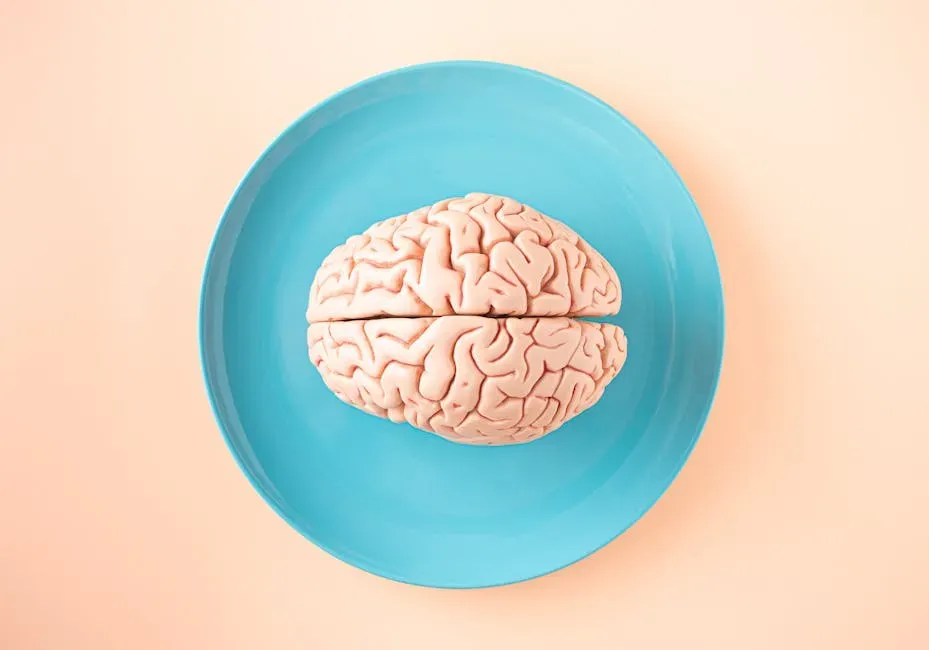
One of the most important shifts in how we think about exceptional minds is moving away from the idea of a pedestal. Giftedness isn’t a single, all-purpose label; it’s a messy spectrum of abilities, traits, and quirks that show up differently in different people. Someone might be off-the-charts in abstract reasoning but average in social skills, or deeply creative in art but uninterested in formal academics. Treating giftedness as one unified “genius” package just blinds us to its real variety.
In a way, every mind is a strange mix of strengths and weaknesses, and the exceptionally gifted are simply more extreme versions of that truth. Understanding what makes some minds so powerful doesn’t have to make the rest of us feel smaller. Instead, it can nudge us to notice our own pockets of unusual ability and to respect the complex inner worlds of people whose minds move differently. In the end, maybe the real question isn’t who counts as gifted, but what we choose to do with the minds we’ve got.