The Core Reaction Fueling Fusion (Image Credits: Unsplash)
Nuclear fusion has illuminated the cosmos for billions of years, driving the life-giving heat and light from stars like our Sun. On Earth, researchers replicate this process by smashing light atomic nuclei together, converting a sliver of their mass into immense energy as described by Einstein’s E=mc².[1] Decades of effort have pushed this stellar reaction closer to practical use, offering a path to boundless clean power free from fossil fuels or long-lived radioactive waste. Progress in containment techniques now hints at a transformative energy source within reach.
The Core Reaction Fueling Fusion
Fusion occurs when two light nuclei merge into a heavier one, releasing energy because the product’s mass falls short of the originals’ combined weight. That mass deficit transforms directly into kinetic energy and radiation, powering stars through chains of reactions starting with hydrogen isotopes.[1] Temperatures exceeding 100 million degrees Celsius strip electrons away, creating plasma where positively charged nuclei can collide despite electrostatic repulsion.
A prime example involved deuterium and tritium, isotopes of hydrogen. Their fusion yields a helium nucleus, a high-speed neutron, and 17.6 million electron volts of energy per reaction – far more efficient than many alternatives.[2] Deuterium abounds in seawater, while tritium breeds from lithium within reactors. This deuterium-tritium path requires relatively lower ignition temperatures, making it a focus for energy production.
Confinement Strategies to Tame Plasma
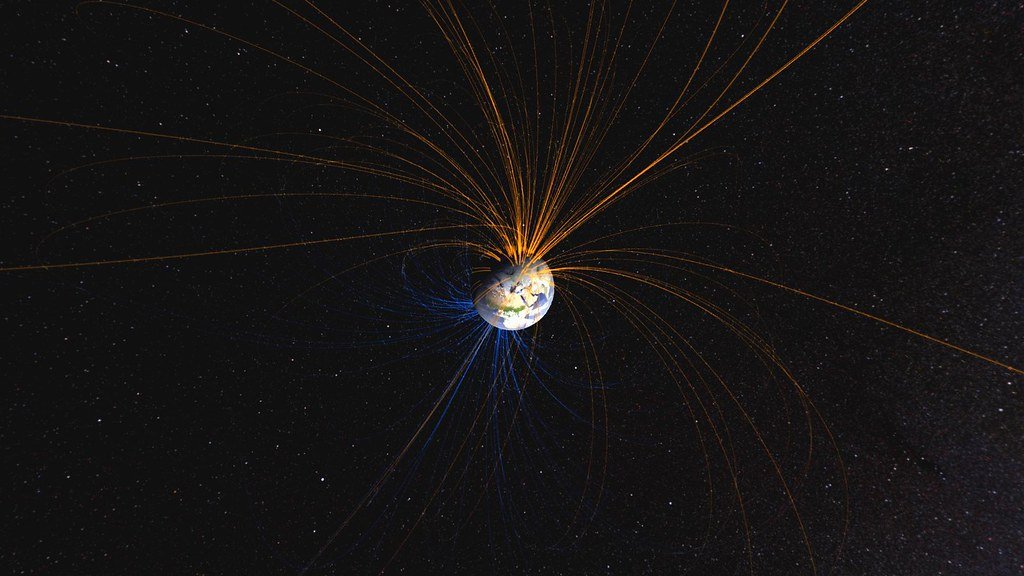
Plasma defies containment at fusion conditions, demanding innovative approaches to hold it long enough for reactions to dominate energy input. Magnetic confinement fusion shaped early designs, using intense fields to suspend scorching plasma away from vessel walls.[2] Tokamaks emerged as leaders, doughnut-shaped chambers where toroidal and poloidal magnets twist paths into stable helices.
Inertial confinement offered a contrasting pulse-based method. High-powered lasers or beams implode tiny fuel pellets, compressing them to stellar densities in nanoseconds for brief but intense fusion bursts. The National Ignition Facility demonstrated this vividly, achieving ignition where output exceeded laser input in 2022.[2]
| Approach | Mechanism | Strengths | Examples |
|---|---|---|---|
| Magnetic Confinement | Magnetic fields suspend low-density plasma | Steady-state potential; scalable | Tokamaks (ITER), Stellarators (Wendelstein 7-X) |
| Inertial Confinement | Laser implosion of fuel pellets | High density bursts; rapid cycles | NIF, Laser Mégajoule |
Persistent Hurdles in the Fusion Race
Sustaining plasma stability proved elusive for years, with tokamaks prone to disruptions that dumped energy and stressed components. Materials faced brutal neutron bombardment, degrading under 14 MeV impacts far harsher than fission’s output.[2] Tritium scarcity added complexity, as reactors must breed it on-site from lithium while managing its radioactivity and permeability.
Engineers tackled power extraction too, since plasma’s low density demanded larger facilities than fission plants. Yet solutions advanced steadily.
- Plasma instabilities required refined magnetic geometries and real-time controls.
- Neutron-resistant blankets slowed particles while generating heat and fuel.
- High-temperature superconductors enabled stronger, compact magnets.
- Tritium cycles demanded closed-loop breeding and safety protocols.
- Net energy gain (Q>1) hinged on ignition and burn propagation.
Milestones Marking Steady Gains
Researchers shattered records through international collaboration. The Joint European Torus produced 59 megajoules of fusion heat over five seconds in 2022, while China’s EAST held 120 million-degree plasma for over 100 seconds a year earlier.[2] NIF’s ignition breakthrough confirmed inertial viability, igniting scientific momentum.
ITER, the world’s largest tokamak under construction in France, nears first deuterium-tritium operations around 2035. It aims for 500 megawatts output from 50 megawatts input, paving for demonstration plants. Private ventures surged too, drawing billions in funding for compact designs and hybrids by 2026.[3][4]
Key Takeaways
- Fusion releases energy via mass conversion in E=mc², using abundant fuels like deuterium.
- Tokamaks and lasers lead confinement, with ignition now achieved experimentally.
- Challenges like materials and tritium persist, but ITER and privates target grid power post-2040.
Fusion stands poised to deliver virtually unlimited energy without greenhouse gases or meltdown risks, reshaping global grids and climates. Projects like ITER and emerging startups signal commercialization in coming decades. What do you think about fusion’s timeline? Tell us in the comments.