You walk through the world thinking your five senses give you a pretty solid picture of reality. You see colors, hear sounds, smell dinner cooking, and feel the breeze on your skin. Seems complete enough, right? Here’s the thing – for the animals sharing this planet with you, your version of reality is barely a rough sketch. They are experiencing dimensions of the world that your brain literally cannot process, not because you haven’t tried hard enough, but because you were never equipped for it in the first place.
Animals possess a remarkable array of sensory capabilities that far exceed human limitations, granting them access to perceptual realms invisible to us. You rely primarily on sight and hearing, but the animal kingdom boasts a dazzling spectrum of sensory abilities that allow creatures to navigate, hunt, and communicate in ways you can only imagine. From tasting the ocean floor with their skin to detecting earthquakes before they strike, some animals live in a sensory universe so rich it borders on the supernatural. Let’s dive in.
The Mantis Shrimp’s Otherworldly Vision
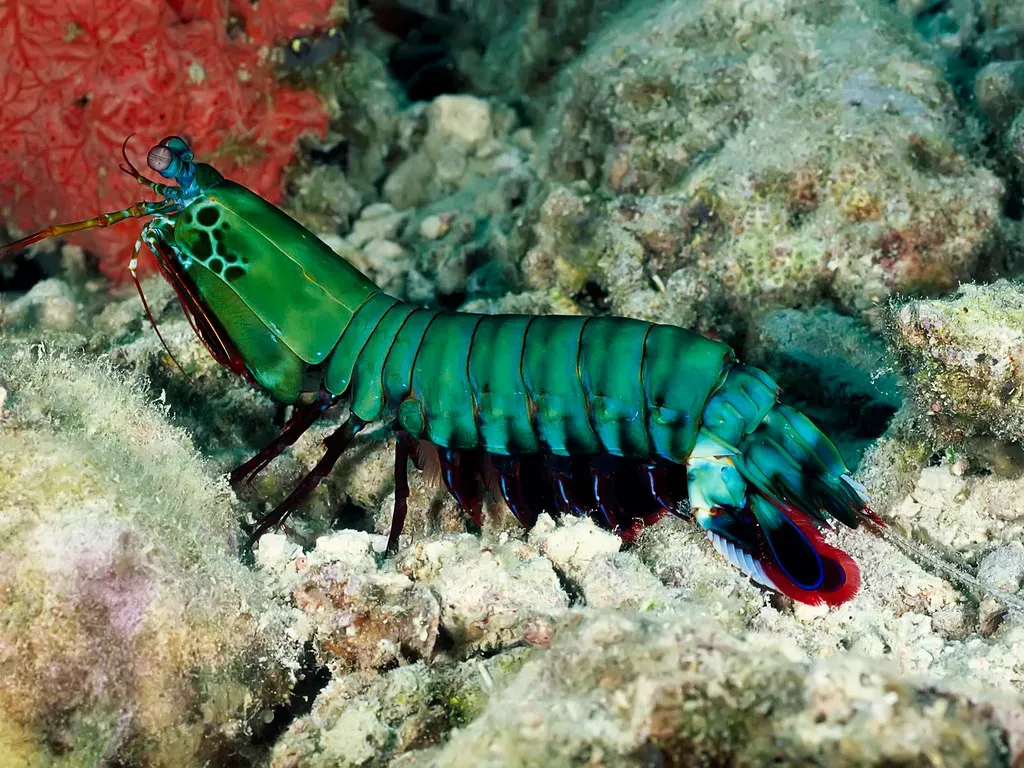
If you think you see colors well, prepare for a serious reality check. The mantis shrimp possesses the most complex visual system known to science, and while you rely on three color receptors, mantis shrimp pack up to 16 photoreceptors into eyes smaller than your fingernail. That’s not just impressive – it’s almost incomprehensible. Imagine trying to describe a color you have never seen to someone who has never seen any color at all. That’s roughly where you stand compared to a mantis shrimp.
This extraordinary visual system allows the mantis shrimp to see a spectrum of light far beyond human perception, including ultraviolet, infrared, and polarized light. Their eyes sit on mobile stalks and can move independently of each other, providing enhanced depth perception and a nearly 360-degree field of vision. Some mantis shrimp species even have body parts that reflect circularly polarized light in ways invisible to most predators but clearly visible to other mantis shrimp – essentially a secret communication system operating right under the sensory noses of potential eavesdroppers.
Sharks and the Electric Sixth Sense

Sharks have the ability to detect electrical fields, a sense called electroreception. They possess clusters of pores on their heads, called ampullae of Lorenzini, which are filled with electrically conductive jelly. Honestly, just picture that for a moment. You are swimming through murky, pitch-black water and you can feel the heartbeat of a fish hiding beneath the sand several feet away. That is exactly what sharks do, and they do it casually, every single day.
This creates a sensory system so sensitive that some species could theoretically detect electrical differences across extraordinary distances. In the wild, their keen senses enable sharks to detect electrical stimuli from their prey’s muscular contractions, significantly enhancing their ability to locate food. Sharks can sense a wide range of electrical fields, including those produced by the muscle contractions of prey animals, the Earth’s magnetic field, and even the electrical activity of other sharks. It’s nature’s version of a full-body lie detector – except it never gets it wrong.
Bats: Seeing the World With Sound
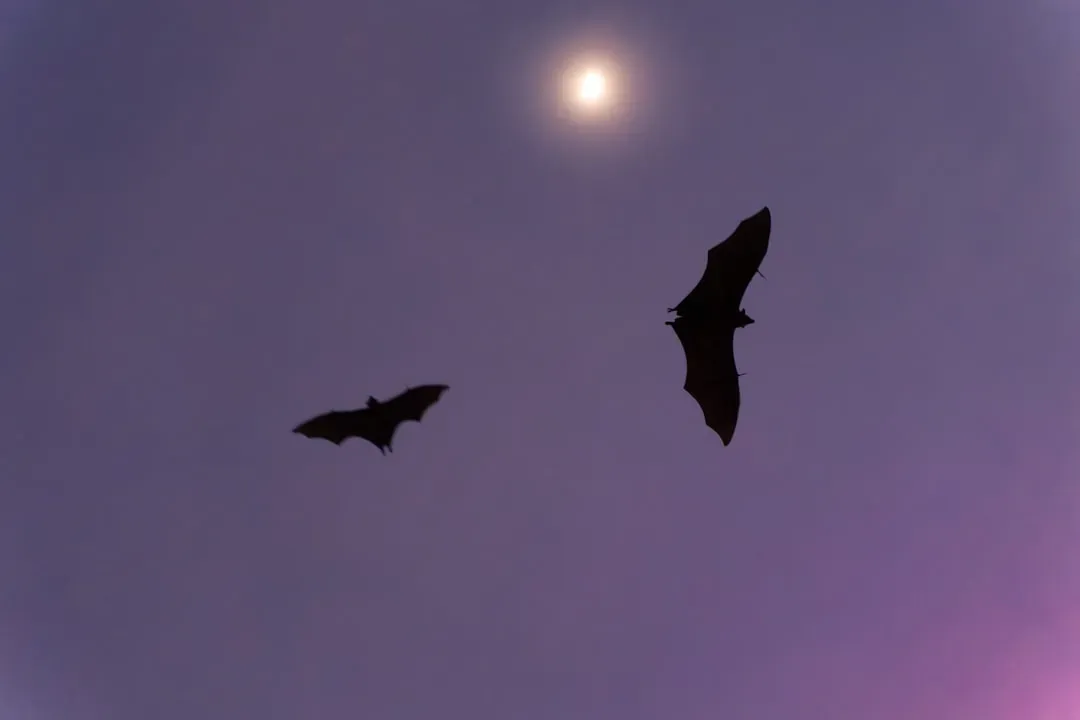
Most of the over 1,400 bat species use echolocation to navigate and hunt in darkness, emitting high-frequency sounds typically well beyond human hearing and interpreting the returning echoes to create detailed mental maps of their surroundings. This remarkable system allows bats to detect objects as thin as a human hair in complete darkness. That last part should genuinely astonish you. A human hair. In complete darkness. Using only sound.
The precision of bat echolocation is so refined that they can detect differences in surface texture and identify prey items as small as mosquitoes while flying at speeds up to 60 mph. Their brains contain specialized neural pathways dedicated to processing these echoes, allowing for rapid interpretation of complex acoustic information. Some bat species have even evolved specialized nose structures that help focus their sound emissions for even greater precision. Scientists have developed echolocation-inspired devices to help visually impaired people navigate their environments, and some individuals even train themselves to use subtle clicking noises to detect nearby objects, mimicking how bats operate.
The Dog’s Nose: A Living Disease Detector

You probably know that dogs have a powerful sense of smell, but the actual scale of it tends to get lost in casual conversation. Dogs have smell receptors that are roughly ten thousand times more accurate than yours, meaning their nose is powerful enough to detect substances at concentrations of one part per trillion – equivalent to a single drop of liquid in twenty Olympic-size swimming pools. That figure is so extreme it almost sounds made up. It isn’t.
In 1989, a woman visited her doctor to discuss a mole that her dog continuously sniffed and bit at, only to discover it was a malignant melanoma. Since that discovery, it has been observed that dogs can smell a range of cancer subtypes, as well as other diseases including malaria, Parkinson’s disease, and epilepsy. Numerous studies have confirmed that trained dogs can detect many kinds of disease, including lung, breast, ovarian, bladder, and prostate cancers, simply through smell. In some cases involving prostate cancer, dogs achieved a nearly perfect success rate in detecting the disease by sniffing patients’ urine samples. Your dog may know more about your health than your doctor does.
Migratory Birds and Earth’s Magnetic Compass

Every year, birds travel thousands of miles across continents and oceans with pinpoint accuracy, arriving at the same precise locations year after year. If you have ever wondered how homing pigeons make round trips without GPS, or how pregnant sea turtles find the same beach on which they were born decades earlier to lay their own eggs, it is all thanks to their sense of magnetoreception. You have no equivalent. None at all. It’s like they have a biological Google Maps hardwired into their brains.
Experiments on migratory birds provide evidence that they make use of a cryptochrome protein in the eye, relying on the quantum radical pair mechanism to perceive magnetic fields. This effect is extremely sensitive to weak magnetic fields, and readily disturbed by radio-frequency interference. Birds have populations of nerve cells in their brains triggered by magnetic fields, and cells in their inner ears capable of detecting magnetic fields by electromagnetic induction. For the more complex navigation sense, animals must have multiple magnetic receptors sending diverse signals that converge in the brain – and scientists still do not fully know what those are or how they work.
Elephants: Feeling Conversations Through the Ground
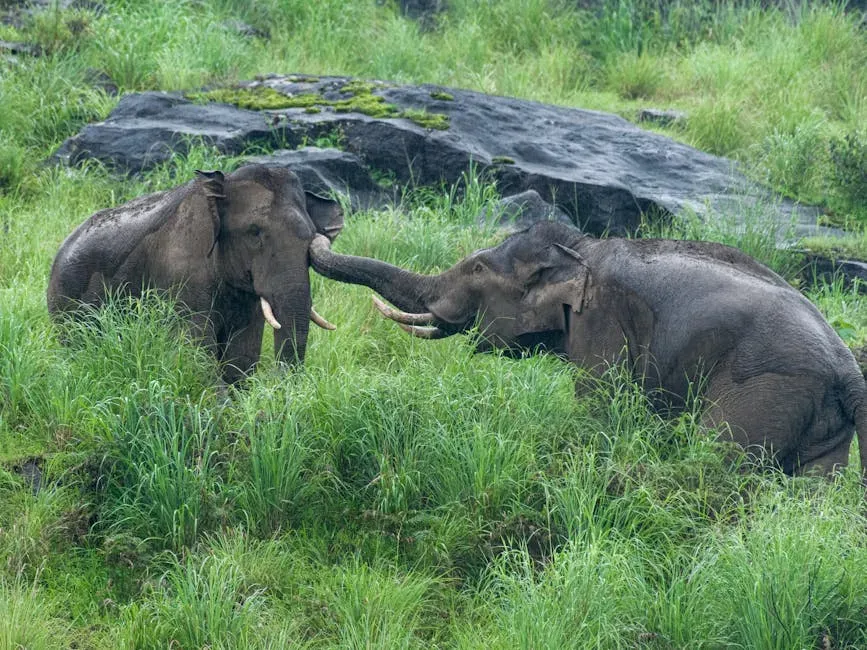
African elephants communicate using incredibly low rumbling sounds that cannot be heard by the human ear. These rumbles are carried through the air as sound waves and also through the ground as seismic waves, and the elephants feel these vibrations using their trunk and their feet. Concentrated at the tip of their trunks and on the heels and toes of their feet are very sensitive receptor cells called Pacinian corpuscles. Think of it as having a conversation using ground tremors – a language that travels underground, completely silent to you but crystal clear to them.
Scientists believe these cells are the way elephants can sense faint vibrations. This seismic wave detection can enable elephants to “hear” other elephants at a great distance or through very dense vegetation. They can even detect underground water sources by using their trunks to feel for the vibrations of water movement. Elephants communicate through infrasound as low as 1 Hz – far below your own hearing limit – enabling them to coordinate with their herd over miles. There is an entire elephant conversation happening beneath your feet right now, and you will never hear a single word of it.
Pit Vipers: Hunting With Built-In Thermal Cameras
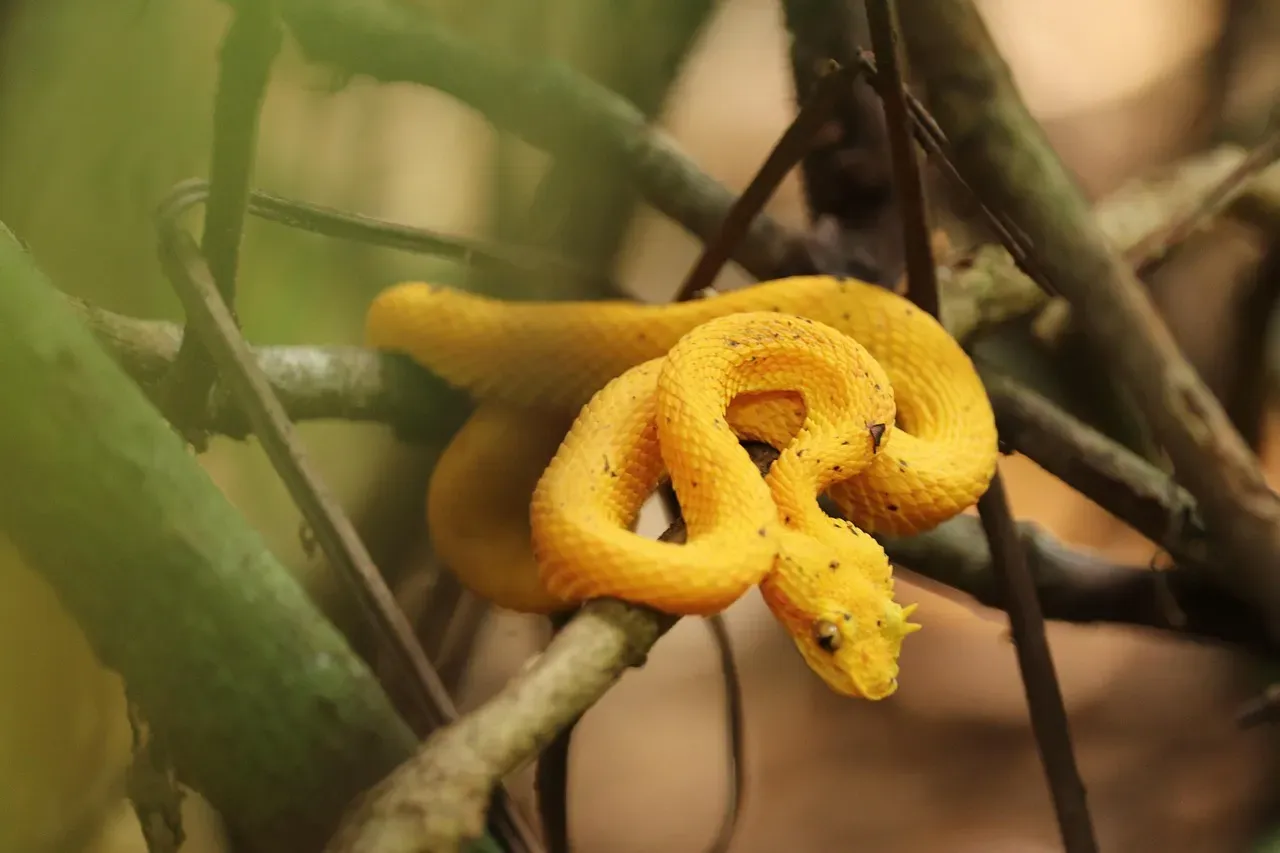
Many snake species, such as pit vipers, have developed a fascinating method of detecting prey through thermal vision. They possess heat-sensing pit organs located between their eyes and nostrils, which detect infrared radiation from warm-blooded animals. This adaptation allows them to effectively “see” the body heat of their prey, which is especially useful in the dark, and they use this sensory adaptation to hunt and strike with deadly accuracy. You would need an expensive, bulky infrared camera to replicate what a pit viper does naturally, effortlessly, and with terrifying precision.
The pit organs contain thousands of temperature-sensitive receptors that can detect temperature differences as small as 0.003°C and can create a thermal image that overlays with their visual perception. This sensory system is so sophisticated that pit vipers can strike with precision at warm targets in complete darkness, and the neural pathways from these pit organs connect to the same brain regions that process visual information, creating an integrated thermal-visual representation of the world. It’s essentially a weapon fused with a sensory organ. Evolution does not mess around.
The Star-Nosed Mole’s Extraordinary Touch
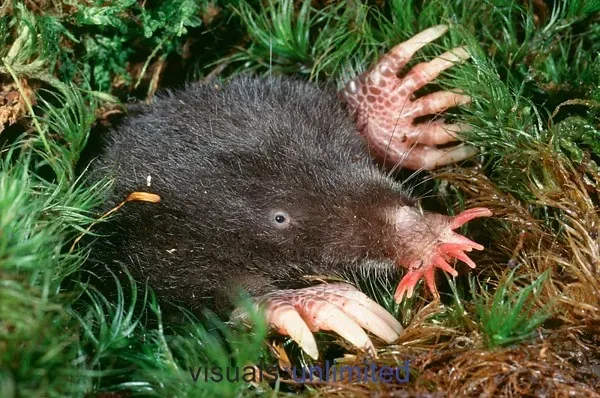
If you have ever seen a photo of a star-nosed mole, your first reaction was probably alarm. Those 22 fleshy, pink tentacles surrounding its nose look bizarre, almost alien. These tentacle-like structures are covered with over 25,000 sensory receptors known as Eimer’s organs, allowing the mole to detect and interpret even the faintest of tactile signals. This hyper-sensitive nose enables the star-nosed mole to identify and devour its prey in under a quarter of a second, making it one of the fastest foragers known.
The star-nosed mole has over 100,000 nerve endings in its snout, compared to your 2,500 touch receptors per square centimeter of fingertip, allowing it to detect and identify prey in milliseconds. Their exquisite noses have six times as many sensory receptors as human hands. To put that in perspective, your fingertips are considered among the most touch-sensitive surfaces in the natural world – yet the star-nosed mole leaves them utterly in the dust. It essentially experiences the world through a supercomputer built entirely out of touch.
Catfish: Tasting the Entire World Around Them
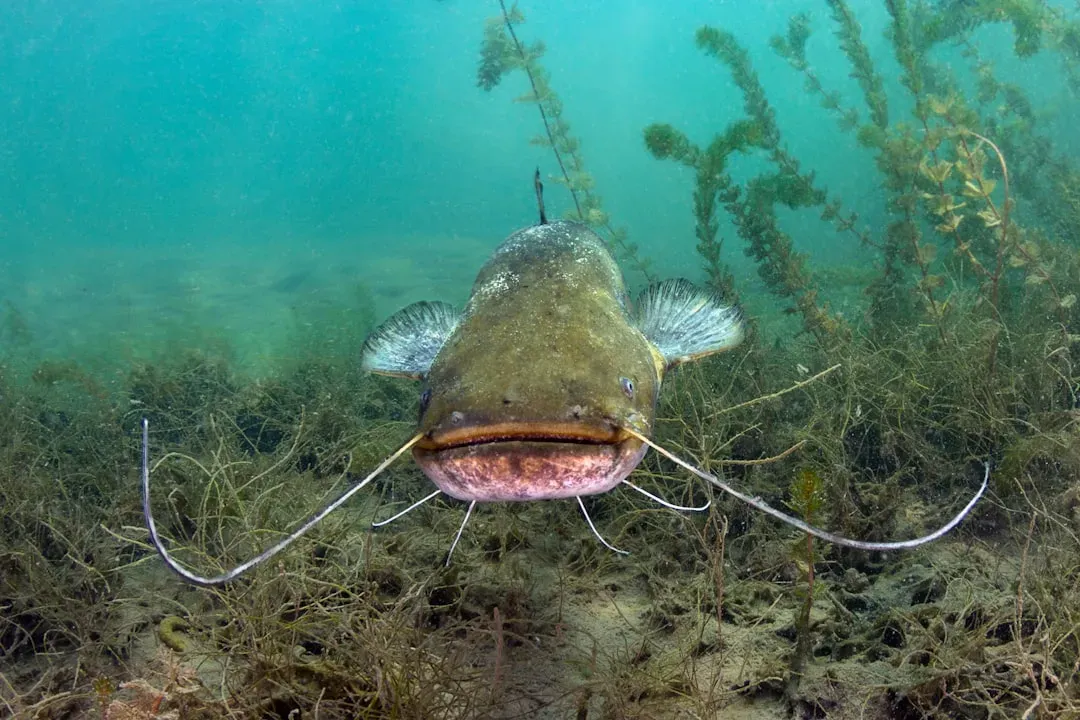
Your taste buds are confined to your tongue, and you have somewhere around eight thousand of them. That seems reasonable, right? Well, meet the catfish. Catfish have evolved a remarkable method of taste detection by having taste buds not just in their mouths, but all over their bodies. This adaptation enables them to taste their surroundings and find food in the murky waters where they often reside, and with around 100,000 taste buds covering their skin, the catfish’s body is an extraordinary sensory organ.
Catfish don’t just have taste buds in their mouths – their entire bodies are covered with them, totaling up to 175,000 compared to your 8,000, letting them essentially “taste” their environment in three dimensions. Imagine walking through a grocery store and being able to taste everything on every shelf simply by brushing past it with your arm. Catfish have devised bodies covered in taste receptors so they can tell when a tasty meal is close by, a sense that is crucial for survival in the murky waters they call home. For a catfish, skin is not just an outer covering – it is a full sensory map of everything nearby.
Bees and the Ultraviolet Flower World You Cannot See
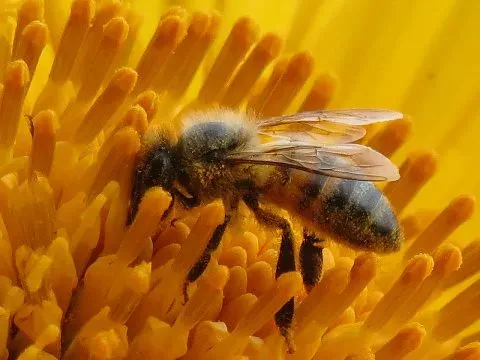
Bees have compound eyes with thousands of tiny lenses that let them see ultraviolet light, helping them locate flowers by detecting patterns invisible to the human eye. Additionally, their acute sense of smell allows them to find food and communicate with other bees through pheromones. To you, a white flower is just a white flower. To a bee, that same flower is ablaze with ultraviolet runway lights pointing directly to the nectar – a visual language that has been there all along, completely hidden from your eyes.
Bees can process ultraviolet light to make the flowers they target more vivid and ensure the pollen stands out. While you need sunglasses to block glare, some animals’ photoreceptors evolved over time to do this naturally, providing them with an extra dimension of vision. Polarized light waves have vibrations that occur in a single plane, traveling vertically and horizontally, and this light is reflected in water, leaves, glass, and other shiny surfaces – giving bees an advantage in navigation and detecting camouflage. The hidden world of ultraviolet patterns exists on every flower in every garden, and you have never once been able to witness it. That’s both humbling and, honestly, a little bit amazing.
Conclusion: The Sensory Universe You Never Knew Existed

Here is the honest truth: the reality you experience each day is only a sliver of what is actually out there. Your senses are limited to what you can see, smell, hear, taste, and feel, and by the capacity of information they provide. Some animals have different perceptions entirely, and tend to have certain senses at far higher intensity and sensitivity than anything you could achieve on your own. You are not experiencing the world – you are experiencing one narrow, filtered version of it.
Animals evolve sensory abilities to best suit their environment and ecological niche, and the sensory systems that develop are those that provide the greatest advantage in survival and reproduction. Every extraordinary ability covered here is not a trick or an accident – it is millions of years of evolution honing a solution to a survival problem. The shark did not choose to detect electricity for fun. The bat did not develop echolocation because it sounded cool. These are life-or-death tools, shaped by time and pressure.
What makes all of this genuinely exciting is the possibility that the natural world still holds sensory secrets we have not even begun to understand. Understanding animal senses can provide inspiration for new technologies, such as sensors and navigation systems, and it deepens our appreciation of the natural world and the diversity of life. The next time an animal behaves in a way that confuses you, consider this: it may simply be perceiving something that you are completely blind, deaf, and numb to. What do you think you might be missing right now, in this very moment? Tell us in the comments.