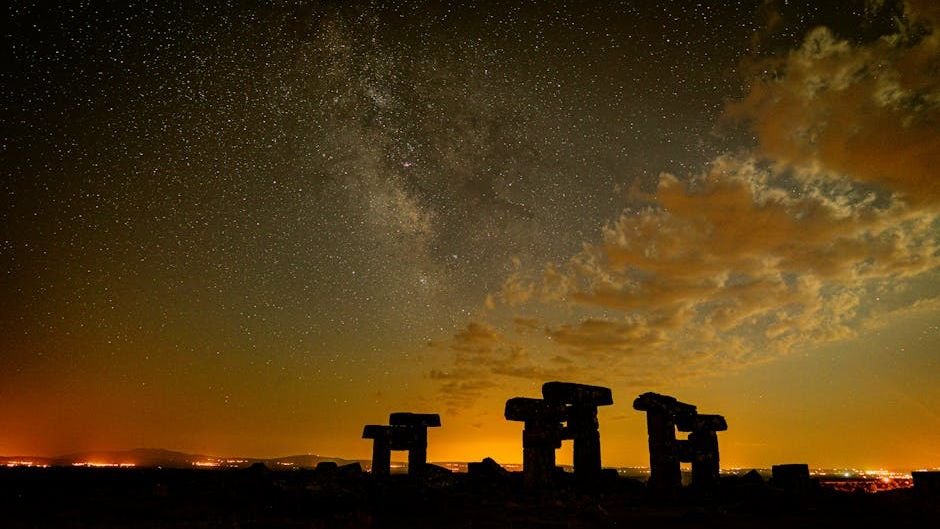

There is something quietly unsettling about standing in front of a structure built thousands of years ago, knowing that its builders aligned it to within fractions of a degree of true north, using nothing more than the naked eye, carved sticks, and decades of patient sky-watching. No computers. No GPS. No modern surveying equipment. Just humans, stone, and an extraordinary understanding of the cosmos above them.
The deeper you look into the world’s most iconic ancient monuments, the harder it becomes to dismiss the idea that our ancestors possessed a level of astronomical sophistication we rarely give them credit for. From the highlands of Peru to the desert plains of Egypt and the jungle temples of Cambodia, the evidence is encoded in stone. Let’s dive in.
Stonehenge: England’s Cosmic Clock on the Salisbury Plain
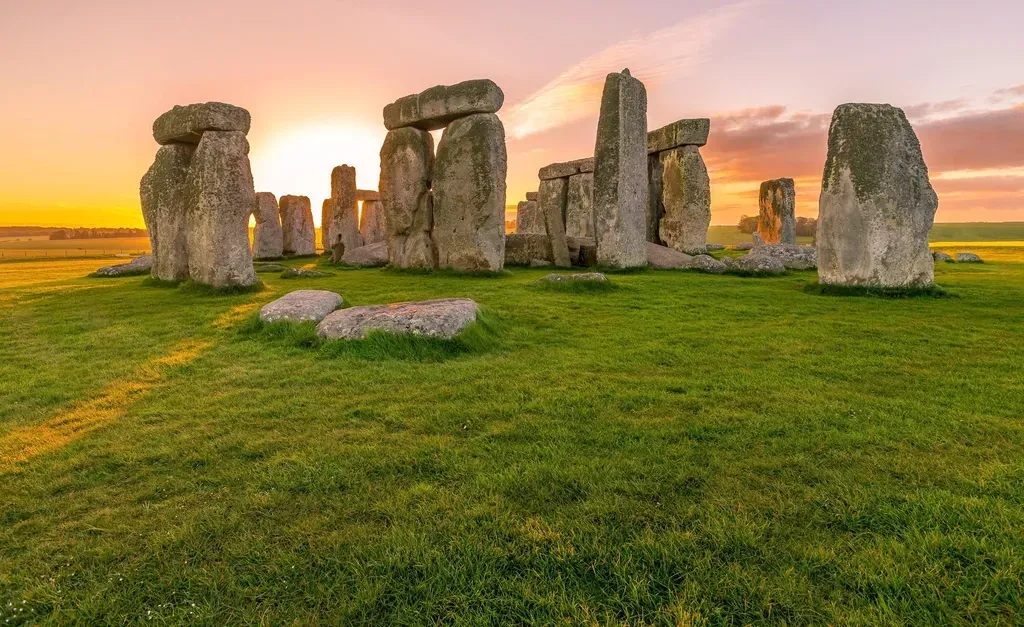
You’ve probably seen the images. Massive stones arranged in a circle on a windswept plain in England, drawing thousands of visitors every summer solstice. But here’s the thing most people miss: Stonehenge is not just dramatic scenery. Stonehenge aligns precisely with the summer solstice sunrise and winter solstice sunset. This is not folklore. It is measurable astronomy. That distinction matters enormously.
The stones have been arranged in a circle since around 3000 BC, marking the Sun’s effect on the generation of our planet’s seasons. When the Sun rises directly above the Heel Stone at the entrance of the monument, it marks the beginning of the summer solstice. What is truly stunning is that we had to wait until the 1960s before any serious study of celestial alignment was undertaken at Stonehenge, which we now know can be used to predict eclipses. Centuries of clues, sitting right there in plain sight, waiting to be noticed.
The Great Pyramid of Giza: Precision That Defies Easy Explanation
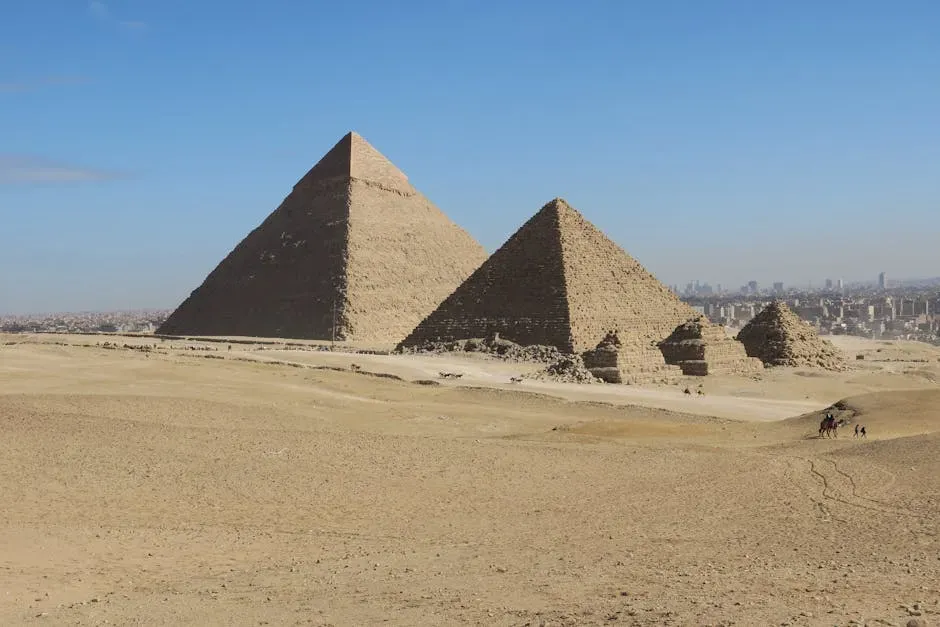
Honestly, the numbers around the Great Pyramid of Giza are the kind that stop you mid-sentence. The orientation of the Great Pyramid of Giza is closely aligned with the cardinal points, with an astonishing precision of less than 0.1 degrees. This suggests the builders possessed advanced knowledge of celestial phenomena. Think about that for a moment. Even with modern GPS and laser-leveling tools, matching that kind of accuracy would be considered impressive work.
Astronomical calculations show that the orientation and position of the Khufu, Khafre, and Menkaure pyramids align together in exactly the same way that the Alnitak, Alnilam, and Mintaka stars align in Orion’s belt. Researchers believe this was no accident. Researchers believe that the ancient engineers aligned the pyramids to the constellation Orion and the star Sirius, as they are circumpolar stars, never rising nor setting, and are therefore visible every night as a useful guide. This may also have religious implications relating to immortality, perhaps adding to the desire to align the Pharaoh’s tombs with such a symbolic constellation.
Chichen Itza: A Pyramid That Doubles as a Living Calendar
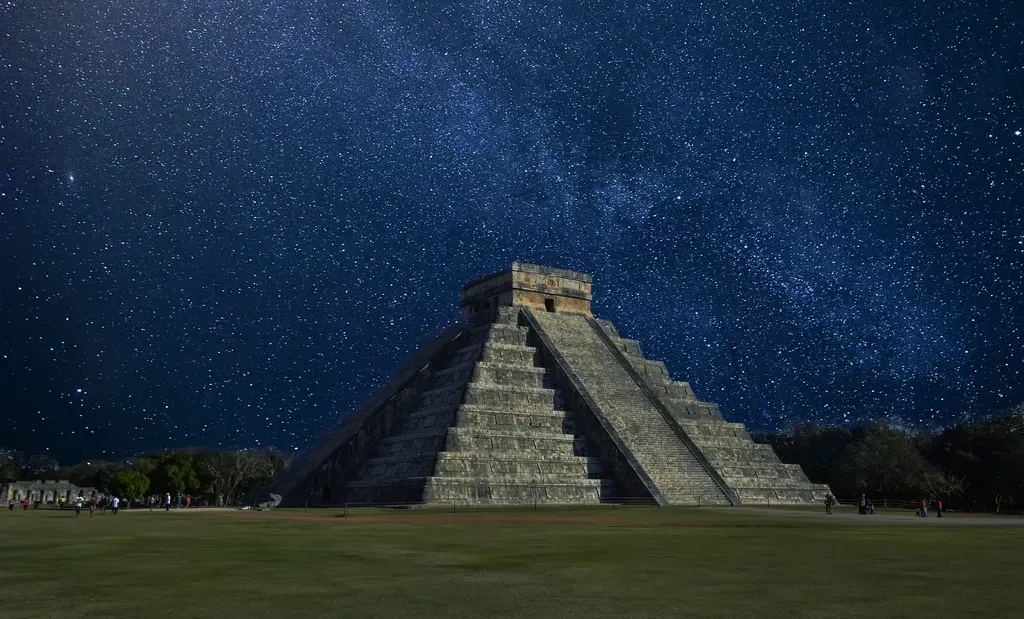
If you ever wanted proof that ancient builders thought in years and not just in stones, Chichen Itza makes the argument for you. During equinoxes, shadows form a zig-zag pattern on the stairs to resemble a giant snake. The pyramid itself serves as a giant calendar with ninety-one steps on its four stairways, plus the top platform amounting to the 365 days of the year. It is a monument definitely exhibiting superior knowledge of astronomy.
During the spring and autumn equinoxes, the setting sun casts a shadow on the northern staircase of El Castillo, creating the illusion of a serpent descending the pyramid. This phenomenon is believed to represent the feathered serpent god Kukulkan, symbolizing the connection between the heavens and the earth. This was not a happy coincidence. In the Americas, the Mayan temples were aligned with equinox and solstice events, showcasing their advanced knowledge of solar cycles. The alignment had to be engineered, tested, and refined over generations.
Chaco Canyon: The Americas’ Most Sophisticated Astronomical Clock
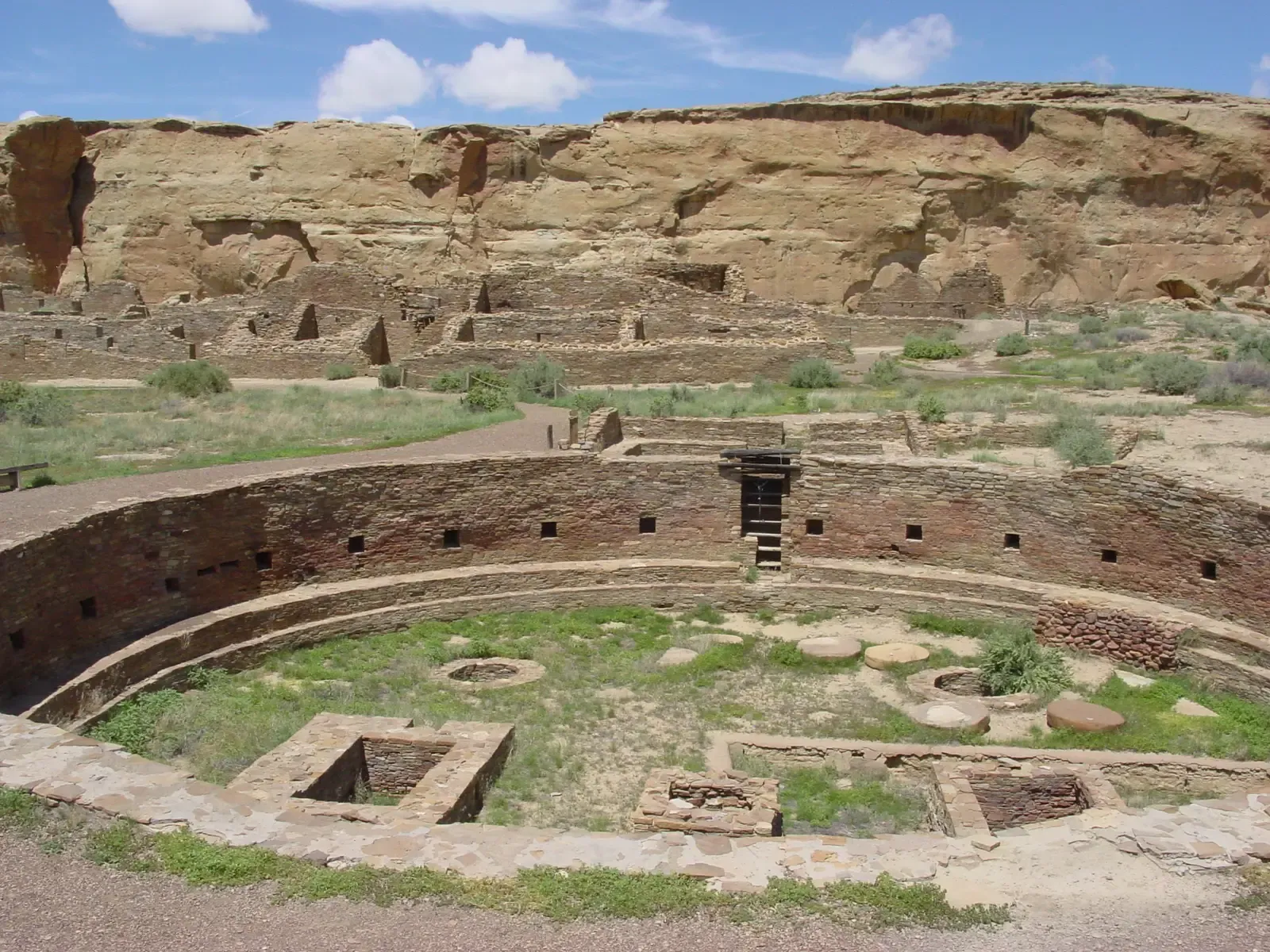
Let’s be real, Chaco Canyon in New Mexico doesn’t get nearly enough attention in the popular imagination. Chaco Canyon, a sprawling ancient marvel in northwest New Mexico, stands as a testament to the extraordinary astronomical precision of its builders. Built by the Chacoan people, who constructed a vast network of buildings believed to have been built between 850 and 1150 AD, this complex is likely the largest and most sophisticated astronomical clock in the world.
Evidence of archaeoastronomy at Chaco has been proposed, with the “Sun Dagger” petroglyph at Fajada Butte a popular example. Many Chacoan buildings may have been aligned to capture the solar and lunar cycles, requiring generations of astronomical observations and centuries of skillfully coordinated construction. What is perhaps most remarkable is that to this day, the Chacoan people are the only culture to align their monuments to the moon’s cycle at such a grand scale. These alignments required decades of observation. The builders’ ability to mark such rare events shows intricate dedication to track the heavens.
Machu Picchu: Where the Inca Wrote Their Science in Stone
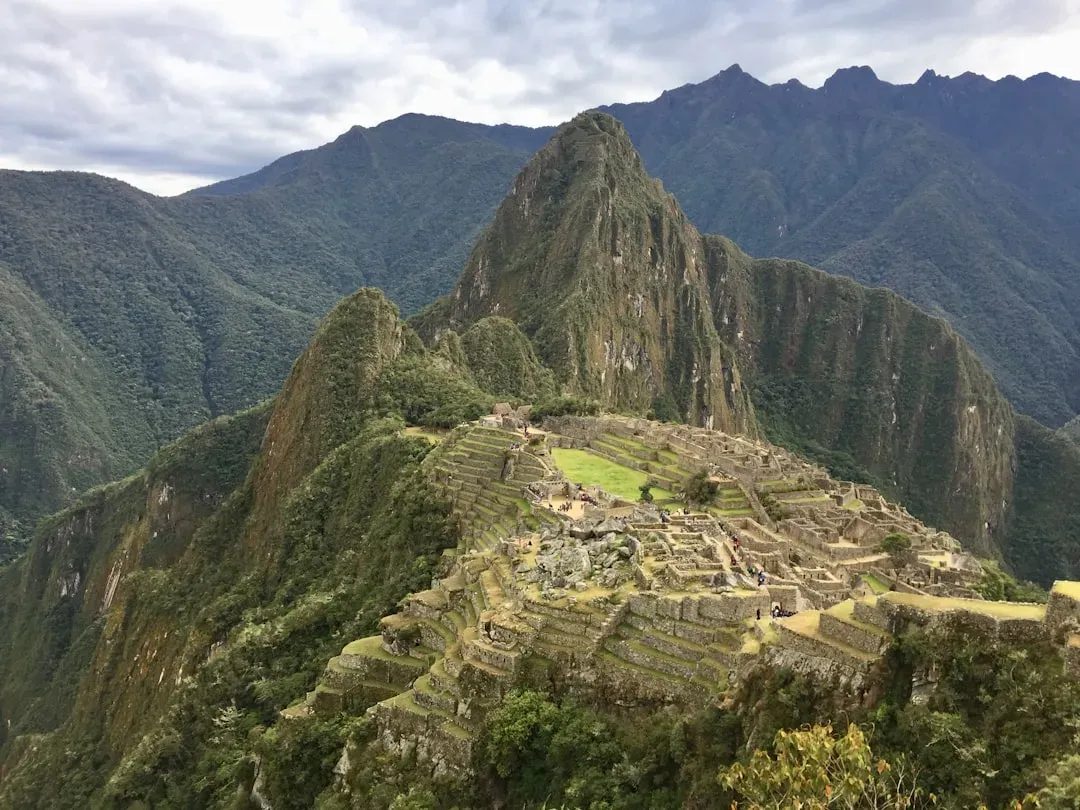
Perched high in the Peruvian Andes, Machu Picchu is one of those places that looks impossible no matter how many times you see it. Machu Picchu, the 15th-century Inca citadel, is known not only for its stunning architecture but also for its sophisticated astronomical alignments. Recent studies have confirmed that the site includes precise alignments with celestial bodies. These discoveries have been bolstered by the use of advanced technologies such as laser scanning and lidar. The Incas’ astronomical knowledge allowed them to create structures that aligned with solstices and equinoxes.
The Intihuatana stone is a remarkable centerpiece of this cosmic design. The Intihuatana stone is a remarkable tool in Machu Picchu’s sacred landscape. The stone’s design shows the Inca’s advanced astronomy. Every angle and surface was made to track the sky’s changes. This made it a living scientific tool. The Inca, it turns out, were not simply building a mountaintop retreat. They were encoding the movements of the entire sky into the very walls of their civilization.
Angkor Wat: The Khmer Empire’s Celestial Blueprint

The sheer scale of Angkor Wat in Cambodia is hard to comprehend even when you’re standing in it. But its size is arguably less impressive than its precision. This complex cosmology is precisely aligned based on the cycles of the sun, moon and stars as observed by the ancient Khmer astronomers. As a result, Angkor Wat works as a giant astronomical observatory encoded in stone.
On the days of the equinox, the sun rises directly over the horizon, perfectly framing the tower from the viewpoint of the western entrance. For this alignment to work, the ancient Khmer builders had to carefully plan and orient each component of the temple complex with precision. The alignments reflect their remarkable astronomical capabilities. Research also suggests that the measurements of the temple appear proportional to calendric and cosmological time cycles. In the central tower, the topmost elevation has external axial dimensions with the sum of 365.37, which is almost exactly the length of the solar year. That is extraordinary, whichever way you look at it.
Nabta Playa and Egypt’s Forgotten Star Circles
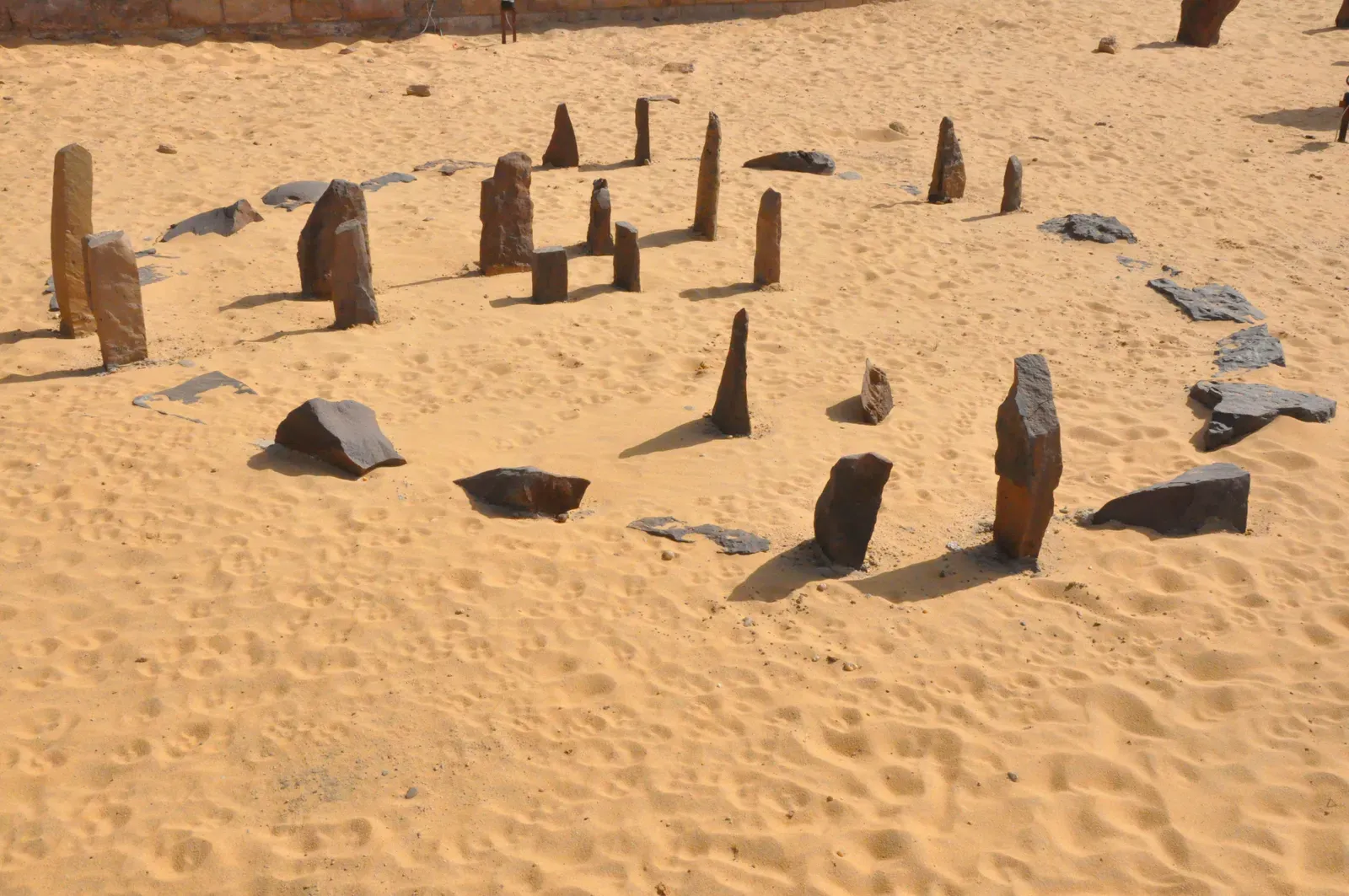
Most people have heard of the pyramids. Far fewer know about Nabta Playa, a site in southern Egypt that may tell an even older story. Nabta Playa is an archaeological site in southern Egypt, containing what may be among the world’s earliest known archaeoastronomical devices from the 5th millennium BC. These include alignments of stones that may have indicated the rising of certain stars and a “calendar circle” that indicates the approximate direction of summer solstice sunrise.
I think what makes Nabta Playa so quietly stunning is that it forces us to push our timeline backward. The alignment of ancient structures with the stars, the Sun, and the Moon reveals knowledge of the cosmos that predates modern astronomy by many centuries. Ancient civilizations relied on the Sun, Moon, and stars to develop celestial calendars that regulated agriculture, religious ceremonies, and daily life. In the Egyptian desert, thousands of years before any pharaoh raised the first pyramid, people were already reading the sky with sophisticated precision.
The Temples of Malta: Astronomy Built Into Sacred Stone
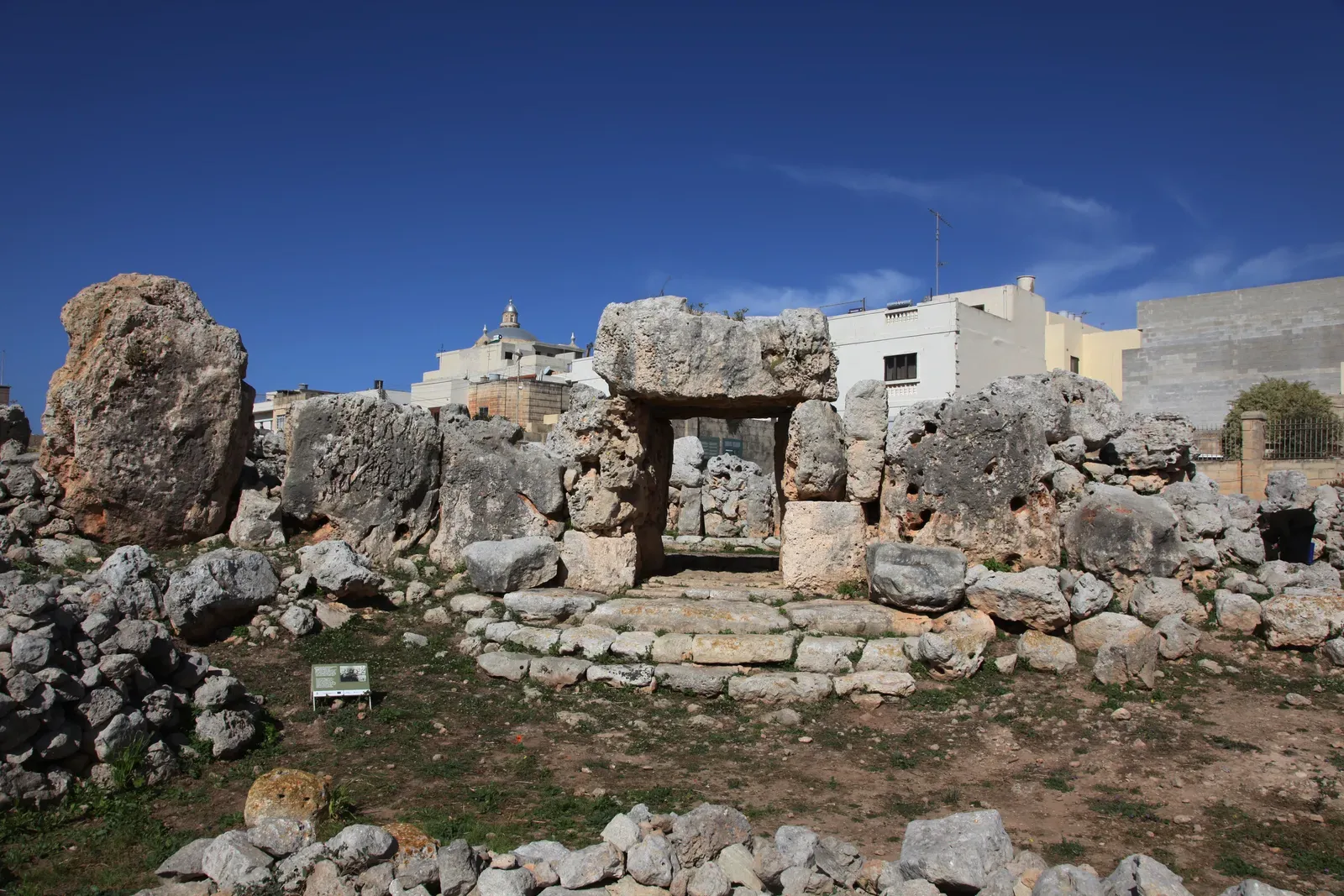
The tiny island of Malta in the Mediterranean is home to some of the world’s oldest freestanding stone structures, and they are astronomically remarkable. Many of these structures are oriented to align with the solstices and equinoxes. At Mnajdra, the temple entrances are positioned to capture the light of the rising sun during specific astronomical events. One notable feature at the Ħaġar Qim complex is the alignment of the main doorway with the sunrise on the summer solstice. Light penetrates the interior and illuminates a particular stone slab, indicating the builders’ sophisticated knowledge of solar patterns.
These alignments reflect how the ancient Maltese integrated astronomy with their spiritual and daily lives. They showcased their advanced understanding of the solar cycles, which played a pivotal role in their architectural design. It’s hard to say for sure what rituals took place inside these ancient chambers, but the deliberate engineering of light into specific points at specific astronomical moments is not something that happens by accident. It takes knowledge, and it takes patience, and it takes generations of careful watching.
What the Technology of Today Reveals About Yesterday
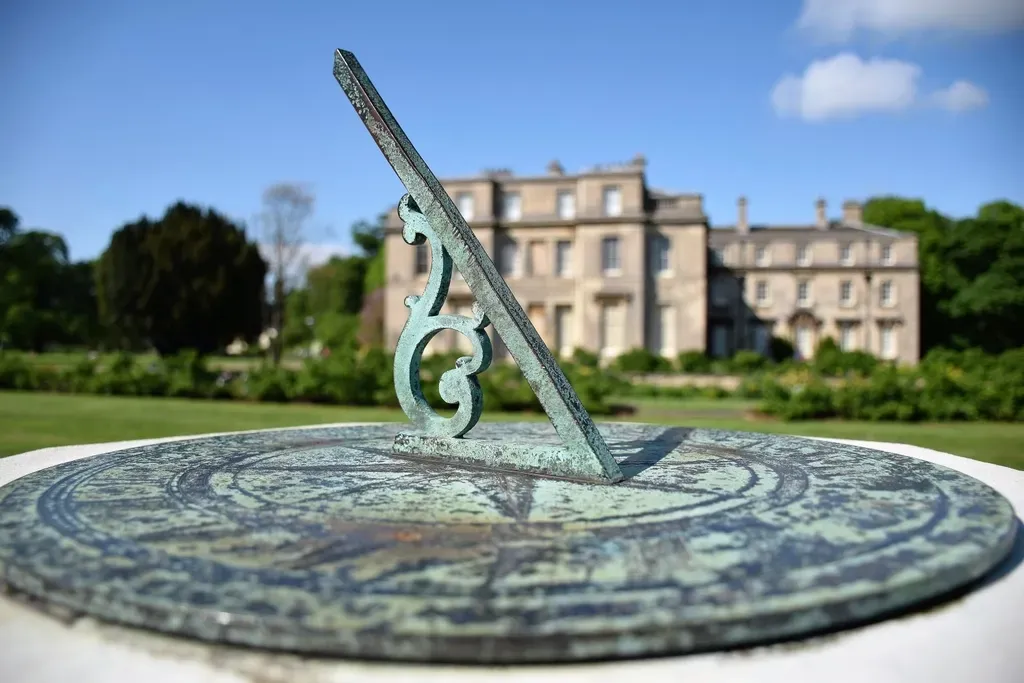
Here is where things get genuinely exciting for researchers in 2026. The tools available to modern archaeoastronomers have transformed what we can learn from ancient sites. Advances in satellite imaging, drone technology, and computational modeling allow researchers to construct celestial alignments of ancient sites with precision, revealing insights into how early civilizations observed and interpreted the night sky. This renewed focus has led to discoveries of previously unnoticed alignments in ancient structures, shedding light on their astronomical significance.
Over the past few decades, the tide has slowly begun to turn, as irrefutable evidence reveals that sophisticated astronomy, mathematics, and other higher sciences were indeed incorporated into many ancient structures. Newer discoveries keep arriving. The Chankillo Archaeoastronomical Complex received UNESCO World Heritage status in 2021, recognizing its significance as the oldest complete solar horizon calendar in the Americas. This remarkable find challenges our understanding of when sophisticated astronomical knowledge first emerged in pre-Hispanic Peru and demonstrates that ancient Andean civilizations possessed complex sky-watching capabilities far earlier than previously believed. Every new excavation seems to rewrite the timeline just a little further back.
Conclusion: The Sky Was Always the Map
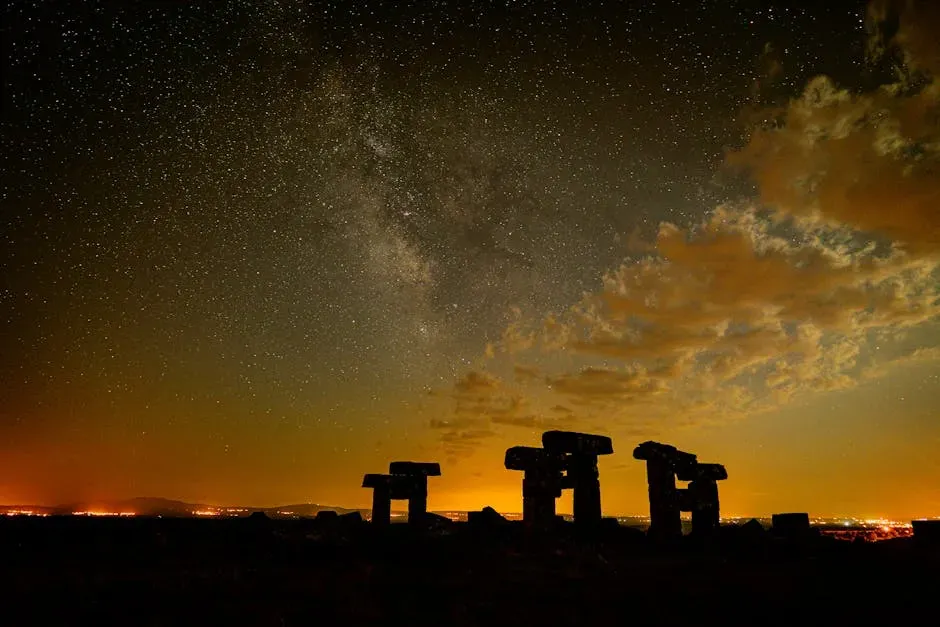
What emerges from all of this is a picture that is both humbling and thrilling. From the frozen plains of northern Europe to the arid valleys of Mesoamerica, great stone structures point to celestial events with suspicious accuracy. Civilizations with no known contact with each other somehow reached similar conclusions: the sky held meaning, and the monuments they built would reflect their understanding of its meanings.
There is something profound in that parallel. Across oceans and mountain ranges, across cultures that never once met or traded ideas, human beings looked up and decided that what they saw deserved to be carved into the very foundations of their world. The legacy of archaeoastronomy reminds us that the stars have been more than just distant lights – they were guides, calendars, deities, and storytellers. The careful alignment of ancient structures with celestial events speaks to a universal human desire to find meaning and order in the cosmos.
The stone circle, the stepped pyramid, the spiral petroglyph lit by a dagger of light at noon on the summer solstice, all of them are different chapters of the same story. Humanity looked up long before it looked inward. Perhaps the real question isn’t how ancient peoples knew so much. Perhaps the real question is how long we went without noticing that they did. What do you think – does this change the way you see the ancient world? Share your thoughts in the comments.