

Somewhere between the world you can touch and the reality you cannot see, there exists a universe so strange that even the scientists who study it admit they do not fully understand it. You probably go through your day believing that things exist in one place at a time, that empty space is actually empty, and that a cat is either alive or dead. Quantum physics is here to tell you that you are magnificently, gloriously wrong.
This is not science fiction. These are the verified, tested, Nobel Prize-winning rules of the universe at its smallest and most fundamental level. Let’s dive in.
1. You Can Be in Two Places at Once – Seriously
Here is the thing that tends to make people’s heads explode first. Quantum particles can exist in multiple states or positions simultaneously – a phenomenon known as superposition – where particles seem to be in multiple places at once until they are observed. Think of it like a coin spinning in the air. Before it lands, it is neither heads nor tails. It is both.
This makes quantum physics all about probabilities. You can only say which state an object is most likely to be in once you look. These odds are captured in a mathematical entity called the wave function. Making an observation is said to collapse the wave function, destroying the superposition and forcing the object into just one of its many possible states. Honestly, it sounds like the universe is cheating.
2. Quantum Entanglement: The Universe’s Spookiest Connection
Quantum entanglement describes a strange and powerful connection between quantum objects that remains intact even across vast distances. When two particles such as photons or electrons are entangled, their states are linked in such a way that the state of one instantly determines the state of the other, no matter how far apart they are. We are not talking about a few miles here. We are talking galaxies apart.
Quantum entanglement has been demonstrated experimentally with photons, electrons, top quarks, molecules, and even small diamonds. Einstein famously hated this idea and called it “spooky action at a distance,” spending years trying to disprove it. He was wrong. The universe really does connect particles across impossible distances, and right now, in 2026, experiments continue to confirm it.
3. Observing Something Changes It Forever
This one is deeply unsettling. The simple act of you watching a quantum particle forces it to pick a definite state. The mathematical equations that describe quantum waves do not explain what happens when you measure them. Physicists do not yet agree on how best to describe or interpret this process. Quantum measurement is the one thing that sets quantum behavior apart from water waves, making quantum physics truly strange.
Imagine this as a practical example: imagine someone speaking to a crowd of people. Sound waves spread out across the crowd, and everyone hears the speech. In the quantum world, however, the sound wave would spread out just as expected, but as soon as a single person in the crowd perceived it, the entire sound wave would concentrate itself in that person’s ear, and no one else would hear it. That is how profoundly observation warps reality at the quantum level.
4. The Heisenberg Uncertainty Principle: Nature Has Secrets It Will Never Tell You
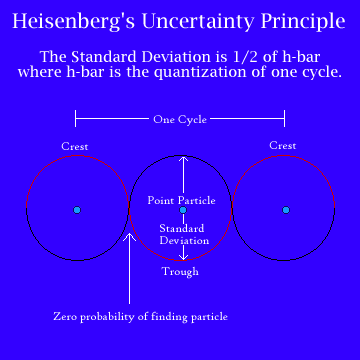
The Heisenberg Uncertainty Principle, proposed by German physicist Werner Heisenberg in 1927, states that certain pairs of physical properties – like a particle’s position and its momentum – cannot both be precisely known at the same time. The more accurately you know a particle’s position, the less accurately you can know its momentum, and vice versa. This is not a flaw in our instruments. It is baked into the fabric of reality itself.
This trade-off between position and momentum is not due to imperfections in our measuring tools but is an intrinsic property of quantum systems. No matter how precise our measuring devices and methods become, no matter how clever our scientists, nature has imposed a limit on what we can know. I think that is simultaneously humbling and absolutely fascinating. The universe keeps its secrets, permanently.
5. Wave-Particle Duality: Electrons That Cannot Make Up Their Minds
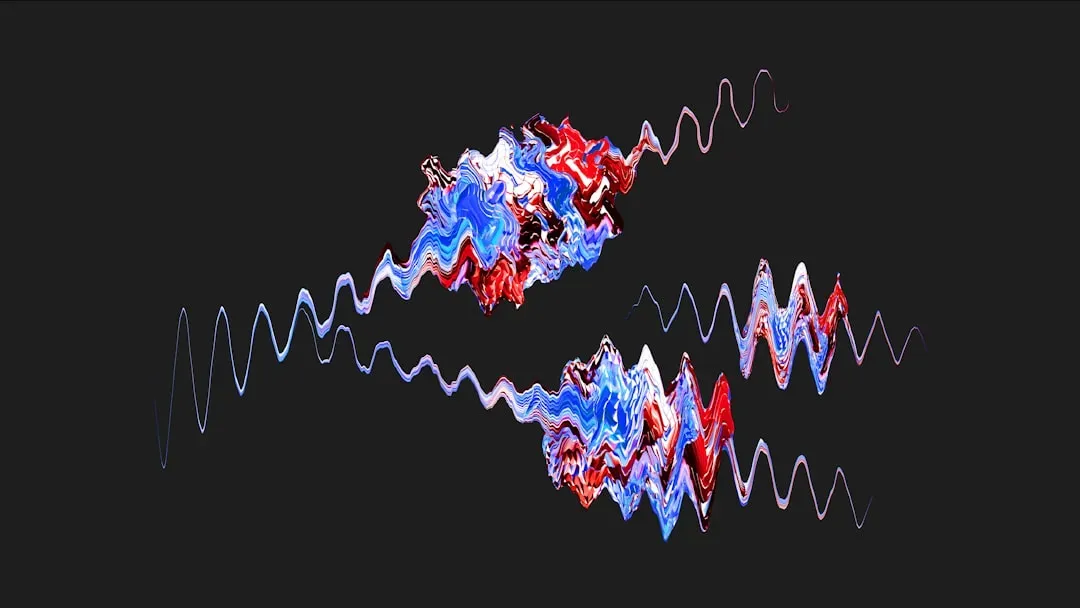
Here is one of the most delicious contradictions in all of science. In 1906, J. J. Thomson won the Nobel Prize for showing that electrons are particles. In 1937, his son George won the same prize for showing that electrons are waves. Both were right – the phenomenon is now termed wave-particle duality and is a cornerstone in quantum physics. A father and son, winning the same Nobel Prize, for seemingly opposite discoveries. You could not make this up.
In quantum physics, particles like electrons and photons exhibit both wave-like and particle-like properties. They can behave as discrete particles or as waves, depending on how they are observed. This dual nature challenges our intuitive understanding of matter. It is like asking whether a shadow is dark or the absence of light. The answer is: it depends entirely on how you are looking at it.
6. Quantum Tunneling: Particles That Walk Through Walls
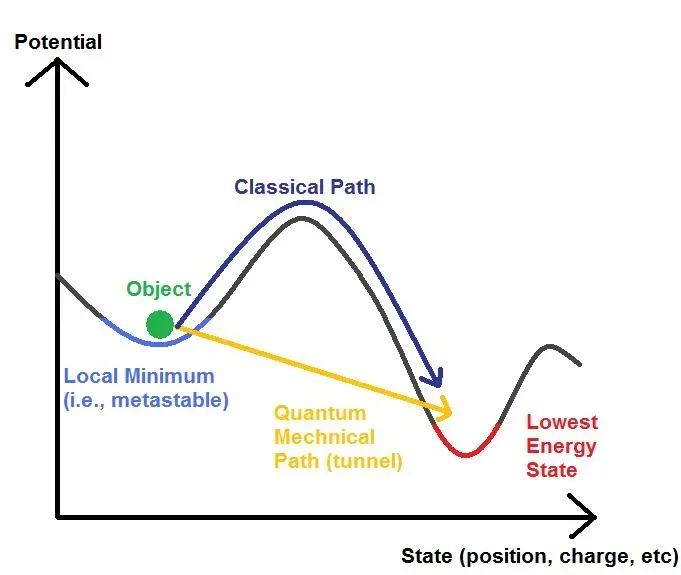
The quantum tunneling effect is a quantum phenomenon that occurs when particles move through a barrier that, according to the theories of classical physics, should be impossible to pass through. The barrier may be a physically impassable medium, such as an insulator or a vacuum, or a region of high potential energy. Yes, you read that correctly. Particles ghost through solid walls.
The real-world consequences of this are staggering. Tunneling allows protons in the core of the sun to overcome mutual repulsion caused by their positive charges – a potential barrier that they do not have the kinetic energy to overcome. This allows the formation of Deuterium, and begins the nuclear fusion process in the star’s core, which leads to the formation of helium from hydrogen. In other words, without quantum tunneling, the sun would not shine. Your morning cup of coffee exists because of quantum weirdness.
7. Empty Space Is Not Empty at All

Let’s be real – most of us picture the vacuum of space as pure, silent nothingness. Quantum physics has news for you. The meaning of Heisenberg’s uncertainty principle is that “something” can arise from “nothing” if the “something” returns to the “nothing” after a very short time. These micro-violations of energy conservation are not only allowed to happen, they do – and so “empty” space is seething with particle-antiparticle pairs that come into existence and then annihilate each other again after a very short interval.
It is also believed that empty space is the source of the Casimir effect – a strange force that can cause two metal plates to attract each other without any physical contact. When two metal plates are placed very close together, the vacuum fluctuations of the quantum vacuum cause the plates to attract each other. Scientists have actually measured this force in laboratories. The universe is constantly buzzing with invisible, ghostly activity, right now, everywhere, all at once.
8. Schrödinger’s Cat and the Problem of Reality

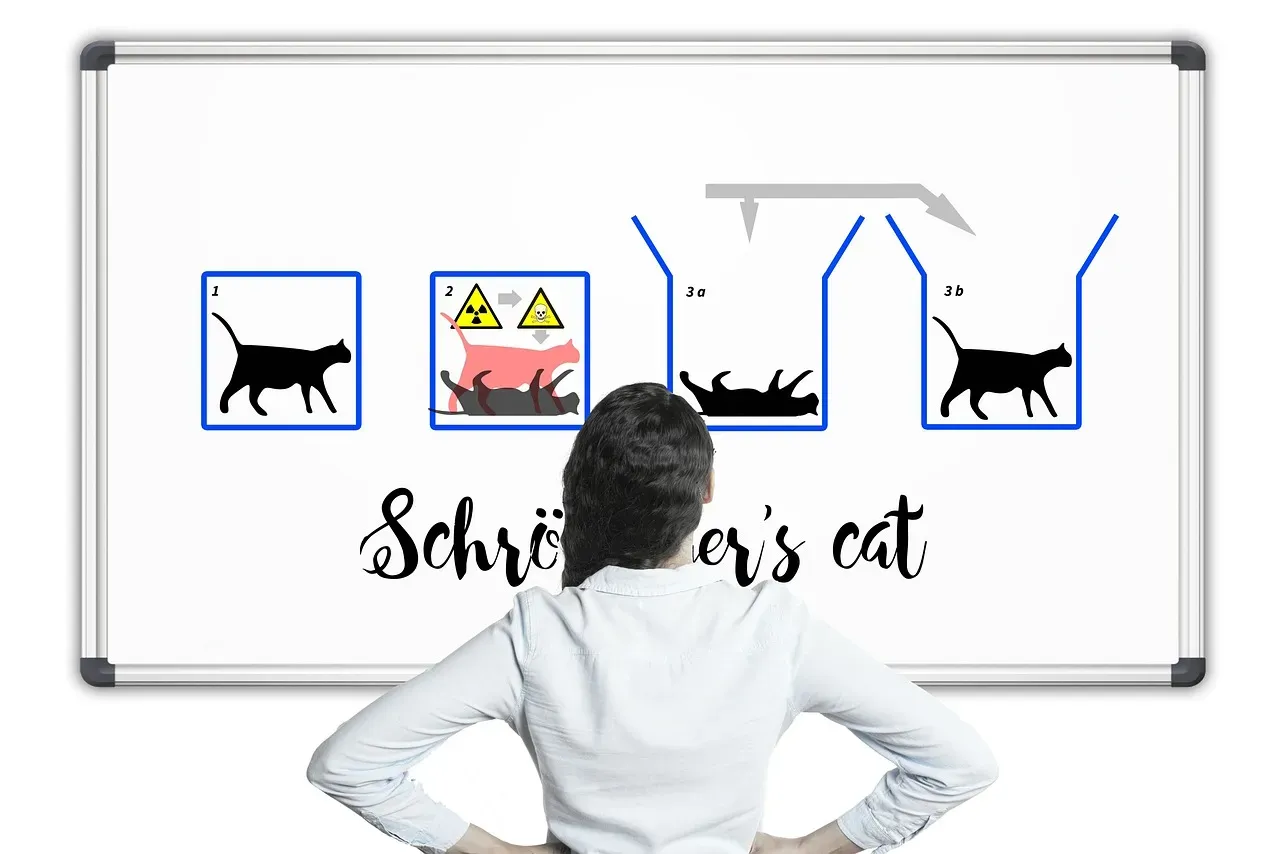
No discussion of quantum physics is complete without the world’s most famous hypothetical feline. A cat in a sealed box has its fate linked to a quantum device. As the device exists in both states until a measurement is made, the cat is simultaneously alive and dead until you look. This thought experiment was actually invented by physicist Erwin Schrödinger as a way to show how absurd quantum rules seem when applied to the everyday world.
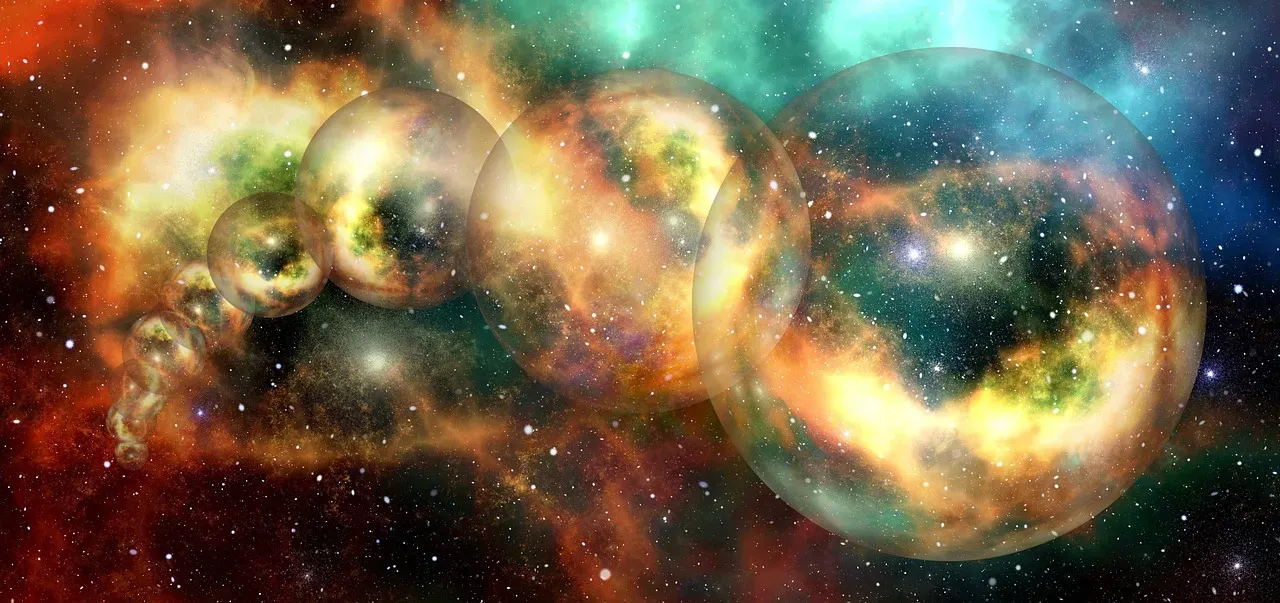
According to the Copenhagen interpretation of quantum physics, observing something forces reality to make a quantum choice and collapse the wave function. On the other hand, the many worlds interpretation suggests that at the moment of measurement, reality splits into two versions, and both outcomes occur in different versions of the universe. So either the cat is alive or dead once you look, or there are two universes – one with a living cat and one without. Neither explanation is exactly comfortable.
9. The Universe Might Not Be Locally Real
In 2022, the Nobel Prize in Physics was awarded for research that delivered one of the most jaw-dropping verdicts in the history of science. Every object having definite properties regardless of how it is observed – no amount of squinting will change an apple from red to green – turns out not to always apply to the quantum realm. Careful, repeated experimentation with entangled particles has conclusively shown such seemingly sensible restrictions do not always apply at the most fundamental level of reality we can measure.
This established that the correlations produced from quantum entanglement cannot be explained in terms of local hidden variables – that is, properties contained within the individual particles themselves. Entanglement can produce statistical correlations between events in widely separated places, but it cannot be used for faster-than-light communication. Your gut feeling that objects have fixed, definite properties when you are not looking at them? Quantum physics says that feeling is wrong.
10. Energy Is Quantized – It Only Comes in Packages

Before quantum physics arrived on the scene, scientists assumed energy flowed like water – smooth, continuous, infinitely divisible. Albert Einstein won a Nobel Prize for proving that energy is quantized. Just as you can only buy shoes in multiples of half a size, so energy only comes in multiples of the same “quanta” – hence the name quantum physics. It is one of the most foundational and often overlooked facts about the universe.
Danish physicist Niels Bohr showed that the orbits of electrons inside atoms are also quantized. They come in predetermined sizes called energy levels. When an electron drops from a higher energy level to a lower energy level, it spits out a photon with an energy equal to the size of the gap. Equally, an electron can absorb a particle of light and use its energy to leap up to a higher energy level. This is why atoms produce light at specific colors. Every color in a fireworks display is a quantum event happening before your eyes.
11. Quantum Physics Powers the Technology in Your Pocket Right Now
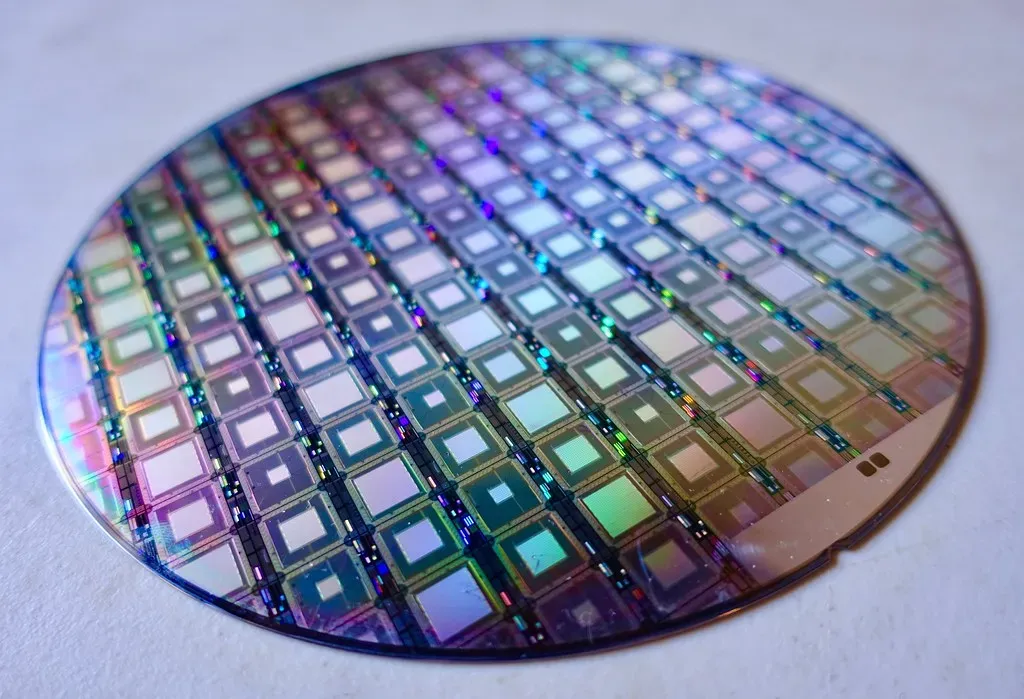
Here is something most people genuinely do not realize. Solar panels, LED lights, your mobile phone, and MRI scanners in hospitals – all of these rely on quantum behavior. It is one of the best-tested theories of physics, and we use it all the time. The phone you are possibly reading this on would simply not function without quantum mechanics. It is not just a theoretical curiosity locked inside university labs.
In quantum computing, superposition enables the parallel processing and transmission of large amounts of information. Since quantum bits, known as qubits, can exist in multiple states at once, quantum computers can process vast amounts of information in parallel. This capability boosts performance dramatically, allowing machines to run complex algorithms far more efficiently than traditional computers. The quantum computing revolution is not coming. It is already here, accelerating every year, and it will reshape medicine, security, and science within our lifetimes.
12. Quantum Biology: Life Itself May Run on Quantum Rules
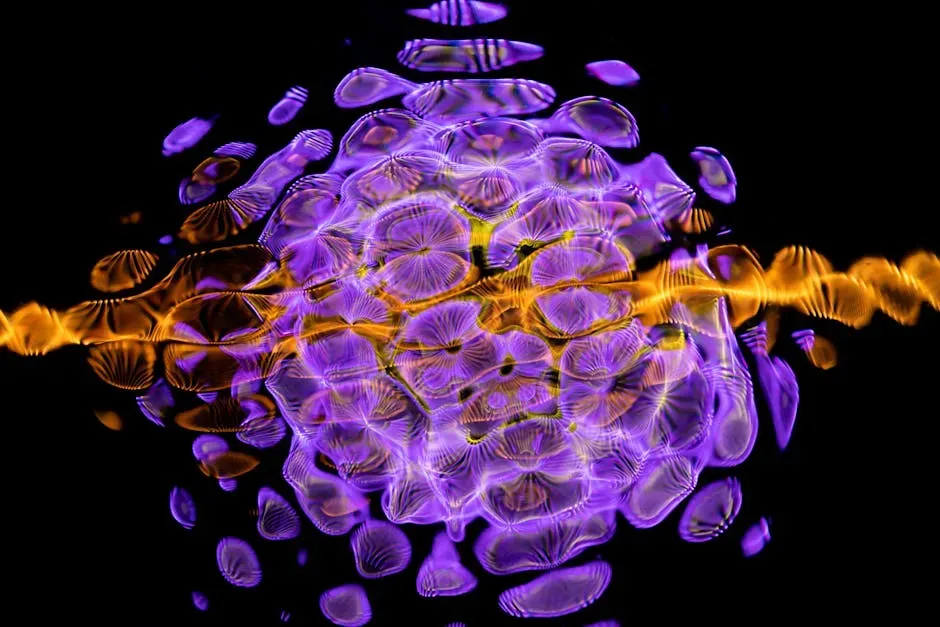
Perhaps the most breathtaking frontier in all of quantum physics is this: life might be actively using quantum tricks to survive. Quantum mechanics operates at the nanometre and sub-nanometre scales and is at the basis of fundamental life processes such as photosynthesis, respiration, and vision. This is the exciting, contested, rapidly evolving field of quantum biology.
When sunlight strikes a leaf, photons energize electrons in chlorophyll molecules. The energy must travel through a maze of molecules to reach the reaction center, where it becomes chemical fuel. Almost no energy is lost along the way. Classical models cannot explain this perfection, but quantum coherence can. The energy does not hop from molecule to molecule like a courier – it ripples like a wave, exploring multiple paths at once, then choosing the most efficient route. Every tree you have ever seen, every blade of grass, has been running quantum computations since before humanity existed.
Conclusion
Quantum physics is not just a collection of strange laboratory curiosities. It is the deepest description of reality that science has ever produced. From the particles in your body to the light of the sun, from the phone in your hand to the birds navigating their annual migrations, the quantum world is not hiding beneath reality. It is reality, at its most fundamental and most honest.
What makes quantum physics truly awe-inspiring is not just how strange it is, but how verified and precise it is. Every prediction has been tested and retested, often to extraordinary accuracy. The universe at its smallest scale does not follow your intuitions. It follows its own rules, and those rules are stranger, richer, and more beautiful than anything we could have imagined before the twentieth century.
The greatest minds in the history of science have stared into the quantum world and admitted they do not fully understand it. Honestly? That might be the most exciting fact of all. Which of these twelve facts surprised you the most? Let us know in the comments.