
Time is one of those things we all experience but almost nobody truly understands. We check our watches, schedule our days, feel the weight of years passing – yet when someone asks what time actually is, most of us go quiet. That silence says a lot.
The universe, it turns out, doesn’t operate on a simple clock. It bends, stretches, and evolves in ways that should honestly make your head spin. From the first fractions of a second after the Big Bang to the eventual heat death of everything we know, time is woven into the very fabric of reality. Curious about what that really means for us? Let’s dive in.
Time Is Not What You Think It Is
Here’s the thing most people never learn in school: time is not a fixed, universal constant ticking away in the background like some cosmic metronome. According to Einstein’s theory of relativity, time is actually a dimension, much like space, and it can be warped, stretched, and compressed depending on gravity and velocity. The faster you move, the slower time passes for you relative to someone standing still. That’s not science fiction – that’s physics working exactly as observed.
Satellites orbiting Earth actually experience time slightly differently than people on the surface, and GPS systems have to account for this difference to give accurate directions. Without those corrections, our navigation systems would drift by several kilometers per day. So in a very real, practical sense, relativistic time is something engineers deal with every single Tuesday morning at their desks.
The Universe Had a Beginning – and Time Did Too
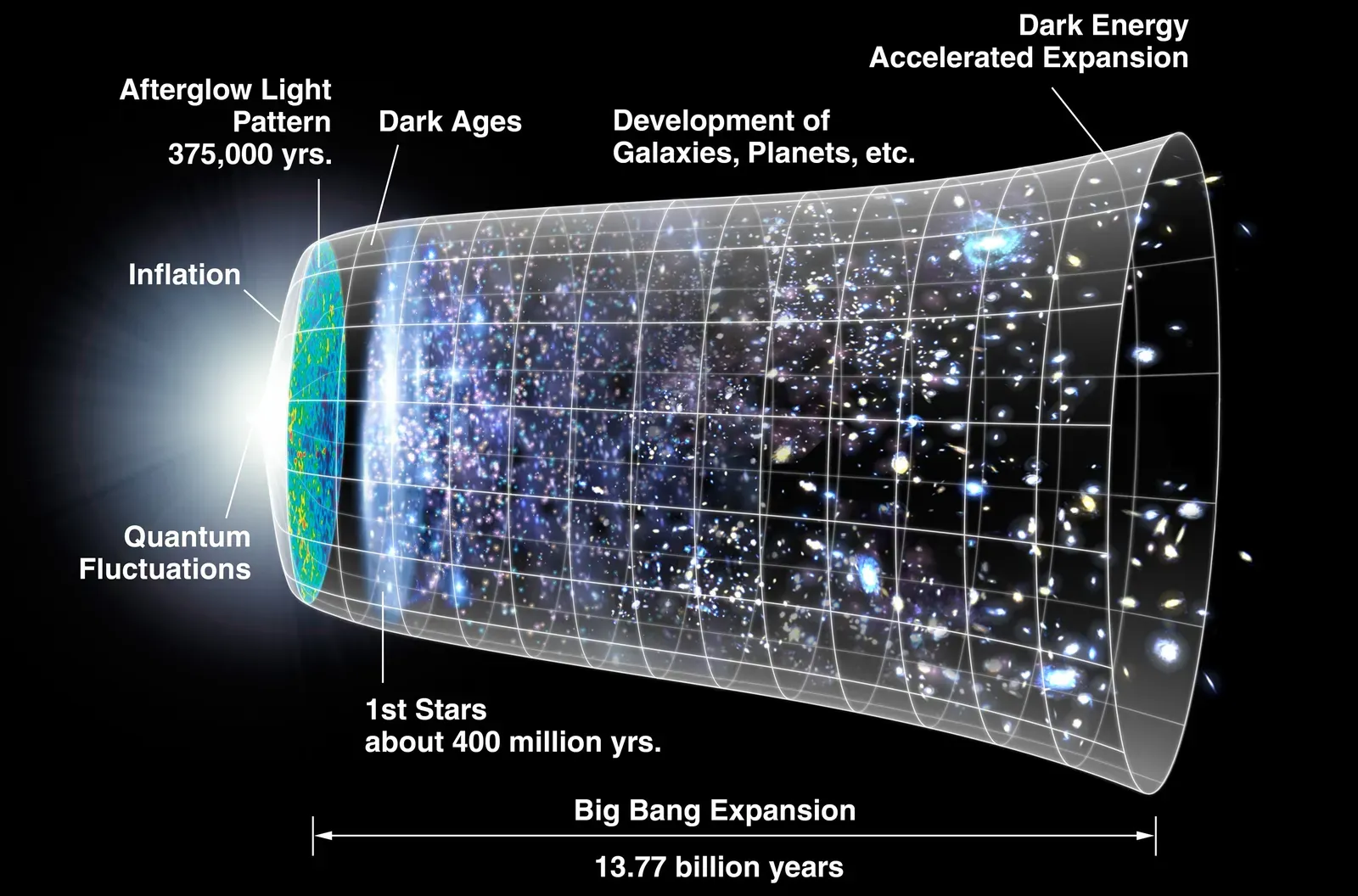
It sounds almost philosophical, but cosmologists are fairly confident that time itself began at the Big Bang, roughly 13.8 billion years ago. Before that moment, asking “what happened earlier?” may be as meaningless as asking what’s south of the South Pole. There simply was no “before.”
This idea is genuinely hard to sit with. Our brains are wired to always ask what came before something else. The concept of a temporal starting point for the universe challenges every instinct we have. Honestly, I think that discomfort is part of what makes cosmology so fascinating – it forces us into territory where human intuition completely breaks down.
Entropy and the Arrow of Time
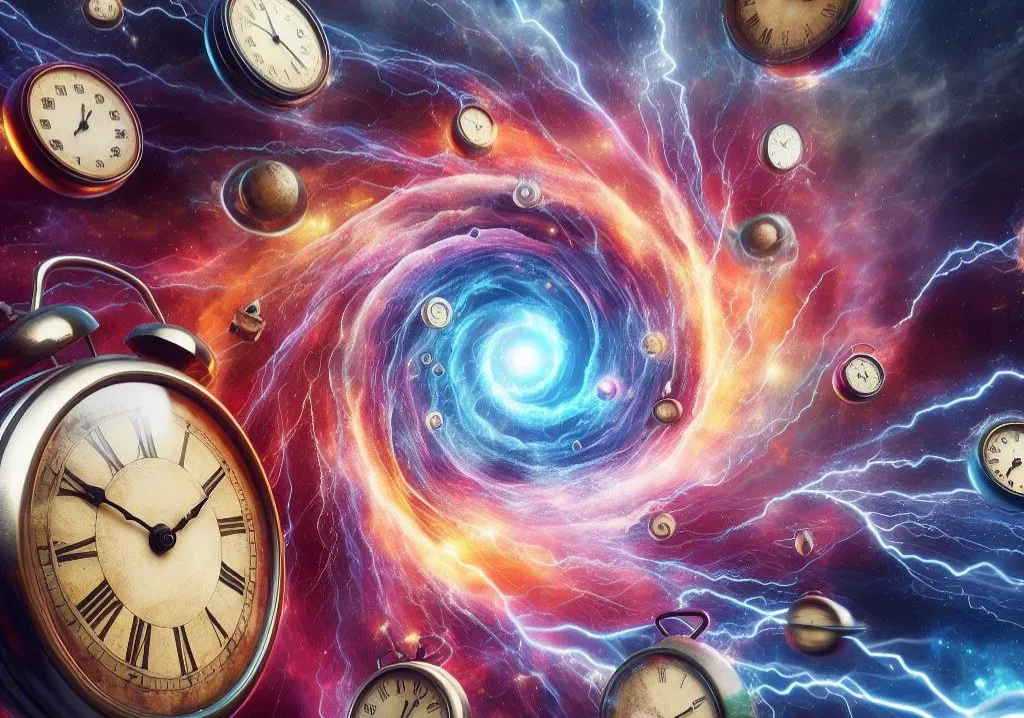
One of the more mind-bending questions in physics is this: why does time only move forward? The laws of physics at the microscopic level are largely reversible – a particle interaction filmed and played backwards would look perfectly valid. Yet we never see a shattered glass reassemble itself off the floor.
The answer lies in entropy, the universe’s tendency to move from order toward disorder. There are vastly more ways for things to be messy than organized, so statistically, disorder almost always wins. This directionality of entropy is what gives time its arrow – its sense of flowing in one direction only. It’s a humbling reminder that even our perception of time’s forward march is rooted in probability, not some iron law.
Black Holes: Where Time Gets Extreme
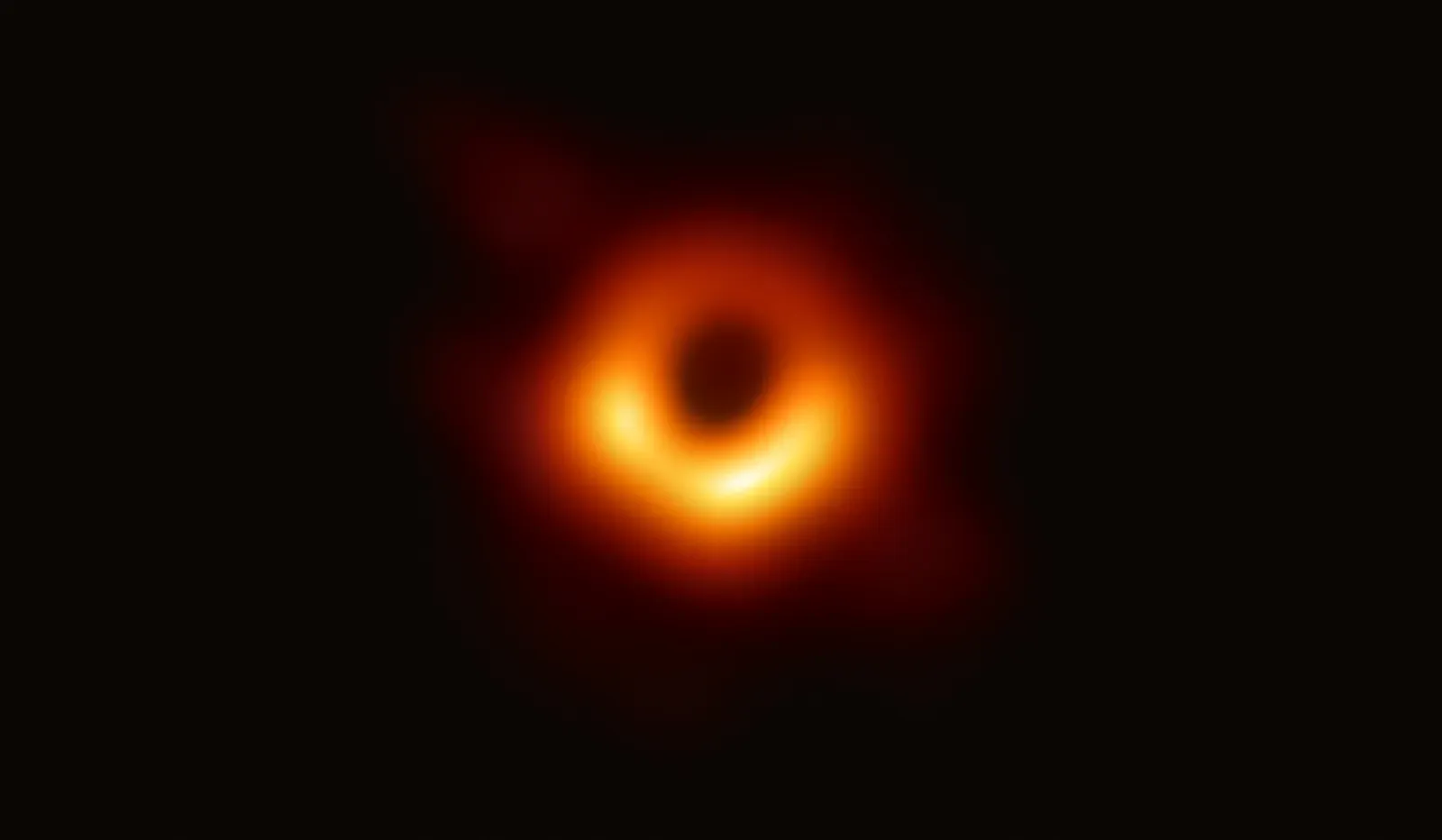
If you want to see what time can really do under pressure, look no further than a black hole. Near the event horizon, the boundary beyond which nothing escapes, gravity is so intense that time slows dramatically from an outside observer’s perspective. An astronaut falling toward a black hole would, in theory, appear to freeze at the edge of that boundary – never quite crossing it – at least from where you’re standing.
For the astronaut, though, time keeps ticking normally as they plunge in. Two people, same event, radically different experiences of time passing. That asymmetry is one of the most haunting concepts in all of science. It makes you wonder how many other aspects of reality look entirely different depending purely on where you happen to be standing.
The Expanding Universe and Cosmic Time
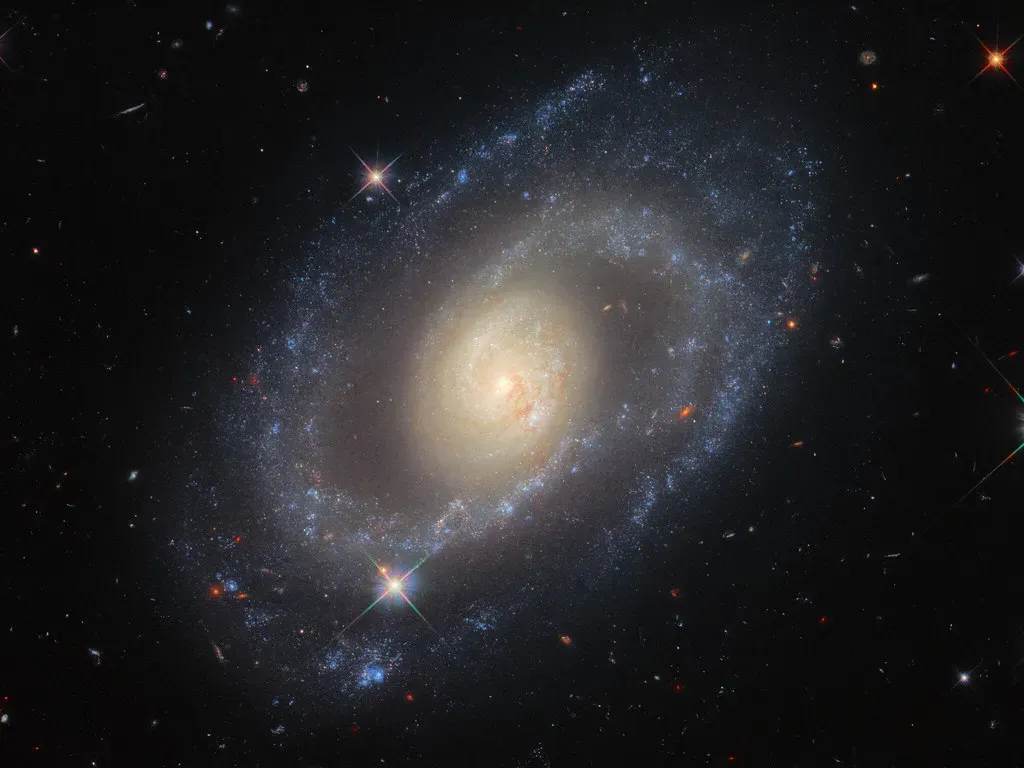
The universe isn’t sitting still. It’s expanding, and it has been ever since the Big Bang, with distant galaxies rushing away from us at staggering speeds. Some galaxies are receding so fast that the light they emit will never reach us, effectively placing them beyond our observable horizon forever.
This expansion has direct implications for time. As the universe grows older, it also grows colder and more diffuse. The stars we see today are burning through their fuel, and new star formation will eventually slow. Cosmic time, measured on scales of hundreds of billions of years, tells a story of gradual dimming – a universe winding down into an almost incomprehensible quiet. That’s not a tragedy; it’s just physics doing what physics does.
Time Dilation and Human Experience

Most of us will never travel at a significant fraction of the speed of light, so time dilation might feel purely academic. Still, the principle reveals something profound: time is personal. Your clock and my clock, under different conditions, tick at different rates. The universe doesn’t guarantee a shared “now” for all observers.
This has surprising philosophical weight. The idea of a single, universal present moment – the idea that everything happening right now is happening simultaneously for everyone – is technically an illusion. Let’s be real, that’s a little unsettling. Two events that appear simultaneous to one observer may occur at different times to another, depending on their relative motion. Our sense of shared reality is more fragile and more constructed than we tend to assume.
Ancient Cultures and the Cyclical View of Time
Long before physics weighed in, human civilizations had their own deeply considered ideas about time. Many ancient cultures, including Hindu, Aztec, and Mayan traditions, viewed time not as a straight line but as a cycle – great cosmic ages repeating endlessly in patterns of creation, sustenance, and dissolution.
There’s something worth pausing on in that perspective. It’s easy to dismiss these frameworks as mythology, but in certain ways they intuitively captured something real: the cyclical nature of seasons, celestial movements, and biological life. While modern cosmology points toward a universe with a definite beginning and probable end, the instinct to find patterns and repetition in time wasn’t entirely off base. Sometimes ancient wisdom and modern science rhyme in unexpected ways.
Psychological Time vs. Physical Time

Here’s something everyone has experienced: time crawls during a boring meeting and vanishes completely during a great conversation. This subjective experience of time has almost nothing to do with the physics of clocks. It’s all in the brain, shaped by attention, emotion, and memory.
Neuroscientists have found that novel experiences tend to feel longer in retrospect because the brain encodes more distinct memories, making the period feel denser. Routine days, by contrast, blur together and seem shorter in memory. This is partly why childhood summers felt eternal while adult years seem to evaporate. It’s not time speeding up – it’s the richness of experience slowing down.
Time in Quantum Mechanics: A Persistent Mystery
Quantum mechanics, the physics of the very small, has a notoriously awkward relationship with time. In quantum theory, time enters equations as an external background parameter rather than an observable quantity – which is philosophically very different from how relativity treats it. Reconciling these two frameworks remains one of the deepest unsolved problems in all of science.
Some physicists have proposed that at the Planck scale, the smallest meaningful unit of time, roughly about one ten-millionth of a trillionth of a trillionth of a trillionth of a second, time itself may be granular rather than continuous. It’s hard to say for sure, but if true, that would mean time isn’t a smooth flow at all but something more like a very fine-grained sequence of discrete moments. Think of it like cinema: what looks like fluid motion is actually a rapid succession of still frames.
What the Future of Time Looks Like
Looking forward on truly cosmic scales, the universe’s timeline stretches almost beyond comprehension. In what cosmologists call the “stelliferous era,” stars continue forming and burning for trillions of years. After that comes the degenerate era, where dead stellar remnants slowly cool. Eventually, even black holes will evaporate through Hawking radiation, leaving behind a cold, dark, nearly featureless expanse.
At that point, in the unimaginably distant future, there may be no thermodynamic processes left capable of marking the passage of time in any meaningful way. Whether time itself continues to “exist” in such a state is a question that sits right at the edge of what physics can currently answer. I find that strangely beautiful, not bleak. The universe played out its entire story, and time was there for every chapter.
Conclusion: Time Is the Universe Telling Its Story
Time isn’t just a backdrop against which things happen. It’s an active, dynamic feature of the cosmos – bending under gravity, racing and slowing with velocity, beginning at a singular moment and pointing steadily toward an unimaginable end. Every concept we’ve explored here is really just another way of saying: the universe is alive, changing, and never the same from one moment to the next.
The concept of time, when you really sit with it, is less like a river flowing past you and more like the river itself – you’re not standing on the bank watching it go. You’re made of it. That’s worth thinking about the next time you glance at a clock. What do you think time really is to you? Drop your thoughts in the comments.