
If you’ve ever felt that the universe is hiding something from you, quantum physics is where that feeling turns into a full-on plot twist. On the surface, we live in a world of solid tables, predictable clocks, and cause-and-effect that mostly makes sense. But zoom into the world of atoms and particles, and reality starts behaving like it’s written by an eccentric storyteller who loves loopholes and paradoxes.
What’s wild is that even in 2026, with all our supercomputers, particle accelerators, and Nobel prizes, some of the strangest quantum questions are still completely unresolved. Physicists can calculate results with ridiculous precision, yet they still argue about what the math really means. The experiments work, the technology works, but the story behind it all? That’s where things get weird, beautiful, and deeply unsettling.
The Measurement Problem: Does Reality Exist Before We Look?
Imagine a world where your coffee is both hot and cold until you actually take a sip. That’s basically the measurement problem in quantum mechanics: before you measure a quantum system, it doesn’t seem to have a single definite state. Instead, it exists in a mix of possibilities called a superposition. Only when you measure it does it “pick” one outcome, like a cosmic coin finally landing on heads or tails.
Here’s the unsettling part: the equations of quantum mechanics work perfectly without any special “collapse” step. The mystery is why measurement seems to break the rules and force a definite outcome. Is consciousness involved? Is there some hidden process in the environment that quietly chooses the result? Or are there countless parallel realities where every possible outcome happens? Physicists can’t agree, and I’ll be honest, the idea that reality waits for us to look at it still makes the hair on my arms stand up.
Wave–Particle Duality: How Can One Thing Be Two Opposites?
At school, we’re told things are either particles, like tiny billiard balls, or waves, like ripples on a pond. Quantum mechanics takes that neat picture, lights it on fire, and throws it out the window. Electrons, photons, even larger molecules have been shown to act like both particles and waves depending on how we test them. In the famous double-slit experiment, a single particle can interfere with itself as if it traveled through two paths at once.
Physicists can predict the interference patterns with amazing accuracy, but what “really” happens between the start and the final detection is still mysterious. Some interpretations say there isn’t a definite path at all, only probabilities spread out like a wave until measurement. Others argue that our classical words like “particle” and “wave” are simply too primitive for what’s happening down there. Personally, I think of it like trying to describe the internet using only the vocabulary of plumbing: the analogy kind of works, but it’s fundamentally the wrong picture.
Quantum Entanglement: Spooky Connections Across the Universe
Quantum entanglement ties two or more particles together so that their properties are linked, no matter how far apart they are. Change the state of one, and the other “knows” instantly, in a way that doesn’t seem to care about distance. Experiments over the last decades have closed loophole after loophole, confirming that these correlations are real and cannot be explained by any simple hidden signals traveling slower than light.
The puzzle is not whether entanglement exists – it’s been tested over hundreds of kilometers on Earth and even between ground stations and satellites – but what it means about reality. Does the universe have a deep, nonlocal structure where space is less fundamental than we think? Are we seeing the shadow of some deeper, underlying information network? I remember first reading about entanglement and feeling like the universe was whispering, “You’re thinking about distance wrong.” That feeling has not gone away, and physicists are still arguing about the right way to think about it.
The Quantum–Gravity Gap: Why Don’t the Two Best Theories Get Along?
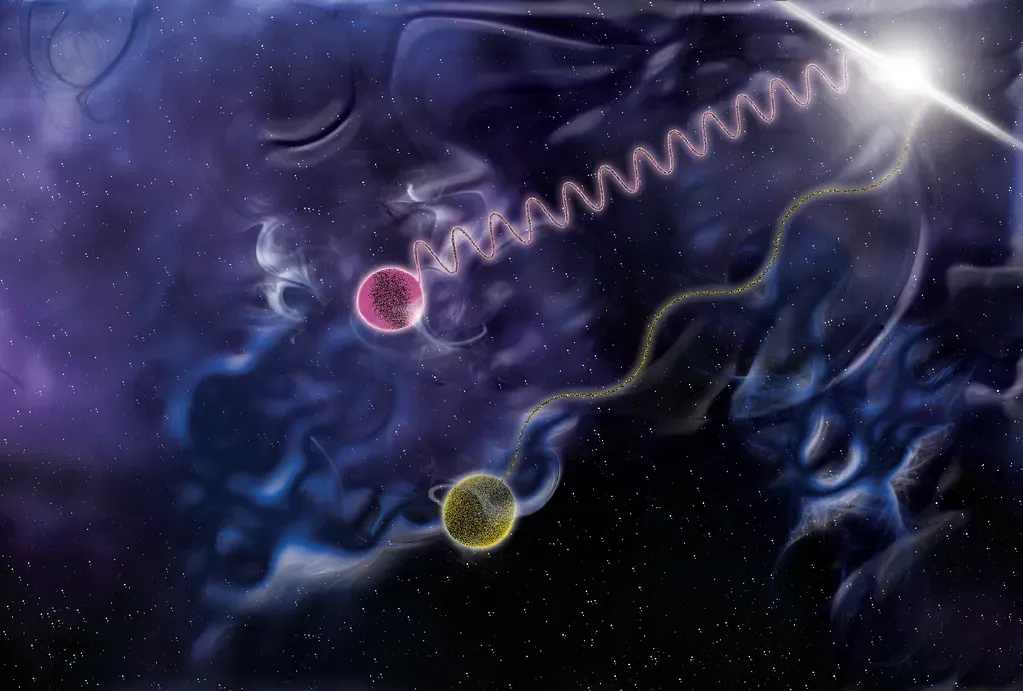
On one side, we have quantum mechanics, which rules the microscopic world and powers technologies from lasers to MRI machines. On the other, we have general relativity, which describes gravity and the large-scale structure of the cosmos, from black holes to galaxy clusters. Both theories have passed every experimental test in their own domains, yet when we try to make them work together, the math breaks down in spectacular fashion.
This clash becomes unavoidable in extreme places like the center of black holes or the first tiny fraction of a second after the Big Bang. We know both quantum effects and gravity must matter there, but our current equations throw out infinities and nonsense instead of answers. People are working on ideas like string theory, loop quantum gravity, and emergent spacetime, but there’s still no consensus and no decisive experiment that picks a winner. To me, it feels like we’re staring at two gorgeous, detailed maps that overlap slightly but refuse to align – and somewhere in that misalignment is a huge missing piece of the universe’s story.
Randomness and Reality: Is the Universe Fundamentally Unpredictable?
Classical physics, like Newton’s laws, suggests that if you knew everything about a system – every position, every speed – you could, in principle, predict its future exactly. Quantum mechanics throws a wrench into that dream. Even with perfect knowledge of a particle’s quantum state, you can only predict probabilities for different outcomes. Measure a radioactive atom, and you can say how likely it is to decay in a certain time window, but not the exact moment it will happen.
The big question is whether this randomness is just a reflection of our ignorance or truly baked into reality. Experiments inspired by Bell’s theorem have strongly challenged the idea that all the uncertainty comes from hidden, pre-existing properties we just can’t see. If the randomness is fundamental, then the universe is not a perfectly scripted movie but more like an improvisation with strict rules. That thought both scares and comforts me: it means that at the deepest level, the cosmos isn’t just a cold machine – it has an element of genuine unpredictability, a kind of cosmic roll of the dice that never fully repeats.
Conclusion
Quantum mechanics has given us transistors, lasers, GPS, quantum computers in development, and a mind-bending new view of reality – and yet its deepest questions remain stubbornly open. The measurement problem, wave–particle duality, entanglement, the quantum–gravity clash, and fundamental randomness all point to a simple, unsettling idea: we still don’t really know what the universe is made of, or how it truly operates beneath the equations.
Maybe in a few decades, people will look back at our current confusion the way we look at ancient astronomers guessing about crystal spheres. Or maybe some of these mysteries will turn out to be even stranger than we can currently imagine. When you think about the fact that your body, your phone, the entire night sky all run on these puzzling rules, it’s hard not to feel a little awe. Which of these quantum mysteries do you think will crack first – and which one do you secretly hope never fully loses its magic?