Somewhere between hard science and wild imagination sits a question that keeps refusing to go away: are we alone in the universe? Astronomers keep finding more planets, more strange signals, more clues that life might not be unique to Earth, yet we still have no clear proof of anything beyond us. In that vacuum of certainty, some of the most mind-bending theories about alien life have taken root, and many of them are far weirder than anything in a sci‑fi blockbuster.
What makes these ideas so gripping is that they aren’t just fantasies pulled out of thin air. Most of them grow out of serious physics, biology, or cosmology, then push those fields right up to their limits. A few are uncomfortable, even a little terrifying, because they flip our place in the cosmos upside down. Others are strangely comforting, hinting that the universe might be full of company we simply haven’t learned how to notice yet.
The Zoo Hypothesis: Are We in a Cosmic Nature Reserve?
Imagine humanity as animals in a gigantic wildlife park, watched by advanced beings who’ve agreed not to interfere. That’s the core idea of the zoo hypothesis: aliens might know we’re here and intentionally leave us alone, the way conservationists observe animals without disturbing them. From this angle, the eerie quiet of the cosmos isn’t a sign of emptiness; it’s a sign of restraint. We’re not being ignored because we’re boring, but because we’re part of some cosmic ethical guideline.
This theory takes the Fermi paradox – the puzzle of why, in a vast universe, we see no obvious signs of advanced civilizations – and turns it into a story about us being too young or too primitive. Maybe they’re waiting for us to pass a test: ending global war, avoiding self-destruction, or mastering certain technologies. It’s a flattering thought, in a twisted way, but it also suggests that the silence isn’t an accident; it’s policy. If that’s true, every radio telescope we build is like shouting into a forest where the rangers already know we’re here and have chosen not to answer.
Simulation Aliens: Life as NPCs in a Cosmic Program

Take the idea that our universe might be a simulation and push it one uncomfortable step further: what if extraterrestrials aren’t “out there” but are just other parts of the same code? In this view, alien life could exist as different classes of simulated beings, running in parallel or in layered realities. We’d be like characters in a massive online game, wondering if anyone else is logged in on different servers. The search for extraterrestrial intelligence, then, becomes the search for glitches, artifacts, or hidden channels left by the programmers.
Some physicists and philosophers have pointed out that if advanced civilizations can run vast simulations, simulated universes might outnumber “base” universes by a staggering margin. If that’s true, the odds tilt toward us being inside one. Alien life under this model might not use rockets or radio waves at all; it might be patched into the same underlying structure we are, just in different regions of the computational space. Suddenly, the question “Where are they?” becomes “What rules did the coders set, and how much freedom did they give the characters?”
Panspermia: Alien Seeds in Our Own DNA
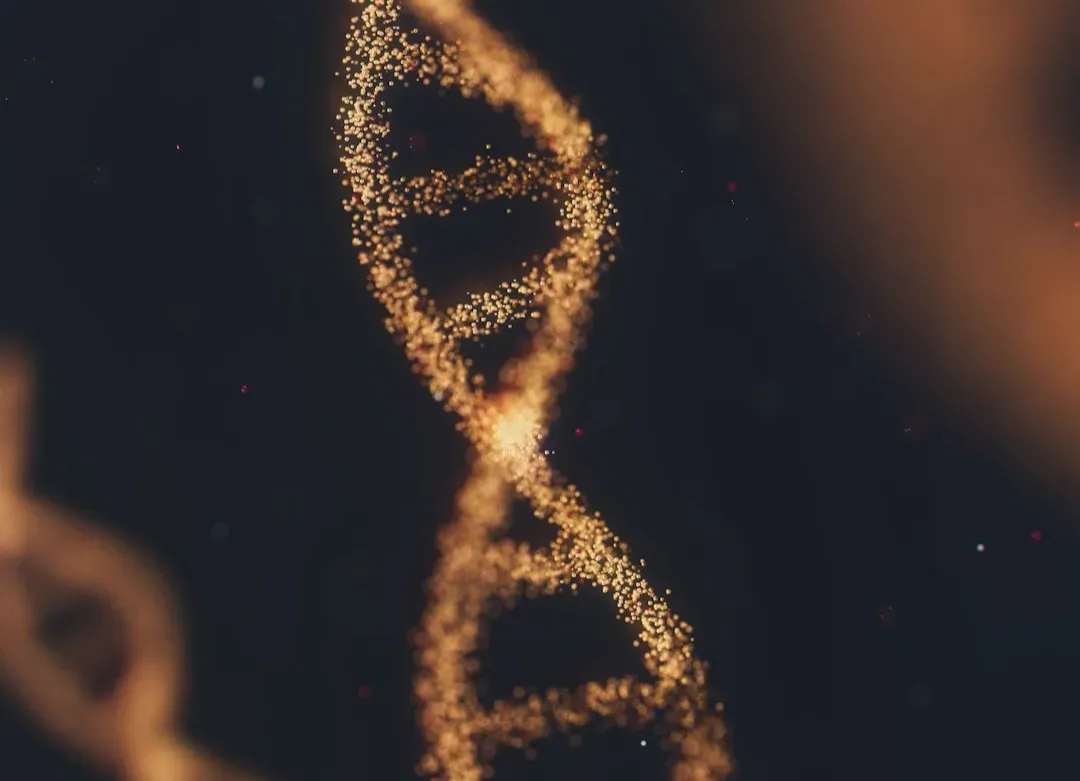
Panspermia is the quietly radical idea that life on Earth didn’t start here at all. Instead, it may have arrived as microscopic hitchhikers on comets, asteroids, or dust, seeded from somewhere else in the galaxy. If that’s right, then when you look in the mirror, you’re looking at a very distant echo of alien biology. Our family tree wouldn’t start on Earth; it would extend backward through interstellar space, to some forgotten cradle of life that spread its offspring far and wide.
There are even more specific versions, like directed panspermia, where an advanced species intentionally spreads life to suitable worlds as a kind of cosmic gardening project. In that scenario, we’re not just random products of chance chemistry; we’re part of someone else’s long-term experiment or legacy. It turns evolution into a shared story written across multiple planets, where cousins we’ll never meet may be evolving under different suns right now. The strangest part is that if panspermia is true, we might already be the aliens we’ve been searching for.
Shadow Biospheres: Aliens Hiding Right Here on Earth
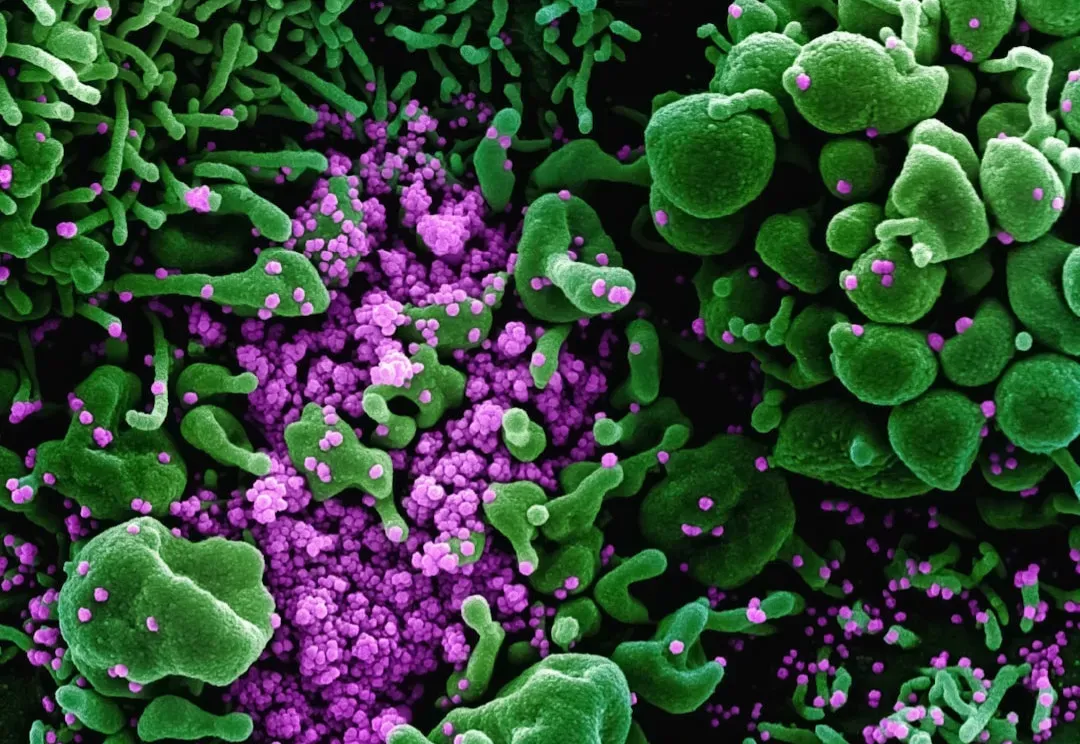
Most people imagine aliens as distant beings on other planets, but some researchers have proposed a much weirder possibility: what if a second form of life already exists on Earth, and we’ve just been looking past it? A shadow biosphere would be life built on different biochemistry than ours – maybe using different amino acids, or even a different backbone than DNA and RNA. Because our detection tools are designed to find familiar life, this “other” ecosystem could slip right under the radar, like trying to find invisible ink with the wrong light.
If something like that exists, it would mean that life started more than once on our own planet, independently. The universe wouldn’t just be capable of creating life; it would be good at it, almost eager. In that case, our assumptions about “rare Earth” start to get shaky. We’d be forced to admit that we couldn’t even fully catalog life on our own world, which is a humbling thought. It also makes the search for aliens feel less like astronomy and more like learning how to recognize what life can be when it doesn’t look like us at all.
The Dark Forest: A Universe Full of Hunters
One of the most unsettling theories borrows its name from a chilling metaphor: imagine the cosmos as a dark forest, where every civilization is both hunter and prey. In this view, everyone stays quiet because broadcasting your existence is like shouting in the night where you don’t know who’s listening or what they want. Any advanced species would recognize that another capable civilization could become a threat in the long run, so the safest move is to hide or destroy potential rivals before they grow too powerful.
This idea reframes the silence of the universe as an act of fear, not emptiness. It turns our radio messages and plans for interstellar beacons into something like lighting a flare in enemy territory. Even if you don’t fully buy it, the dark forest model forces a hard question: is contact inherently dangerous? Instead of imagining enlightened beings eager for friendship, it paints a harsher, more paranoid picture where survival instincts trump curiosity. It’s the opposite of comforting, but it does match a brutal kind of logic we already see in nature.
Post-Biological Aliens: Life That Has Left the Body Behind
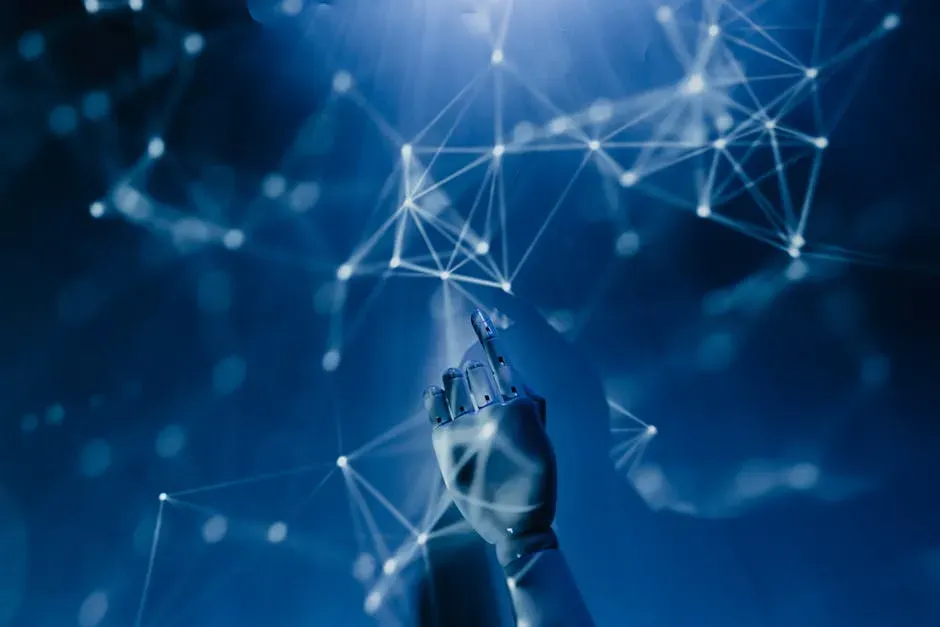
We tend to imagine aliens as creatures with flesh, bones, maybe tentacles if we’re feeling dramatic. But some scientists argue that any civilization that survives long enough will likely shed biology altogether. They might become digital minds, swarms of nanobots, or diffuse intelligence embedded in machines spanning entire asteroids or moons. Once you move into hardware that doesn’t age or rot, the old rules of survival change, and so do the ways you might choose to exist.
These post-biological beings would interact with the universe in ways that are almost impossible for us to picture. They might compress themselves into tiny, efficient matrices near cold regions of space, where computation is easier. Their idea of travel could be beaming information, not moving ships. And they might find our kind of life grotesquely fragile, like trying to build a civilization out of foam. If most advanced species make that leap, then we may be searching the skies for the wrong thing, listening for voices that have long since turned into code.
Hyperadvanced Civilizations as Physics Itself
Some of the boldest ideas suggest that aliens could be so far beyond us that we wouldn’t even recognize them as life. Instead of ships and cities, think of entities that operate on the level of stars, black holes, or even the fabric of spacetime. If a civilization had millions or billions of years to grow, it might learn to manipulate reality in ways that blur the line between technology and natural law. From our point of view, their actions would look like pure physics, not intention.
A civilization that advanced might stabilize stars, harvest energy from entire galaxies, or embed computation into the cosmic web itself. We’d see strange astrophysical anomalies and chalk them up to obscure processes, while they could be someone’s infrastructure. This theory flips the usual question: instead of asking where the aliens are, it asks whether we’ve already been staring at their fingerprints without realizing it. Trying to detect them is like a stone-age person trying to infer the internet by watching lightning.
Multiverse Aliens: Neighbors in Other Realities
If the multiverse idea is right and our universe is just one of many, then alien life might not share our space at all – it could exist in entirely separate realities. These universes might have different physical constants, different types of matter, or different dimensions. Life in such places could be so exotic that our word “life” barely applies. Yet some speculative physics suggests that, under certain conditions, regions of different universes could brush against each other, like soap bubbles just touching.
In an extreme version of this idea, highly advanced civilizations might even learn to deliberately access other universes, escaping dying stars or decaying reality like travelers stepping through a series of doors. From their perspective, staying confined to a single cosmos would be like refusing to leave your hometown forever. We, on the other hand, would be stuck inside ours, with only faint hints in the cosmic background or weird gravitational effects to suggest anyone else is out there. It’s a concept that makes “aliens on another planet” sound almost boringly familiar.
Self-Destruct Hypothesis: Civilizations That Burn Out Fast

There’s a darker, tragically human theory about why we don’t see aliens: they might be very common, but they tend to wipe themselves out quickly. As a civilization gains powerful technology – nuclear weapons, planet-scale engineering, synthetic biology, artificial intelligence – it also gains more ways to accidentally or intentionally end its own story. If the window between “we invented radios” and “we destroyed our ability to communicate” is short, then the odds of two civilizations overlapping in time shrink dramatically.
In this view, the galaxy could be full of ruins, silent worlds that once had their own histories, art, and arguments before something went catastrophically wrong. We just happen to be early enough in our own dangerous phase that we’re still able to ask questions about the universe. The theory isn’t just cosmic pessimism; it doubles as a warning. Every breakthrough we celebrate could be a test we don’t yet realize we’re taking. If that pattern is real, surviving long enough to meet anyone else might be the rarest achievement of all.
We Are the First: A Universe Still Waking Up
One of the strangest possibilities is also one of the simplest: maybe the universe is still young, and we really are among the first intelligent species to emerge. Stars like our sun are not even close to the largest or longest-lived; some smaller, cooler stars can burn for trillions of years, while ours lasts only billions. That means the majority of potential habitable time is still in the future. In that context, humans might be very early bloomers in a garden that has barely started to grow.
If that’s true, then of course the sky seems quiet – most of the civilizations that will ever exist simply haven’t arrived yet. Instead of being late guests to a cosmic party, we’re the people who showed up before the music even started. This thought is strangely heavy: it would mean that what we do now helps set a precedent for an entire universe that’s only beginning to awaken. It also puts a kind of responsibility on us, whether we like it or not, because pioneers rarely get the comfort of role models.
Conclusion: A Universe That Refuses to Be Ordinary
All these theories stretch the imagination in different directions, but they share one stubborn refusal: the idea that life is an insignificant accident in a dull, empty universe. Whether aliens are watching us like animals in a preserve, hiding in fear, long since gone digital, or simply not born yet, each possibility says something about what we might become. Some paths feel hopeful, others feel like cautionary tales, and a few are so strange they make our everyday worries feel oddly small.
What lingers, after you sift through all the speculation, is the sense that the real answer is probably stranger than whatever we can currently picture. We might discover that we’re late to a party, or early, or locked inside a kind of cosmic one-way mirror. Until hard evidence finally shows up, we’re left in this strange in‑between, building stories out of physics, math, and human fear and hope. Which of these possibilities would you bet on, if you had to choose today?