

Every day, you make thousands of choices: what to wear, what to eat, whether to text back, whether to quit your job. It feels like there’s a little “you” inside your head freely steering the ship. But when you peek under the hood of the brain, that feeling starts to look less like a captain at the wheel and more like a very convincing story your neurons are telling after the fact.
I still remember the first time I read about experiments showing that your brain “decides” before you’re aware of deciding. It felt almost offensive, like someone had told me my entire life was just a movie already written, and I was only watching. But the deeper you go into the neuroscience, the more interesting, nuanced, and strangely comforting it becomes. Free will might be more complicated than we were taught – but that doesn’t mean your choices don’t matter.
The Strange Timing Trick: Your Brain Decides Before “You” Do

One of the most surprising findings in neuroscience is that brain activity related to a decision appears before you consciously feel like you’ve made that decision. In classic experiments, people are asked to flex a wrist or press a button whenever they feel like it, while watching a clock and reporting the moment they “decided.” Brain recordings show a buildup of neural activity a fraction of a second before the reported conscious decision. It’s as if the brain is already rolling, and conscious awareness shows up fashionably late.
More modern brain imaging has pushed this timing gap even further, showing patterns that can predict simple choices a second or more before people say they made up their minds. This doesn’t mean that everything in your life is predetermined down to the color of your socks, but it strongly suggests that conscious will is not the first cause in the chain. Instead, the brain is constantly simmering with unconscious processes, and what we call a “decision” is the moment we become aware of the winner of that internal competition.
The Storyteller in Your Head: How the Brain Confabulates
If you’ve ever caught yourself inventing a reason for something you did and only later realized it wasn’t quite true, you’ve had a taste of what neuroscientists call confabulation. The brain is a relentless storyteller, stitching together explanations so your experience feels smooth and coherent. In some neurological patients, this is turned up to eleven: they can perform an action triggered by the experimenter and then confidently give a totally unrelated reason for why they did it, without any sense of lying.
This storytelling machinery is active in healthy brains too, just more subtly. When you say “I chose this because…” your brain is often reverse-engineering a narrative around a decision that bubbled up from unconscious processes. The illusion of free will is strengthened because having a clear story feels reassuring, like having a map, even if the map was drawn after you’d already walked the path. It’s a bit like explaining why you “chose” your favorite song when really your tastes were molded over years of influences you barely noticed.
The Divide-and-Explain Brain: Left, Right, and the Interpreter

Some of the most striking evidence for the brain’s illusion-making comes from split-brain patients, where the connection between the two hemispheres is severed to treat severe epilepsy. In these people, each hemisphere can receive different information. Experiments show that one side of the brain can be instructed to do something, while the other side, lacking access to the instruction, still confidently makes up a reason for the behavior. The left hemisphere in particular seems to act like an “interpreter,” filling in gaps to preserve a sense of unified, willed action.
This suggests that what feels like a single, central “you” might actually be a coalition of systems, with one part constantly rationalizing the actions of the others. You feel as if you are the author of your choices because the interpreter system weaves everything into a neat story, not because there is a tiny ruler sitting in your skull. Once you grasp that, the illusion of free will starts to look less like a bug and more like a feature that makes life feel continuous and understandable.
The Invisible Hand of Habit, Emotion, and Bias

We like to think our choices come from clear reasoning, but much of what we do is quietly driven by habit, emotion, and built-in biases. Your brain is a prediction machine that constantly leans on shortcuts: doing what worked before, following the easiest path, reacting to subtle cues from your environment. That snack you “decided” to eat may have a lot more to do with your stress level, the lighting, or a commercial you saw earlier than with a rational, conscious choice.
On top of that, unconscious biases shape everything from who you trust to how you vote, often in ways that conflict with your stated values. The uncomfortable truth is that a big chunk of what feels like “I chose this” is really “this pattern was triggered and I experienced it as my choice.” The illusion of free will is strengthened because the brain does not usually reveal these hidden influences to consciousness – it just hands us the final result wrapped as a personal decision.
Why Consciousness Feels Like Control

Even if unconscious processes get the ball rolling, consciousness still feels like the boss. Part of that is timing: conscious awareness tends to align with the moment of action and the sense of effort, so we naturally credit it with causing the outcome. When you strain to resist a temptation or push through fear, the subjective feeling of effort is intensely tied to your sense of “me,” making it very hard to believe anything else is in charge.
Another reason is that consciousness plays a crucial role in monitoring, simulating, and correcting. You can imagine future scenarios, weigh options, and override automatic impulses. That doesn’t mean consciousness is a magical force stepping in from outside the brain; it means the neural processes that give rise to conscious experience are tightly linked to systems that evaluate and modulate behavior. The illusion is not that nothing is happening, but that this complex feedback loop is a single, simple, freely willing entity.
Predicting Your Choices: What Brain Scanners Can and Can’t Do
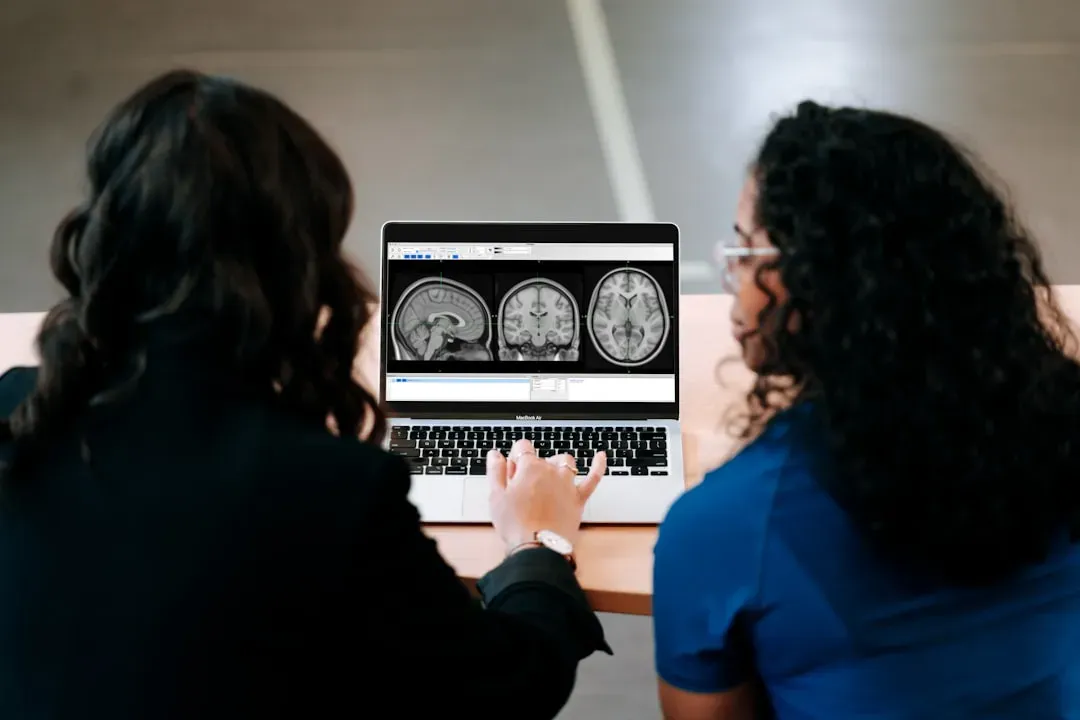
Brain-imaging studies that claim to predict decisions can sound eerie, like a mind-reading device exposing your innermost will. But when you look closer, they’re usually predicting simple, arbitrary choices – press left or right, pick red or blue – based on subtle patterns of activity. These predictions are often better than chance but far from perfect, especially for more complex, meaningful decisions. Your brain is partly predictable, but not like a pre-written script.
Still, the fact that any prediction is possible before you’re aware of deciding shows that the seeds of choice lie in neural activity, not in a separate, ghostly will. The illusion of free will includes the sense that, up until the very last moment, you could have just as easily chosen otherwise. Yet the more we can see the underlying patterns, the clearer it becomes that your choice was the culmination of countless prior states – memories, moods, expectations – coming together long before you felt the “click” of deciding.
The Weight of Past Experience and Environment

Your brain is not born blank; it’s shaped by genes, early development, and the world you grow up in. Every experience leaves traces – strengthened connections, changed sensitivities – that tilt future decisions one way or another. The way you respond to a partner’s tone of voice today might be subtly guided by how your caregivers spoke to you decades ago, even if you never consciously think about it. In that sense, your “choice” often reflects a long chain of prior causes stretching backward through your life.
On top of personal history, there’s the social and cultural environment: norms, expectations, opportunities, and constraints. Choosing a career, a religion, or a lifestyle feels like pure self-determination, but your menu of options is pre-filtered by where you were born, who you met, and what seemed imaginable to you. The brain then wraps these shaped, nudged outcomes in the feeling of “I freely decided,” because that feeling is how a complex, causally entangled creature experiences its own behavior from the inside.
What “Free Will” Might Really Mean

Once you see how much of decision-making is driven by unconscious processing, habits, and past causes, it’s tempting to throw your hands up and declare free will dead. But that might be too easy a conclusion. Some philosophers and scientists argue that free will doesn’t require being uncaused or outside the brain; it requires your actions to flow from your own motives, values, and character, even if those have a history. By that view, the important question is not “Am I a magical exception to causality?” but “Do my actions reflect who I am and what I care about?”
From this perspective, the illusion is not that we have no influence, but that influence must look like total, unconstrained spontaneity to count. In reality, your brain’s ability to learn, deliberate, change its habits, and reflect on itself gives you a kind of freedom that is gradual and fragile, not absolute. You may not be free in the fantasy sense of being able to step outside of all causes, but you are still capable of reshaping the causes that shape you. That quieter, humbler version of free will might be less glamorous, yet more useful for real life.
How This Changes Responsibility, Blame, and Compassion

Seeing free will as a brain-based illusion – or at least as very limited – can feel threatening to ideas of moral responsibility. If choices are the result of neural processes and life history, does anyone truly “deserve” blame or praise? Some researchers and thinkers argue that understanding the brain should push us toward less retribution and more rehabilitation and prevention. If someone’s actions were heavily influenced by trauma, mental illness, or lack of opportunity, punishing them as if they were a completely free agent starts to look misguided.
At the same time, most people feel strongly that we need some concept of responsibility to live together. A growing view is that responsibility can be redefined in terms of how people respond to reasons and how changeable their behavior is, rather than in terms of a mystical power to have done otherwise in an identical universe. That shift can make us a bit less harsh, a bit more compassionate, without pretending that harm doesn’t matter. It asks us to see every choice as both personal and deeply embedded in a wider network of causes.
Living With the Illusion: What Do We Do Now?

After learning all this, there’s a natural, slightly dizzy question: how on earth are we supposed to live, knowing that our cherished sense of free will is at least partly a construction? One option is denial – just forget the science and carry on as if nothing changed. Another option is despair, acting as if nothing you do matters because it’s all “just the brain.” Both of these miss an important point: even if your choices are shaped by countless prior causes, they still shape what happens next, for you and for others.
Personally, I’ve found that understanding the illusion of free will makes me a bit more forgiving – of myself and of other people – while also more intentional about my surroundings and habits. If the brain is so sensitive to context, then changing your environment, your routines, and the information you consume becomes a powerful way of nudging your future “choices.” Maybe we’re not the free, untouched authors we imagined, but more like co-writers collaborating with our past and our world. Given that, what kind of story do you want your brain to keep telling?