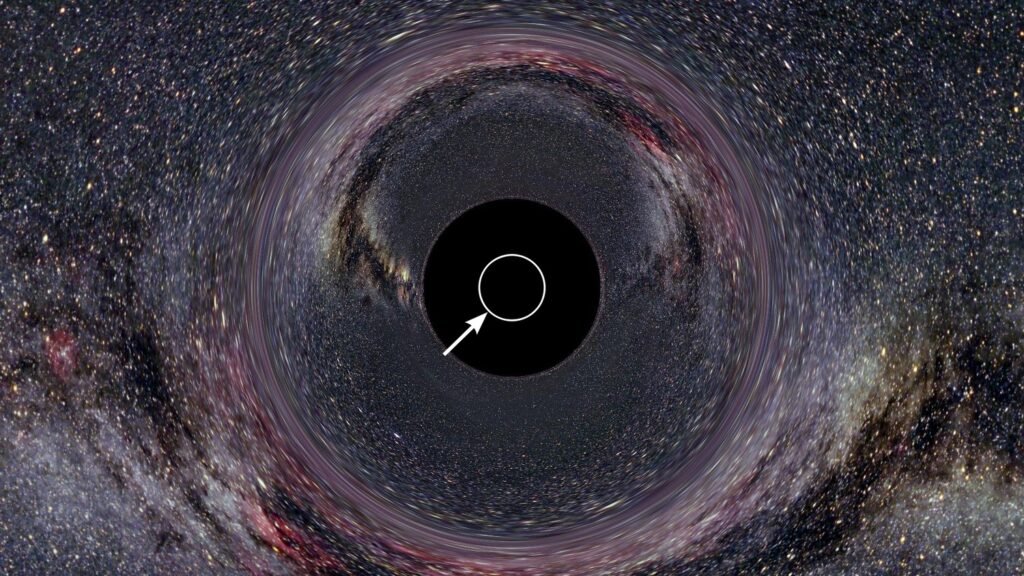

Picture this: everything you can see, touch, and feel – every mountain, every star, every thought crossing your mind right now – might not be truly three-dimensional at all. You could be living inside an extraordinarily sophisticated projection, like a cosmic version of the image on a credit card, except stretched across the entire universe. Sounds like a sci-fi screenplay, doesn’t it?
Yet this is not fiction. It is one of the most seriously debated ideas in modern theoretical physics. Some of the most brilliant minds on the planet have spent decades wrestling with the math, the implications, and the sheer mind-bending possibility of it. So, what is this theory really about, and how close are scientists to actually proving it? Let’s dive in.
The Big Idea: Reality Could Be a Projection
Here’s the thing – most of us walk through life completely convinced that up is up, that depth is real, and that the world around us has three solid dimensions. But the “holographic principle” asserts that a mathematical description of the universe actually requires one fewer dimension than it seems, and what you perceive as three-dimensional may just be the image of two-dimensional processes on a huge cosmic horizon. That’s not a small claim. That’s reality itself being called into question.
In a larger and more speculative sense, the theory suggests that the entire universe can be seen as a two-dimensional information structure “painted” on the cosmological horizon, so that the three dimensions we observe are only an effective description at low energies. Think of it like watching a movie in IMAX. You feel immersed, completely surrounded by depth and sound. But everything originates from a flat screen. The holographic universe idea says something similar – only this time, you are inside the movie.
Where This Wild Idea Actually Came From
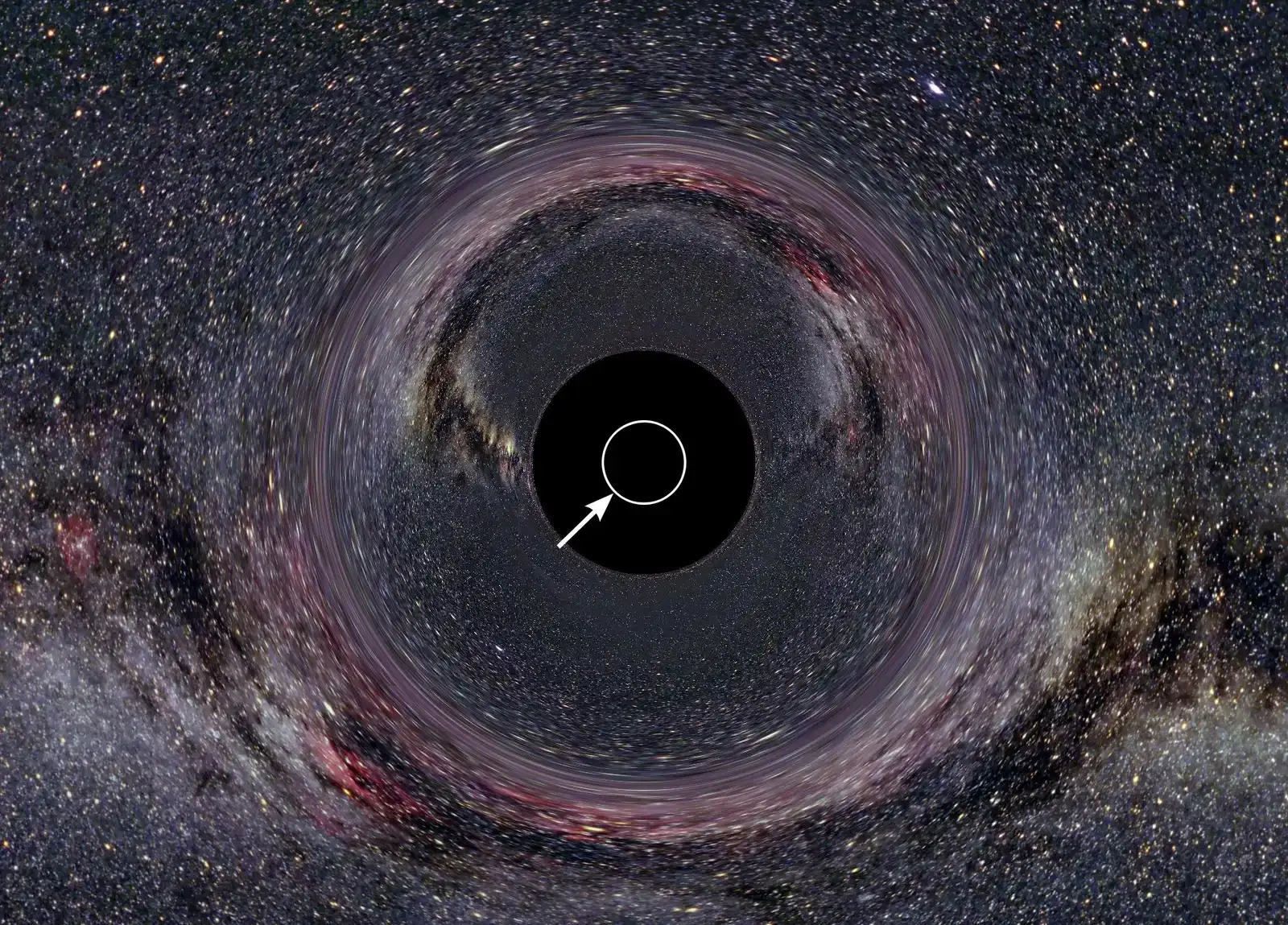
First proposed by Gerard ‘t Hooft in 1993, the holographic principle was given a precise string-theoretic interpretation by Leonard Susskind, who combined his ideas with previous ones of ‘t Hooft and Charles Thorn. These weren’t fringe scientists. These were people at the top of the field, grappling with one of physics’ most stubborn problems. The puzzle that kicked everything off? Black holes.
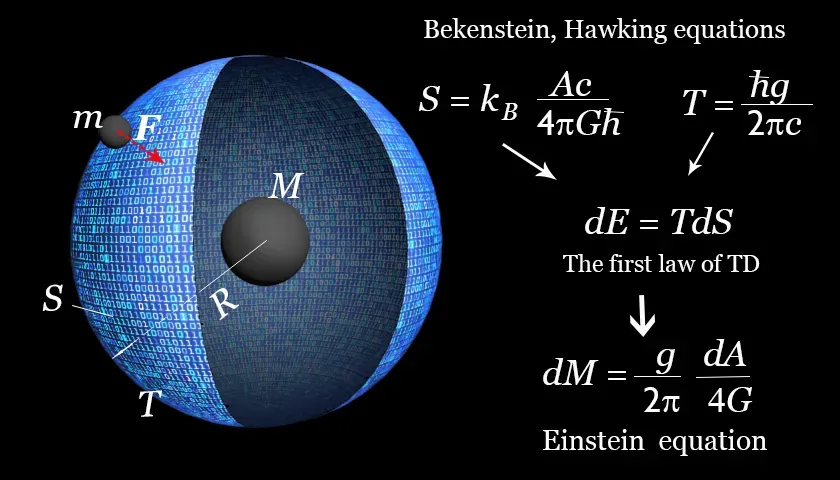
In the 1970s, the black hole information paradox was born after Stephen Hawking theorized that black holes emit radiation that carried “no information,” which eventually causes them to disappear. Physicists Gerard ‘t Hooft and Leonard Susskind theorized that the information isn’t actually lost, but is stored on the surface of the black hole at its event horizon. After this potential revelation, it was suggested that maybe all the information in the universe is stored on a 2D surface somewhere, and what you see and experience in 3D is a sort of projection, just like a hologram. From that insight, an entire new frontier in physics was born.
The Maldacena Bombshell: When Mathematics Got Serious
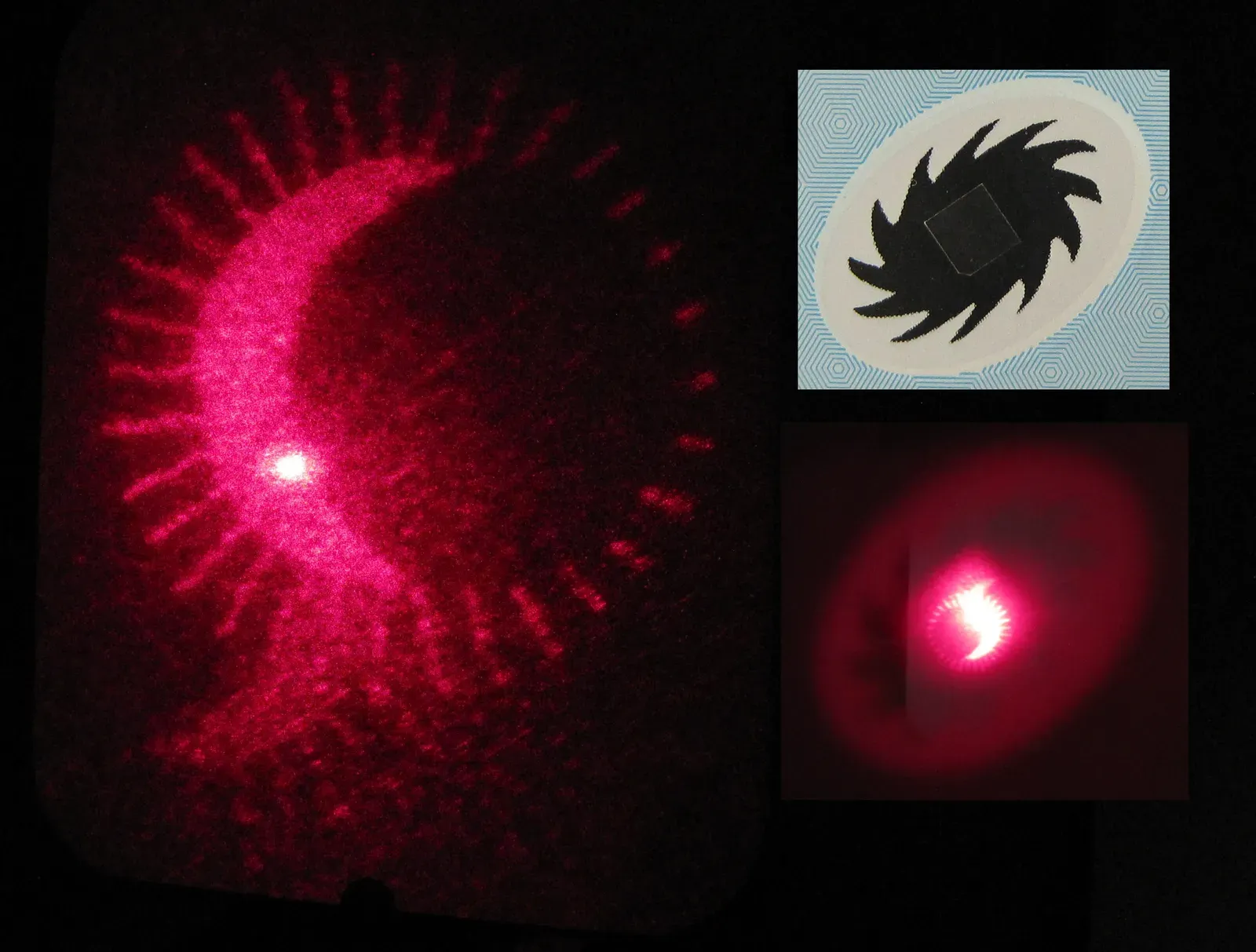
In 1997, physicist Juan Maldacena formulated what is now known as AdS/CFT duality. It states that a universe with gravity inside – an anti-de Sitter space – is mathematically equivalent to a universe without gravity on its boundary, a conformal field theory. In simple terms: a three-dimensional world with gravity equals a two-dimensional world without it. Honestly, that sentence alone should make your brain stutter a little.
Much like a 3D hologram emerges from the information encoded on a 2D surface, your universe’s 4D spacetime could be a holographic projection of a lower-dimensional reality. Specifically, Maldacena showed that a five-dimensional theory of a type of imaginary spacetime called anti-de Sitter space that included gravity could describe the same system as a lower-dimensional quantum field theory of particles and fields in the absence of gravity. This was not a vague metaphor. It was a precise mathematical correspondence – and it shook the theoretical physics world to its core.
Searching for Real Evidence in the Sky
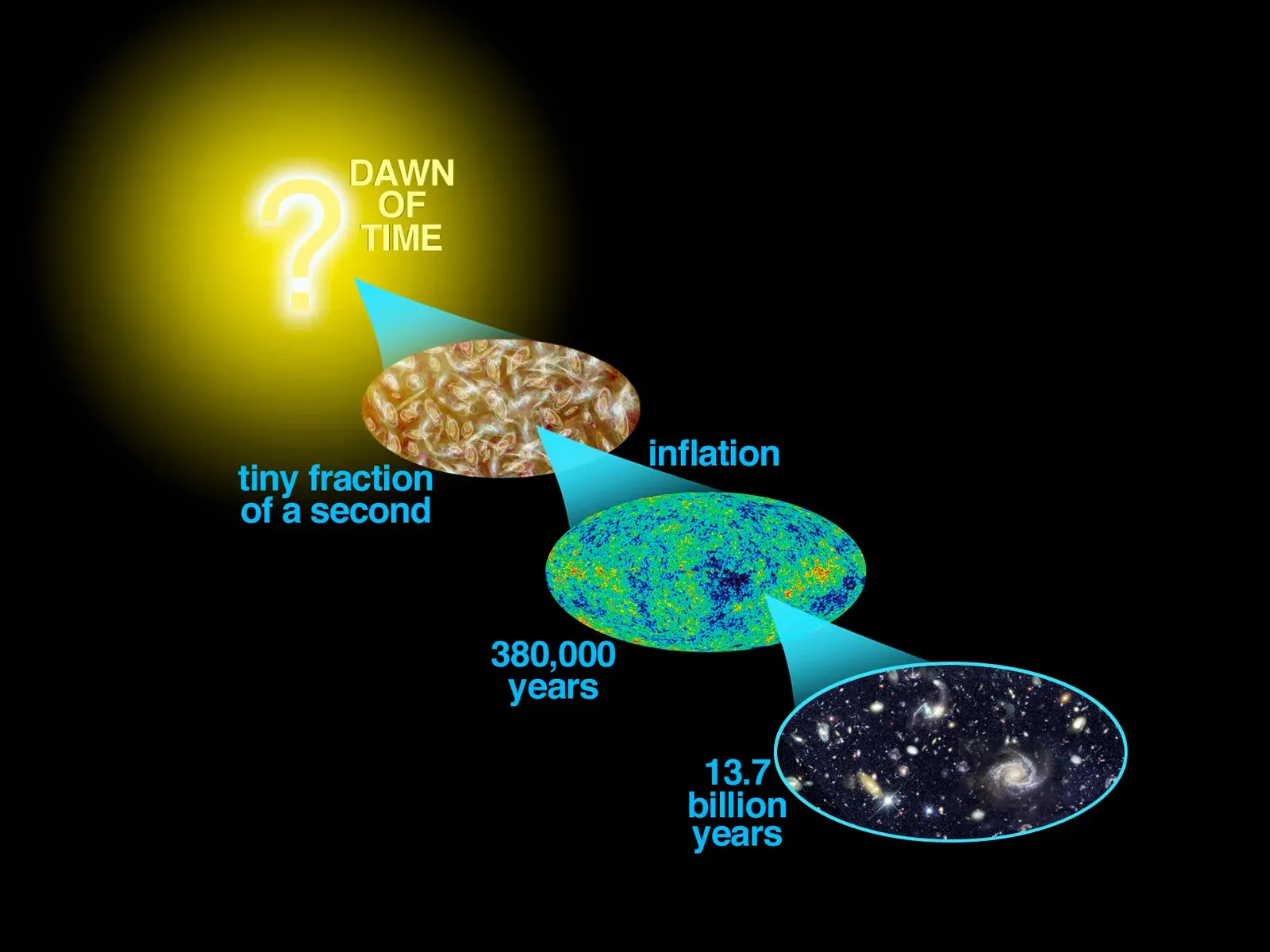
A UK, Canadian and Italian study provided what researchers believe is the first observational evidence that your universe could be a vast and complex hologram. Theoretical physicists and astrophysicists, investigating irregularities in the cosmic microwave background – the afterglow of the Big Bang – found there is substantial evidence supporting a holographic explanation of the universe. In fact, as much evidence as there is for the traditional explanation using the theory of cosmic inflation. That comparison alone is staggering.
In recent decades, advances in telescopes and sensing equipment have allowed scientists to detect a vast amount of data hidden in the microwaves left over from the moment the universe was created. Using this information, the team was able to make complex comparisons between networks of features in the data and quantum field theory. They found that some of the simplest quantum field theories could explain nearly all cosmological observations of the early universe. The cosmic microwave background is essentially humanity’s oldest photograph, and it might be hiding a holographic fingerprint.
New Tests, Fresh Approaches, and the Push to Verify
Abhay Katyal, a doctoral student at Utah State University, and his mentor Associate Professor Oscar Varela, along with former postdoctoral researcher Ritabrata Bhattacharya, are focusing on a concept known as the holographic principle. Their findings were recently published in the prestigious journal Physical Review Letters. This is not dusty 1990s theory collecting cobwebs. This is active, ongoing science happening right now.
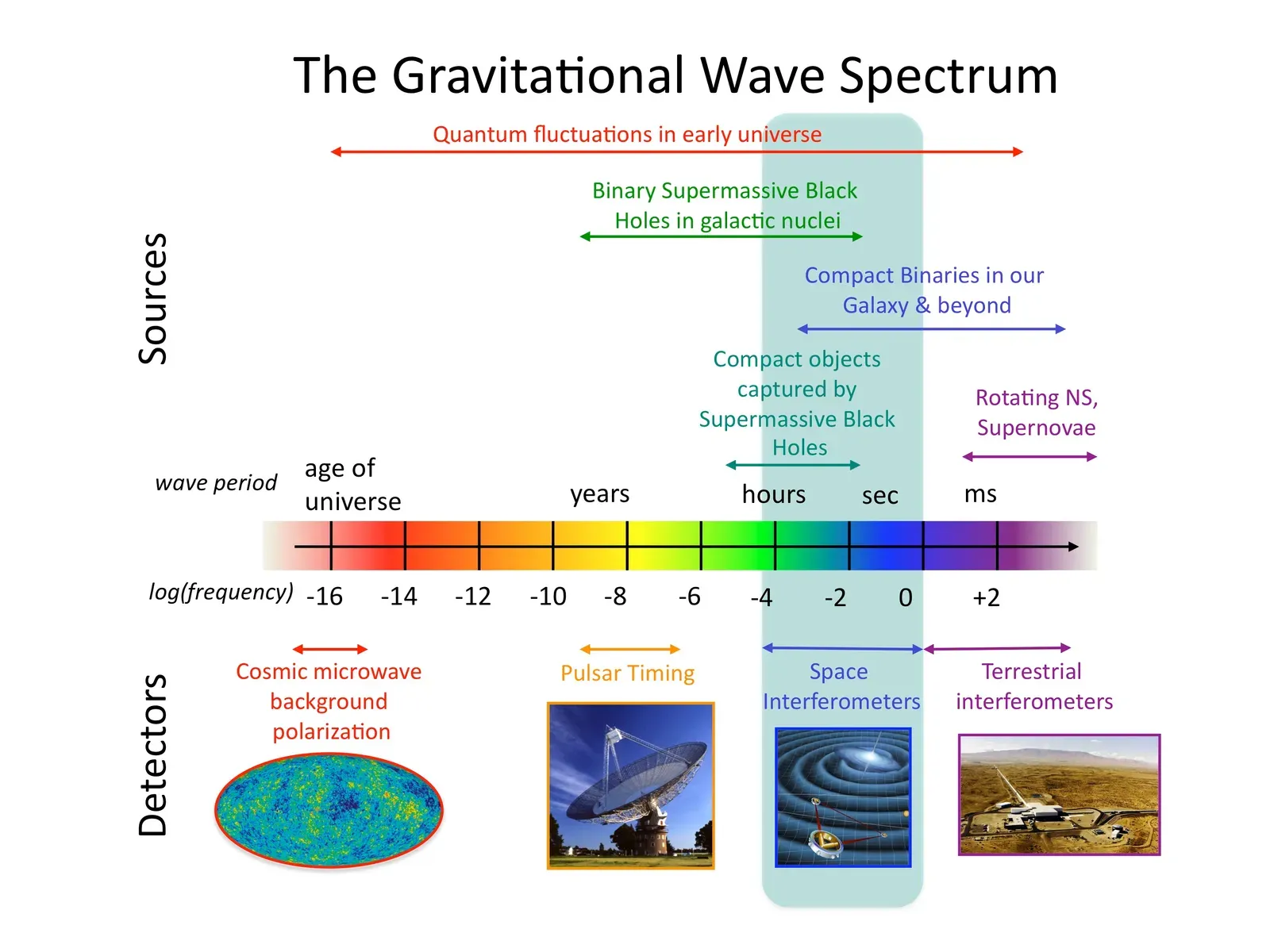
A new mathematical test of the holographic principle has been developed to advance understanding of quantum gravity, aiming to reconcile quantum mechanics and general relativity. Strominger and others in the subfield of celestial holography aim to approach it as testable within real-world physics using gravitational wave detection with LIGO or LISA. Gravitational waves as a tool to test whether your reality is a projection – if that doesn’t excite you, I’m not sure what will.
The Challenges, the Skeptics, and What Remains Unknown
Despite its intriguing nature, the holographic universe theory faces skepticism from many in the scientific community. While mathematically compelling, the holographic principle often feels speculative and abstract, lacking the direct experimental evidence that typically underpins established scientific theories. Critics argue that without concrete proof, it remains more of a theoretical curiosity than a validated description of the universe. Let’s be real – that is a fair criticism. Science runs on evidence, not elegance alone.
Your universe isn’t an anti-de Sitter space – it’s expanding, with a positive cosmological constant, meaning it’s a de Sitter space. The AdS/CFT duality doesn’t apply directly. Still, physicists including Maldacena himself are working on ways to extend the holographic idea to universes like yours. Confirming the holographic nature of spacetime is challenging due to the abstract and theoretical nature of the principle. However, potential experimental evidence could come from observations that align with predictions made by the holographic principle, such as specific properties of black hole radiation or the behavior of entangled particles that suggest non-local encoding of information. The gaps are real, but so is the momentum driving researchers forward.
Conclusion: A Theory That Changes Everything – If True
It’s hard to say for sure where this all leads. But consider what’s at stake. If the holographic principle turns out to be correct, it could change how scientists understand the universe, from its origin to its future. It could reshape the way physicists think about the Big Bang, the existence of black holes, and the shape of the cosmos. It may also improve the development of technologies like quantum computing or techniques used in material sciences.
If the holographic theory is correct, it would flip your understanding of reality entirely. The idea of “depth” or “inside” might not be fundamental at all. Space itself could be an illusion – an emergent property derived from information stored elsewhere. That is not just a scientific revolution. That is a philosophical earthquake. The universe you inhabit, the coffee you drank this morning, the face of someone you love – all of it, possibly just extraordinarily complex information encoded on a surface you can never see or touch.
Whether this turns out to be the greatest insight in the history of science or the most spectacular dead end, one thing is certain: the scientists pursuing it are asking the most profound question a human being can ask. What is reality, really? What would you answer?