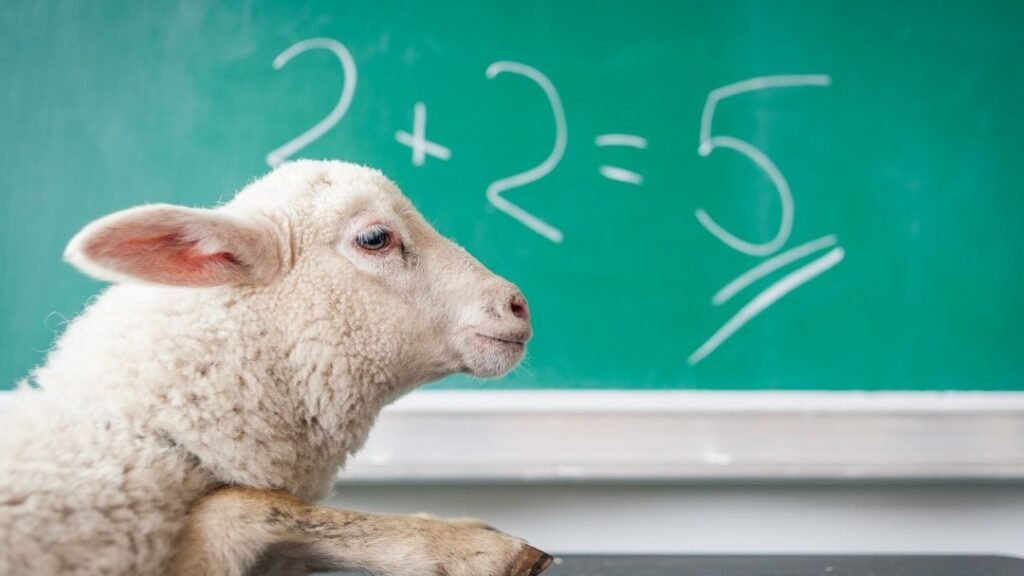
Most of us walk past a crow pecking at scraps on the pavement and think nothing of it. We watch an octopus drift across an aquarium tank and assume it’s just going through instinctual motions. We’ve spent centuries telling ourselves that intelligence – real, complex, layered intelligence – is a human thing. Honestly, it’s a comfortable idea. It also happens to be increasingly, spectacularly wrong.
For centuries, humans believed that intelligence was our defining feature, the one thing that truly separated us from the rest of the animal kingdom. Modern science keeps challenging that belief. The deeper researchers look into the minds of animals, the more astonishing discoveries they make. Intelligence, it turns out, is not a human monopoly. What you’re about to read might just change how you see every animal you’ve ever looked at. Let’s dive in.
Chimpanzees: The Memory Champions Who Beat Humans at Their Own Game
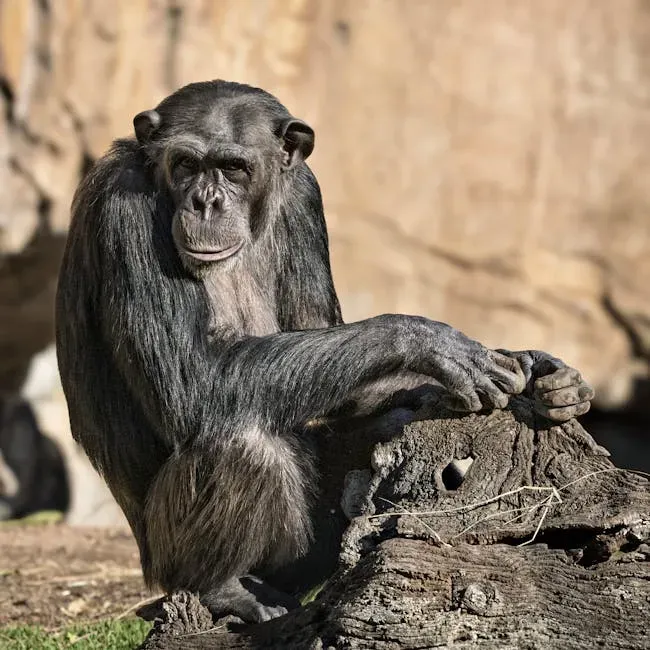
Here’s a fact that should knock you sideways: a chimpanzee has beaten human adults in memory tests. Not once, as a fluke, but repeatedly, under controlled conditions. If you sat down against a chimp in a short-term spatial memory challenge, the odds are not in your favor.
Chimpanzees consistently lead intelligence rankings due to their mastery of tool-making, long-term planning, and cultural learning. They craft spears for hunting, use leaves as sponges, coordinate group strategies, and learn sign language with comprehension similar to young children. Their ability to innovate and pass knowledge down generations mirrors early human societies, making them the closest comparison to human cognitive evolution.
In 1960, chimps became the first nonhuman animals documented using tools, an ability scientists previously thought was unique to humans. Further research has uncovered complex social lives, a range of human-like emotions, and metacognition – or the ability to “think about thinking.” Think about that for a moment. These are animals reflecting on their own thought processes, something most people assume is reserved purely for philosophers and late-night existential spirals.
Chimps may even revise their beliefs in surprisingly human-like ways, adjusting their understanding when new evidence is presented to them. That’s not instinct. That’s reasoning. If you’ve ever assumed your intelligence made you categorically different from a chimpanzee, science is gently, but firmly, asking you to reconsider.
Dolphins: The Ocean’s Social Geniuses With Their Own Names
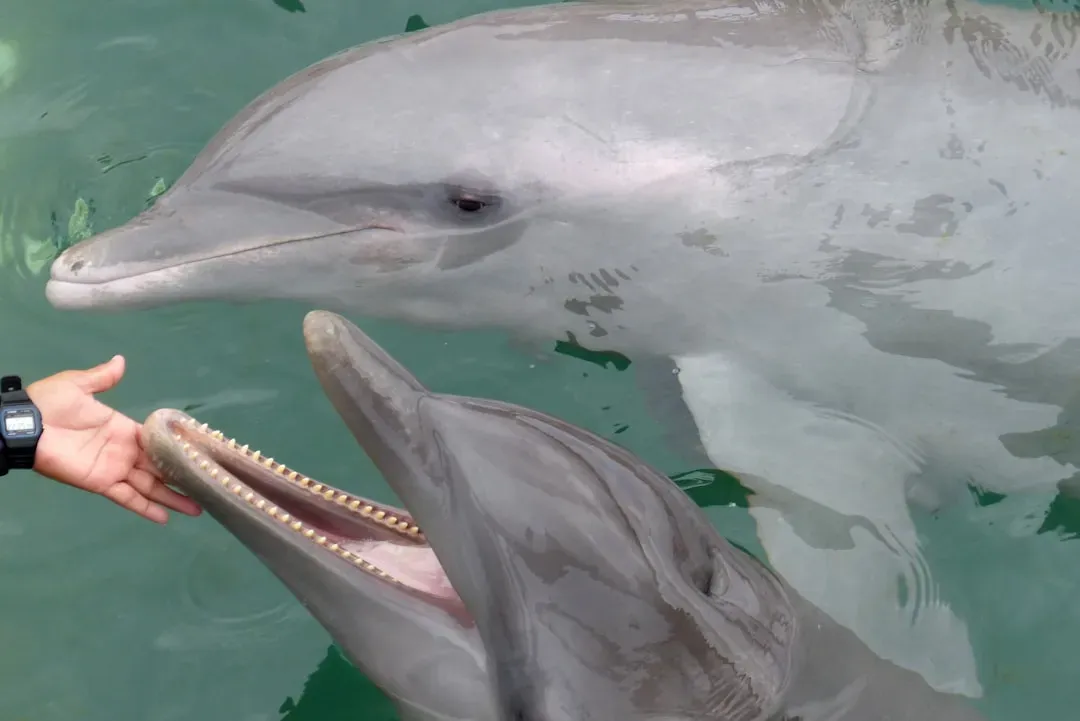
Imagine if every person you ever met gave you a unique, personalized whistle as a greeting. That’s essentially what bottlenose dolphins do, and it’s one of the most remarkable communication systems in the entire animal kingdom. I think this one surprises people more than almost anything else about animal cognition.
Bottlenose dolphins combine echolocation precision with advanced communication systems. They use signature whistles, essentially names, to identify individuals and pass complex behaviors through social teaching. Their cooperative hunting strategies require high-level planning, role assignment, and real-time adaptation, showcasing exceptional cognitive abilities for marine mammals.
In 2001, two researchers performed a self-recognition test on dolphins at the New York Aquarium, proving that they can recognize themselves in a mirror. This is a hallmark of self-consciousness, once thought exclusive only to humans. Field observations have also shown bottlenose dolphins teaching their young to use marine sponges as foraging tools, proving their empathy and innovation.
Some studies show that dolphins can recognize themselves in mirrors, something only a few species, including humans and great apes, are capable of. This self-awareness hints at a level of consciousness that’s both humbling and extraordinary. When you think about the ocean as a vast, featureless environment where survival depends on cooperation and communication, a dolphin’s brain starts to make perfect evolutionary sense.
Octopuses: The Alien Minds Living Right Here on Earth
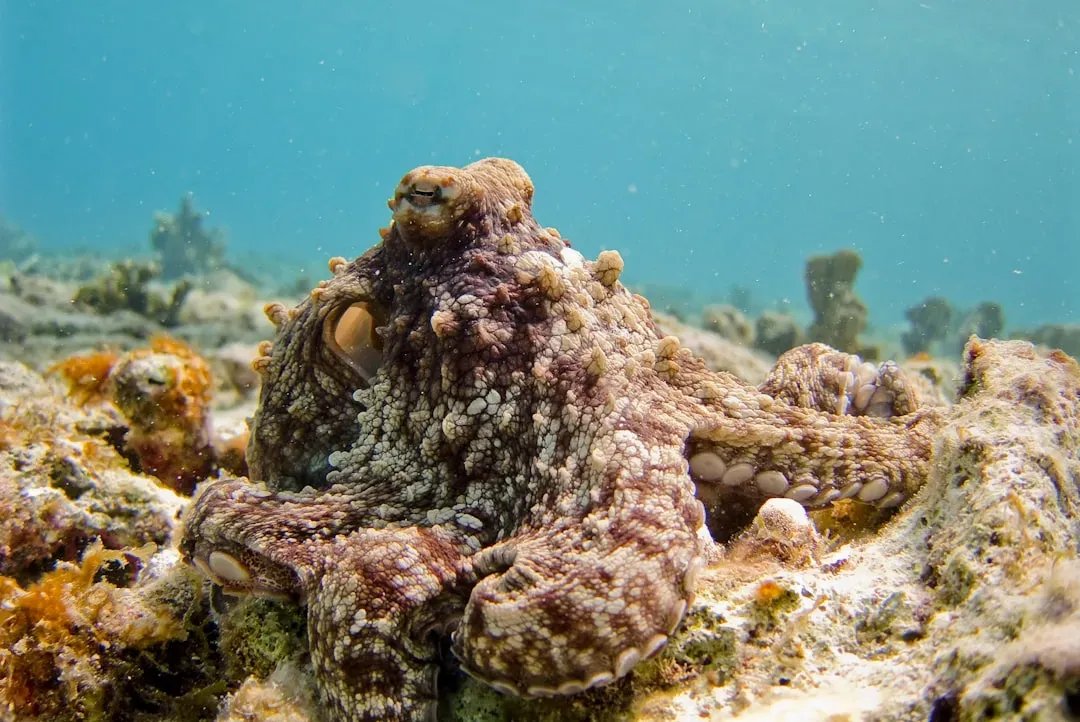
If you’ve never heard of an octopus escaping its tank at night to raid neighboring fish tanks, sneaking back before morning, then you’re in for a treat. It sounds like fiction. It absolutely is not. The octopus is, without exaggeration, one of the strangest and most brilliant minds on the planet.
Each of their eight arms can function semi-independently from the brain in the octopus’ head. In a sense, with each limb having a mind of its own, an octopus essentially has nine brains. The intelligence of octopuses is truly remarkable, especially considering they are invertebrates. They are capable of complex problem-solving skills, can learn through observation, and have excellent spatial memory.
Researchers confirmed that octopuses could recognize individual humans despite them wearing identical uniforms. The animals behaved differently around the person who fed them and the person who touched them with a bristly stick. That’s not just memory. That’s a personal grudge, and honestly, who could blame them?
Their camouflage and mimicry abilities are also cognitively demanding, allowing them to control their skin color and texture to blend in with their surroundings or imitate other animals. Think of it like this: an octopus is simultaneously running a disguise operation, navigating complex terrain, remembering individual faces, and problem-solving, all without the kind of centralized brain structure we typically associate with intelligence. It rewrites everything we thought we knew about what a “smart” creature needs to look like.
Elephants: The Giants Who Grieve, Name Each Other, and Never Forget
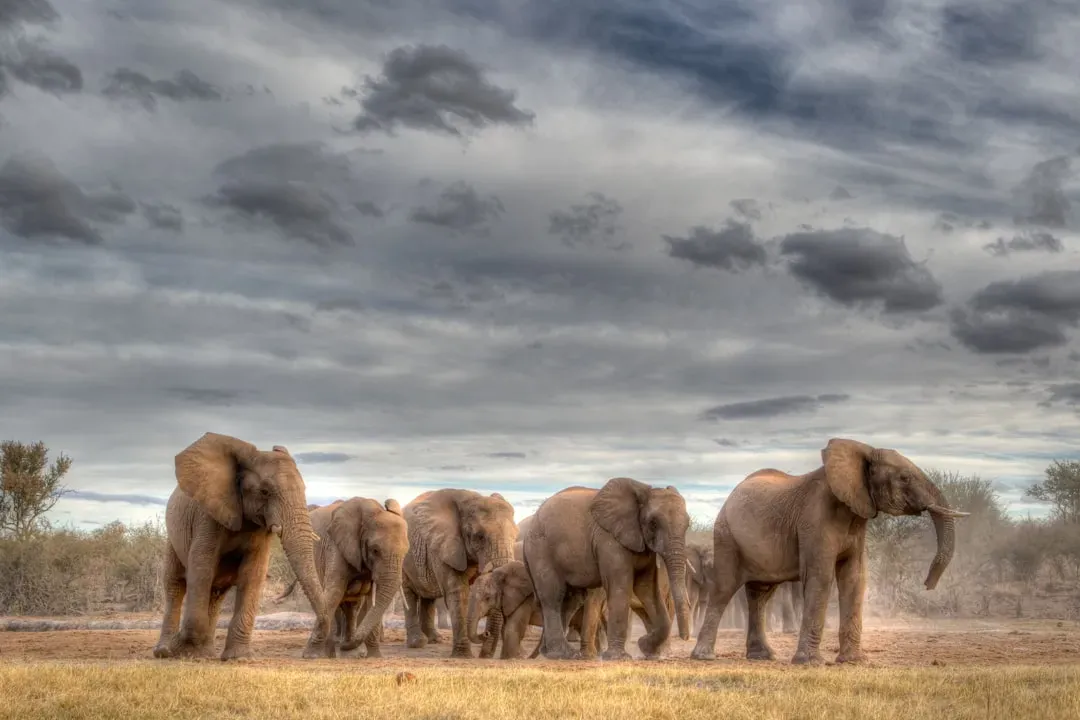
The phrase “an elephant never forgets” turns out to be more science than cliché. These animals carry with them an emotional and cognitive world so rich that researchers who study them often describe it as humbling. What makes elephants special isn’t just memory – it’s what they do with it.
Elephants have the largest brains of any land animal. These giants have extraordinary memory, high social intelligence, excellent problem-solving abilities, and complex emotions. Elephants are widely recognized as some of the world’s most empathic creatures. They live in tight-knit family groups and have been recorded helping each other in distress and grieving for their dead.
Elephants have close social bonds, which may have led to the evolution of name-like calls. Humans aren’t the only animals that have names for each other, and studying animals that use names can teach researchers more about how human names evolved. Let that sink in. You are not the only species on Earth with a name. Your name is not uniquely human.
A recent study by Indian scientists outlined cases of elephant burials. That means elephants not only recognize and mourn death but also engage in deliberate ritual behavior around it. Whether you want to call that culture, grief, or something else entirely, it is staggering evidence of a depth of inner life that we are only beginning to understand.
Crows and Ravens: The Feathered Strategists Planning 17 Hours Ahead
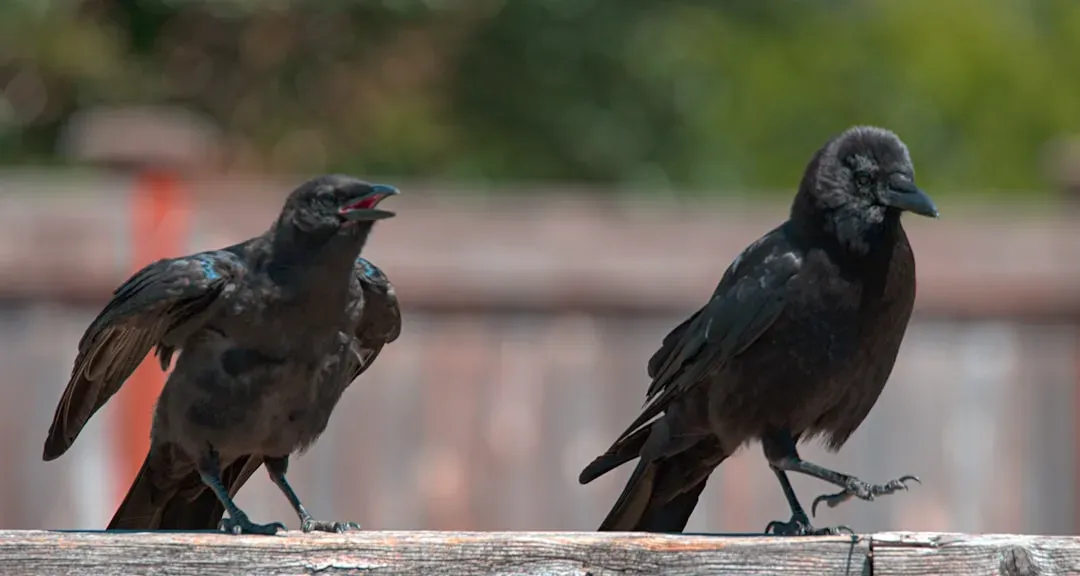
Let’s be real – most people still use “bird brain” as an insult. Which is wild, because corvids like crows and ravens are pulling off cognitive feats that leave scientists genuinely astonished. These birds plan for the future. They remember faces. They hold grudges. They even engage in something that looks remarkably like politics.
Ravens rival great apes in their ability to plan for tool use and bartering. These birds can plan for events 17 hours in advance, and they display impressive levels of self-control when making decisions for the future. Seventeen hours. That’s not reaction. That’s deliberate, forward-thinking strategy from a creature with a brain smaller than your fist.
Research shows that ravens are highly social and intelligent, forming foraging groups structured by dominance hierarchies and social bonds. They remember former group members, deduce third-party relationships, and use social knowledge in conflicts and affiliations. These cognitive abilities, like forming alliances and intervening in social interactions, suggest that ravens engage in behaviors resembling politics. Their intelligence is comparable to that of other socially complex species, like primates.
By looking in-depth at their neuroanatomy, recent research suggests that crows are aware of the knowledge that they have and are able to ponder that knowledge. This ability is how individuals make new discoveries. So the next time a crow tilts its head and stares at you, it might not just be curiosity. It might be assessment. A cold, calculated, remarkably intelligent assessment of exactly who you are and whether you’re worth remembering.
Conclusion: The Animal Kingdom Is Smarter Than You Think
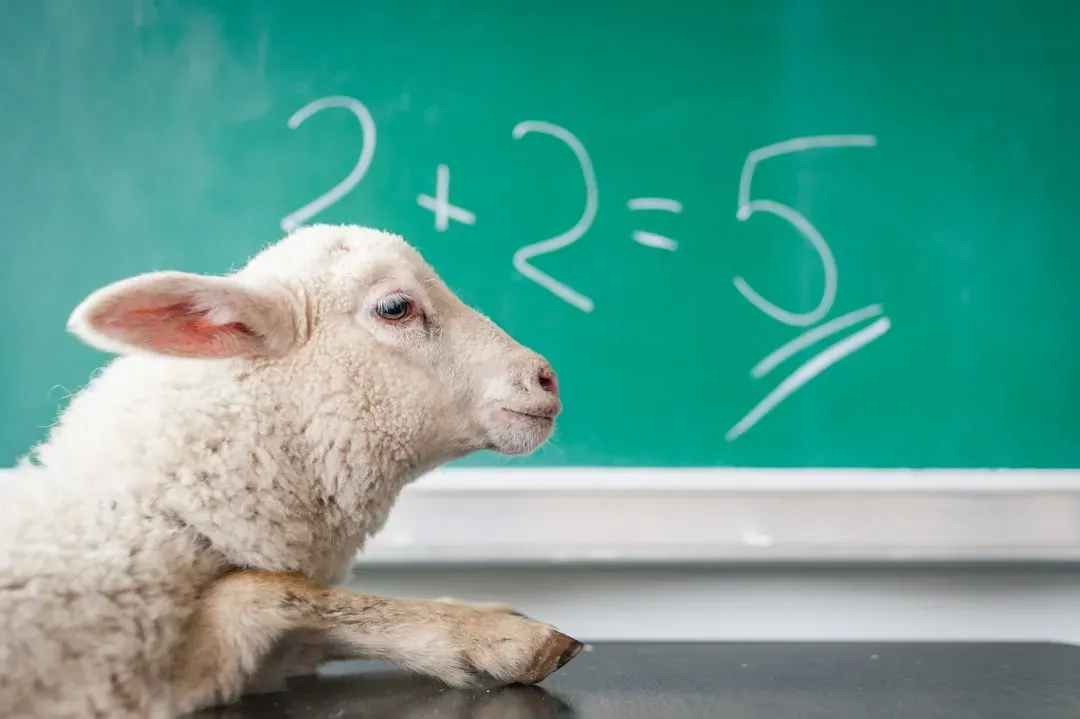
What these five cases tell us, collectively, is something profound. Animal intelligence takes many different forms, from the emotional memory of elephants to the mathematical reasoning of parrots and the problem-solving strategies of crows and octopuses. These species demonstrate cognitive abilities that challenge narrow definitions of intelligence and highlight the depth of mental complexity found throughout the animal kingdom. Studying these abilities shows that intelligence is not a single trait but a spectrum shaped by evolution, environment, and social structures.
We’ve spent so long assuming the top of the intelligence pyramid was ours alone that we almost missed the extraordinary minds living right alongside us. A crow planning its afternoon. An elephant calling its friend by name. An octopus holding a personal grudge. These aren’t curiosities at the margins of science. They are central, urgent reminders that the world is far more complex and far more alive than we give it credit for.
The more we look, the more we find. As research progresses, scientists continue to uncover astonishing examples of advanced cognition in animals once underestimated. Understanding these capabilities not only enriches scientific knowledge but also supports stronger conservation efforts. So the real question isn’t how smart animals are. The real question is: were we ever paying close enough attention? What animal surprised you most on this list? Tell us in the comments below.