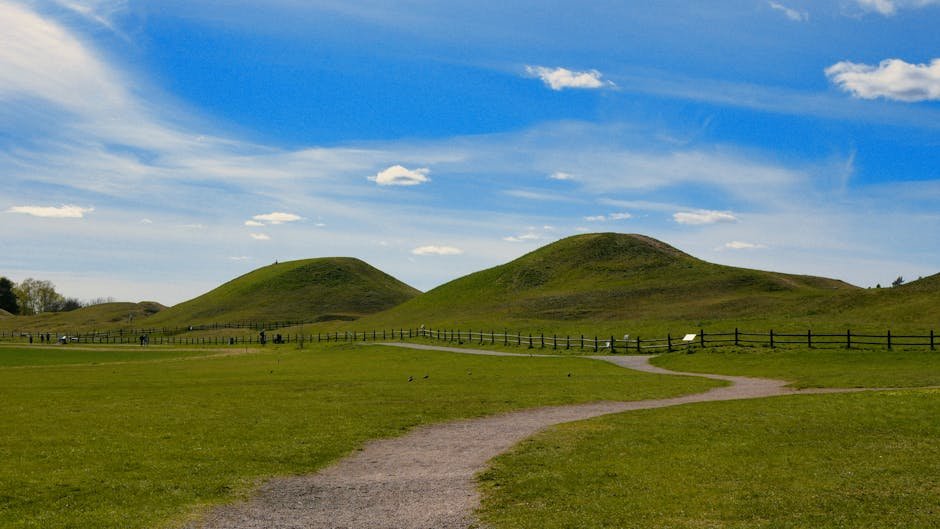

You might think you know American history. The Revolutionary War, the founding fathers, the westward expansion. But go back further, much further, and you’ll find a continent full of jaw-dropping enigmas that no textbook has ever fully cracked. These are the kinds of mysteries that keep archaeologists awake at night – sunken cities of earth, vanished populations, footprints pressed into ancient mud, and carved words that open more questions than they close.
Honestly, some of these stories are so strange that even the experts shrug their shoulders. The Americas have a past far deeper and more complex than most people realize, and the gaps in that story are astounding. Get ready to look at your continent with fresh eyes. Let’s dive in.
1. Cahokia: North America’s Forgotten Metropolis That Simply Vanished
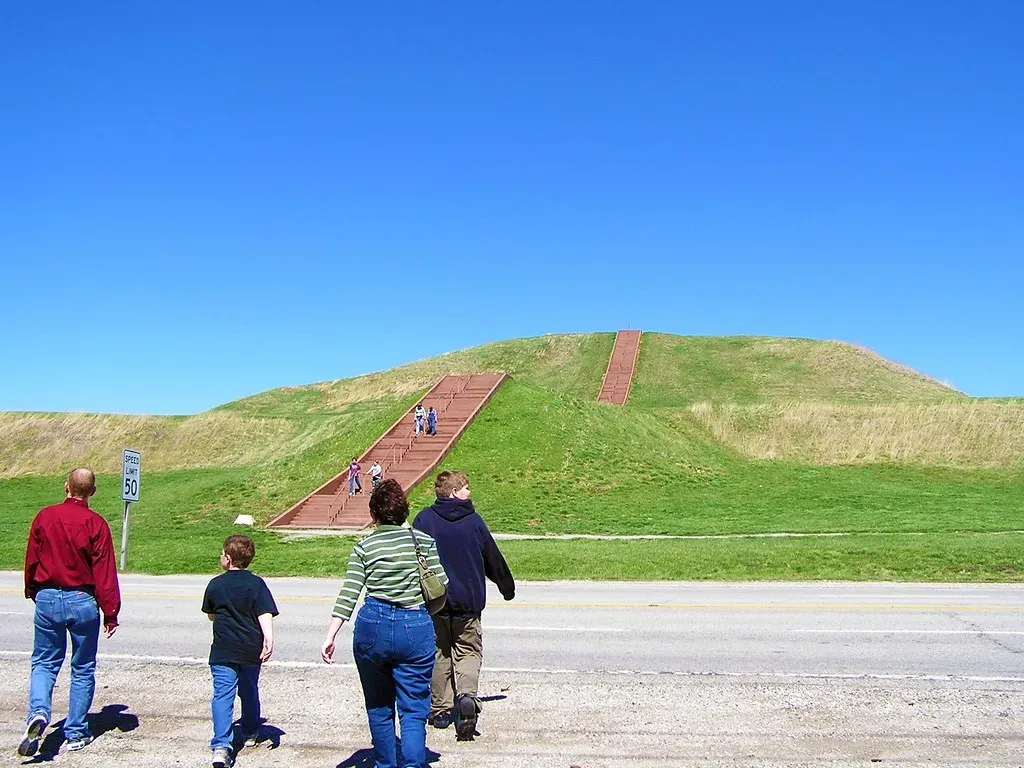
Picture a city larger than London, thriving in what is now southern Illinois, centuries before Columbus ever set sail. That is exactly what Cahokia was. Nine hundred years ago, the Cahokia Mounds settlement just across the Mississippi River from present-day St. Louis bustled with roughly 50,000 people in the metropolitan area, making it one of the largest communities in the world. It had urban planning, trade networks, and monumental architecture that rivals anything in the ancient world.
The city’s landscape was dominated by massive earthen pyramids, broad ceremonial plazas, and woodhenges, vast circular arrays of timber posts believed to have been used to track the sun’s movements and mark seasonal rituals. At its core rose Monks Mound, a towering 100-foot-high platform that remains the largest prehistoric earthen structure in North America. Yet, for all that grandeur, by 1400, the once-popular site was practically deserted, a mass departure that remains shrouded in mystery. Theories range from drought and crop failure to political unrest, but perhaps they had exhausted the land’s resources, or were the victims of political and social unrest, climate change, or extended droughts. Nobody truly knows, and that silence is haunting.
2. The Lost Colony of Roanoke: 115 People, Gone Without a Trace
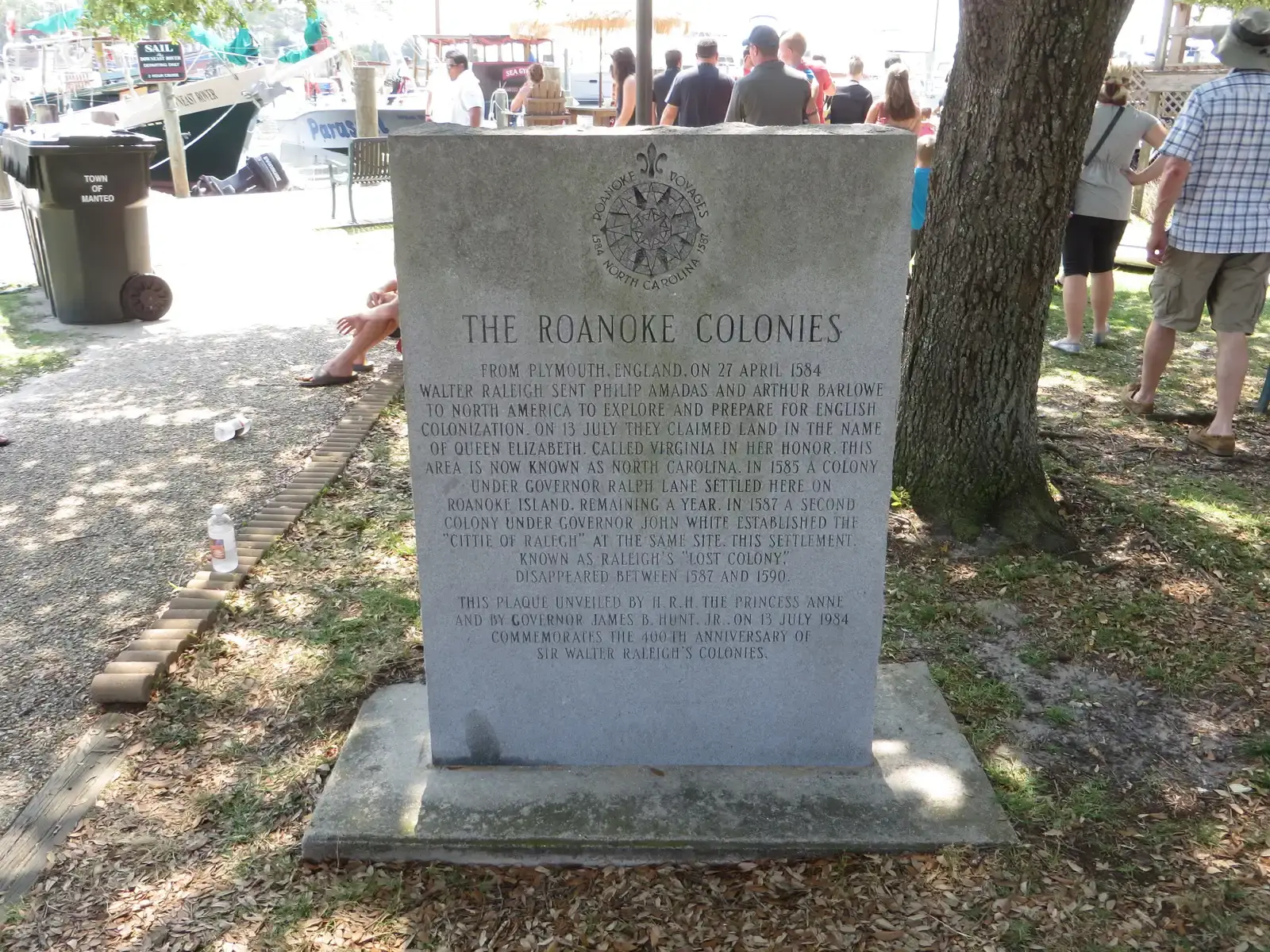
This one never gets old, and it never gets solved. The origins of one of America’s oldest unsolved mysteries can be traced to August 1587, when a group of about 115 English settlers arrived on Roanoke Island, off the coast of what is now North Carolina. Following an earlier, failed attempt at settlement on Roanoke two years earlier, these colonists intended to form the first permanent English outpost in the New World. When their governor John White sailed back to England for supplies, war with Spain stranded him there for years.
The colony was completely deserted when he returned. The settlers had dismantled their homes, suggesting a planned rather than hasty departure. There were no signs of a struggle or violence, no graves, and no indication of where they had gone. The only clues were the letters “CRO” carved into a tree and the word “CROATOAN” carved into a fence post. Beginning in 1998, the Croatoan Archaeological Project researched and provided archaeological evidence to back up the theory that the colonists moved to be with, or at least interacted with, the Hatteras tribe. Artifacts and objects found within Croatoan villages that only English settlers had owned or made at the time have solidified the connection between the two groups. Still, regardless of this evidence, and many other theories, it is likely that no definitive answer to the mystery of the colonists’ disappearance will ever be found.
3. Poverty Point: A Hunter-Gatherer City That Shouldn’t Exist
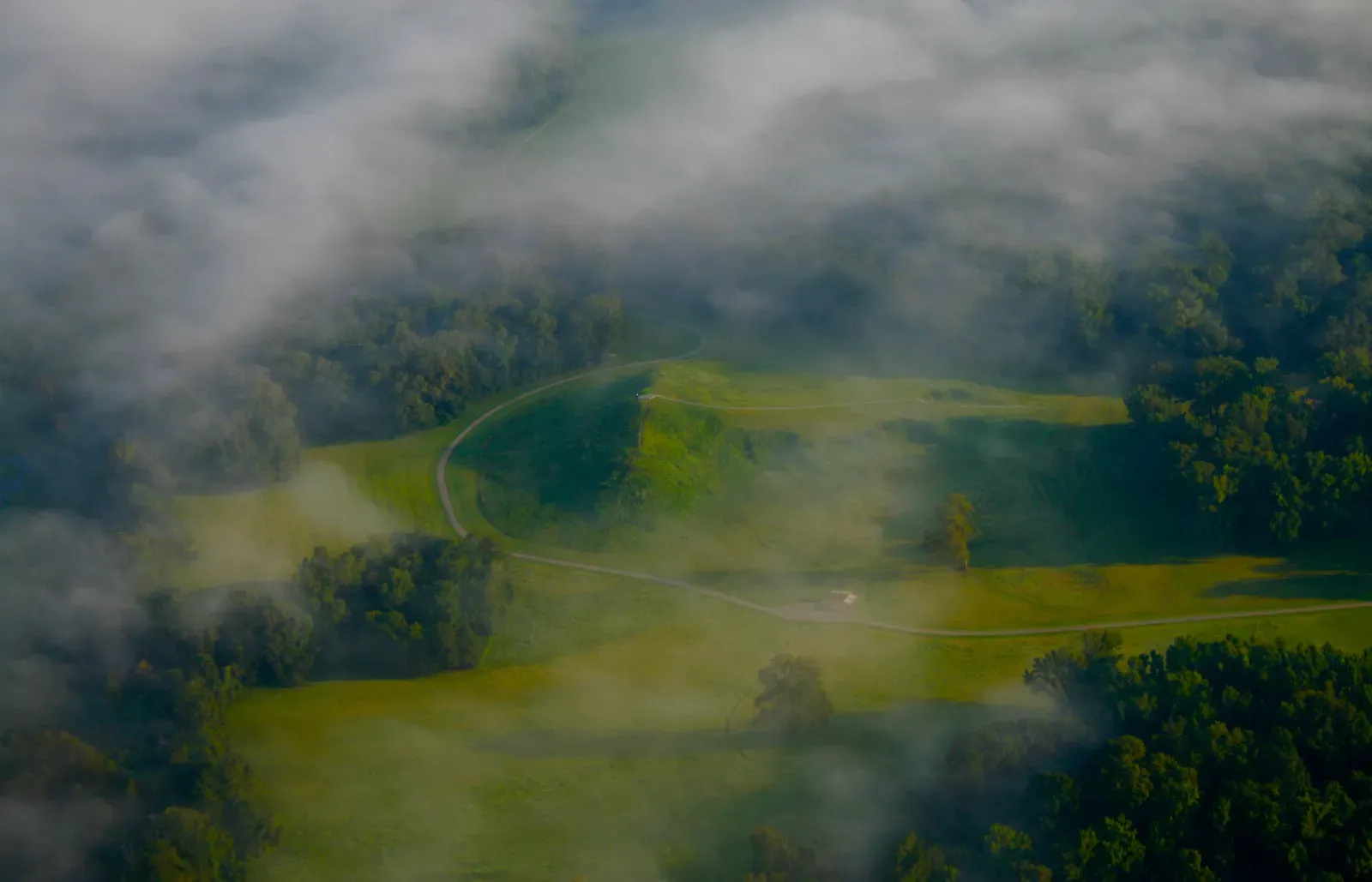
Here’s the thing – ancient history tells us that massive cities required agriculture, a ruling class, and generations of organized labor to construct. Poverty Point, Louisiana, breaks every one of those rules. Constructed about 3,500 years ago, these giant, evocatively shaped earthworks were the largest in the Western Hemisphere when they were built. Beyond the obvious surmise that they were the work of Native Americans, little is known about the people responsible. What makes this even more remarkable is that 3,500 years ago, Poverty Point was a thriving city of over 5,000 people in the bayous of northern Louisiana, and despite not having agriculture or even ceramics, those people built North America’s second-largest pyramid-mound.
The sheer scale of construction is baffling without a centralized authority. Think of it like building a skyscraper using only hand tools and willpower. Yet a fascinating new theory has emerged. Hunter-gatherers at Poverty Point may have built its massive earthworks not under the command of chiefs, but as part of a vast, temporary gathering of egalitarian communities seeking spiritual harmony in a volatile world. New radiocarbon data and reexamined artifacts suggest far-flung travelers met to trade, worship, and participate in rituals designed to appease the forces of nature. Archaeologists have recovered thousands of clay-fired cooking balls and materials brought from faraway regions, such as quartz crystal from Arkansas, soapstone from the Atlanta area, and copper ornaments originating near the Great Lakes. The why, however, remains wide open.
4. The Great Serpent Mound: A Mile-Long Snake Pointing at the Sky
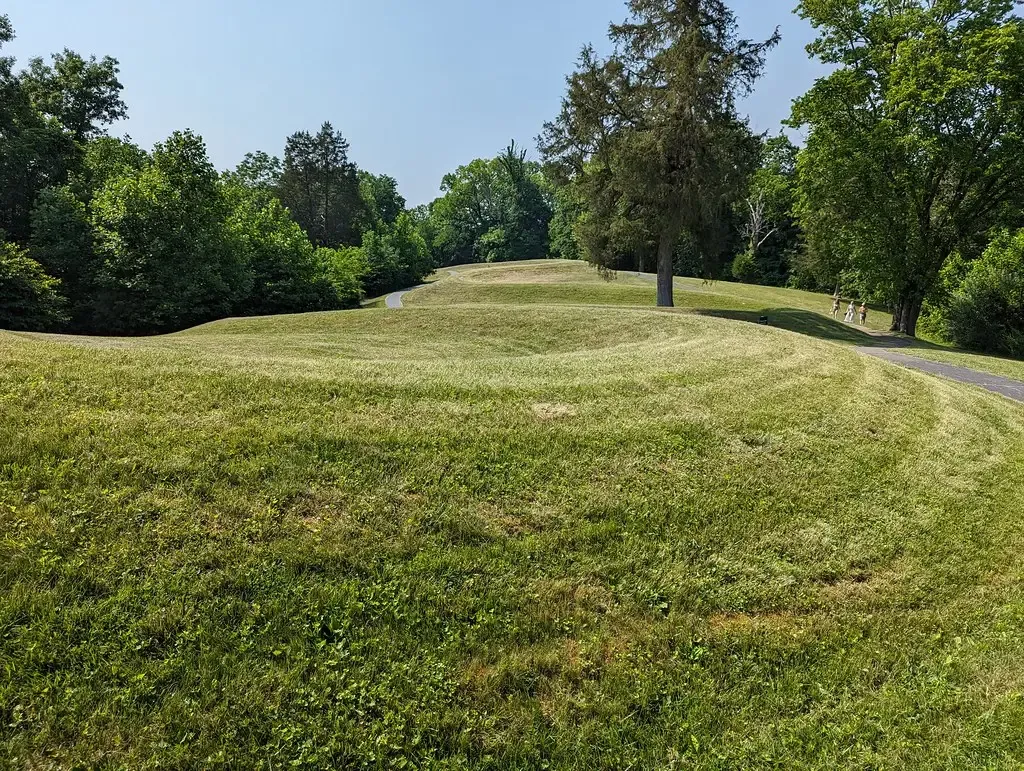
If you’ve ever seen an aerial photograph of Ohio’s Great Serpent Mound, you already understand why people find it so unsettling. Serpent Mound is an archaeological and historic site in Peebles, Ohio, enclosing an effigy mound 1,348 feet long in the shape of a serpent, the largest effigy mound of a serpent in the world, built between approximately 800 BCE and 1070 CE. It’s enormous, it’s precise, and it was built by people who could never see the full picture of what they were creating from the ground. The effort involved is almost incomprehensible.
The debate over who built it runs parallel to the mystery of why. Dating of the site has been problematic as it was first positively dated and attributed to the Native American Adena culture, but later excavations strongly suggested it was built by the natives of the so-called Fort Ancient culture, around 1070 CE. Some archaeologists point out that the serpent mound’s head aligns with the summer solstice, so it may have had an astronomical or ceremonial purpose. In the absence of any artifacts or written records, however, the mound may remain a vast, serpentine enigma. Was it a calendar? A cosmic map? A ritual offering? It’s hard to say for sure, but the silence of the earth beneath it speaks volumes.
5. The White Sands Footprints: Were Humans in America Thousands of Years Earlier?
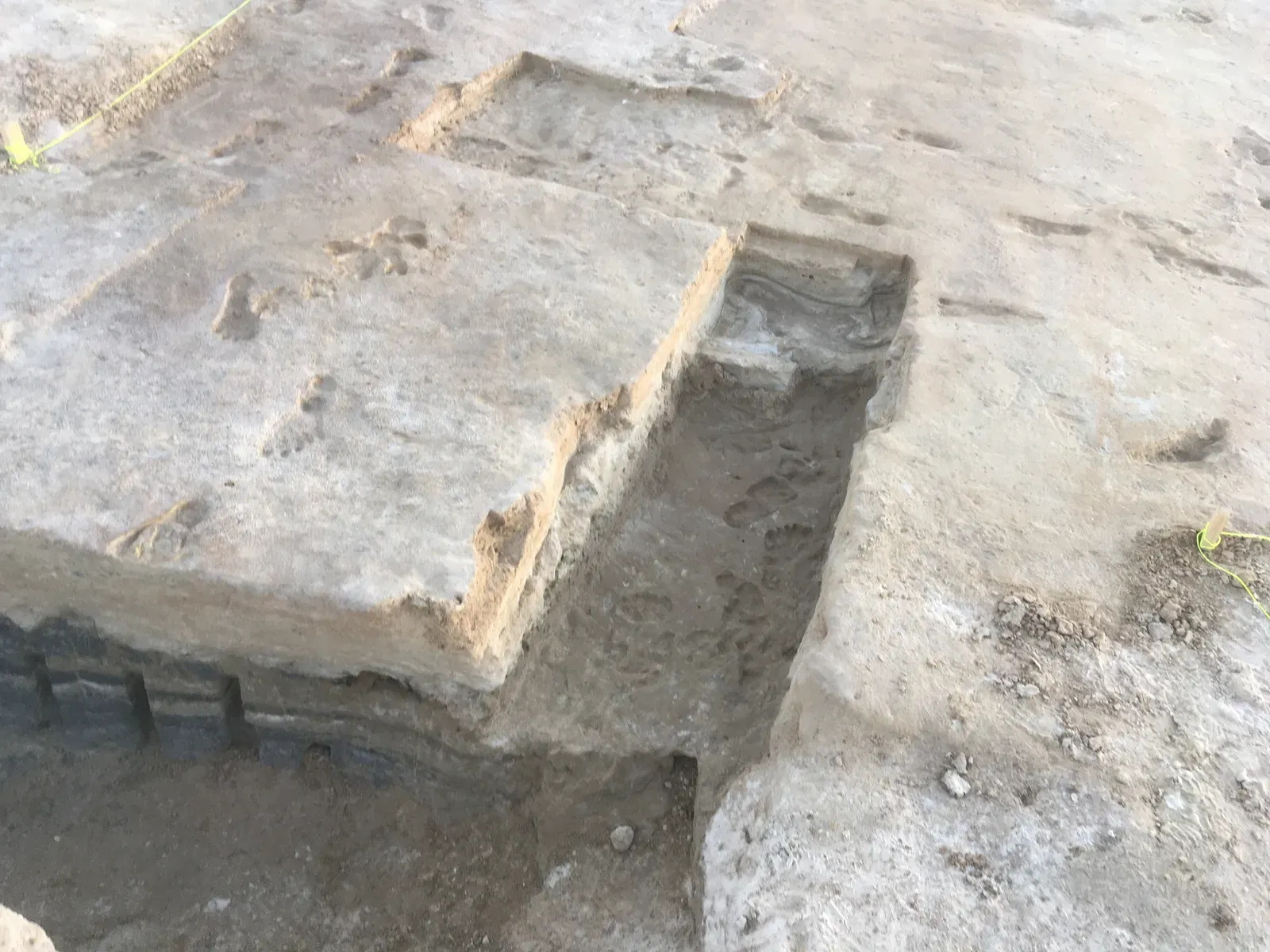
This one genuinely rewrote the textbooks, or at least tried to. The discovery of fossilized footprints in White Sands National Park offered evidence that humans roamed North America 21,000 to 23,000 years ago, much earlier than previously thought. That alone is staggering. The accepted timeline of human arrival in the Americas has long been a subject of fierce academic debate, and these footprints dropped a grenade right into the middle of that conversation. Covering around a mile, it’s also the longest track of fossilized human footprints ever discovered. They were made mostly by children and teenagers, including one child under three, and other prints show that these people crossed paths with mammoths and giant sloths.
What followed the discovery was a scientific tug-of-war that continues today. The findings of the original 2021 study were disputed by a second study in 2022, which claimed the footprints were just 15,000 to 13,000 years old. Then in 2023, a third study reaffirmed the original findings. The confusion all came down to the dating techniques used, which are still up for debate in some scientific circles. Think of it like a courtroom where every expert witness contradicts the last one. Who first walked across America, and when? We may be closer to answering that question, but we are not there yet.
6. Casa Grande: Arizona’s Four-Story Enigma in the Desert
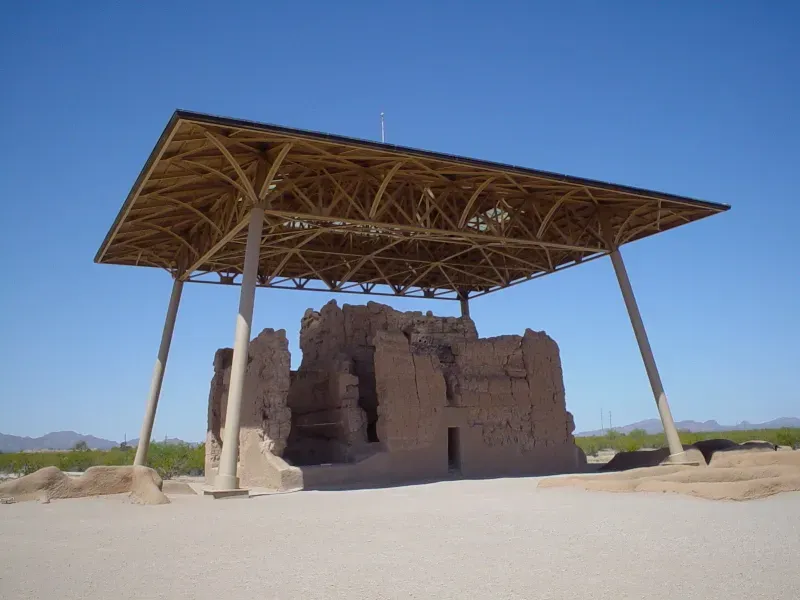
Standing in the middle of the Arizona desert, Casa Grande looks like something between a fortress, a temple, and an observatory. It demands a kind of reverence, mostly because nobody fully understands what it was for. Archaeologists understand some things about Casa Grande in Arizona. They know that it was probably constructed in the early 13th century, that the builders used adobe, and that the full complex included several other adobe structures and a ball court, and was once surrounded by a wall. What they don’t know is what the four-story central building was for: a guard tower, a grain silo, a house of worship, or something else.
The abandonment of the site makes everything worse, mystery-wise. The site was abandoned nearly half a century before Columbus’s voyage to the Americas, long after the nearby Hopi had moved away, and was too ruined for early Spanish explorers to do their own investigating into what it was. So by the time the outside world even noticed it, the people with answers were long gone. Let’s be real – a four-story adobe structure built without modern tools, aligned with astronomical events, and then simply left behind, is the kind of thing that should be in every history class. The fact that we still cannot decode its purpose is a reminder of just how much has been lost to time.
7. America’s Stonehenge: A Mystery Hill That Nobody Can Explain
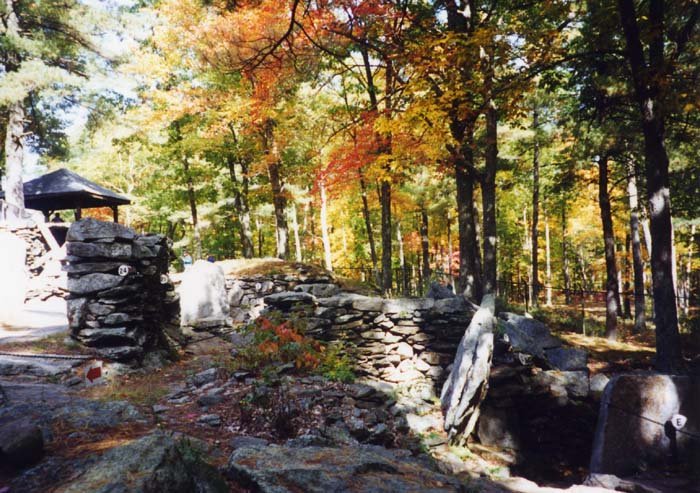
Hidden in the forests of New Hampshire sits a collection of stone chambers, walls, and megalithic structures so puzzling that people have been arguing about its origins for over a century. It may not be as mighty as England’s famous stone circle, but America’s Stonehenge is equally shrouded in mystery – nobody really knows who constructed the manmade chambers, walls, and ceremonial meeting places. Parts of the site have been carbon-dated to 4,000 years ago, while the stone chambers and walls are more reminiscent of early American settlers in the 1700s. That wide range alone tells you how confounding this place is.
The inscriptions only deepen the puzzle. There are supposedly Phoenician, Iberian Punic, and Ogham – an early Celtic alphabet – inscriptions, although some think these could have been left by later Indigenous peoples or be colonial graffiti. Were ancient trans-Atlantic voyagers involved? Were these chambers built by Indigenous peoples, colonial farmers, or someone else entirely? The site’s “mysterious” reputation has made it a popular tourist attraction for decades, and it’s even earned some pop culture fame – H.P. Lovecraft reportedly visited the site for inspiration, and The X-Files set one episode nearby. Pop culture aside, serious researchers still cannot agree on even the most basic facts about this place. Every theory opens a new door, and none of them lead to a clear room.
The Mystery Endures, and That’s the Point
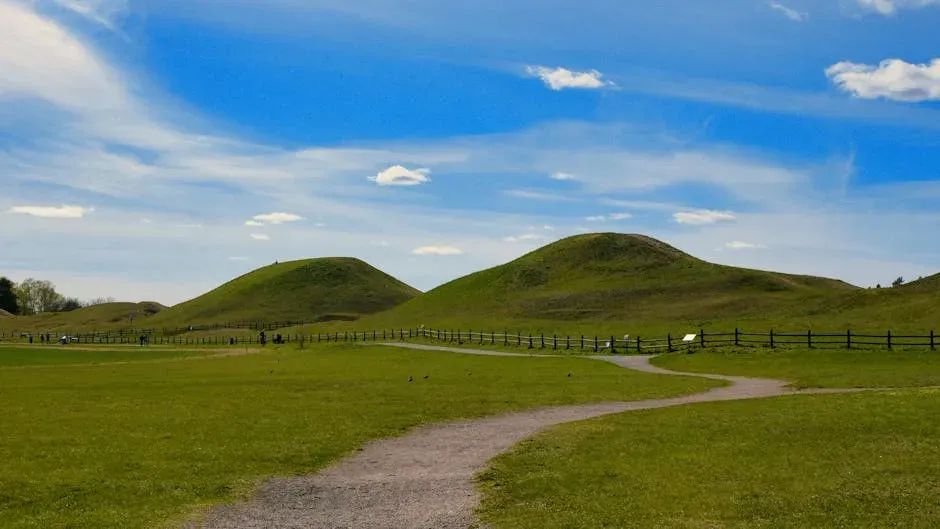
What you’ve just encountered is only a slice of the ancient American puzzle. From the shadow of Monks Mound to the ghostly silence of Roanoke Island, these seven mysteries represent something deeper than unsolved cases. They are proof that the American continent held civilizations of extraordinary intelligence, ambition, and spiritual vision, long before anyone thought to write it down.
The gaps in the record are not failures of archaeology. They are invitations. Whether standing stones, nondescript mounds, or lines in the earth, ancient civilizations have left signs of their existence that must have held deep meaning for them that is now lost to time. Subsequent dwellers of this earth are left to wonder who, what, when, and why. Technology is catching up – LiDAR surveys, isotope analysis, and DNA research are all chipping away at the darkness. Yet some of these questions may never be fully answered.
Maybe that’s not a tragedy. Maybe there is something worth preserving in the not-knowing. These mysteries keep us humble, curious, and connected to a human story far older than any flag or border. Which of these ancient puzzles surprised you the most? Drop your thoughts in the comments – you might just see something others have missed.