
Planet Earth is endlessly surprising. You think you have it figured out, and then the ground itself reminds you that you absolutely do not. From deserts that look like alien landscapes to ancient rock patterns so precise they seem almost engineered, our planet is full of geological puzzles that the best scientific minds still argue about.
What makes these formations so compelling isn’t just how they look. It’s the fact that they exist at a scale and with a precision that still doesn’t quite add up. Some theories have been proposed, some partially accepted, but none truly satisfy the weight of the mystery. Get ready to have your sense of “normal” completely rearranged. Let’s dive in.
1. The Eye of the Sahara: Earth’s Bullseye That Nobody Can Fully Explain
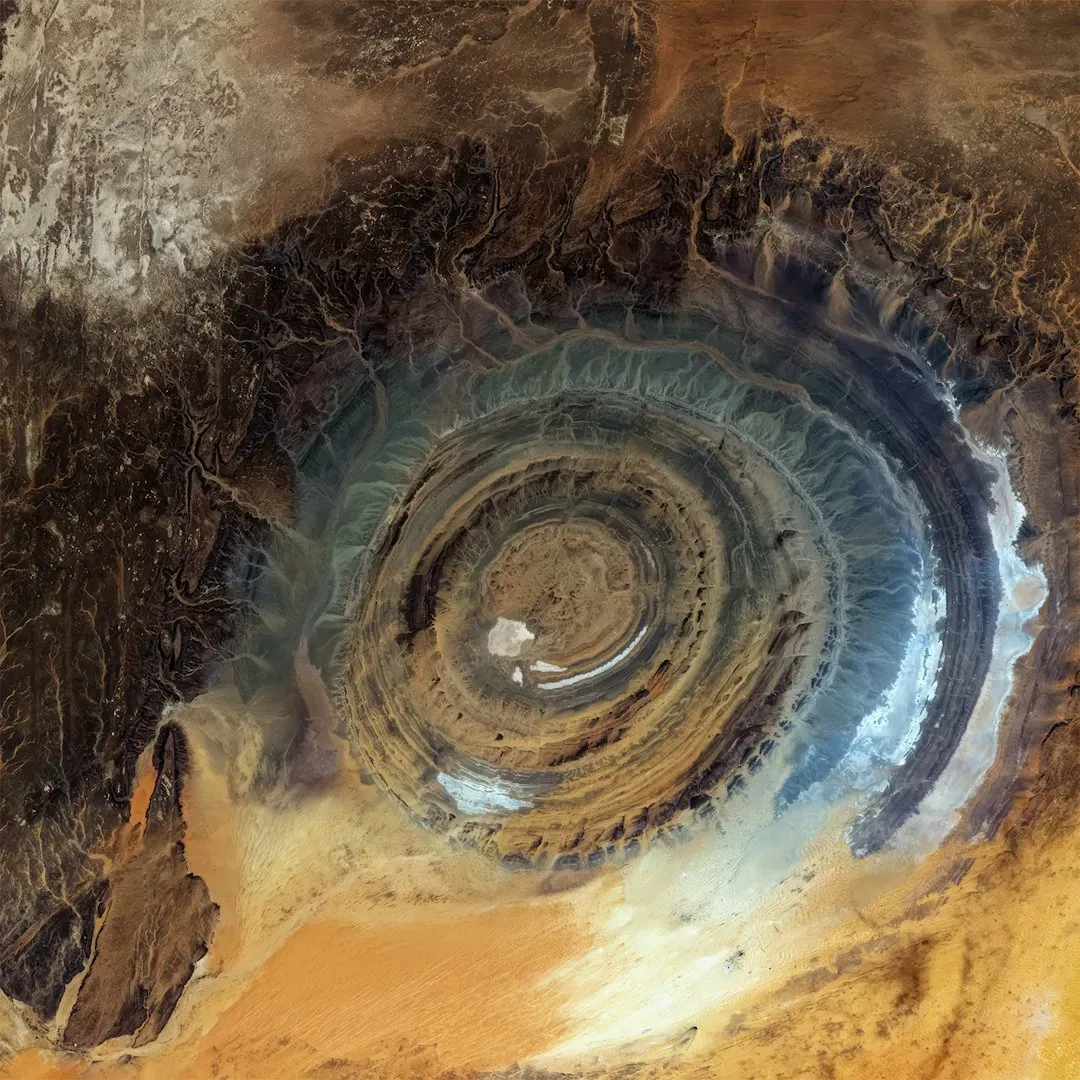
Imagine flying over the Sahara Desert and suddenly spotting what looks like a massive target drawn into the earth by a cosmic hand. That’s essentially what you’d see. The Eye of the Sahara, also known as the Richat Structure, is a 28-mile-wide site of huge concentric circles found in the western African nation of Mauritania. It’s so enormous that early astronauts actually used it as a navigational landmark from orbit. That’s not a small thing, that’s a geological feature big enough to guide spacecraft.
Geologists initially thought the site was created by an asteroid impact, but there isn’t enough melted rock among the rings to support this theory. Similarly, there’s no evidence to suggest a volcanic eruption. More recently, geologists have proposed that the Eye of the Sahara could be an eroded, collapsed geological dome formed some 100 million years ago when the supercontinent Pangea broke up. Bolstering this theory are ancient rocks found on the surface that originated as much as 125 miles beneath the Earth’s crust. Honestly, rocks from that deep sitting on the surface feels like the Earth turning itself inside out. Still unexplained. Still breathtaking.
2. The Great Unconformity: A Billion Years of Earth’s History Just… Gone
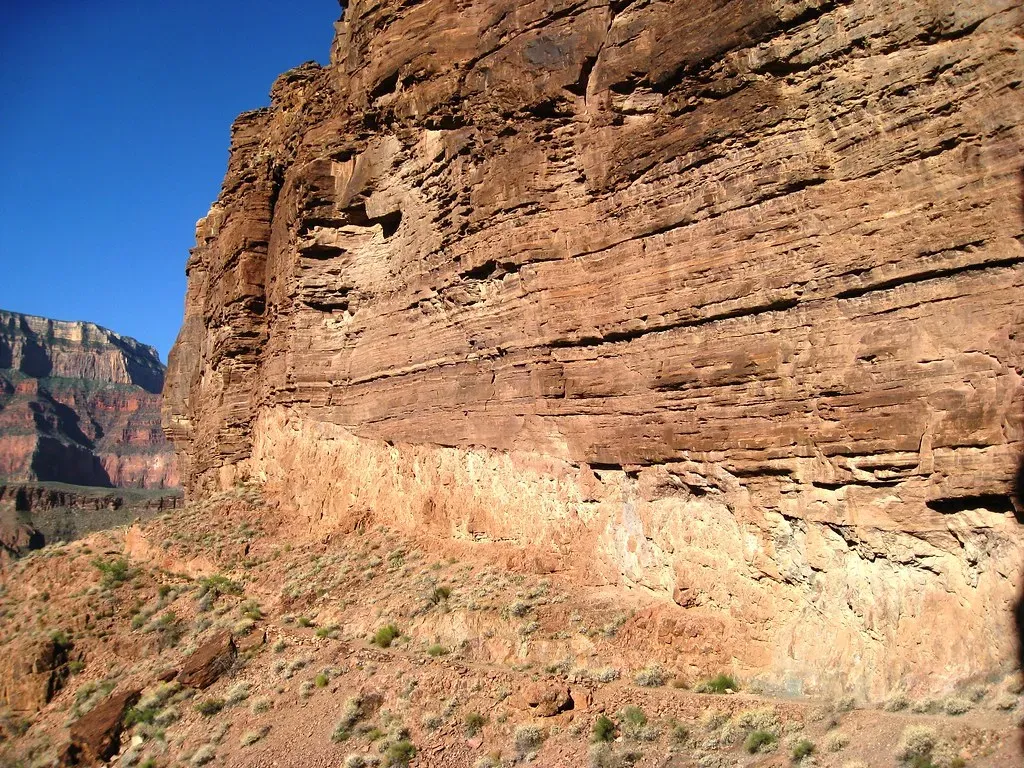
Here’s a thought experiment: imagine opening a history book and finding that roughly a thousand pages in the middle have been ripped out. No explanation, no notes, just a jarring jump from one era to the next. That’s essentially what you’re looking at when you study the Great Unconformity. The Great Unconformity is a huge gap in the geological record: layers of rock dating from about 1.2 billion to 250 million years ago are completely missing from certain areas around the globe. This enormous chunk of lost time can be seen clearly in the stratigraphy of the Grand Canyon in Arizona. Geologists studying the anomaly there have noted that there is plenty of rock, full of fossils, from the Cambrian period but the layer beneath it is basement rock formed roughly 1 billion years ago and empty of fossils.
So where did nearly a billion years of rock go? Around 700 million years ago, Earth was encased in snow and ice. Moving glaciers peeled off the planet’s crust with the help of lubricating sediments, pushing it into oceans, where it was reabsorbed by subducting tectonic plates. This theory, known as “Snowball Earth,” is compelling. Think of it like an enormous eraser passing over the planet’s journal, wiping out entire chapters of history. It’s a plausible explanation, but scientists still debate whether it fully accounts for the scale of what’s missing. The gap remains one of geology’s most unsettling open questions.
3. The Nastapoka Arc: Nature’s Suspiciously Perfect Circle
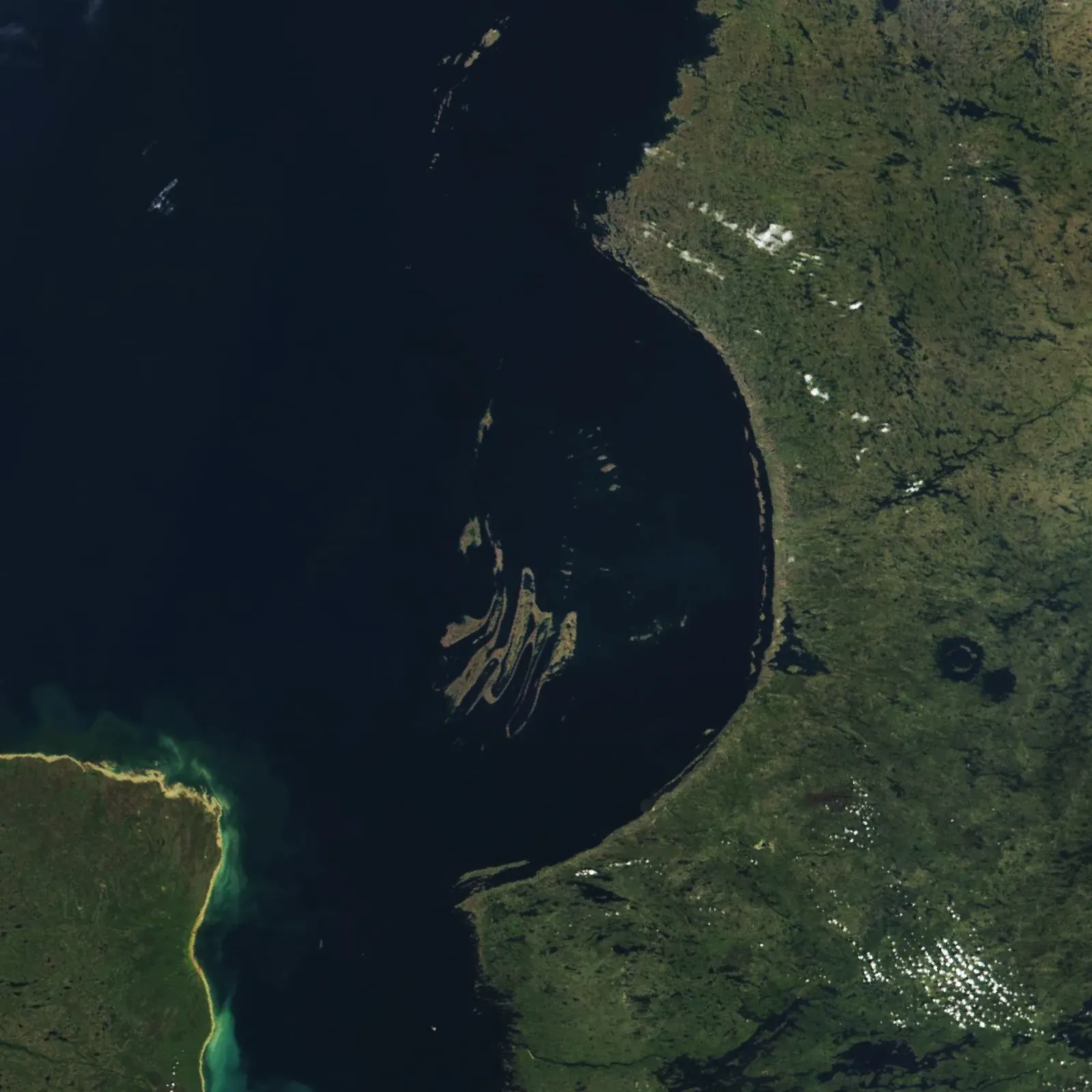
You’ve probably never heard of the Nastapoka Arc, and that’s honestly a shame. In the southeast corner of Hudson Bay, Canada, lies a near-perfect arc. The mysterious half-circle, also known as the Hudson Bay Arc, was first thought to be an impact crater from a meteorite. But none of the usual confirming evidence, such as shatter cones or unusual melted rocks, has been found in the vicinity. Think about how precise this arc is. Nature rarely produces perfect circles without some extraordinary force behind it.
The most commonly accepted theory for the arc, based on geological evidence collected in the 1970s and later, is that it is a boundary formed when one shelf of rock was pushed under another. That doesn’t explain how or why it’s so perfectly round, so the Nastapoka Arc remains subject to ongoing study. It’s one of those cases where the current explanation accounts for the “what” but completely fails to address the “how.” The Nastapoka Arc, a near-perfect circle carved into the landscape of Hudson Bay, is a geological marvel. While tectonic plate collisions are often cited as the cause for such dramatic arcs, the Nastapoka Arc’s flawless roundness remains puzzling. You’d expect a process as chaotic as tectonic collision to leave behind something ragged and irregular. Not this. Not something that almost looks drawn with a compass.
4. The Mima Mounds: Mysterious Earthen Humps That Predate Human Civilization
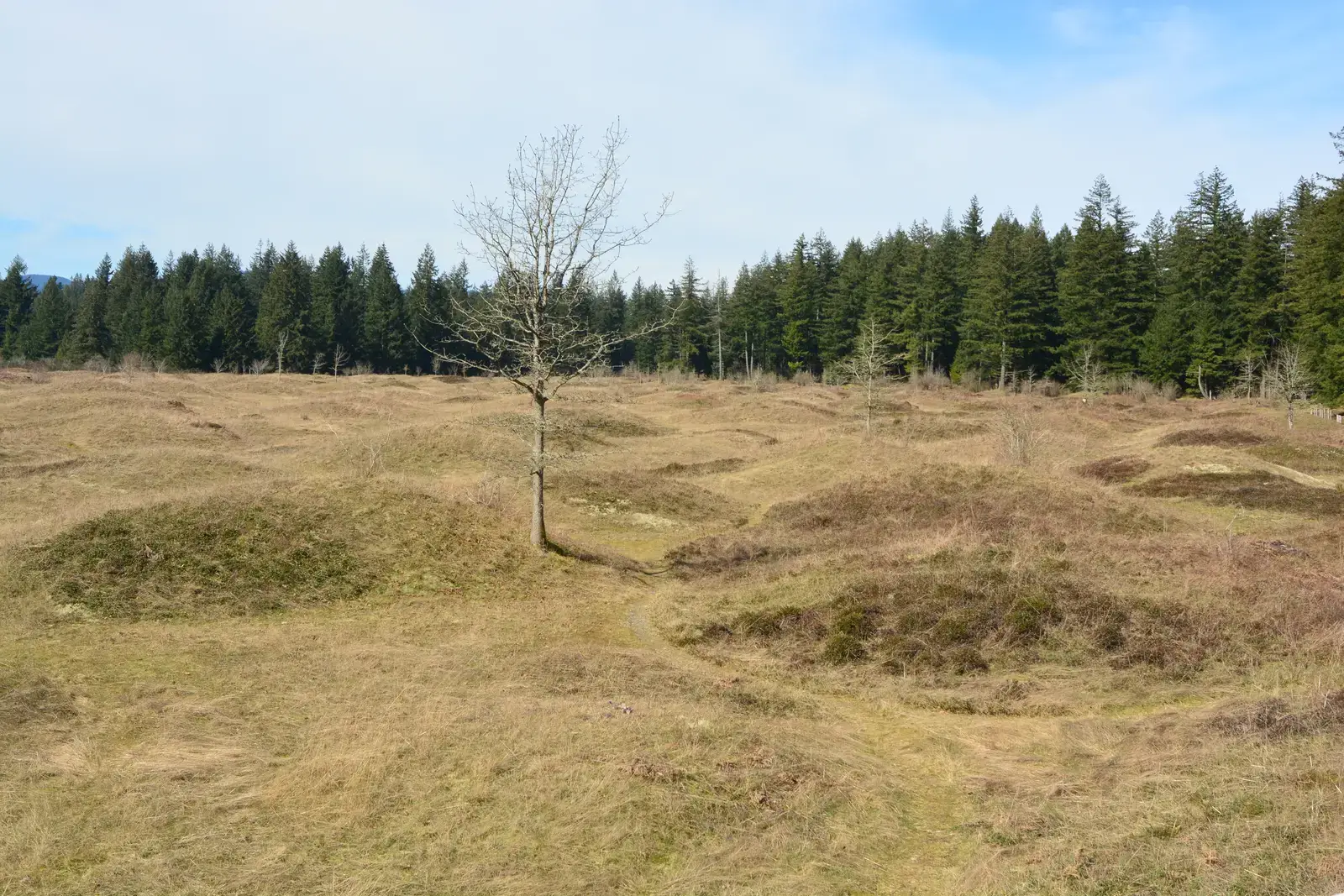
Let’s be real, if you saw these mounds without context, your first instinct would be to assume humans built them. The Mima Mounds are mysterious, uniform undulations in the grasslands of Washington State near Olympia, ranging from 10 to 164 feet in diameter and up to 6.5 feet tall. When American explorer Charles Wilkes set eyes on them in 1841, he believed they were human-made burial mounds and had three of them excavated, only to find them filled with loose stones. So, not burial mounds. Not human-made at all. Just perfect, repeating earthen domes scattered across the landscape like nature’s version of bubble wrap.
Similar mounds are found from California to Colorado and have puzzled naturalists for years. Scientists suggest that some of the mounds may be 30,000 years old, which makes decoding them complex; humans are believed to have arrived in North America several thousand years later than that. That detail is quietly staggering. Whatever made these mounds did so before people even set foot on the continent. Theories range from ancient gopher activity to seismic vibrations to glacial processes. None of them have earned a clear consensus. Meanwhile, in Washington state, the Mima Mounds stand as enigmatic earthen structures scattered across the landscape. These circular mounds, some reaching heights of several feet, have baffled scientists for decades. Thousands of uniform humps, no explanation, and a mystery nearly as old as the ice age itself.
5. The Sailing Stones of Death Valley: Rocks That Move Themselves
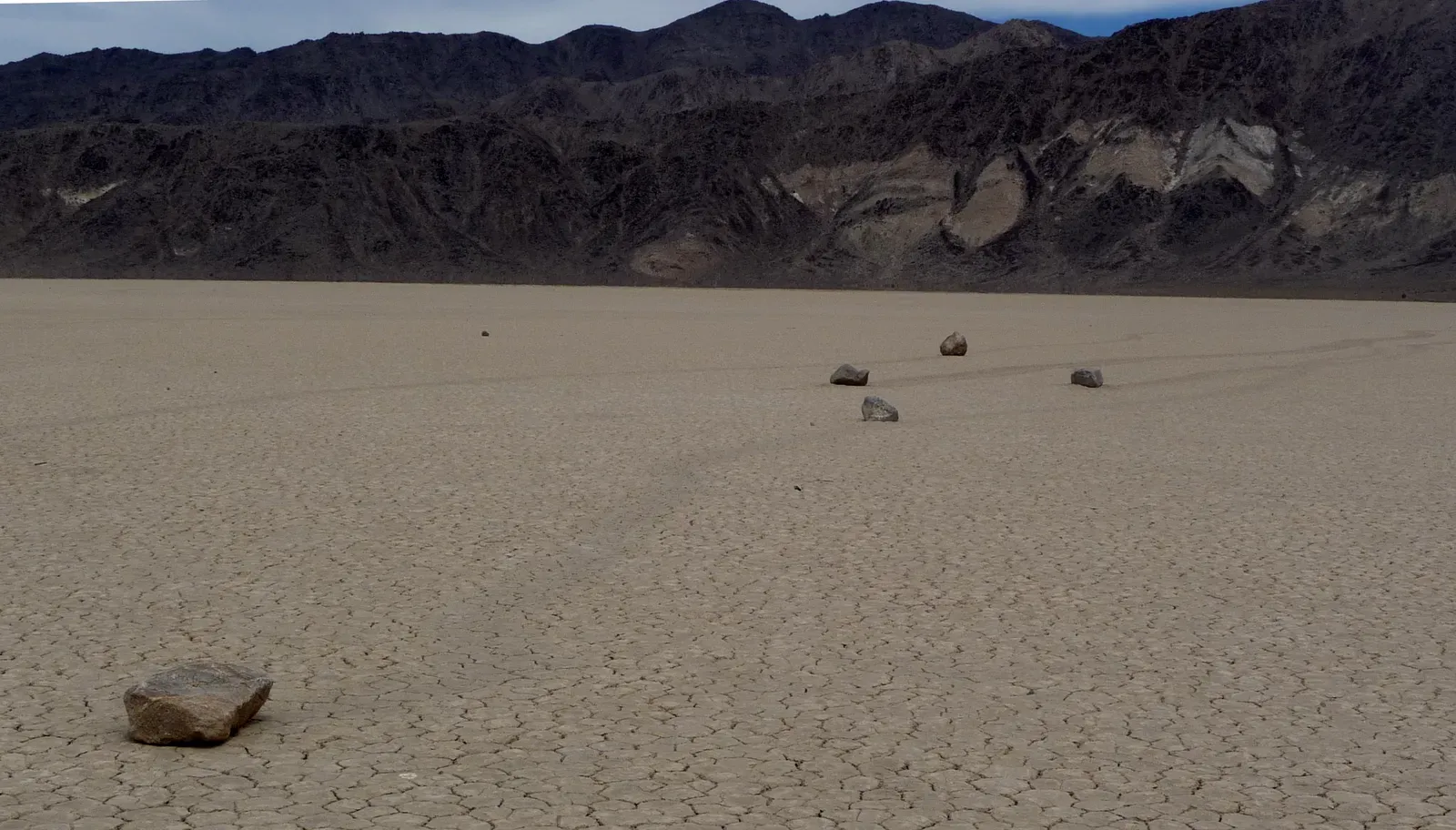
This one sounds like something out of a fantasy novel, yet it’s very much real. The sailing stones of the Racetrack Playa in Death Valley seem to strangely move on their own, leaving long trails behind them in the cracked clay. You can actually see the tracks they leave, long, winding grooves carved across the dry desert floor, sometimes stretching for hundreds of feet. These rocks, weighing up to hundreds of pounds, appear to glide, sometimes non-linearly, across the desert floor without animal intervention. There’s no pushing, no rolling, and no visible force at work. Just tracks.
Scientists have ruled out animals, gravity, and earthquakes as possible culprits for the stones’ strange movements. NASA research suggests that during the winter months, ice forms around the rocks, perhaps allowing them to slip across the frozen surface of the playa. The ice theory is the closest science has come to a workable explanation, and it does hold some water, so to speak. But here’s the thing: nobody had ever observed a rock actually moving in real time until fairly recently, and the conditions required are so rare and specific that many researchers still consider the full picture incomplete. These stones are essentially the magicians of the geology world. You know there’s a trick, you just can’t catch it happening.
6. The Manpupuner Rock Formations: Siberia’s Stone Giants That Shouldn’t Exist
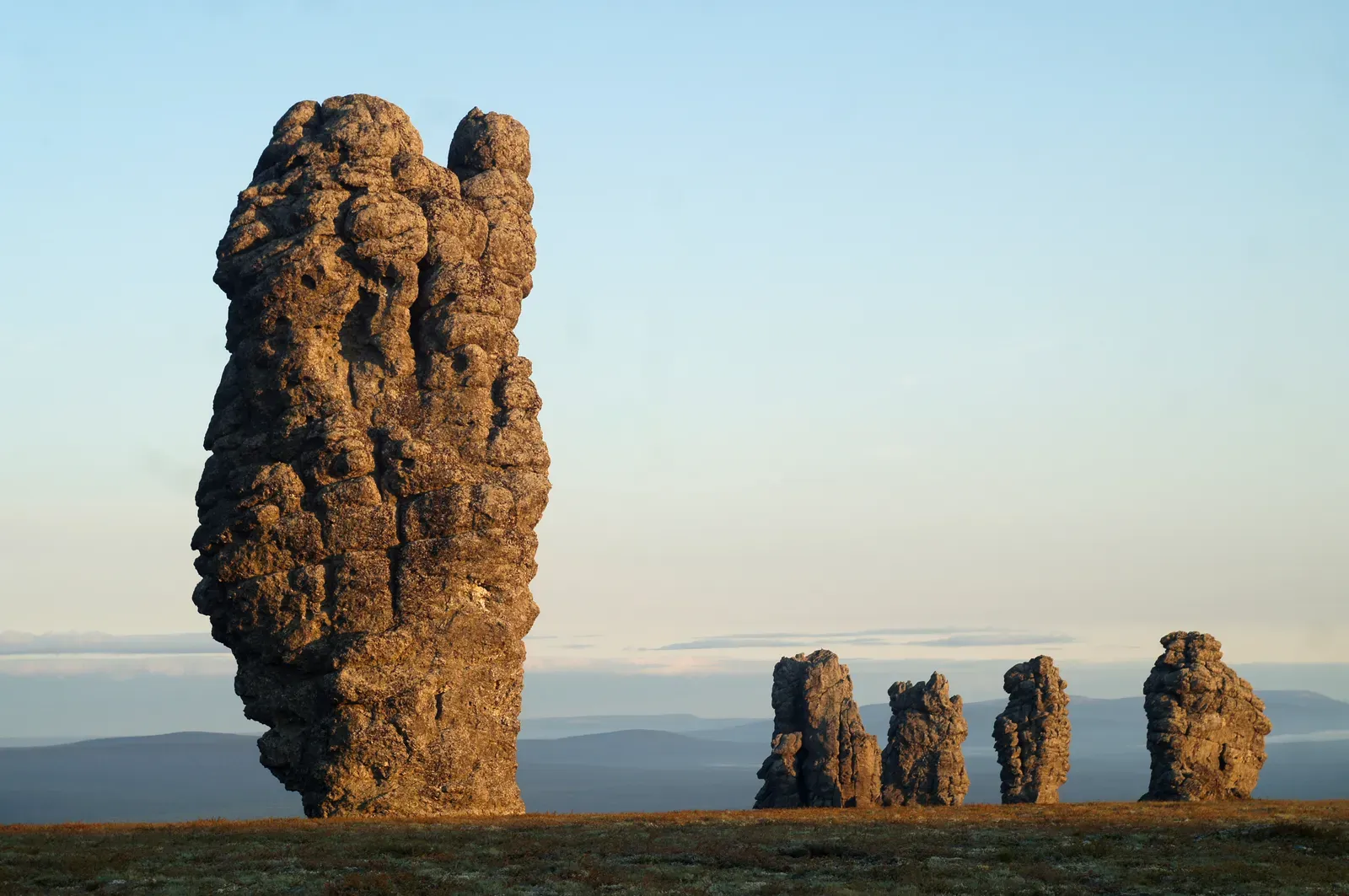
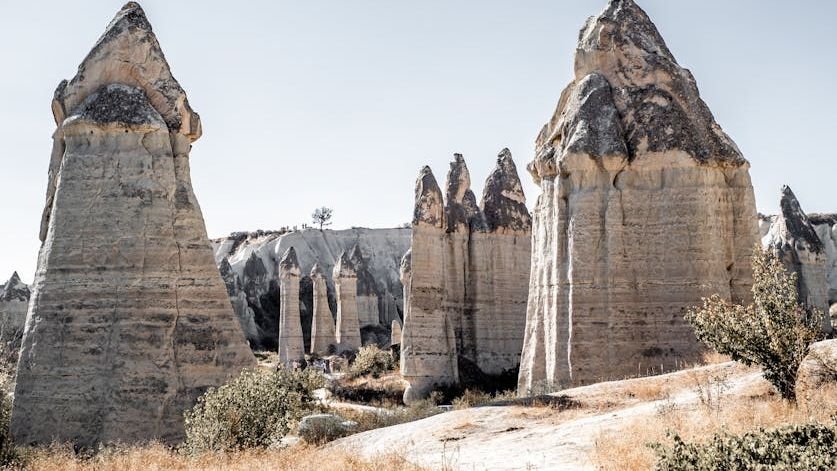
Deep in the remote wilderness of Russia, far beyond where most people dare to travel, you’ll find something that looks like it was dropped there by another world entirely. Deep in the Komi Republic of northern Russia, seven towering rock formations rise from the landscape like frozen sentinels. The Manpupuner Rock Formations stand between 30 and 42 metres tall, their shapes eerily reminiscent of hunched giants or petrified trolls. They rise dramatically from flat, featureless tundra with no nearby mountain range to explain their origin. It’s like finding skyscrapers in the middle of a parking lot.
Geologists explain them as products of 200 million years of erosion, where wind, water, and frost gradually wearing away softer rock left these striking pillars behind. But even that explanation raises more questions. Why only these seven? Why in this configuration? Why do they stand so evenly apart? Six of the pillars sit at the edge of a cliff while another stands apart. The Seven Strong Men are reminiscent of the Easter Island Moai. They, too, stand in contrast with their environment and give off a vibe of belonging to a mysterious civilization. According to the Mansi tribe, the ground on which the formations stand is sacred. Whether you lean toward the geological explanation or simply stand there in awe, one thing is clear: these formations feel like a message from deep time that nobody has quite decoded yet.
Conclusion: The Planet Is Still Full of Secrets
What’s remarkable about every single one of these formations is how they resist a neat, tidy answer. Science has made enormous progress in understanding our planet, and yet these places remain stubbornly in the grey zone, partially explained, endlessly debated, and quietly humbling to anyone who studies them.
There’s something almost comforting about that. In a world where it feels like every mystery has been catalogued and solved, the Earth itself is still out here producing phenomena that leave the smartest geologists scratching their heads. You don’t need to believe in aliens or ancient gods to find that extraordinary. The truth is strange enough.
So the next time you walk on solid ground and feel certain about where you are, maybe spare a thought for the billion years of history beneath your feet that simply went missing, or the 300-pound boulders somewhere in Nevada silently rearranging themselves in the night. What do you think is really behind these geological mysteries? Drop your theories in the comments.