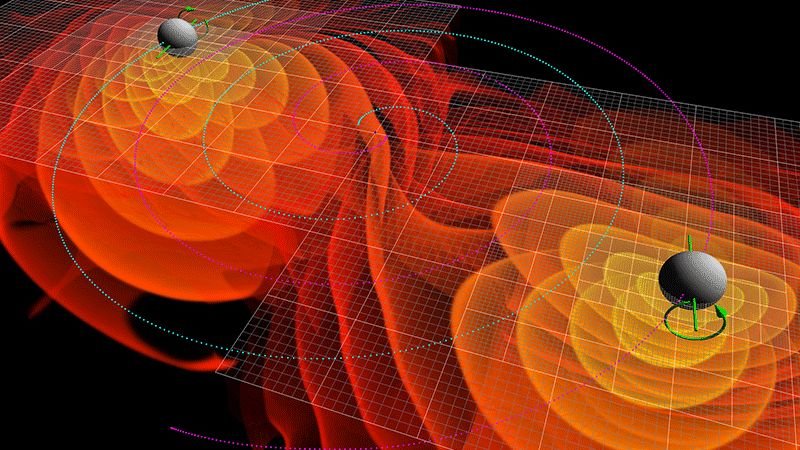
Gravity is the most familiar force in existence. You feel it the moment you wake up, when your feet hit the floor, every single day without fail. It is so ordinary, so background-noise constant, that it barely earns a second thought. Yet beneath that reassuring dependability lies one of the most mysterious, perplexing, and actively debated topics in all of modern science.
Honestly, the more you dig into what physicists have been discovering about gravity in recent years, the more unsettling it gets. From holes in the Antarctic ice sheet to collisions that shake the very fabric of spacetime, gravity keeps rewriting the textbook. So buckle up, because things are about to get weird in the best possible way. Let’s dive in.
1. Gravity Literally Slows Down Time, and Your GPS Knows It
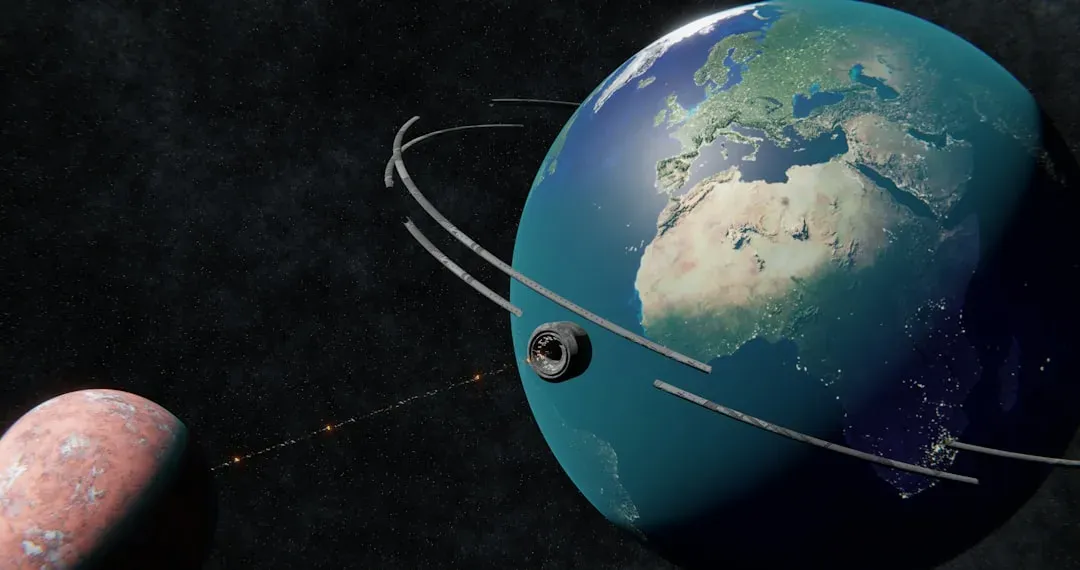
Here is something that probably never crossed your mind while typing your destination into a navigation app: without a correction for the effects of gravity on time, your GPS would be completely useless. According to Einstein’s general relativity, time is affected by gravity. The stronger the gravitational force you experience, the slower time passes for you. That is not a metaphor. It is a measurable, physical reality.
Atomic clocks aboard navigation satellites must already take into account the fact that they run faster up in orbit than down on the ground, amounting to a few tenths of a microsecond per day, which would result in navigation errors of around 10 km daily if uncorrected. Think about that. A few billionths of a second, uncorrected, and your map sends you into a lake. In 2024, JILA physicist Jun Ye and colleagues pushed the bounds further by using an optical lattice clock to measure a gravitational effect at the submillimeter scale, about the thickness of a human hair. The precision of modern science here is nothing short of breathtaking.
2. LIGO Heard the Universe Scream, and It Changed Everything
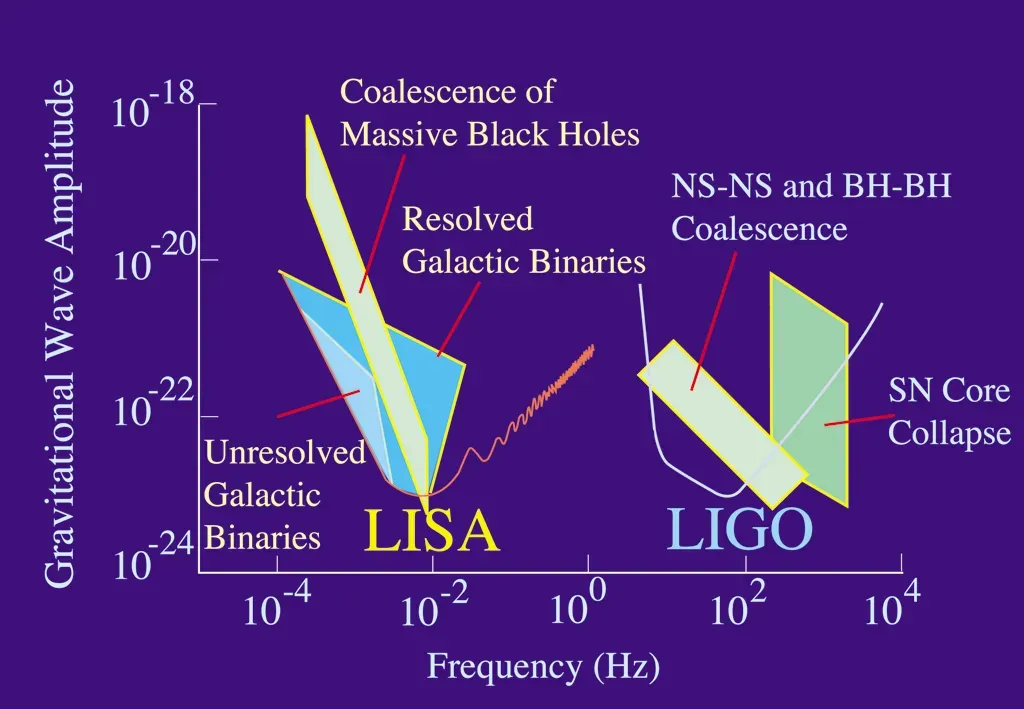
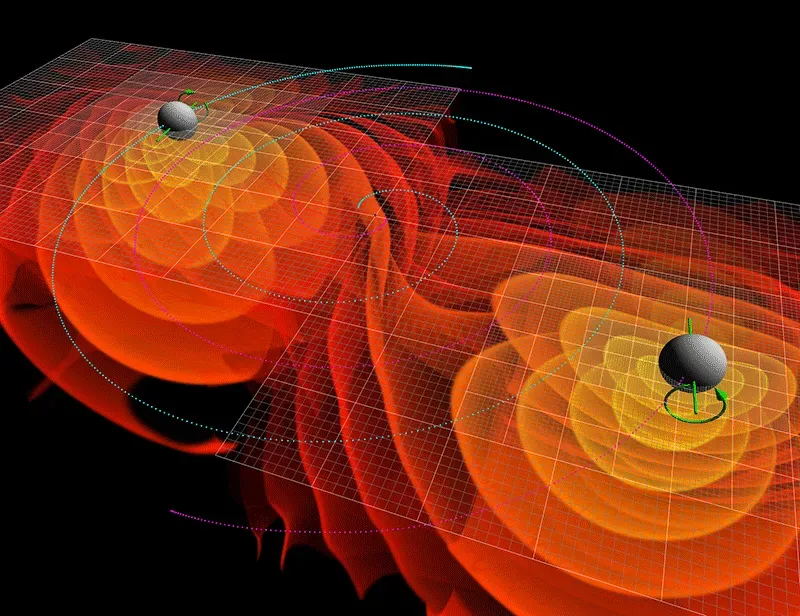
For the first time in history, scientists observed ripples in the fabric of spacetime called gravitational waves, arriving at Earth from a cataclysmic event in the distant universe. This confirmed a major prediction of Albert Einstein’s 1915 general theory of relativity and opened an unprecedented new window onto the cosmos. It was one of those rare moments in science when a theory more than a century old was proven in the most dramatic way imaginable.
The space-time distortions induced by gravitational waves are incredibly minuscule. LIGO detects changes in space-time smaller than 1/10,000 the width of a proton. That is 700 trillion times smaller than the width of a human hair. To put it another way, LIGO is the most precise measuring instrument ever built by human hands. Today, LIGO, which consists of detectors in both Hanford, Washington and Livingston, Louisiana, now routinely observes roughly one black hole merger every three days. What once seemed impossible is now practically routine.
3. A Black Hole Merger So Massive It Breaks the Rules
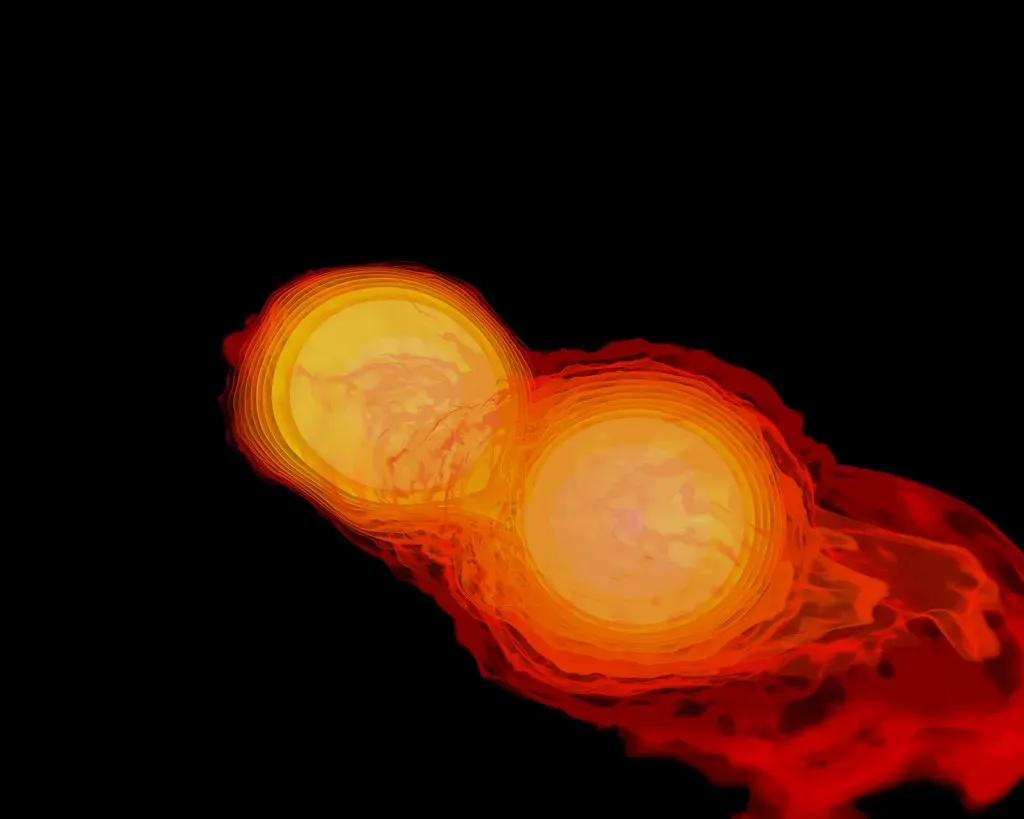
The LIGO-Virgo-KAGRA Collaboration has detected the merger of the most massive black holes ever observed with gravitational waves. The powerful merger produced a final black hole approximately 225 times the mass of our Sun. That number is hard to even comprehend. We are talking about an object with a mass equal to over two hundred suns, born in a single violent instant.
Here is the thing that keeps physicists awake at night about this particular discovery. Black holes this massive are forbidden through standard stellar evolution models. One possibility is that the two black holes in this binary formed through earlier mergers of smaller black holes. In other words, our current understanding of how black holes are born simply cannot explain what was observed. The high mass and extremely rapid spinning of the black holes in this event push the limits of both gravitational-wave detection technology and current theoretical models. Science does not always hand you comfortable answers.
4. Antarctica Is Sitting Over a Gravity Hole, and It Is Getting Stronger
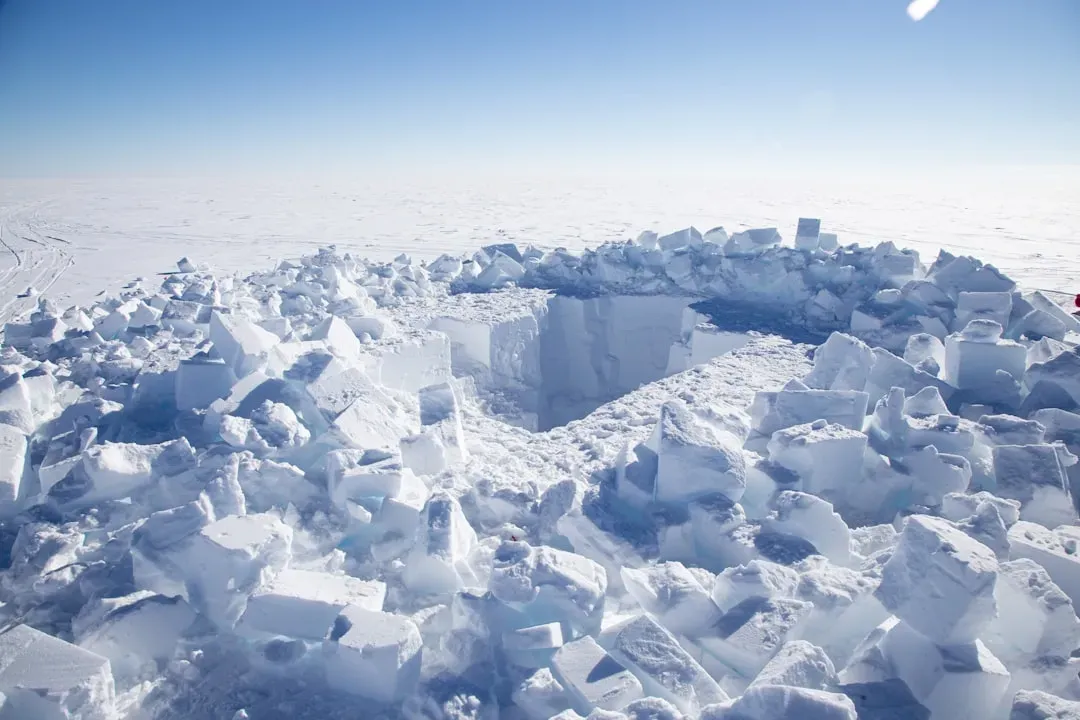
You would never feel it standing on the ice, but Antarctica sits above one of the strangest gravitational features on the entire planet. Gravity actually varies across the planet, and one of the strangest places is Antarctica, where gravity is slightly weaker than expected. Scientists have traced this “gravity hole” to slow, deep movements of rock inside Earth that unfolded over tens of millions of years. It is like finding out the ground beneath your feet has been quietly shifting for longer than mammals have existed.
The results showed that the Antarctic Geoid Low is not a new development; a gravitational depression has been sitting near Antarctica for at least 70 million years. It has not remained static. About 50 million years ago, its position and strength started to change dramatically. Even more intriguingly, the timing of its growth overlaps with the birth of Antarctica’s massive ice sheets, hinting that processes deep within the planet may have helped shape the frozen continent. Gravity, ice, geology, and deep time all entangled together. It is genuinely beautiful, in a haunting sort of way.
5. Earth’s Gravity Field Had a Mysterious Two-Year Outburst
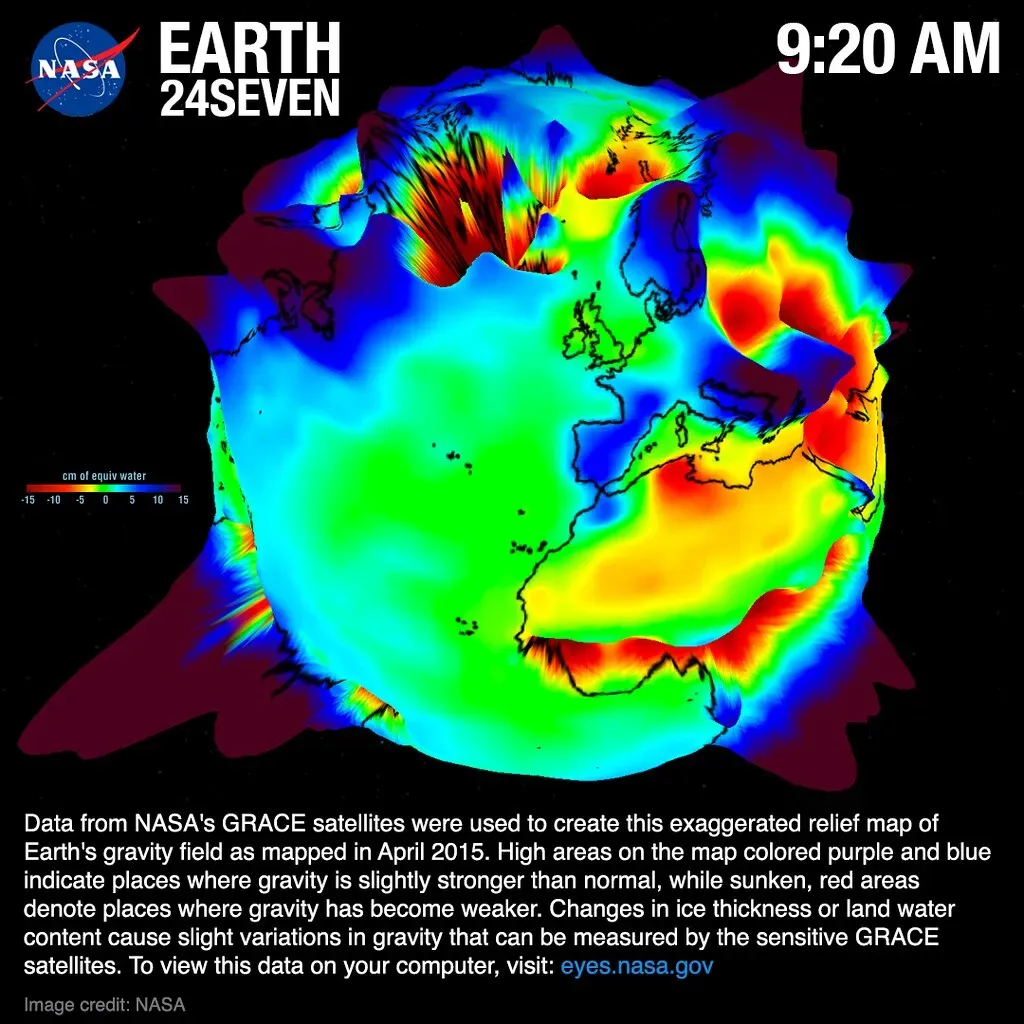
Something deeply strange happened beneath the Atlantic Ocean around 2007, and satellites caught it in real time. In 2007, something strange happened over the eastern Atlantic Ocean. According to satellites orbiting Earth, our planet’s gravity field developed a continent-scale anomaly before subsiding to its original state. The odd event, undetectable to humans on the surface, has only just been discovered in data collected by gravity-monitoring satellites. Think of it like the planet briefly exhaling, then pretending nothing happened.
According to a team led by geophysicist Charlotte Gaugne Gouranton of Paris City University in France, that redistribution was likely the result of a phase change of material some 3,000 kilometers down, close to the lower boundary of the mantle. To make things even stranger, what made this signal even more intriguing was that it coincided with a jerk in Earth’s magnetic field in the same region, known as a geomagnetic jerk. The planet’s interior is a place of constant, invisible drama, and we are only just beginning to learn how to listen to it.
6. Gravity Might Break Down at Very Weak Accelerations
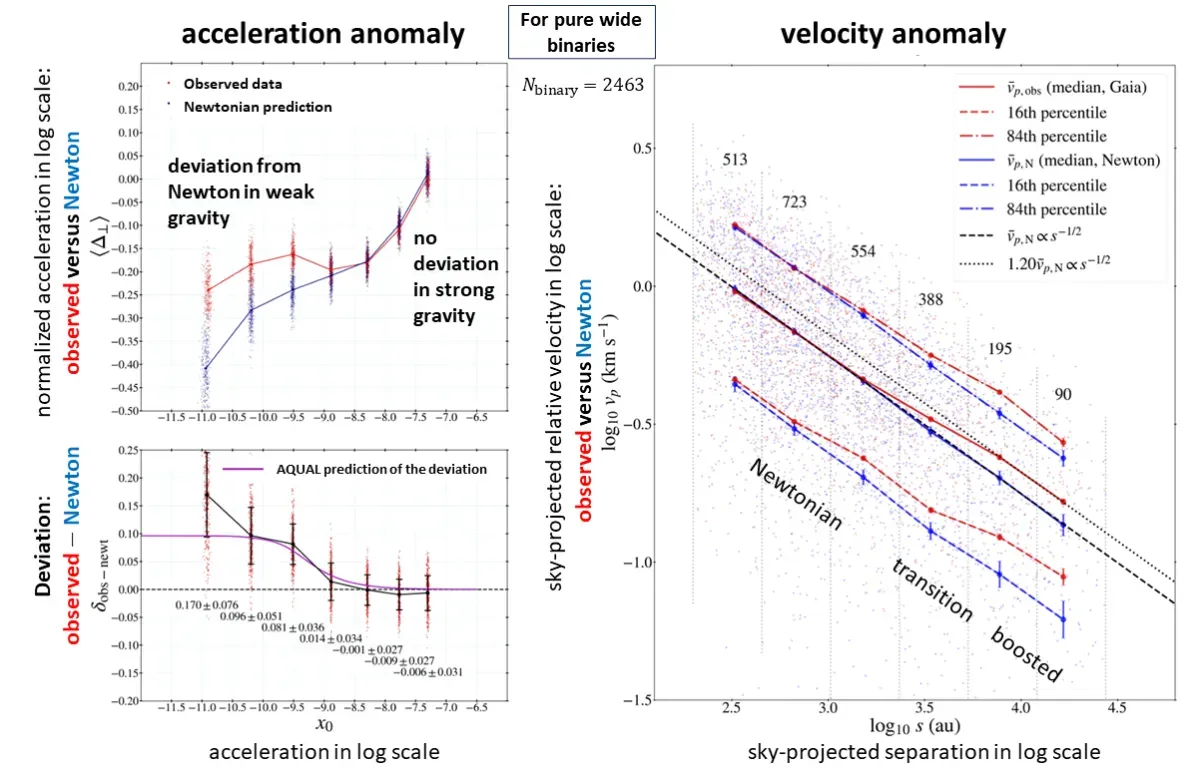
Let’s be real: the idea that gravity might simply stop following its own rules under certain conditions sounds almost laughably radical. Yet that is exactly what some researchers have been finding when studying wide binary star systems. New data suggests that when the gravitational accelerations of these stars slip below one nanometer per second squared, they begin to move in ways that are more aligned with MOND models than by the standard model. MOND, or Modified Newtonian Dynamics, is an alternative theory of gravity that has long existed on the fringes of mainstream physics.
This discovery suggests that the standard view of gravity cannot account for these motions at low accelerations, which may inspire scientists to rethink aspects of Newton’s inverse square law of gravity and Einstein’s general relativity, as well as the necessity of dark matter. This is not a minor footnote. If verified and accepted, it would mean that everything from cosmology to the need for dark matter would require a fundamental rethink. Because the standard cosmology is based on general relativity, cosmology needs a major revision now. It is hard to say for sure how this story ends, but the implications are staggering either way.
7. Physicists Are Finally Closing In on a Quantum Theory of Gravity
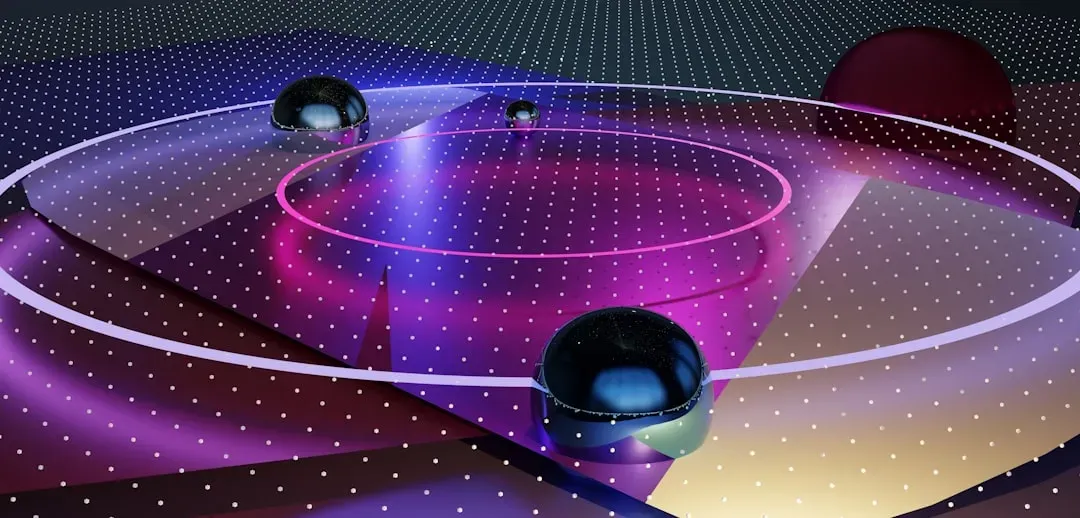
For decades, perhaps the single most embarrassing problem in all of physics has been the complete inability to make gravity play nicely with quantum mechanics. Quantum ideas describe particles and fields in tiny, jumpy packages, while general relativity paints gravity as smooth curves in space-time. Fit those viewpoints together, and the math usually blows up into useless infinities. Every physicist knows the problem. Nobody has solved it. Until, possibly, now.
Researchers Mikko Partanen and Jukka Tulkki at Aalto University believe they have found common ground. They place gravity inside a type of gauge theory, the same broad framework that lets photons mediate light and gluons glue quarks. I think what makes this genuinely exciting is not just the theory itself, but where it could lead. A unified theory combining gravity with the other fundamental forces, including electromagnetism and the strong and weak nuclear forces, is within reach. Bringing gravity into the fold has been the goal of generations of physicists, who have struggled to reconcile the incompatibility of quantum field theory and Einstein’s theory of gravity. If this works, it would be the single greatest leap in physics since Einstein himself.
Conclusion: Gravity Is Far Stranger Than You Were Told
From the invisible ticking of satellite clocks to gravity holes forming beneath polar ice caps, from ripples in spacetime produced by colliding behemoths to the possible breakdown of Newton’s own law at the edge of detectability, gravity is anything but the simple, settled force you were taught about in school. Every new discovery seems to peel back another layer of a genuinely astonishing mystery.
The most remarkable thing about all of this is how much of it is happening right now, in the present moment. Scientists are not waiting around for the future to figure this out. They are measuring, colliding, calculating, and occasionally being completely stunned by what they find. Gravity is not a solved problem. It is an unfolding story, and we are living right in the middle of the most exciting chapters yet written.
Which of these seven discoveries surprised you the most? Tell us in the comments below.