A Microchip’s Audacious Voyage Begins (Image Credits: Pexels)
Astrophysicist Cosimo Bambi envisioned a fleet of minuscule spacecraft embarking on an epic journey to the edge of a black hole. These gram-scale probes, no heavier than a paperclip, would harness the power of ground-based lasers to accelerate toward one-third the speed of light.[1][2] The mission promised data from the event horizon that telescopes and gravitational wave detectors could never capture, potentially reshaping our grasp of gravity and reality itself.
A Microchip’s Audacious Voyage Begins
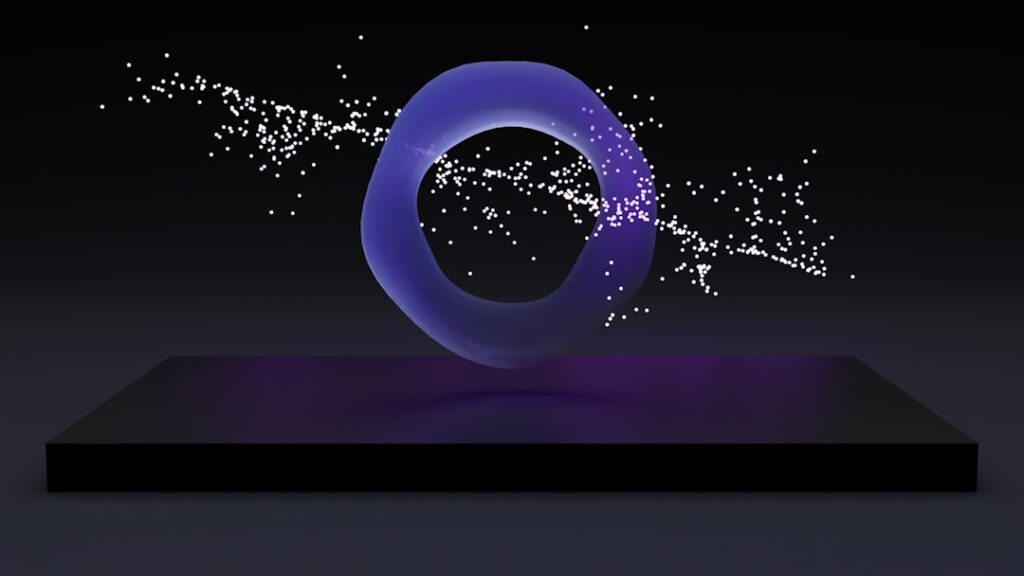
Picture a device smaller than a postage stamp racing across the stars at 100 million miles per hour. Bambi detailed this concept in a paper published in the journal iScience, drawing inspiration from ongoing lightsail research.[1] The nanocraft featured a lightweight microchip paired with a 10-square-meter dielectric sail, designed to withstand the relentless push of laser photons.
Propulsion relied on massive laser arrays on Earth, delivering acceleration for about 17 minutes to hit relativistic speeds. Engineers anticipated no fundamental barriers to reaching even 90 percent of light speed, though costs posed the real limit. Multiple probes ensured redundancy – one could orbit while another plunged closer, beaming observations back home.[3]
Hunting the Nearest Cosmic Abyss
Stellar-mass black holes outnumbered stars in the Milky Way, yet most lurked undetected without glowing accretion disks. Bambi estimated the closest one hid just 20 to 25 light-years away, based on galactic demographics – one black hole per 100 stars.[1] Telescopes like the Square Kilometer Array or James Webb Space Telescope might spot them through microlensing or stellar wobbles.
Gaia-BH1, the nearest confirmed at 1,560 light-years, served as a fallback, but a hidden neighbor slashed travel time to 60 to 75 years. Data transmission added another two decades, framing the full endeavor as an 80-to-100-year commitment. Localization demanded pinpoint accuracy, perhaps from future gravitational wave observatories like the Einstein Telescope.[2]
Probing Physics at the Brink
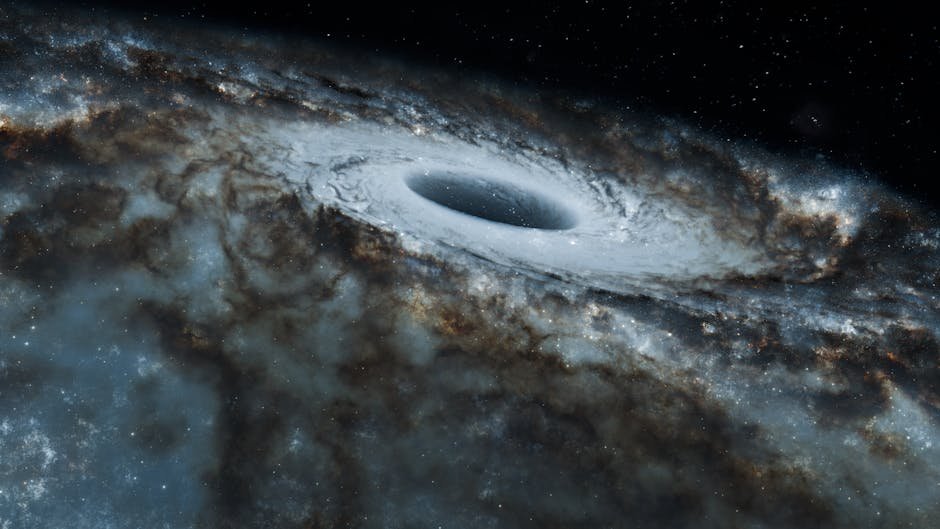
Near the event horizon, gravity warped space-time in ways no Earth lab could replicate. The probes targeted the Kerr metric of spinning black holes, tracking signal redshifts from orbits at the innermost stable circular orbit. Deviations from general relativity as small as one part in a million could emerge.[1]
Experiments distinguished true event horizons from exotic alternatives like fuzzballs, watching a sister probe’s signals fade into silence. Variations in fundamental constants, such as the fine-structure constant, might reveal themselves through atomic spectra shifts. Isolated black holes offered a pristine vacuum, free from the hot gas clouding distant observations.
| Target Distance | Speed (fraction of c) | Travel Time | Total Mission (incl. data return) |
|---|---|---|---|
| 20-25 light-years | 0.3c | 60-75 years | 80-100 years |
| 1,560 light-years (Gaia-BH1) | 0.3c | ~5,000 years | Impractical |
| 150 light-years (Hyades) | 0.3c | ~500 years | >500 years |
Overcoming Interstellar Obstacles
Laser infrastructure currently cost trillions of euros, though Bambi foresaw drops to billions within decades as technology matured. Sails faced cosmic dust and tidal shredding near the horizon, demanding metamaterials tougher than today’s prototypes.[4]
Orbit insertion proved trickier without navigational beacons – probes relied on gravitational sensing alone. Instruments squeezed onto a one-gram wafer limited resolution, yet sufficed for breakthrough tests. Bambi likened the skepticism to early doubts over gravitational waves, proven 100 years later.
- Develop durable lightsails and high-power lasers.
- Pinpoint isolated black holes via advanced surveys.
- Engineer tiny sensors for extreme gravity.
- Secure funding for a multi-decade relay network.
- Mitigate interstellar radiation and collisions.
Key Takeaways
- Gram-scale nanocrafts could test general relativity directly at a black hole’s edge, far beyond current indirect methods.
- A 20-25 light-year target makes the mission feasible within a century using laser propulsion akin to Breakthrough Starshot.
- Success hinges on discovering a nearby black hole and slashing laser costs from trillions to billions.
This proposal stretched human ingenuity to cosmic scales, echoing past triumphs like black hole imaging. It invited a new era of direct exploration, where tiny machines pierced the universe’s darkest mysteries. What do you think about launching probes into a black hole? Tell us in the comments.