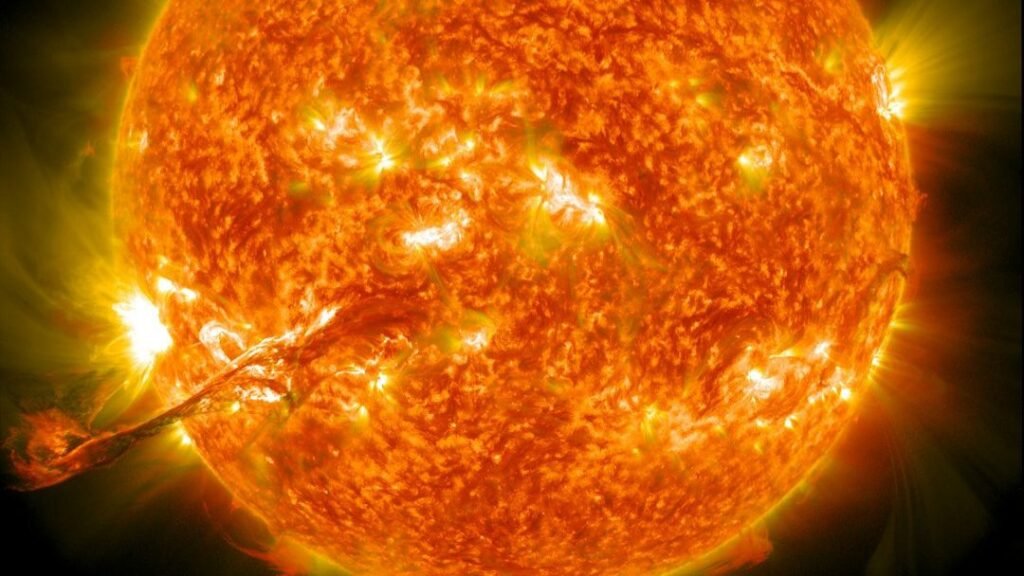

Stand outside on a clear day, feel the warmth on your face, and it’s easy to forget that the Sun is anything but calm. Yet behind that steady golden disk is a restless, roaring, magnetic beast that still manages to surprise the scientists who spend their lives studying it. The star we depend on for every heartbeat, every leaf, every drop of rain is far stranger, more dynamic, and more mysterious than most of us were ever taught in school.
In the last two decades, a wave of new spacecraft, telescopes, and simulations has started to peel back the Sun’s layers. We’ve learned that it beats with hidden cycles, hurls invisible storms across space, and sings with vibrations that echo through its interior. And the more we learn, the more we realize how much we still don’t understand – especially now, as the Sun ramps up into one of its most active periods in years.
The Sun Is Not Quiet: A Turbulent, Living Star
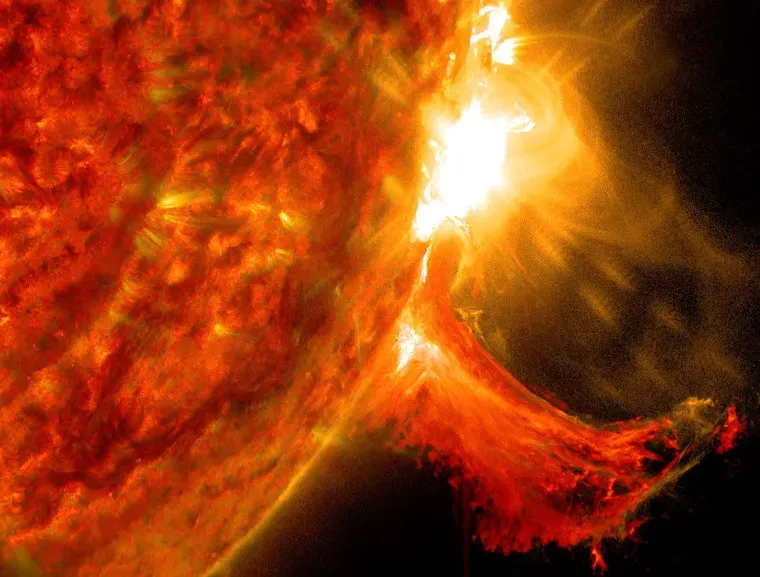
The biggest misconception about the Sun is that it’s a calm, steady ball of fire quietly hanging in space. In reality, it behaves more like a wild ocean pulled and twisted by unseen tides, with hot gas churning, swirling, and rising in enormous cellular patterns across its surface. What looks smooth and uniform to our eyes is, close up, a constantly shifting landscape of boiling plasma and crackling magnetic fields.
Spacecraft like NASA’s Solar Dynamics Observatory have shown the Sun flaring, pulsing, and flickering almost constantly, even during its so‑called “quiet” years. Imagine watching a slow-motion lightning storm that covers an entire planet and never really stops – that’s closer to what our star is like. When you see those perfectly calm sunset photos, you’re really looking at the outer face of a very restless, always changing engine.
The Eleven-Year Rhythm: Solar Cycles and Sunspot Swarms
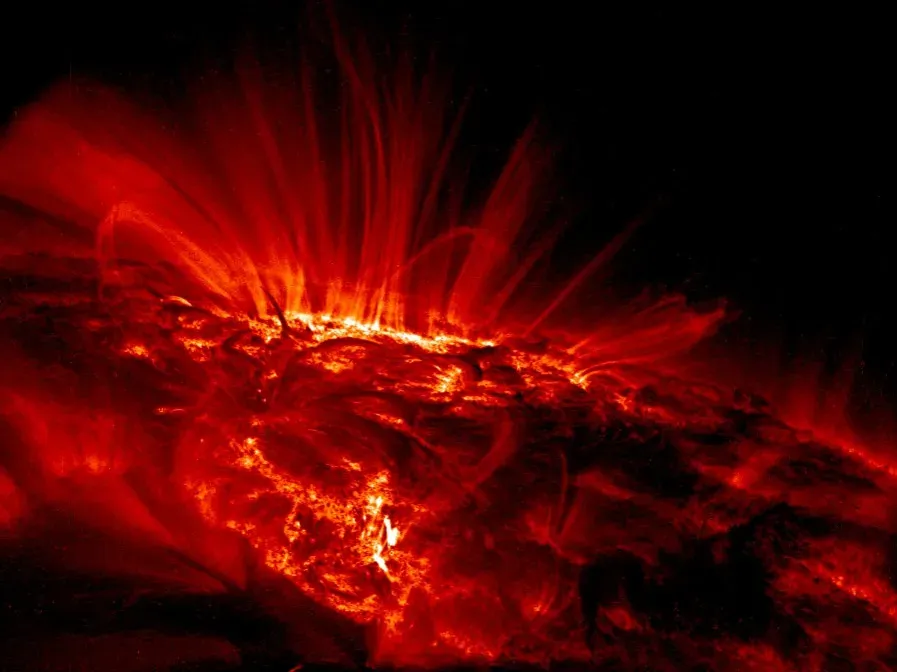
One of the most surprising secrets of the Sun is that it follows a roughly eleven-year activity cycle, swinging from relatively calm conditions to roaring, stormy peaks. Scientists track this rhythm by counting sunspots – dark, magnetically intense regions on the Sun’s surface where strong magnetic fields poke through and suppress some of the light. When sunspots are rare, the Sun is in a minimum; when they appear in crowded clusters, we’re near a maximum.
These cycles matter for us because more sunspots usually mean more solar flares and eruptions, which can rattle Earth’s magnetic field and affect satellites, power grids, and even radio communication. We’re currently moving through Solar Cycle 25, and observations show it’s been more active than many experts originally expected. The Sun’s magnetic field flips direction at each peak, like a cosmic heartbeat resetting itself, yet the exact reason for this eleven-year rhythm remains one of solar physics’ biggest puzzles.
Magnetic Mayhem: The Invisible Force Shaping Solar Behavior
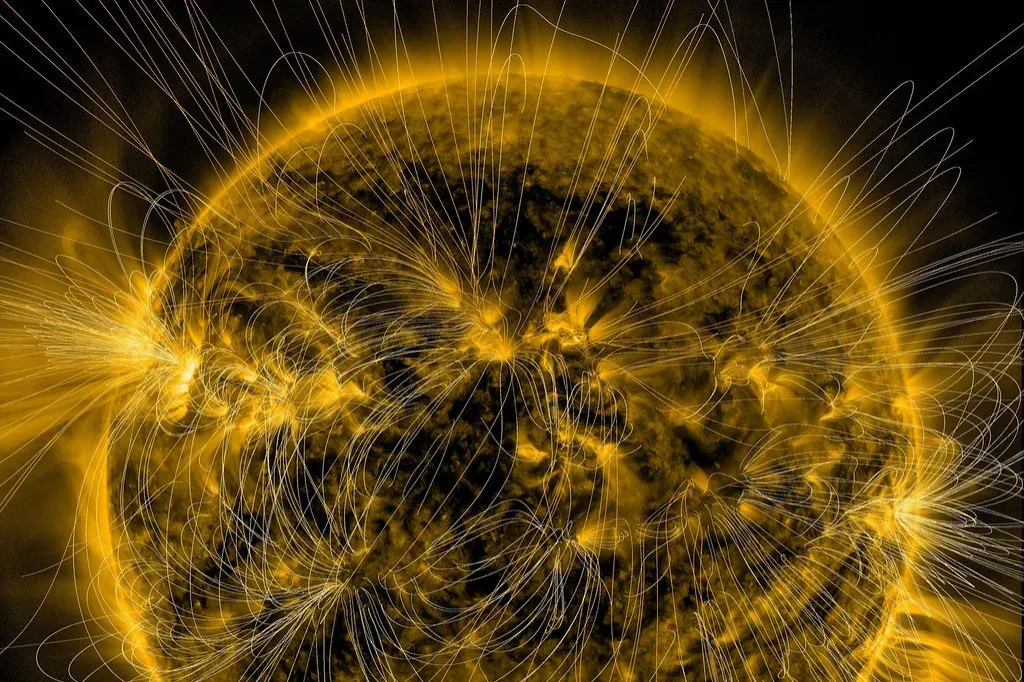
If you want to understand the Sun’s strange behavior, you have to talk about magnetism. The Sun is a giant ball of hot, ionized gas – plasma – where charged particles move and generate powerful magnetic fields. These fields twist, tangle, and reconnect in complex ways, like gigantic rubber bands made of energy. Where they get coiled up the most, the Sun releases sudden bursts of power that we see as solar flares and coronal mass ejections.
Scientists call the Sun’s global magnetic engine the solar dynamo, but they’re still trying to fully explain how it works. It likely depends on the way the Sun rotates faster at the equator than at the poles and how hot material rises and sinks in the interior. Even with advanced supercomputer simulations, magnetic activity on the Sun often turns out more turbulent and chaotic than predicted. It’s a reminder that, just like weather on Earth, space weather is still hard to forecast perfectly.
Solar Flares and Space Storms: When the Sun Strikes Back
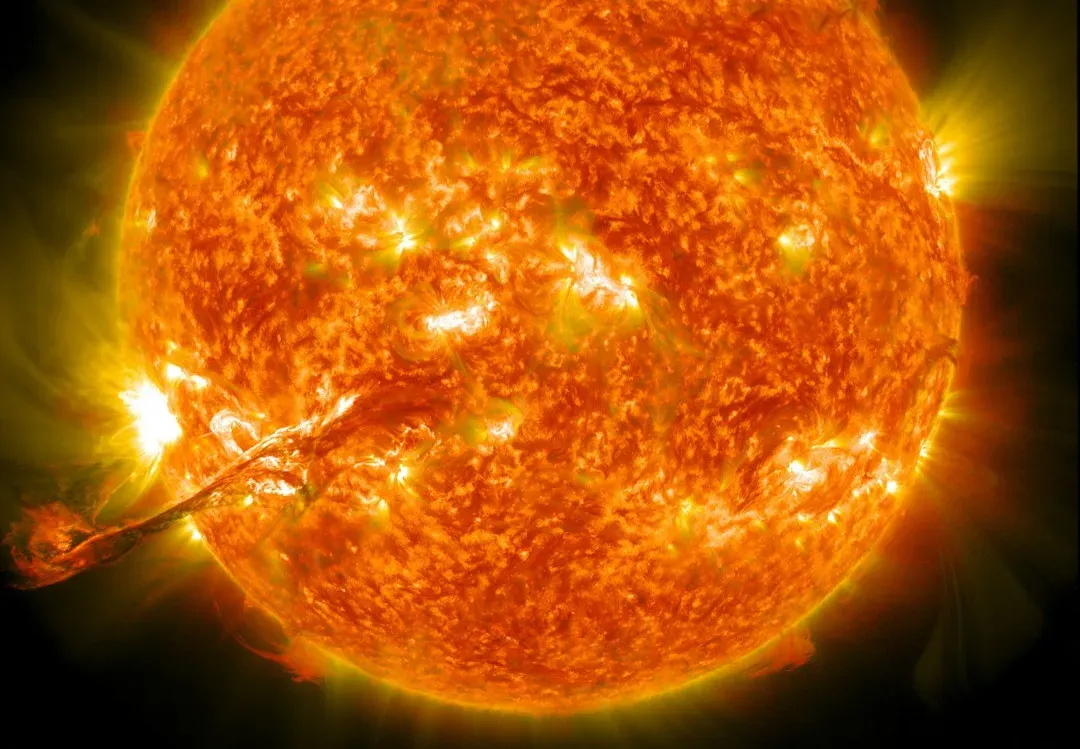
Solar flares are bursts of high‑energy radiation powered by sudden magnetic reconfigurations, and they can release as much energy in minutes as billions of nuclear bombs. Sometimes these flares are accompanied by coronal mass ejections – huge bubbles of solar plasma and magnetic field flung into space at mind-bending speeds. When these storms are aimed at Earth, they can collide with our magnetic field and send ripples racing through the planet’s space environment.
For most people, the visible effect is beautiful: auroras flaring across the sky far beyond their usual polar homes, sometimes dipping into regions where they’re normally never seen. But for satellites, astronauts, and power grids, these storms are a serious concern. Strong events can disrupt navigation signals, damage electronics in orbit, and in extreme cases threaten electrical infrastructure on the ground. Governments and operators now monitor solar activity constantly, treating the Sun a bit like a distant, unpredictable neighbor whose moods can spill over into our daily lives.
The Solar Wind: A Constant, Invisible Breath Through the Solar System
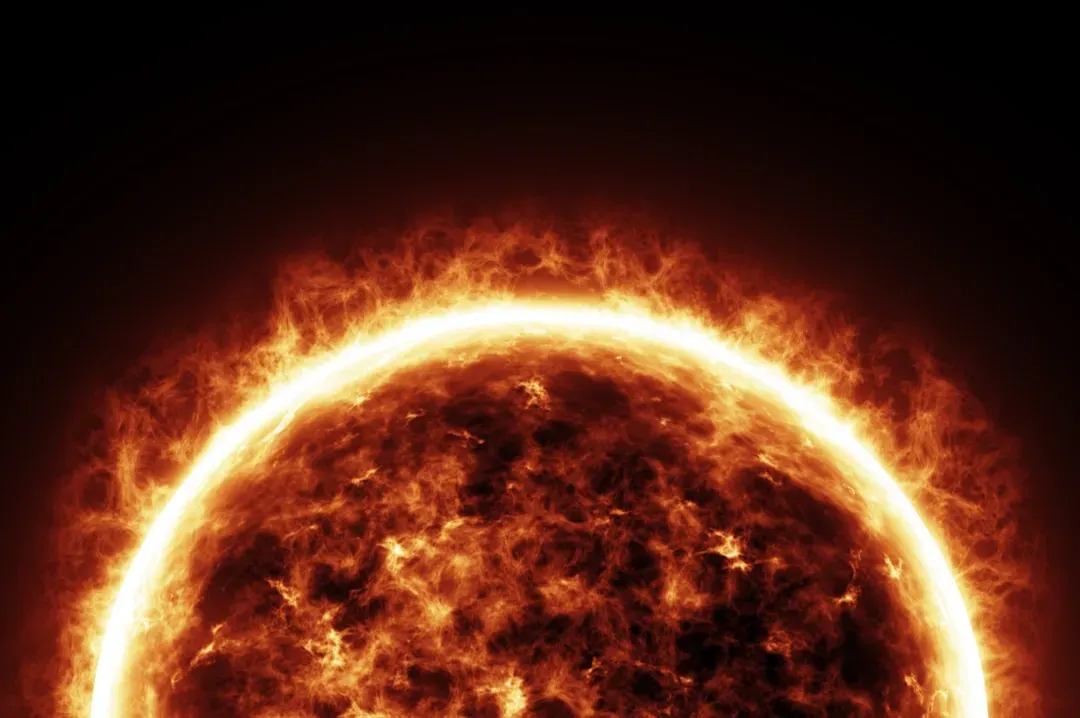
Even on calm days, the Sun is not just sitting there – it’s continuously blowing material out into space in a stream called the solar wind. This wind is made of charged particles and magnetic fields flowing outward in all directions, shaping a vast bubble that stretches far beyond the orbit of Pluto. Spacecraft like the Voyager probes have actually crossed the edge of this bubble, known as the heliosphere, and found where the Sun’s influence begins to give way to interstellar space.
The solar wind interacts with every planet it hits, sculpting comet tails, stirring up auroras, and slowly stripping atmospheres from worlds that don’t have strong magnetic shields. Mars, for example, has likely lost much of its atmosphere over billions of years in part because it lacks a robust protective magnetic field. The strength and speed of the solar wind can change with the solar cycle, so it’s yet another way that our star’s moods echo out across the entire solar system like a long, invisible breath.
An Unsolved Puzzle: Why the Sun’s Atmosphere Is Hotter Than Its Surface
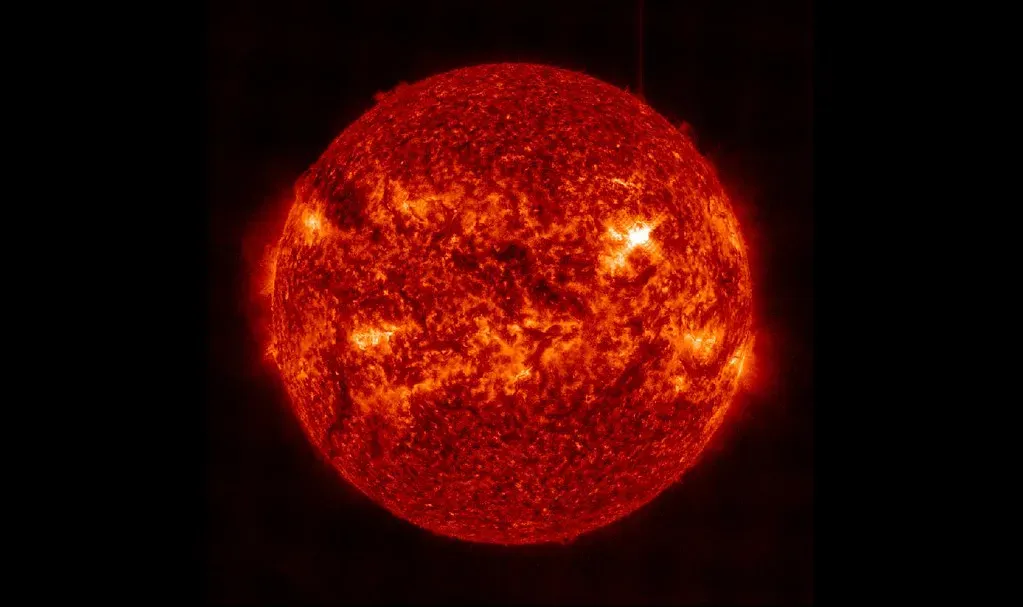
One of the strangest solar mysteries sounds like a bad joke: why is the Sun’s atmosphere hotter than its surface? The visible surface, or photosphere, sits at thousands of degrees, but the outer atmosphere – the corona – soars to temperatures of millions of degrees. It’s as if you walked away from a campfire and discovered the air far above the flames is suddenly scorching compared to the wood itself.
Scientists know this can’t be explained just by simple heating from below, so they’ve been exploring more exotic ideas. Two leading suspects are waves that carry energy from the lower layers into the corona and small, rapid magnetic reconnection events sometimes called nanoflares. Missions like the Solar Orbiter and Parker Solar Probe are diving closer to the Sun than any spacecraft before, trying to capture the fine details of how energy travels and dissipates. The answer will not only explain the Sun but also help us understand countless other stars with similar hot coronas.
The Sun’s Hidden Interior: Listening to a Star’s Heartbeat
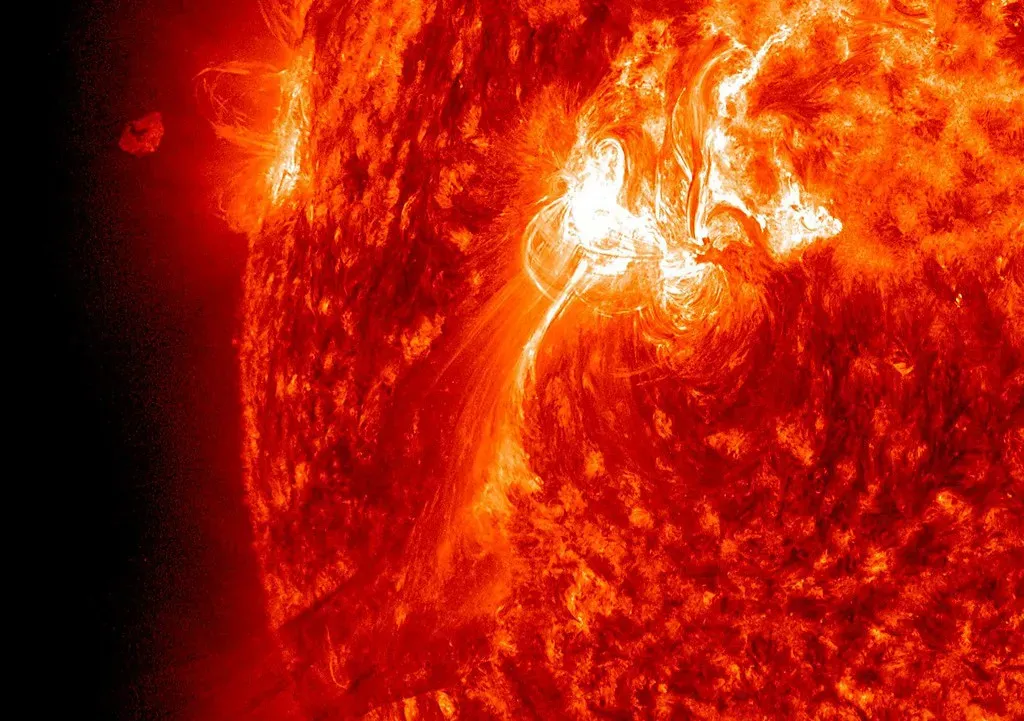
We can’t peer directly inside the Sun, but we’ve learned to “listen” to it instead. The Sun constantly vibrates with waves that slosh around its interior, causing tiny ripples on its surface. By carefully measuring these oscillations, a technique known as helioseismology, scientists can infer what’s happening deep under the visible layer, much like doctors use ultrasound to see inside the human body.
These vibrations reveal how the Sun’s internal layers rotate, how temperature changes with depth, and where energy moves more quickly or more slowly. Surprisingly, helioseismology has shown that some simple models of the Sun’s structure were too neat and tidy, and the real interior is more complex than expected. This has forced researchers to refine their understanding of how elements mix inside stars and how long-term changes in the Sun might unfold over millions of years. It’s a bit like realizing your family home has secret rooms you never knew about, hidden just behind the walls.
Solar Mysteries and Climate: What the Sun Can and Cannot Explain

Any time global climate change is discussed, the Sun enters the conversation, often in confusing ways. It’s true that the Sun’s output varies slightly over each eleven-year cycle, and over very long time spans its behavior can shift in more dramatic patterns. Historical periods like the so‑called Little Ice Age have sometimes been loosely linked to extended low solar activity, although the relationship is still being carefully studied and debated.
Modern satellite measurements, however, show that recent warming on Earth cannot be explained just by small changes in solar brightness. While the Sun certainly influences climate patterns – especially through its ultraviolet radiation and impact on the upper atmosphere – greenhouse gas increases are the main driver of the rapid warming observed over the last century. The real challenge is untangling how solar variability and human impacts combine to shape regional weather and long‑term climate trends. Understanding the Sun more deeply helps scientists sharpen that picture, but it doesn’t erase the fingerprints we’ve left on our own planet.
New Eyes on the Sun: Probes, Telescopes, and the Next Big Surprises
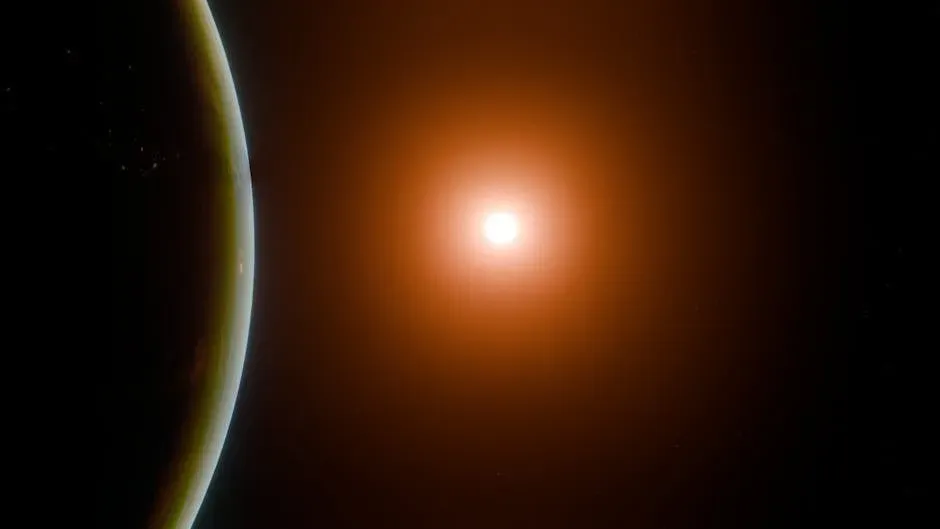
We’re living in a golden age of solar exploration. The Parker Solar Probe has swooped closer to the Sun than any spacecraft in history, plunging through the outer corona to directly sample the solar wind and magnetic fields near their source. The Solar Orbiter, working from a more distant vantage point, captures high‑resolution images of the Sun’s poles and surface while measuring particles and fields in the surrounding space. Together, they’re giving us a layered, three‑dimensional view of our star that previous generations could only dream about.
On the ground, new solar telescopes with incredible resolution are revealing fine-scale structures in sunspots and magnetic loops that look almost like tangled threads of fire. Each fresh image or dataset has the potential to overturn old assumptions and spark new theories about how the Sun really works. The more clearly we see the Sun, the more we realize that even this familiar star can still behave in ways we never anticipated. It’s a bit humbling to realize that the most important object in our sky is still, in many ways, a mystery waiting to surprise us again.
Living With a Restless Star: Why the Sun’s Secrets Matter
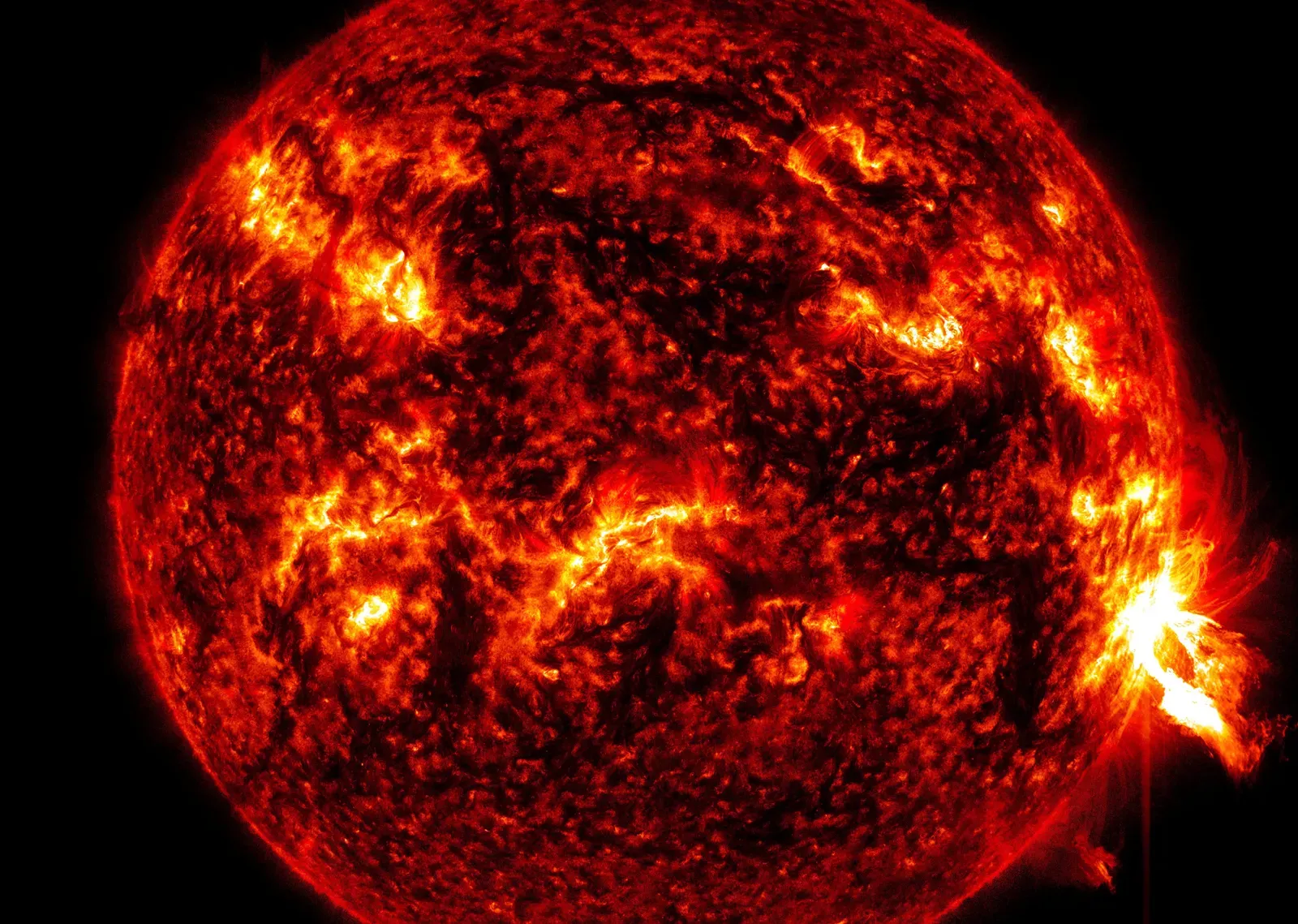
Learning the Sun’s secrets isn’t just a scientific hobby; it’s a form of self‑defense for a civilization deeply dependent on technology. Satellites, GPS, aviation, power grids, and even the timing of financial systems all operate in a space environment shaped by our star. Better understanding and forecasting solar activity can help us prepare for strong solar storms, reinforce vulnerable infrastructure, and protect astronauts as they venture deeper into space. In that sense, studying the Sun is a bit like studying the weather, but on a much larger and more energetic scale.
On a more personal level, there’s something quietly profound about realizing how dynamic and alive our star really is. Every sunrise is powered by nuclear reactions in a turbulent core, filtered through layers of swirling plasma, and sculpted by invisible magnetic forces that we’re only just beginning to decode. For all our technology, we still orbit a star that can surprise us, challenge us, and occasionally remind us how small we are. Knowing that, how will you look at the next sunrise?