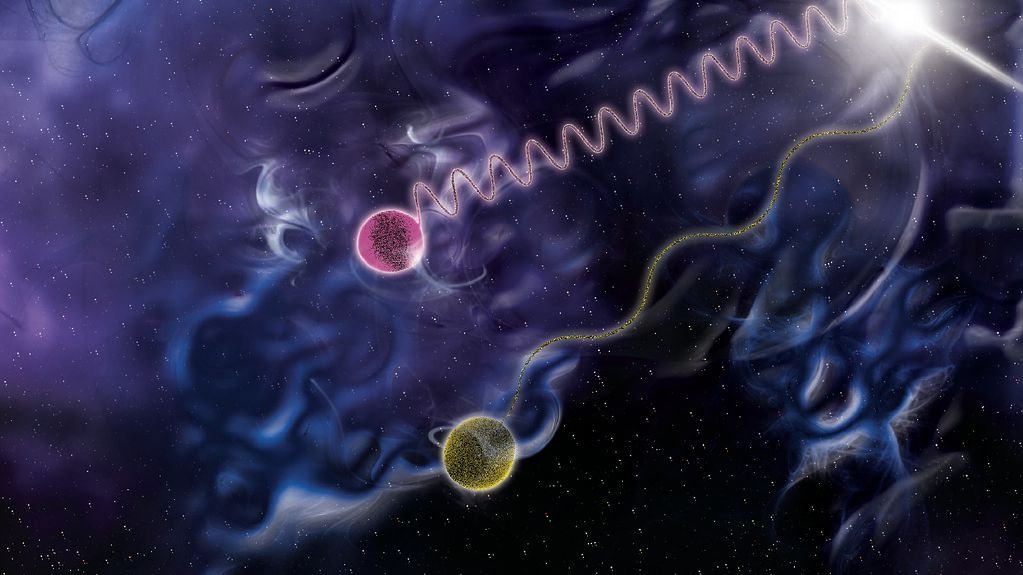

If someone told you that particles can be in many places at once, influence each other instantly across galaxies, and only seem “real” when you look at them, you’d probably file that under science fiction. Yet this is exactly what modern physics has been wrestling with for more than a century. The quantum realm is not just strange; it is staggeringly, stubbornly at odds with our everyday common sense.
And here’s the twist: this bizarre invisible world is not far away or theoretical. It sits under your fingertips every time you unlock your phone, stream a movie, or fire up a laptop. The rules of the quantum world, as alien as they sound, are already running huge parts of your life in the background – and they’re about to change much more than that.
The Shocking Idea That Reality Is Probabilities, Not Certainties

Imagine rolling a die and being told the die is somehow showing all six faces at once until you peek under the cup. That’s roughly what quantum mechanics says about particles like electrons: before you measure them, they don’t have a single definite position or state. Instead, they’re described by a “wave” of possibilities, a kind of cloud of maybes, where each outcome has a certain likelihood but nothing is fixed.
This isn’t just a philosophical quirk; it’s been confirmed again and again in experiments. When scientists fire individual particles through a pair of narrow slits and into a screen, they get interference patterns that only make sense if each particle acts like a spread-out wave going through both slits at once. Yet when they measure which slit it went through, that wavy cloud of possibilities suddenly collapses to one concrete result. The universe, at its foundations, seems to run on probabilities, not hard-edged facts.
Superposition: Being In Many States At The Same Time
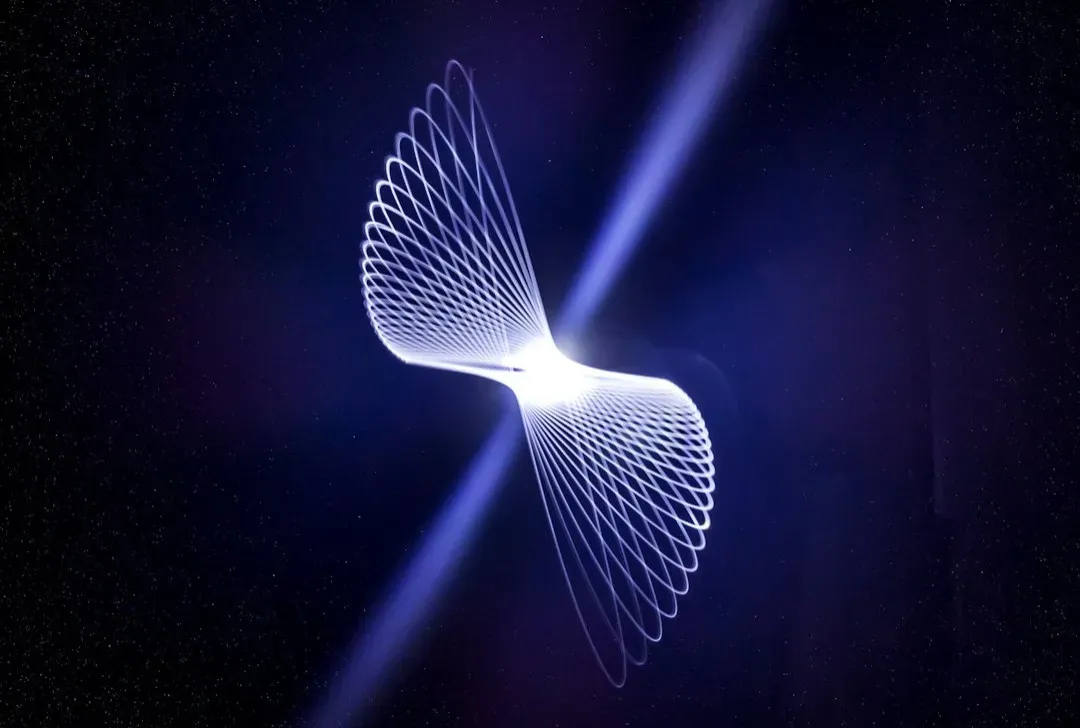
Superposition is one of those ideas that sounds like a bad joke until you realize it underpins modern technology. In classical terms, a light switch is either on or off. But at the quantum level, a particle can exist in a blend of “on” and “off” until it’s checked. It’s not that we just don’t know which state it’s in; the math and experiments show it literally behaves as if it’s in both at once.
A famous thought experiment imagines a cat sealed in a box, tied to a quantum event that could kill or spare it. Until someone opens the box, the cat is treated as both alive and dead at the same time, at least from the perspective of the equations. As absurd as that sounds, superposition isn’t hypothetical. It’s used in real devices like atomic clocks and sits at the heart of quantum computing, where tiny quantum bits can represent multiple values simultaneously, dramatically boosting potential computing power.
Entanglement: When Particles Seem To Share A Secret
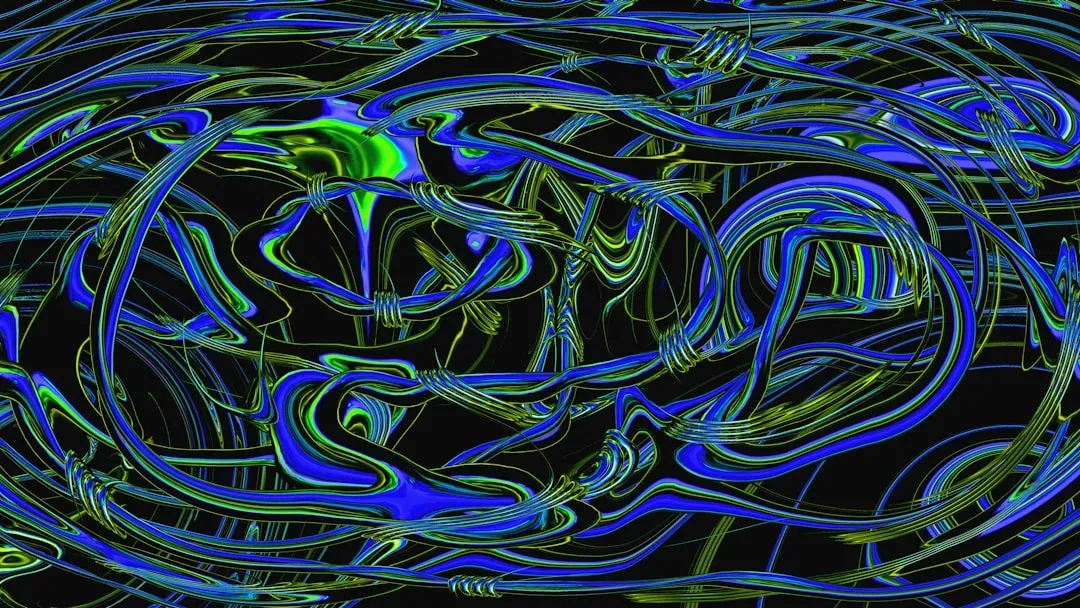
Entanglement is the part of quantum physics that made even Einstein uneasy. When two particles become entangled, their properties become linked so tightly that measuring one instantly tells you something about the other, no matter how far apart they are. It’s like flipping a pair of coins on opposite sides of the universe and finding that whenever one lands on heads, the other must be tails, with the connection showing up the moment you check.
This is not just about hidden information we’re missing. Experiments have repeatedly shown that no local, classical explanation can fully match what’s observed. Researchers have tested this through what are called Bell inequality experiments, sending photons in different directions and measuring their correlations. The results consistently line up with quantum predictions and not with everyday intuition, suggesting the world is more deeply interconnected than any simple cause-and-effect picture allows.
Quantum Tunneling: When Particles Walk Through Walls

In the classical world, if you don’t have enough energy to climb over a hill, you stay put. Quantum tunneling breaks this rule in a way that would look absurd on a human scale. Because particles behave like waves spread over regions of space, there is a small but real chance that part of that wave seeps through a barrier and appears on the other side. The particle effectively “tunnels” through something it shouldn’t be able to cross.
This isn’t a fringe effect; it plays a role in everyday technologies and even in the life of stars. In the sun’s core, atoms fuse together at rates that only make sense if quantum tunneling helps them overcome their mutual repulsion. On Earth, tunneling is used in devices like scanning tunneling microscopes, which can image individual atoms by measuring tiny currents produced by electrons tunneling through a narrow gap. What looks impossible from a classical viewpoint turns out to be a routine trick in the quantum realm.
From Quantum Weirdness To Everyday Electronics
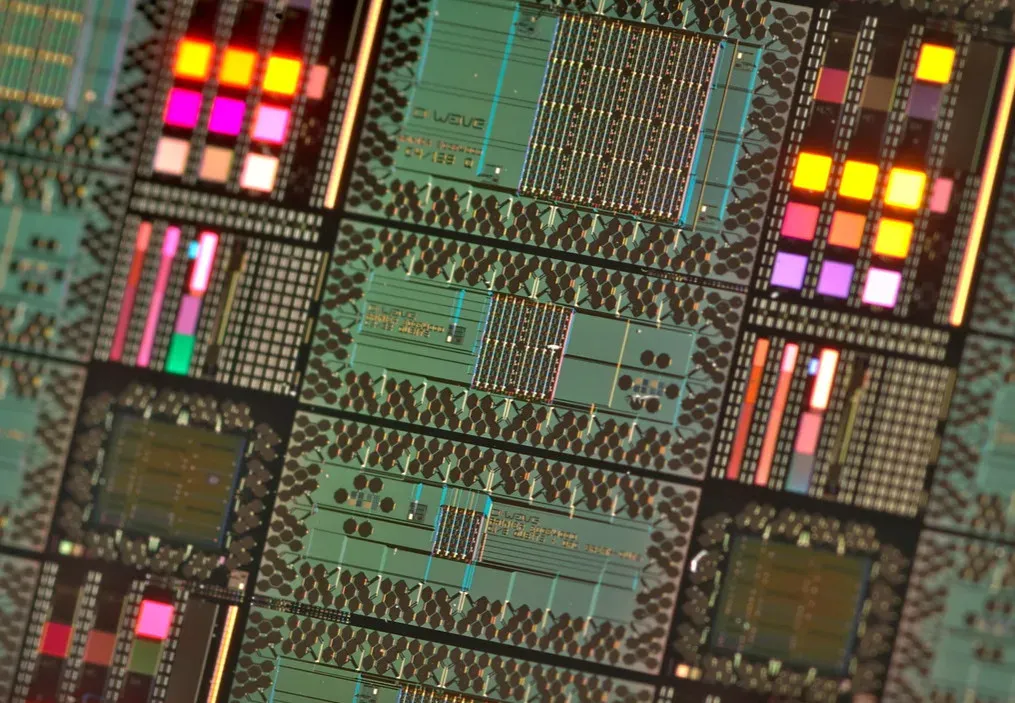
Despite how mystical the quantum realm sounds, it’s already built into the electronics that surround you. The functioning of semiconductors inside computer chips depends directly on quantum principles. Engineers design and control the energy levels of electrons in silicon so that they can turn currents on and off in extremely precise ways, creating the logic gates that run software, apps, and everything your devices do.
Lasers are another clear example. Their perfectly aligned beams rely on atoms jumping between quantized energy levels, emitting light in a highly coordinated way. Without quantum theory, there would be no modern telecommunications, barcode scanners, or optical storage. The world of tiny, discrete jumps and probability waves quietly powers the very hardware that lets you read about how strange it is.
Quantum Computers: Leveraging Weirdness For Power
Quantum computing takes all the bizarre behavior that once looked like a headache for physicists and turns it into a potential superpower. Instead of ordinary bits that are either zero or one, quantum bits, or qubits, can exist in superpositions of zero and one simultaneously. When many qubits are entangled and manipulated carefully, a quantum computer can explore a huge number of possible solutions in parallel, at least for certain kinds of problems.
Real machines are still in their early stages, but companies and research labs around the world are steadily increasing the number and quality of qubits they can control. These devices are not just “faster computers.” They follow different rules and are expected to excel at tasks like simulating molecules, optimizing complex systems, and cracking some current encryption methods. If they mature, they could reshape fields ranging from drug discovery to logistics in ways we’re only starting to sketch out.
Quantum Randomness And The Limits Of Predictability
One of the most unsettling aspects of quantum mechanics is that some events appear to be fundamentally random. In classical physics, randomness usually means we don’t know enough details. In the quantum world, even with perfect information, some outcomes seem to have no deeper hidden cause, only probabilities written into the fabric of the theory. When a radioactive atom decays, for example, there is no known reason it happens at that particular moment instead of earlier or later.
This deep randomness isn’t just philosophical wallpaper; it’s being put to use. Quantum random number generators exploit inherently unpredictable processes to produce sequences of numbers that are far harder to fake or predict than traditional methods. These devices are already being used for secure communications and cryptographic systems. The fact that nature appears to roll its own cosmic dice becomes, somewhat ironically, a powerful tool for digital security.
Does Consciousness Collapse The Wavefunction?
One of the most debated and emotionally charged questions in quantum physics is how and why the fuzzy cloud of possibilities “collapses” to a single outcome when measured. Some interpretations, especially in their more dramatic popular versions, suggest that consciousness plays a central role in this process. In that view, reality becomes definite only when a conscious observer looks, giving the human mind a strange starring role in the universe’s script.
Most working physicists today lean toward explanations that do not require consciousness to do any special heavy lifting. They tend to treat measurement as any physical interaction that forces the system to behave classically, though the details are still being explored. The honest truth is that we don’t yet have a universally accepted answer. What we do know is that our everyday sense of a solid, observer-independent world does not sit neatly with the mathematical description we use at the quantum level.
Quantum Physics And The Fabric Of Space-Time
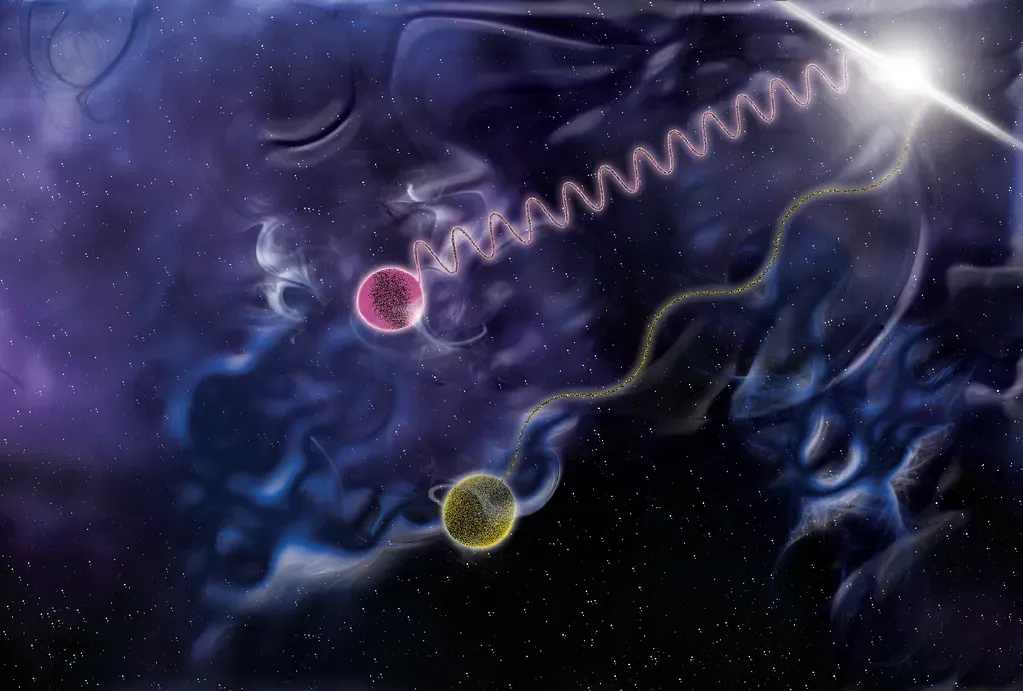
Quantum theory does not live in a vacuum; it collides head-on with another pillar of modern physics: general relativity. Relativity describes gravity as the curvature of space-time itself, working beautifully for planets, stars, and galaxies. Quantum mechanics, by contrast, shines at the scale of atoms and particles. Trying to merge these two into a single picture leads to serious tension and hints that our understanding of reality is still incomplete.
Some approaches to quantum gravity, like certain versions of loop quantum gravity or holographic ideas, suggest that space and time might not be fundamental at all. Instead, they could emerge from more basic quantum relationships, the way a smooth liquid emerges from countless individual molecules. If this line of thinking is right, then reality as we experience it – continuous, flowing, and three-dimensional – could be more like a high-resolution illusion built on an invisible quantum network.
How Quantum Physics Rewrites Our Sense Of “Real”
Living at human scale, it’s natural to think of reality as solid objects following clear rules: things are here or there, now or later, cause then effect. Quantum physics quietly shreds that picture. It replaces it with a world where objects blur into waves of possibility, distant events link up in ways that defy simple cause-and-effect stories, and certainty gives way to structured uncertainty. The gap between how the world feels and how it seems to fundamentally operate is wide and unsettling.
Yet this gap is also strangely liberating. It reminds us that our everyday intuitions are tuned for survival, not for truth at the deepest levels of nature. The quantum realm shows that reality is richer, stranger, and more flexible than any simple mechanical model. It shapes everything from the light in our devices to the reactions in our bodies, whether we understand it or not. The question that lingers is simple and disorienting: how much of what you take for granted about reality would you still trust after peering into the quantum world?