
There’s a question that has haunted philosophers, scientists, and late-night overthinkers for centuries. What actually happens when we die? Most of us assume the answer is straightforward, even if unsettling. But a small, growing corner of theoretical physics suggests the story might be far stranger, and far more hopeful, than anyone expected.
Some researchers and quantum theorists are now seriously entertaining the idea that consciousness doesn’t end at death. Instead, it might slip sideways into another version of reality entirely. It sounds like science fiction, honestly. Let’s dive in.
The Theory That Refuses to Die (Pun Intended)
Here’s the thing: the idea that you might survive death by jumping into a parallel universe isn’t just wishful thinking from people who’ve watched too much sci-fi. It’s rooted, at least partially, in real quantum mechanics. The theory is sometimes called “quantum immortality,” and it builds directly on the many-worlds interpretation of quantum physics, first proposed by physicist Hugh Everett III back in 1957.
The basic premise is this: every time a quantum event occurs, reality branches into multiple outcomes. All of them happen, just in different universes. So in the branch where you die, your consciousness, if it’s somehow tied to quantum processes, may simply continue experiencing the branch where you didn’t.
It’s a bit like standing at a fork in a road where both paths are real, and you somehow always end up on the one where you keep walking.
Hugh Everett and the Many-Worlds Interpretation
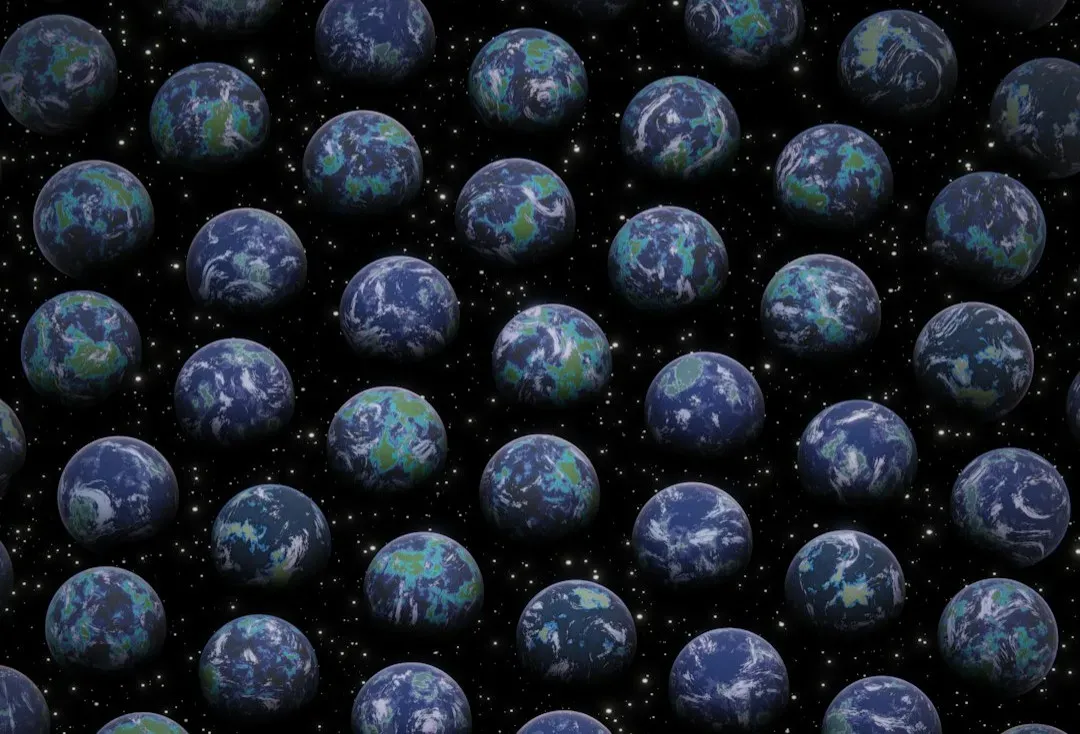
Hugh Everett III was, by most accounts, a quietly revolutionary thinker. When he submitted his many-worlds interpretation as part of his 1957 Princeton dissertation, the physics community largely dismissed it. Niels Bohr’s Copenhagen interpretation was the dominant framework, and Everett’s ideas were seen as unnecessary, even bizarre.
Everett essentially argued that the wave function of the universe never collapses. Every possible quantum outcome is realized, just in a constantly branching set of parallel realities. He never lived to see his ideas gain mainstream traction. He died in 1982, and it’s one of those genuinely poignant ironies of science history that the man who theorized endless parallel lives had a rather short one himself.
Today, many-worlds is taken seriously by a significant portion of physicists, even if it remains deeply controversial. It forms the theoretical backbone of quantum immortality.
The Quantum Suicide Thought Experiment
The most striking, and honestly disturbing, way to understand quantum immortality is through a thought experiment called quantum suicide. It was popularized by philosopher and physicist Max Tegmark in the 1990s. Imagine a machine designed to measure a quantum particle. Depending on its spin, it either fires a bullet or doesn’t. You sit in front of it and press the button.
In the many-worlds framework, both outcomes happen. In one branch, you’re shot. In the other, you survive. Tegmark’s unsettling point is that from your own subjective perspective, you would always find yourself in the surviving branch. You would never experience the branch where you die, because there’s no “you” left to experience it.
This is not an experiment anyone should actually try. That needs to be said clearly. It remains a thought experiment, a philosophical stress test for the theory, nothing more.
What Does “Consciousness” Have to Do With Any of This?

Here’s where the theory gets genuinely complicated. Quantum immortality depends heavily on the assumption that consciousness plays a special role in quantum mechanics. This is not a universally accepted idea, not even close. The relationship between consciousness and quantum physics is one of the most contested areas in all of science.
Some interpretations, like the von Neumann-Wigner interpretation, do assign consciousness a role in collapsing quantum states. Others reject this entirely. If consciousness is purely a product of classical brain chemistry with no quantum component, then quantum immortality collapses as a concept entirely. You’d be left with regular, mortal physics, which is considerably less exciting but probably more accurate.
The honest answer is that nobody fully understands consciousness yet. And until we do, this part of the theory remains frustratingly open-ended.
The Role of the Anthropic Principle
Quantum immortality also leans on something called the anthropic principle, which is essentially the observation that we can only observe a universe that permits our existence. Think of it this way: the very fact that you’re alive and reading this means you’ve already survived every potentially fatal event in your life so far. In a many-worlds scenario, that’s not luck. It’s selection.
You’ve always experienced the branch where you survived, because you couldn’t experience the branches where you didn’t. It’s a subtle but genuinely mind-bending point. Roughly speaking, it reframes every near-miss you’ve ever had as a branching event, a moment where one version of you kept going and another didn’t.
It doesn’t make grief easier, though. The people around you experience your death in their branches, even if you don’t experience it in yours. That asymmetry is one of the most emotionally thorny aspects of the whole theory.
The Serious Scientific Skepticism

Let’s be real: most mainstream physicists are not rushing to endorse quantum immortality as a literal description of what happens when you die. The many-worlds interpretation may be intellectually serious, but applying it to personal survival after death involves several additional philosophical leaps that many scientists consider unjustified.
One major criticism is the “measure problem.” Even if all branches exist, not all branches are equally likely. The probability weighting of quantum outcomes is something many-worlds theorists still struggle to fully account for. Another critique is that even if quantum branching occurs, it’s far from clear that anything like subjective consciousness persists or transfers across branches in any meaningful sense.
Tegmark himself, despite popularizing the thought experiment, has expressed significant reservations about drawing literal conclusions from quantum suicide. It’s one thing to play with the logic. It’s another to claim it describes reality.
Near-Death Experiences and the Quantum Angle
Some proponents of quantum consciousness, most notably physicist Roger Penrose and anesthesiologist Stuart Hameroff, have proposed that consciousness arises from quantum processes within microtubules in brain cells. Their framework, known as Orchestrated Objective Reduction, or Orch OR, has been around since the 1990s and remains controversial but not entirely dismissed.
If consciousness does have a quantum foundation, that opens a small door, just a crack, to the possibility that it might behave in ways classical physics wouldn’t predict at death. Some researchers have also pointed to near-death experiences as circumstantial evidence worth examining. People report vivid, structured experiences during periods of clinical death, and while most neuroscientists attribute these to brain activity patterns, the debate is ongoing.
I think it’s worth noting that “ongoing debate” in science doesn’t mean “equally supported by evidence.” It doesn’t. But it does mean the conversation isn’t fully closed.
How This Theory Differs From Religious Afterlife Beliefs
It’s tempting to draw a line from quantum immortality straight to religious concepts of the afterlife, but the comparison is a bit misleading. Traditional afterlife beliefs typically involve a soul, a non-physical essence that persists beyond the body. Quantum immortality doesn’t require a soul in that sense. It’s more structural than spiritual.
The theory proposes that your subjective experience simply continues in a branch of reality where your physical body didn’t die. There’s no heaven, no reincarnation, no divine judgment. Just an infinite forking of physical reality and a consciousness that keeps riding one of the surviving paths. Whether that’s more or less comforting than traditional beliefs is, honestly, a personal question. Some people find the idea profoundly strange and cold. Others find it weirdly reassuring.
The two frameworks come from completely different starting points, one from faith and tradition, the other from quantum mechanics. They’re asking related questions but not really giving the same kind of answer.
The Philosophical Implications Are Enormous

If quantum immortality were true, the ethical and philosophical consequences would be staggering. For starters, the concept of risk changes entirely. If you always survive from your own perspective, then in some sense, nothing is ever truly lethal for you specifically. That’s a deeply strange way to live, and probably not a healthy one to internalize too literally.
There’s also the question of identity. If countless versions of you are branching off constantly, which one is the “real” you? Is continuity of consciousness even meaningful across quantum branches? Philosophers have argued about personal identity for centuries without resolving it. Many-worlds doesn’t make that easier. It makes it considerably more complicated, stacking parallel selves onto an already messy problem.
And then there’s grief. Even if you survive in your own branch, the people who loved you don’t. They experience your death in their reality. The theory offers no comfort there, and that matters.
Where Does This Leave Us?

Quantum immortality sits in a fascinating, unresolved space between legitimate physics and speculative philosophy. It’s not pseudoscience exactly, because it’s built on a real and seriously debated interpretation of quantum mechanics. However, it’s also not something physicists are ready to endorse as a literal description of what happens after death. Not even close.
The theory does something valuable though, even if it’s ultimately wrong. It forces us to ask harder questions about consciousness, about identity, and about what we even mean by death. Those questions matter regardless of the answer. Science has a long history of seemingly absurd ideas turning out to be true, and an equally long history of poetic theories that turned out to be just that, poetry.
What do you think? Does the idea that some version of you might live forever change anything about how you see the world? Tell us in the comments.