
Picture yourself stepping outside on a warm summer evening, tilting your head back, and seeing not just the moon or a scattering of stars, but a colossal, glowing arc of rock and ice cutting clean across the entire sky. Breathtaking, right? It sounds like the kind of thing reserved for science fiction novels or vivid paintings on someone’s bedroom wall. Yet the science behind this scenario is surprisingly real, shockingly detailed, and honestly a little mind-bending.
What would our world actually look like if Earth wore a ring system like Saturn’s? How would it shape our climate, our culture, our very sense of direction? From the frozen wastelands it might create to the mythologies it would almost certainly inspire, this is one of the most fascinating “what if” questions in all of planetary science. Let’s dive in.
Did Earth Actually Have Rings Once? The Shocking Answer Is Yes
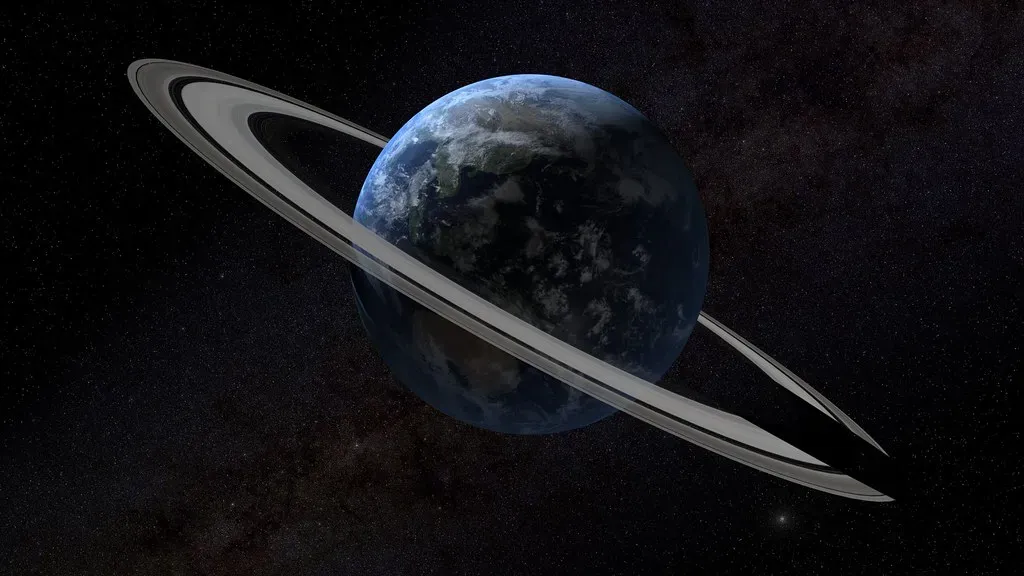
Here’s the thing that blows most people’s minds right away: Earth very likely did have rings, not once but possibly twice in its deep history. The question is not entirely hypothetical. Scientists believe Earth had a ring once, billions of years ago, appearing early in the formation of Earth’s moon. According to the giant impactor hypothesis, a planet named Theia collided with Earth, causing an explosion of matter to rocket into Earth’s orbit. That matter formed a ring of space debris hovering in low Earth orbit, and eventually coalesced into the moon we see today.
More recently, scientists uncovered compelling evidence of a second ring event. Earth may have sported a Saturn-like ring system around 466 million years ago, after it captured and wrecked a passing asteroid. The debris ring, which likely lasted tens of millions of years, may have led to global cooling and even contributed to the coldest period on Earth in the past 500 million years, during the Ordovician era. So when you ask “what if,” you may actually be asking “what was it like back then?” Honestly, that makes this whole discussion even more extraordinary.
How Would a Ring Form Around Earth Today?
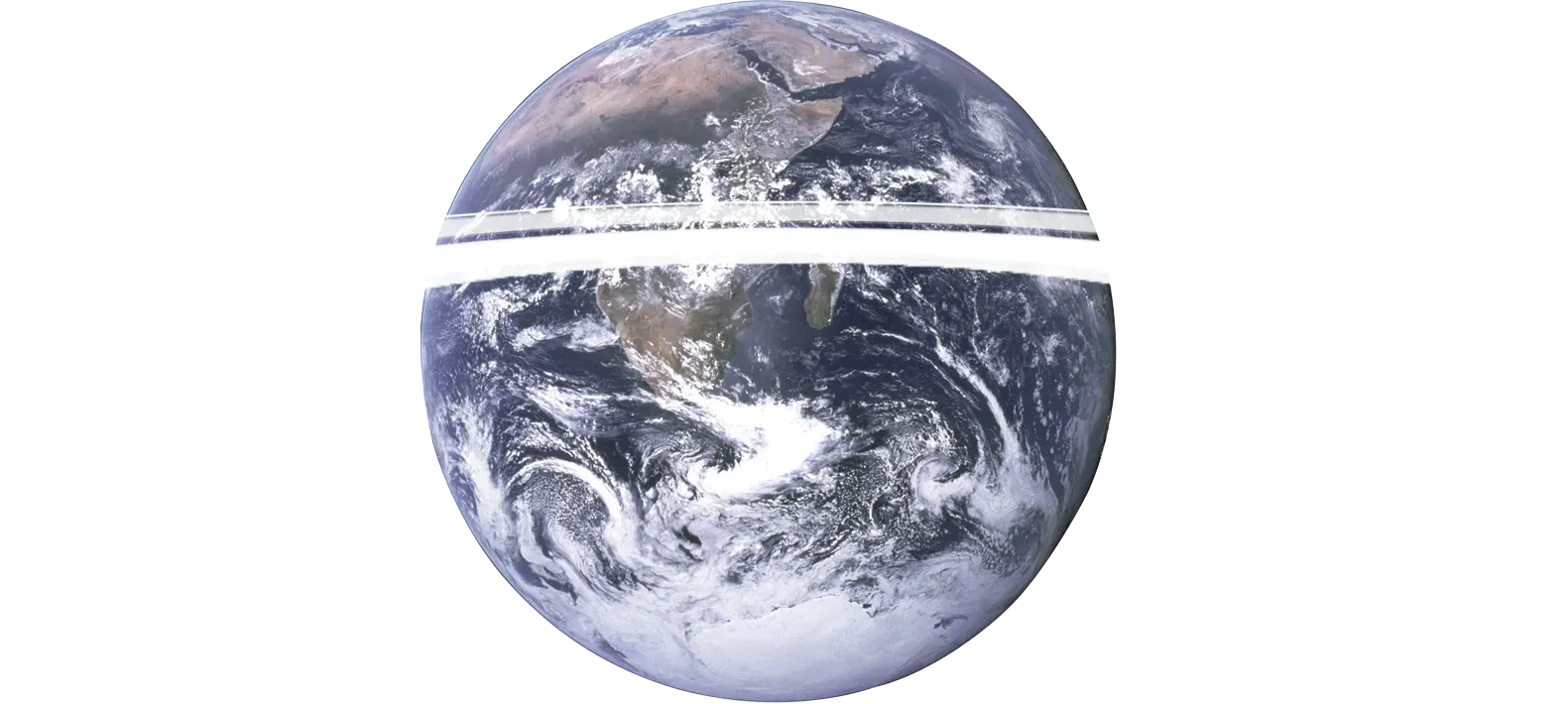
For Earth to grow a new ring system, something violent would need to happen first. Think of it like cosmic demolition before reconstruction. A large body could escape from the asteroid belt and wander toward the inner solar system. If it flew close enough to Earth, it would breach our planet’s Roche limit, the line of demarcation about 1,900 miles above the surface where Earth’s gravity would effectively rip it apart, creating a flying rubble field. The flock of rocks would eventually settle into orbit, forming a neat ring around the planet’s equator.
There is a precise science to what keeps that ring in place. The Roche limit is named for French mathematician Edouard Roche, who in 1848 figured out that a planet’s gravitational pull on a moon is unequal, exerting greater gravitational force on the side closest to the planet. This means that if a moon, ring, or other object has an orbital trajectory too close to a planet, the unequal pull of the planet’s gravity could tear it apart. Essentially, the Roche limit is the minimum distance an object can be from a planet and still hold itself together by its own gravity. Think of it as a gravitational shredder sitting just above Earth’s atmosphere.
What Would You See Looking Up at the Sky?
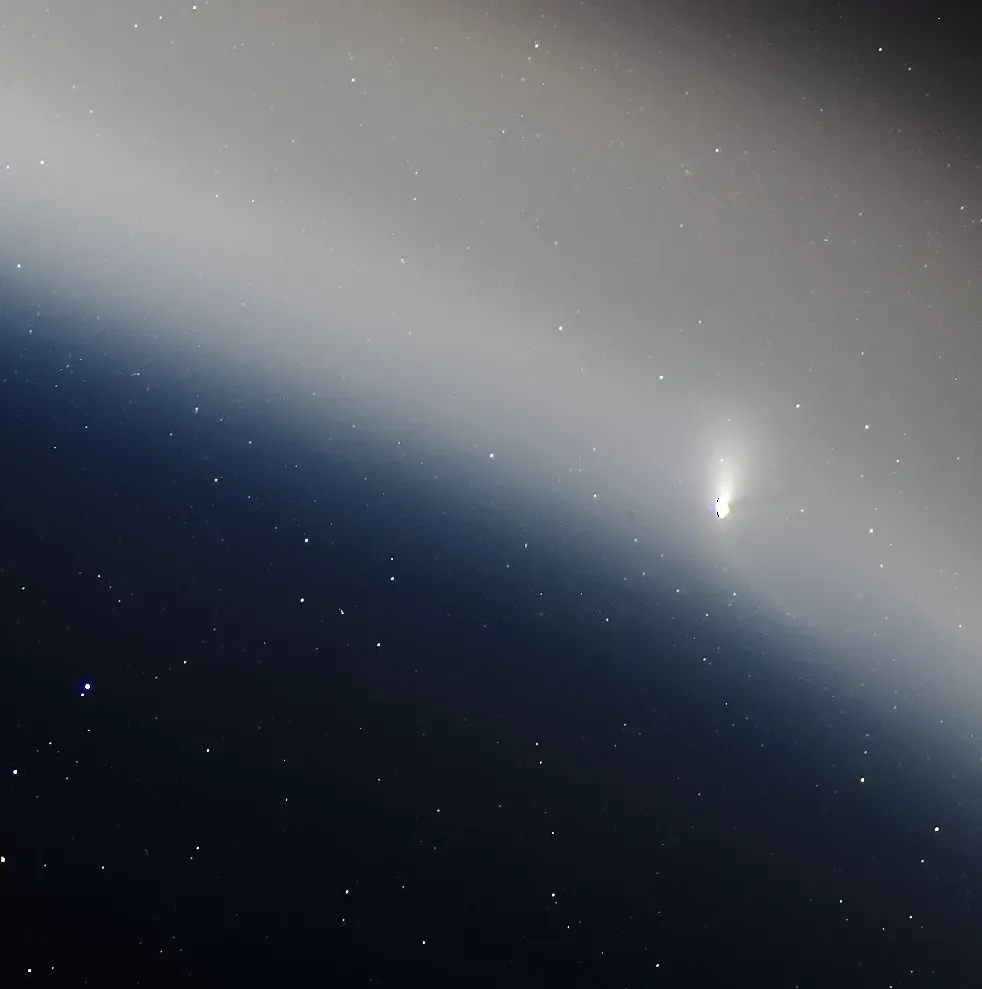
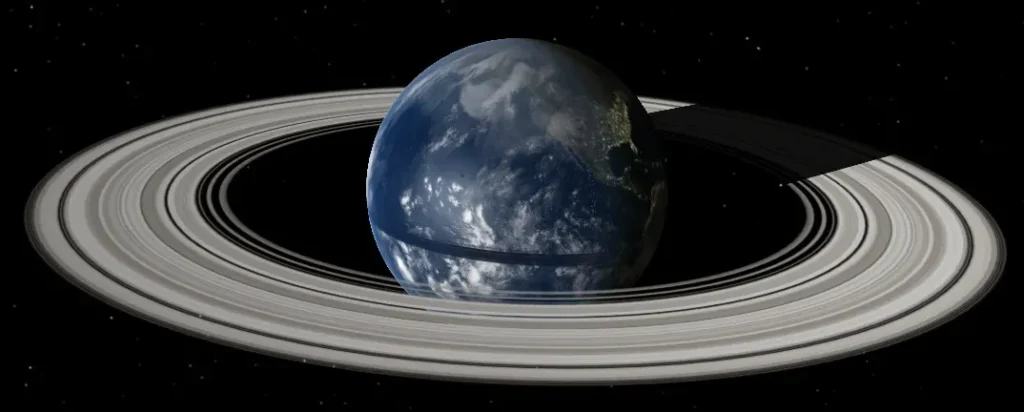
Here is where your imagination should really start working overtime. The view would be dramatically different depending on where you were standing on the planet. The most stable place for rings is around a planet’s equator, so the appearance of the rings would vary greatly by latitude. Near the equator at Quito, Ecuador, for example, you would see the rings from the inner edge on, making them look like a thin line rising straight up from the horizon.
Move away from the equator and the whole picture transforms. At more temperate latitudes, the rings would look like a giant arch, crossing from one end of the sky to the other. If you were in Washington, D.C., rings on Earth might arc like an out-of-this-world rainbow. These glittering rings would neither rise nor set, and would always appear in the exact same place in the sky. These cosmic landmarks would be visible both day and night. It is an almost surreal thought. Something permanently, immovably there. Every single night. Every single day.
What Would Earth’s Rings Actually Be Made Of?
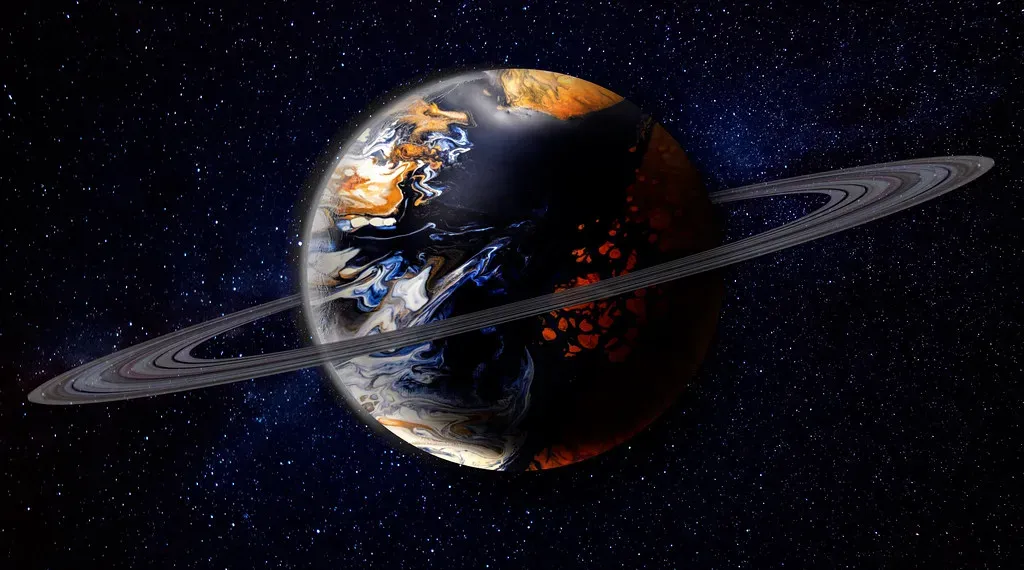
Here is a key difference you need to know between Earth’s hypothetical rings and Saturn’s famous ones. Saturn’s rings are famously icy and brilliant. Earth’s would be a whole different beast. Earth’s hypothetical rings would differ in one key way from Saturn’s: they would not have ice. Earth lies much closer to the sun than Saturn does, so radiation from our star would cause any ice in Earth’s rings to sublimate away. Still, even if Earth’s rings were made of rock, that might not mean they would look dark.
The visual impact could still be genuinely spectacular. Unlike Saturn’s icy rings, Earth’s would be made of nothing but rock. The Earth is simply too close to the Sun to keep the debris iced. Even so, rocky debris has its own kind of glittering quality in sunlight. The particles making up the rings would likely scatter the sun’s light, making it appear hazy or veiled. Imagine sunsets filtered through a gauze of orbiting rock dust. Honestly, that sounds simultaneously terrifying and completely gorgeous.
How Would the Rings Mess With Earth’s Climate?
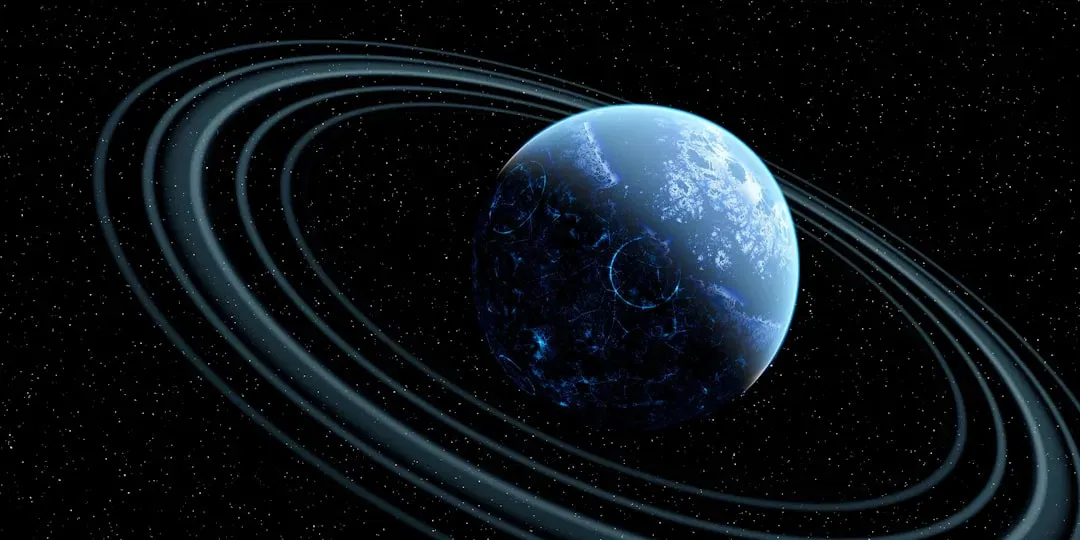
Let’s be real: the visual spectacle is one thing, but the climate effects would be staggering. Scientists have actually studied what happened when Earth had its ancient ring system, and the results are sobering. If Earth had sported a Saturn-like ring around its equator, the ring would have significantly affected our planet’s climate. Because Earth’s axis is tilted relative to its orbit around the sun, the ring would have cast a shadow over parts of our planet’s surface, potentially causing global cooling.
The effects would not be uniform across the globe. Rings around Earth would undoubtedly have significant climatic implications. These vast sheets of debris could act as a shield in some regions, potentially preventing much of the sun’s rays from reaching the Earth’s surface. This might lead to cooler temperatures in some areas, especially those beneath the densest parts of the ring. Conversely, the reflected sunlight from the rings could cause a warming effect in other regions. Climate models would need to account for these new variables, making our understanding of global weather patterns even more complex. In other words, you could have a frozen wasteland on one side of the equator and a weirdly sun-baked zone on the other. Unpredictable, to say the least.
How Would Rings Affect Wildlife, Ecosystems, and Life on Earth?
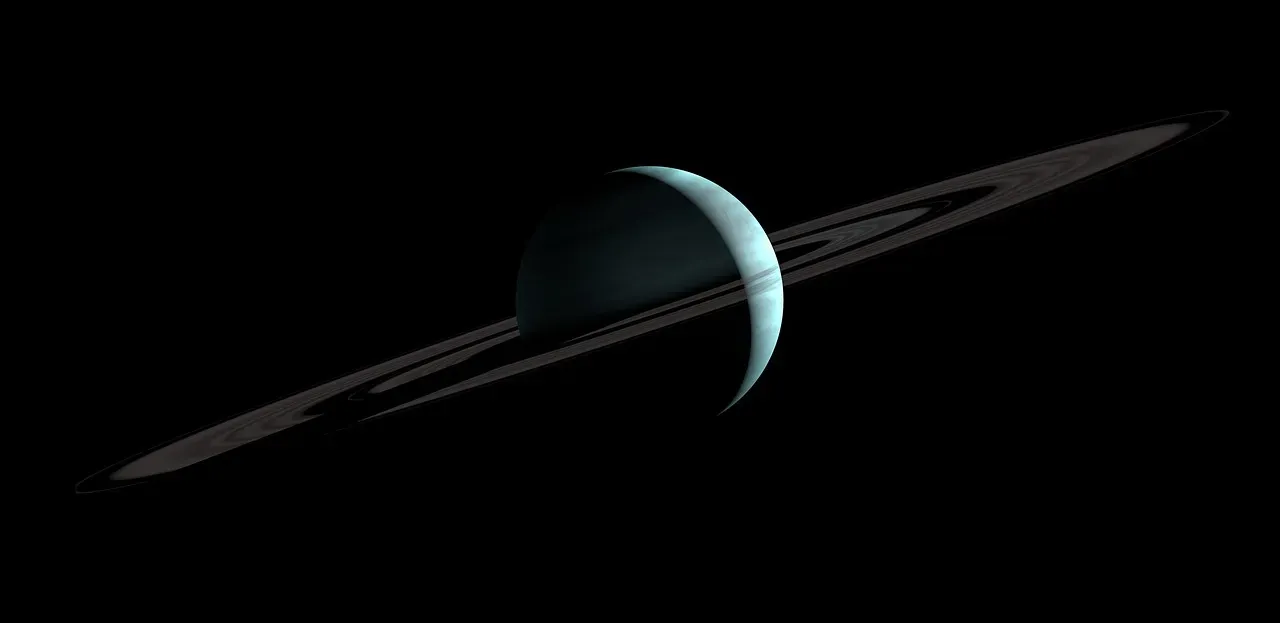
The consequences for living things would ripple far beyond climate. Nature is remarkably sensitive to light cycles, and a permanent ring system throwing shadows and extra brightness across the sky would throw countless species into complete disarray. The light reflected off the rings when the sun was down would prove deeply problematic for nocturnal species. A number of species have eyesight specifically geared towards navigating through darkness, so a significant increase in luminosity could throw them completely off balance, drowning out some of the light from background stars. One species, the dung beetle, actually navigates using the stars as a road map. Another, the swallow-tailed gull native to the Galapagos Islands, has its behavior modified by lunar cycles.
Plants would face their own existential challenge. The rings suddenly hugging Earth would disrupt the internal navigation systems of some animals. If not enough direct sunlight made it through the rings, they would also affect photosynthesis and our oxygen supply. That is not a small footnote. Photosynthesis is the engine of nearly all life on Earth. Compromise it, even slightly, and you are tugging at the threads of the entire food web. I think it is safe to say the world we know would look very, very different.
What Would Rings Mean for Space Exploration and Satellites?
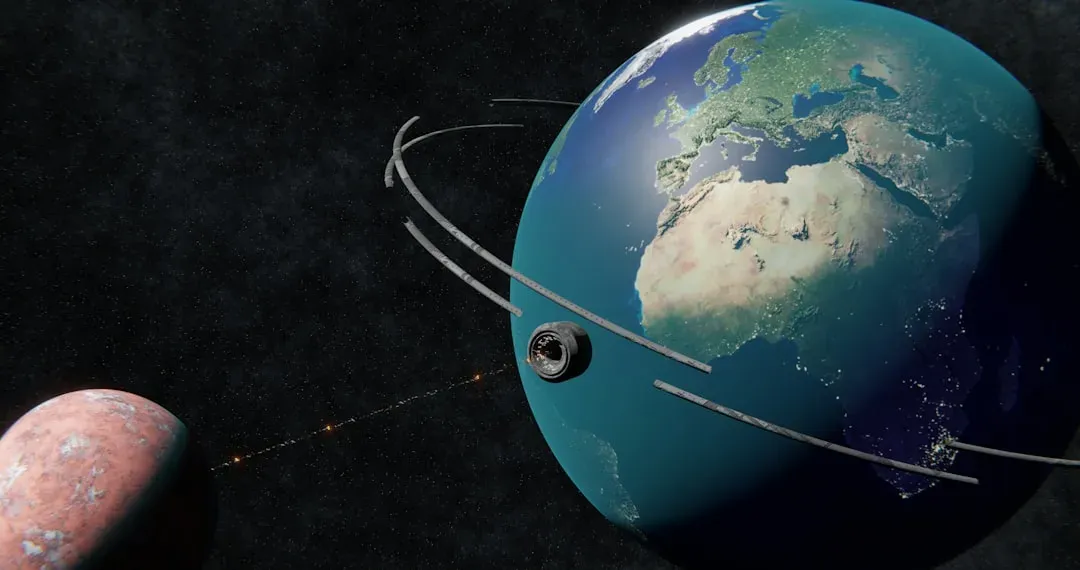
Now here is where things get truly complicated for modern humanity. We live in an age of GPS, satellite internet, weather forecasting, and space stations. A ring system would threaten all of it. Rings could interfere with satellite trajectories, telecommunications, and space exploration missions. The presence of a dense ring could also present navigational hazards for space missions leaving or entering Earth’s atmosphere. Space agencies would need to recalibrate and perhaps even redesign spacecraft to safely navigate in such an environment, not to mention the impact on research vessels like the International Space Station.
The cultural and exploratory ambitions of humanity would likely take a completely different path. If Earth had a ring like Saturn’s, we might not have had any technology that depends on satellites. Our technological development would have gone in a different direction. We might not have even had a space race. The ring debris might have proven an impassable barrier. In this alternate scenario, there might have been no moon landing. It is a little humbling to think that those magnificent glowing arcs in the sky might have permanently caged us here on Earth, unable to reach beyond them.
Conclusion: A World More Beautiful, and More Broken
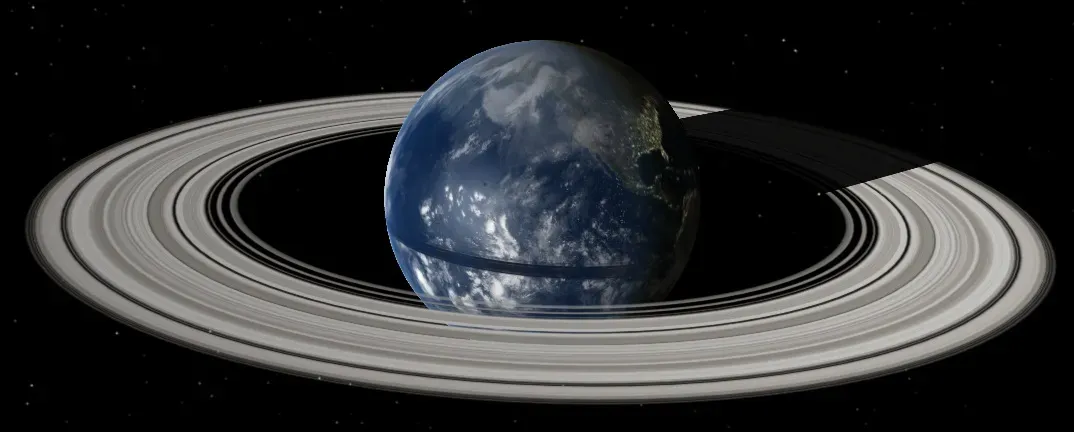
So what would Earth be like with rings? The honest answer is this: breathtakingly beautiful, climatically chaotic, ecologically disrupted, and technologically paralyzed. Having rings would make Earth visually stunning, but the scientific consequences would be profound, including climate shifts, orbital disruptions, and biological changes. While it is a mesmerizing thought, Earth’s delicate balance is what makes it the perfect home for life.
As celestial landmarks that never change their position in the sky, the rings would almost certainly play a key role in mythologies. At temperate latitudes, one might imagine that their appearance as an arch might symbolize a bridge between heaven and Earth. Since the rings’ appearance changes with latitude, so too might people’s interpretations of them. Given how wars on Earth have stemmed from opposing views of religious doctrine, one might wonder what might have happened as ancient people started roaming the planet and seeing the rings change in appearance.
There is something deeply poetic in the fact that Earth may have had rings long, long before any human eye could ever gaze at them. Our planet wore its jewels in silence, billions of years before anyone was around to appreciate them. Now we’re left to imagine. Maybe that’s the most human thing of all: staring up at an ordinary sky and dreaming of what might have been. What do you think, would you trade our open, starry skies for a sky split by glowing rings?