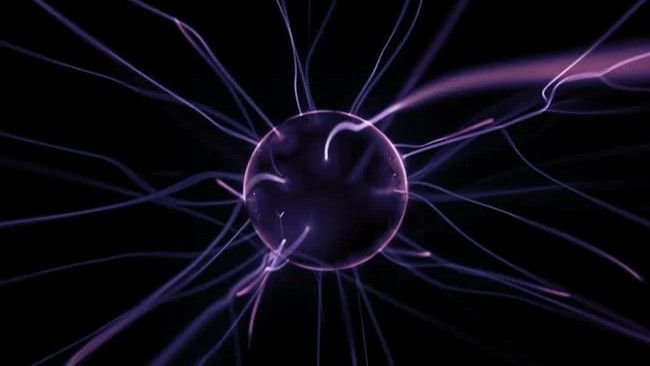

Imagine billions of tiny, invisible bullets streaming through your body every second, and yet you feel absolutely nothing. That’s not science fiction – that’s neutrinos, the most elusive players in the universe’s hidden game. They slip through planets, stars, metal, concrete, even lead walls, as if matter is mostly just empty space.
When I first learned that almost all the neutrinos passing through Earth do so without interacting even once, it felt like finding out there’s a secret river flowing straight through my living room. These ghost particles are everywhere, born in stars, nuclear reactors, and even in the first violent moments after the Big Bang. We can’t see them, we barely manage to catch them, but they quietly shape our understanding of how the universe really works.
The Strange Nature Of Ghost Particles
Here’s the shocking part: neutrinos are so tiny and so shy about interacting that a single one could pass through a wall of solid lead light‑years thick and still probably come out the other side untouched. They carry no electric charge, which means they don’t feel the electromagnetic forces that control most of everyday life – no attraction, no repulsion, almost no friction with reality as we know it. They only really respond to gravity and the so‑called weak nuclear force, and that weak force is, as the name suggests, really weak.
Physicists often describe neutrinos as almost pure motion with a tiny hint of mass, like a whisper passing through a hurricane. They travel close to the speed of light, zipping through space in all directions, created whenever certain types of nuclear reactions or particle collisions occur. In a way, they’re like cosmic background chatter: always there, mostly ignored, but full of clues if you know how to listen. The weirdness of neutrinos is precisely what makes them so fascinating – they break many of our intuitive ideas of what a “particle” should be.
Where Neutrinos Come From: The Universe’s Invisible Fireworks
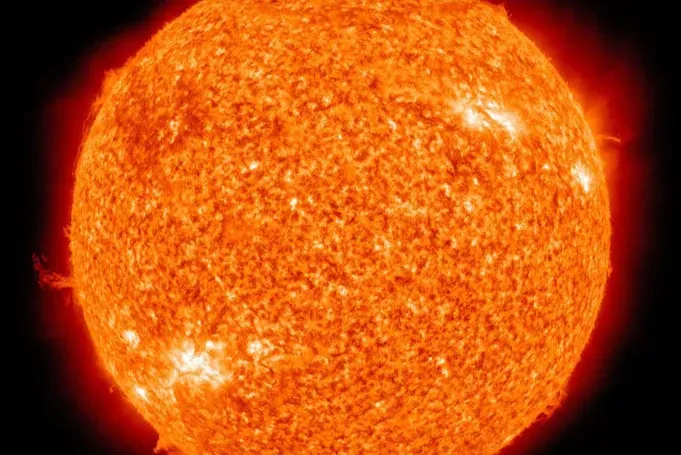
Every second, the Sun showers Earth with a nonstop rain of neutrinos created in nuclear fusion reactions deep in its core. These solar neutrinos are constantly bursting out of the Sun as hydrogen atoms fuse into helium, releasing energy and spitting out ghost particles on their way. By the time that sunlight reaches your face and warms your skin, an even bigger flood of neutrinos from the same reaction has already passed straight through your body and kept going.
But the Sun is just one source. Neutrinos are born in exploding stars called supernovae, in energetic processes around black holes, and in cosmic rays slamming into Earth’s atmosphere. On our own planet, nuclear reactors, particle accelerators, and even the natural radioactivity inside Earth’s crust create more of them. There are so many neutrinos in the universe that they’re believed to be one of its most abundant particles, forming an invisible background ocean filling every corner of space.
Why Neutrinos Pass Through Almost Everything

The reason neutrinos are so ghostly comes down to the forces they ignore. Most particles get slowed down, bounced around, or absorbed because they carry electric charge and feel electromagnetic forces, like dust sticking to a staticky sweater. Neutrinos don’t carry any charge at all, so they breeze past electrons and protons without really “seeing” them, almost like a person walking through dense fog without getting wet.
On top of that, neutrinos barely interact via the weak nuclear force, which operates over incredibly tiny distances within atoms. For a neutrino to actually bump into something, it has to pass extremely close to a particle in just the right way, and that almost never happens. In practical terms, this means that of the countless neutrinos passing through Earth every moment, only a minuscule fraction ever collide with anything. Our planet is effectively transparent to them, and that’s why you can stand here, feel solid ground under your feet, and still have ghost particles sailing through you uninterrupted.
Hunting The Uncatchable: How We Detect Neutrinos
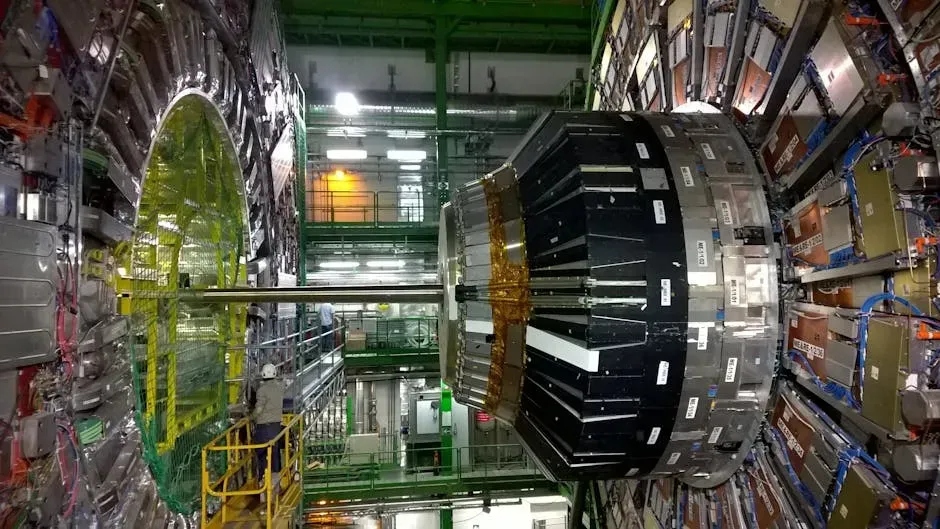
Trying to detect a neutrino is like trying to photograph the wind: most of the time, it just slips away. Because neutrinos interact so rarely, scientists have to build huge, ultra‑sensitive detectors, often buried deep underground to shield them from other kinds of particles and noise. These detectors are sometimes giant tanks filled with ultra‑pure water or special liquids that light up faintly when a rare neutrino finally crashes into an atomic nucleus inside.
When that impact happens, it creates a tiny flash or spark of light that cameras and sensors can pick up and analyze. Facilities in mountains, old mines, and under Antarctic ice patiently wait for these rare events, collecting data over years to piece together a picture of what the neutrinos are doing. It’s a bit like placing gigantic, silent nets in the path of a nearly invisible current, hoping to catch just a few travelers and learn where they came from. The patience and scale involved are staggering, but the payoff is a unique window into processes we can’t observe directly any other way.
Neutrino Oscillations: The Shape‑Shifting Trick
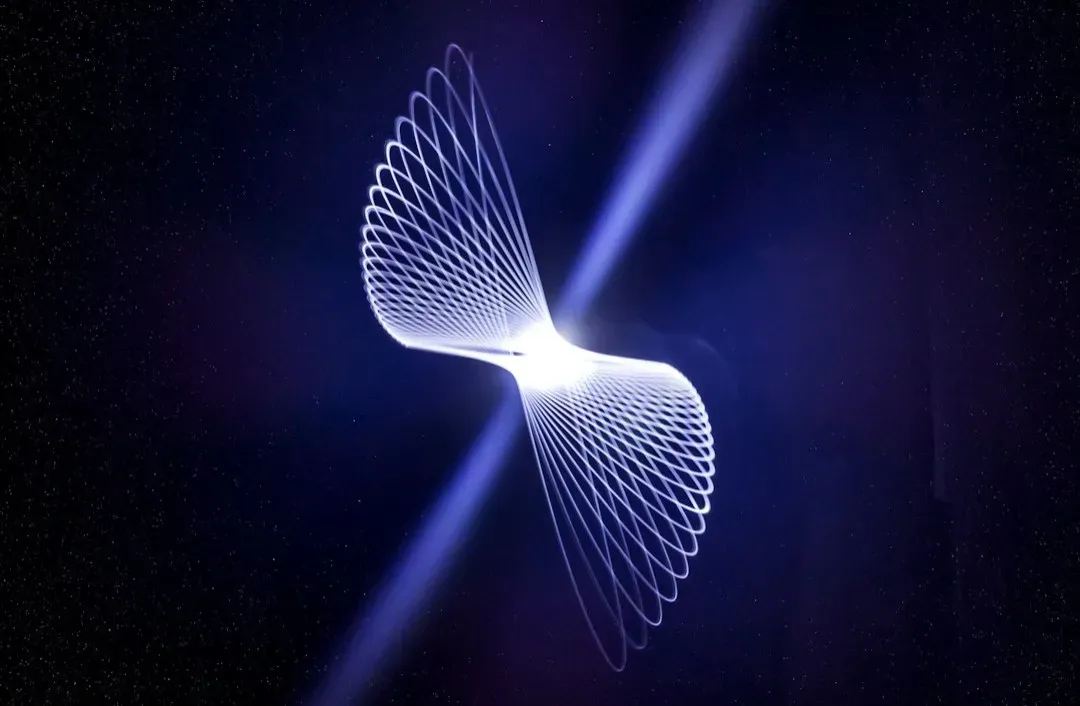
One of the wildest discoveries about neutrinos is that they can change their identity as they travel. There are three known “flavors” of neutrinos, each linked with a different partner particle: electron neutrinos, muon neutrinos, and tau neutrinos. Experiments have shown that a neutrino born as one flavor can later show up as another, like a traveler switching passports mid‑flight.
This behavior, called neutrino oscillation, is not just a cute party trick. It proved that neutrinos must have mass, even if it’s incredibly tiny, because only particles with mass can oscillate this way according to our best theories. That discovery forced physicists to update the Standard Model of particle physics, which originally treated neutrinos as massless. The fact that these nearly invisible particles quietly broke one of the neatest, cleanest parts of modern physics still feels like a cosmic prank – and it suggests there’s deeper physics we haven’t fully mapped out yet.
What Neutrinos Reveal About The Universe’s Past And Future
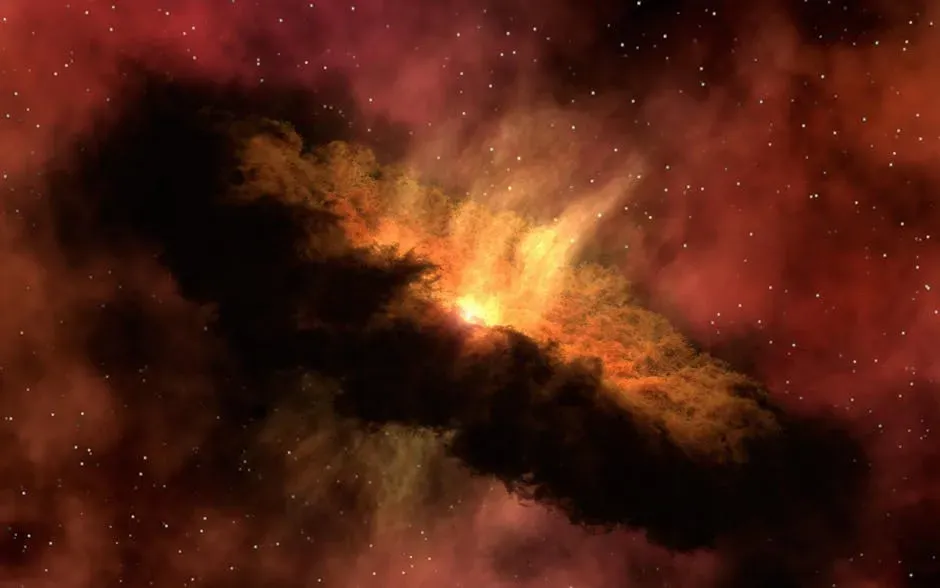
Because neutrinos interact so weakly, they carry information from extreme environments that light can’t escape. When a massive star explodes in a supernova, for instance, a burst of neutrinos races out from its core before most of the light even reaches us, providing a kind of early warning signal. These neutrinos tell us about the conditions deep inside the star, where pressures and densities are so intense that normal matter would be crushed beyond recognition.
On an even larger scale, there are neutrinos left over from the earliest moments after the Big Bang, forming a kind of fossil background that fills the universe. Scientists are working on ways to detect this ancient sea of particles more directly, hoping it will reveal clues about how the universe expanded, cooled, and evolved. Neutrinos might even help explain why the universe is made mostly of matter rather than an even mix of matter and antimatter, a long‑standing mystery in cosmology. In their quiet way, these ghost particles are storytellers of cosmic history.
Practical Uses And The Future Of Neutrino Science
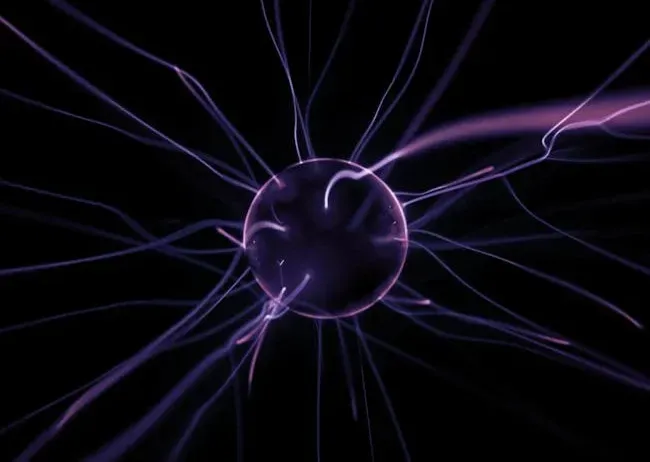
Even though neutrinos are incredibly hard to catch, people are already exploring how to use them in surprisingly practical ways. Because they pass straight through Earth, in theory you could send a beam of neutrinos right through the planet to communicate with the other side, completely ignoring oceans, mountains, and even underground obstacles. That’s still more of a futuristic idea than an everyday technology, but early experiments have shown that neutrinos can carry messages across solid rock, at least in principle.
There’s also growing interest in using neutrinos to monitor nuclear reactors and detect illicit nuclear activity, since reactors produce a distinctive neutrino signature. On the scientific frontier, new observatories are being built to catch the highest‑energy neutrinos from distant galaxies and black holes, turning neutrino astronomy into a powerful tool alongside traditional telescopes. The more we learn, the more it feels like neutrinos are not just ghostly bystanders, but quiet messengers we’re only just starting to hear.
Conclusion: Living In A World Filled With Invisible Rivers
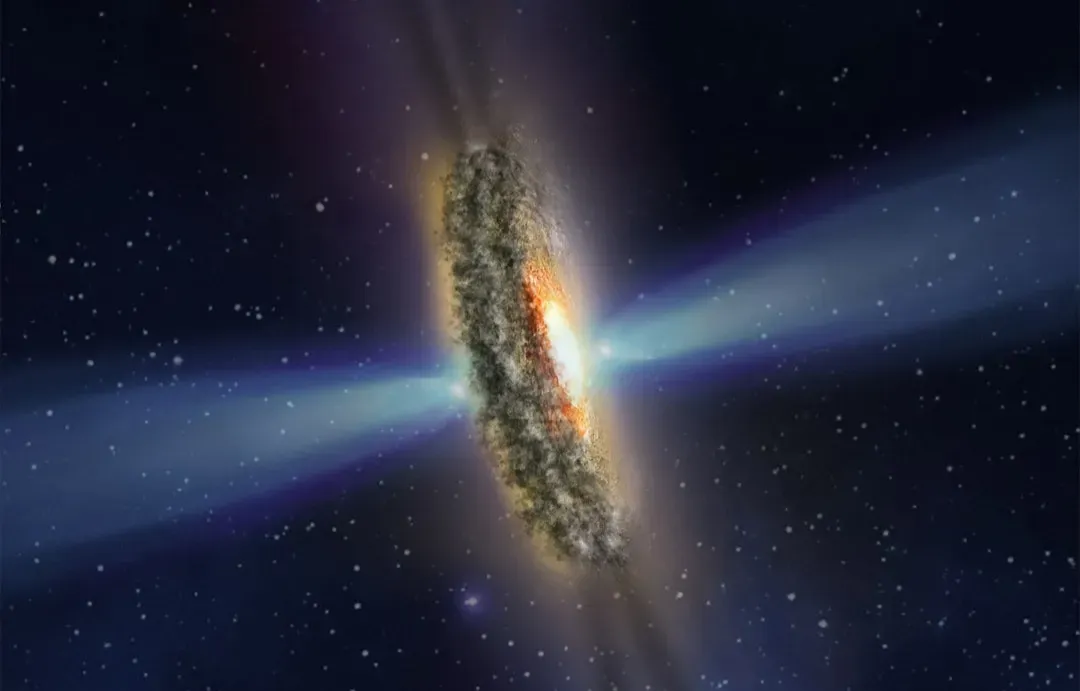
Once you know neutrinos exist, it’s hard to look at the world the same way again. You realize that at every moment, an unimaginable number of ghost particles are streaming through your body, your home, the entire planet, barely leaving a trace. They come from the Sun, from ancient supernovae, from deep beneath our feet and far beyond our galaxy, turning space into a web of invisible rivers.
Neutrinos show us that reality is richer and stranger than what our senses alone can detect, and that even the quietest, most elusive things can reshape the biggest ideas in physics. They’re proof that the universe still has secrets to share with anyone stubborn enough to go looking for them, even if the clues pass through us without a sound. Knowing that, how can you not wonder what other ghostly layers of the universe we still haven’t learned to see?