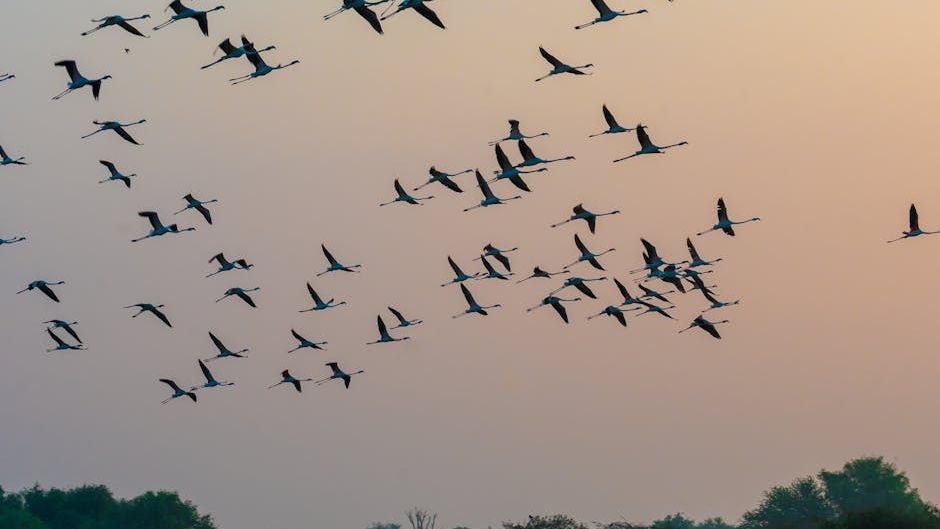
If you suddenly woke up in a foreign country with no phone, no map, and no one to ask for help, how confident would you be about finding your way home? Now imagine doing that in the dark, over the ocean, in bad weather… with nothing but your body as your navigation system. That’s what migrating birds do every single year, crossing continents and oceans with an accuracy that still stuns scientists.
Some birds travel from the Arctic to Antarctica and back again, following roughly the same routes, returning to the same patch of forest or even the same backyard tree. They do this without GPS, without road signs, and without ever having flown the route before. They’re not guessing. They’re running one of the most sophisticated natural navigation systems on Earth, and we’re only just starting to understand how it works.
The Shocking Distances Birds Travel

It’s hard to really grasp how extreme bird migration is until you hear some numbers. The Arctic tern, for example, can fly from the Arctic to Antarctica and back each year, covering distances that add up to more than the circumference of the planet. Some shorebirds, like the bar-tailed godwit, can fly non-stop for over a week from Alaska to New Zealand, crossing the entire Pacific Ocean without landing once. These are not just impressive records; they’re borderline unbelievable feats of endurance and orientation.
Even smaller songbirds that weigh less than a smartphone can make transoceanic flights of several days, navigating at night with no landmarks in sight. Many species return to the same breeding grounds year after year, sometimes to within a few meters of where they hatched. That consistency is not random luck. It tells us that whatever system they’re using, it’s robust, reliable, and deeply built into their biology. The real mystery is: what exactly are they reading from the world to pull this off?
Following the Sun and Stars as a Celestial Compass
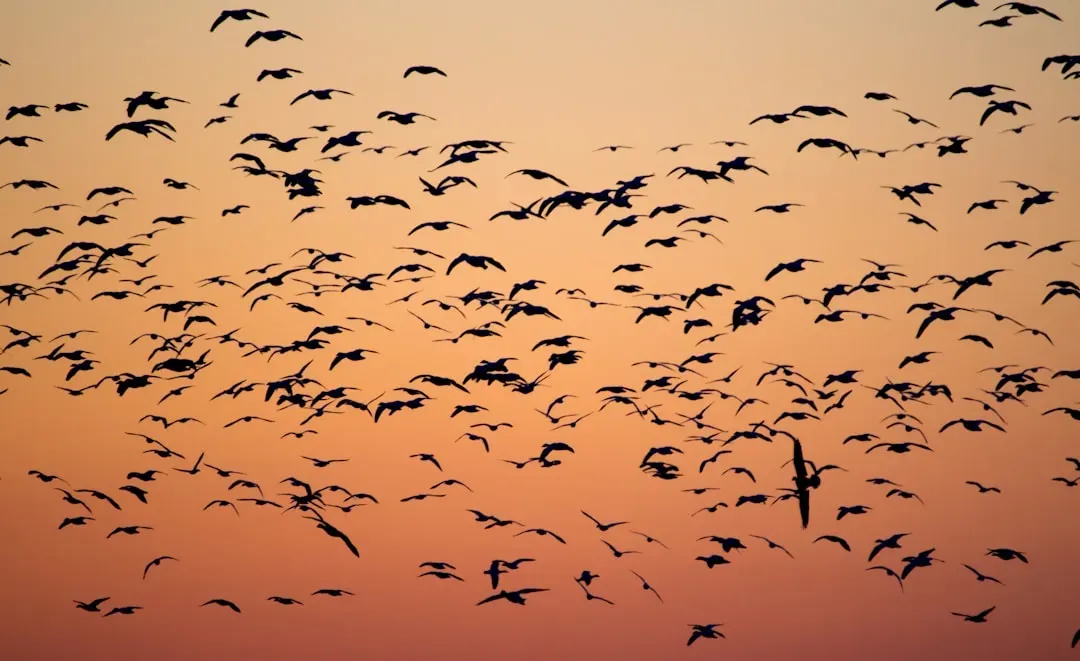
One of the earliest clues came when researchers noticed that many birds migrate at night, often calling softly to each other as they pass overhead. Experiments showed that birds can use the night sky as a kind of star map. When young birds are raised under a simulated sky in a planetarium, they learn to orient themselves using the apparent rotation of the stars around the North Star. If scientists shift the star patterns, the birds shift their direction accordingly, like someone following a rotated compass.
During the day, birds can also use the sun as a guide, adjusting for the time of day using an internal clock. Imagine constantly recalculating where south should be as the sun moves across the sky, all while you’re flying. That’s what their brains are doing on the wing. Clouds and storms can block the sky, of course, which means celestial cues aren’t enough on their own. But they’re one important layer in a navigation system that relies on several overlapping tools, like stacking multiple safety nets to reduce the chance of getting lost.
Reading Earth’s Magnetic Field Like an Invisible Map
One of the most mind-bending discoveries is that many birds can sense the Earth’s magnetic field. They’re effectively carrying a built-in compass, and possibly even a rough map, inside their bodies. Studies suggest this magnetic sense comes from at least two main systems: tiny particles containing iron in their beaks or heads that might act as detectors, and light-sensitive molecules in their eyes that change with magnetic fields. In some experiments, when scientists disturb the magnetic field around birds, their orientation shifts dramatically, as if someone had spun the dial on a compass.
Even wilder, there is growing evidence that some birds may actually “see” magnetic fields as patterns or shades overlaid on their normal vision, like a faint heads-up display. This doesn’t mean they see glowing grid lines, but more like subtle visual cues helping them keep a steady course. Magnetic fields give them a sense of direction, and possibly latitude, though not a precise GPS-like position. It’s more like a broad, invisible highway system spread around the planet that they can feel and follow, even when the sky is overcast or it’s completely dark.
Smell, Sound, and Landmarks: Local Navigation Up Close
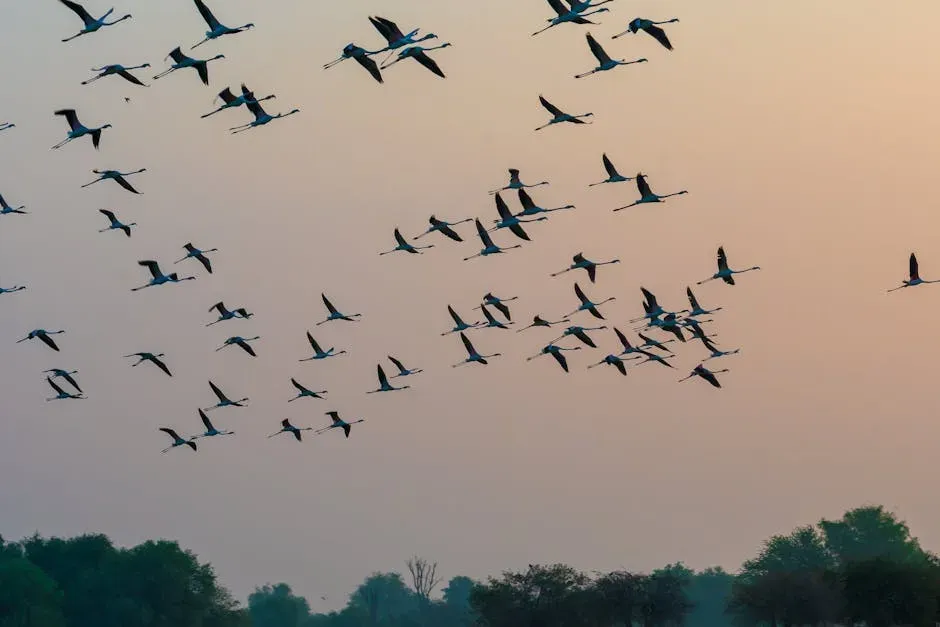
Once birds get closer to home, long-distance tools like stars and magnetism often get supplemented by more familiar local cues. Many species are surprisingly good at recognizing coastlines, mountain ranges, river valleys, and other major landscape features, especially those that migrate during the day. Think of it like switching from a world map to a street-level view. Pigeons, in particular, have been shown to follow roads, rivers, and even railway lines, suggesting they build detailed mental maps of their surroundings.
Smell also plays a big role, especially in some seabirds and pigeons. Experiments where birds have had their sense of smell temporarily blocked often show them struggling to find their way back as effectively, hinting that they use large-scale “odor landscapes” carried by the wind. Some birds can even hear infrasound – very low-frequency sounds from ocean waves or distant storms – that might provide additional directional clues. Taken together, these cues help them refine their path as they close in on their final destination, like zooming in from a global route to your exact street.
Instinct vs. Learning: How Young Birds Know Where to Go

One of the big puzzles is how first-time migrants know where to fly when they’ve never made the journey before. For many species, especially long-distance migrants, a large part of the route is hard-wired. Young birds raised in captivity, with no adults to guide them, still attempt to fly in the correct general direction at the right time of year. Their bodies seem to come preloaded with a rough travel plan, including preferred directions and how long to keep flying before switching to a different heading.
But instinct is only part of the story. Once birds survive their first migration, many refine their routes based on experience, wind patterns, stopover sites, and food availability. Some species, especially more social ones like cranes or geese, rely heavily on learning from older birds, following experienced leaders who know the good resting and feeding spots. Over time, this combination of inborn programming and personal experience creates an incredibly efficient path-specific route, a bit like a family passing down the best back roads and shortcuts across generations.
The Hidden Role of the Body: Internal Clocks and Fuel Management
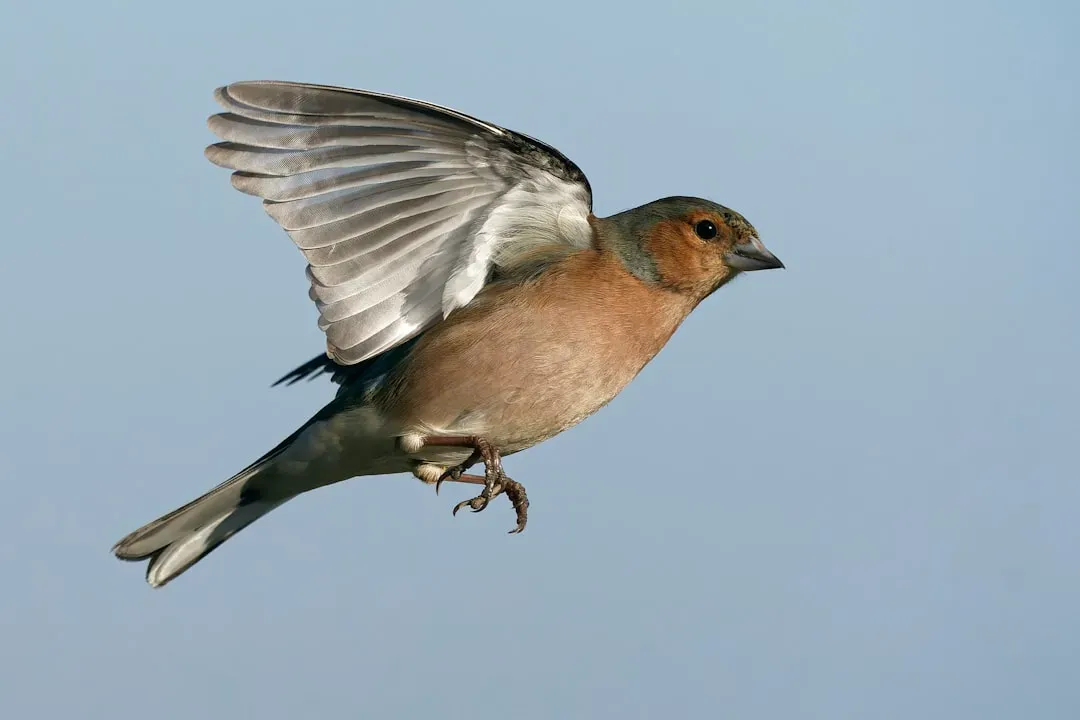
Navigation is not just about direction; it’s also about timing and energy. Birds have powerful internal clocks that help them know when to start migrating, how long to fly, and when to rest. These rhythms are tuned to changes in day length, temperature, and food availability. In late summer and early fall, many birds undergo a behavioral change known as migratory restlessness, suddenly becoming more active at night and showing strong directional preferences, even in captivity. Their bodies are essentially pushing them toward the sky.
At the same time, their entire physiology shifts into long-distance mode. They store huge amounts of fat, which acts like a high-energy fuel tank, sometimes nearly doubling their body weight before departure. Organs can temporarily shrink or change in size to save energy, and flight muscles strengthen to handle the journey. So while we often focus on their “senses” as the headline story, the real magic is a full-body coordination of clocks, metabolism, muscle, and brain – a whole living machine geared around one mission: get there and get back.
Human Disruption: Lights, Towers, and Changing Skies

As breathtaking as bird navigation is, it’s also fragile. Many of the cues birds rely on are being scrambled by human activity. Artificial lights from cities and offshore platforms can disorient night migrants, pulling them off course or causing them to circle in confusion until they collapse from exhaustion. Glass buildings and illuminated towers become deadly traps, especially on foggy or overcast nights when birds fly lower and depend more on lights and nearby structures to orient. The result is millions of avoidable deaths each year.
On top of that, climate change is shifting weather patterns and food availability along their routes. Traditional stopover sites can dry out or become degraded, and the timing of insect hatches or plant growth may no longer match birds’ arrival times. It’s like having the roads you’ve used your whole life suddenly disappear or move without warning. Yet even in the middle of all this disruption, many species are showing surprising flexibility, adjusting migration dates, detouring around problem areas, and sometimes even evolving new routes in just a few generations.
Conclusion: A Navigation System We’re Only Beginning to Understand
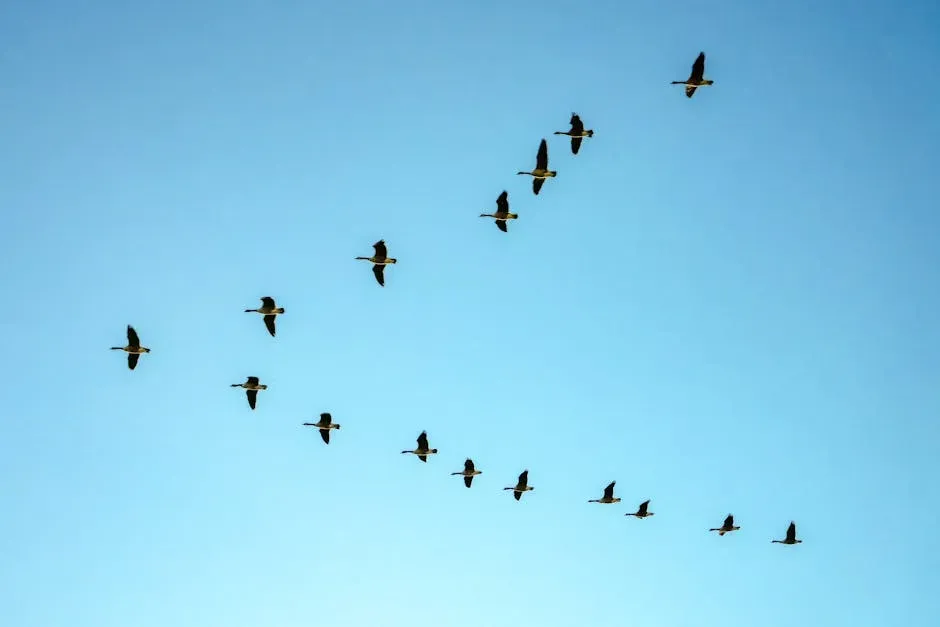
The more scientists study bird navigation, the clearer it becomes that there isn’t just one magic trick. Birds blend multiple systems – sun, stars, magnetism, smell, landmarks, sound, internal clocks, and instinct – into a single, seamless experience of the world. To them, direction is not an app or a device; it’s woven into how they see, feel, and move. What looks like effortless travel is actually the result of countless tiny signals constantly processed and updated in real time.
In a way, watching migration is like watching living maps cross the sky, carrying information that has been tested and refined over millions of years. As we light up the night, reshape coastlines, and change the climate, we’re rewriting the rules of those maps faster than many species can adapt. Understanding how birds navigate is not just a fun scientific mystery; it’s a step toward figuring out how to keep their ancient routes alive in a rapidly changing world. When you see a flock passing overhead, do you see just birds – or one of the most advanced navigation systems nature ever built?