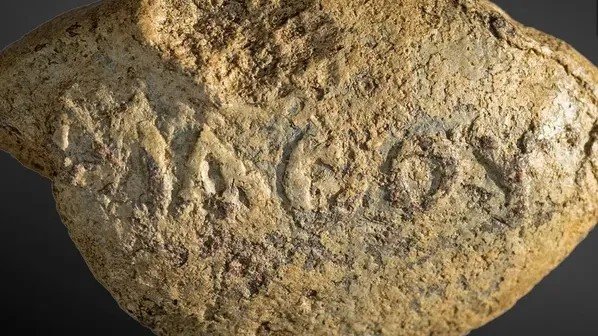
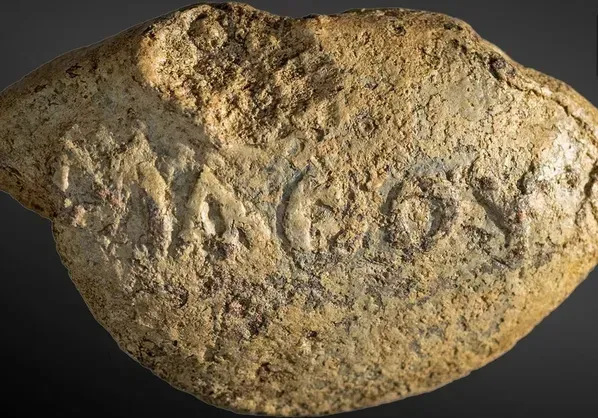
Imagine picking up a small lead projectile from ancient soil and finding words carved into it – not just any words, but a cold, deliberate threat aimed at an enemy. That is exactly what archaeologists uncovered in the ancient Holy Land, and the message it carries is far darker than most people would expect from a simple battlefield weapon. It is the kind of discovery that makes you stop and think: warfare has always had a psychological edge, and ancient people understood that better than we give them credit for.
This find is not just another artifact in a glass case somewhere. It opens a window into a world of conflict, intimidation, and calculated fear that existed two thousand years ago in one of history’s most contested regions. Let’s dive in.
A Tiny Weapon With a Massive Backstory
Here’s the thing about sling bullets – most people picture them as primitive, almost accidental tools of war. The reality is far more sophisticated. These lead projectiles were precision-engineered instruments of ancient combat, cast in molds and shaped to fly accurately over long distances.
The sling itself was one of antiquity’s most underrated weapons. Skilled slingers could hurl a lead bullet with enough force to crack bone and penetrate armor at distances that even early archers found difficult to match. Armies across the ancient Mediterranean and Middle East relied on slingers the way modern militaries rely on artillery.
Where the Bullet Was Found and Why It Matters
The bullet was discovered in the region known historically as the Holy Land, a stretch of land in the modern-day Middle East that has been fought over for millennia. This area carries layer upon layer of human conflict, making it one of the richest archaeological zones on the planet. Every dig season seems to produce something that rewrites a small piece of history.
What makes the location significant is the context. This was not a random battlefield find dropped carelessly in the dirt. It was recovered in an area tied to specific historical periods of military confrontation, suggesting it was used during an organized campaign rather than a skirmish. The deliberate inscription on the bullet is what elevates this from a curious artifact to a genuinely remarkable piece of ancient communication.
The Message Carved Into the Lead
The inscription reads roughly as a dark warning, telling an enemy to learn their lesson. That phrasing, two thousand years old, carries a kind of chilling clarity that feels almost modern. Whoever ordered or carved this message wanted the enemy to know that defeat was inevitable and that resistance was futile.
Honestly, it gives me goosebumps a little. Ancient warfare was brutal and close-range, but this inscription shows a layer of psychological warfare that goes beyond physical force. It is a statement of dominance – not just “we will beat you,” but “you should have known better.” That subtle difference says a lot about how these ancient combatants thought about power and intimidation.
The Language and Who May Have Written It
Researchers identified the inscription as written in a Semitic script, pointing to a culture active in the region during the Hellenistic or early Roman period. This places the bullet within a turbulent era of regional conflict involving multiple powers, including the Seleucid Empire, local Jewish revolts, and Roman military expansion. It is a period packed with dramatic historical turning points.
The specific language and phrasing offer clues about the political and cultural identity of whoever fired this weapon. It suggests a group with literary capability, enough to inscribe a message onto a battlefield tool, and enough confidence to believe the enemy would understand it. Whether the bullet was ever actually fired or was ceremonial in some sense remains a point of academic discussion, but its intent is unmistakably hostile.
Psychological Warfare in the Ancient World
This is not actually the first time inscribed sling bullets have been discovered from the ancient world. Greek and Roman slingers were known to scratch taunts, curses, and names onto their ammunition – messages like “take that” or references to enemy commanders. It was a form of battlefield trash talk, baked into the weapon itself.
What makes this particular bullet stand out is the directness of the warning. While some ancient inscriptions lean toward humor or crude insults, this one is sober and forceful. It reads less like mockery and more like a judge pronouncing a sentence. That tone reflects a very deliberate, almost formal intent – the kind of message sent not to entertain your own troops, but to genuinely unsettle the enemy.
What Archaeologists Can Learn From This Discovery
Beyond the drama of the inscription itself, this bullet is a valuable data point for understanding military communication in the ancient Near East. Artifacts like this help researchers map out which factions were active in specific regions, what languages were in use, and how armies communicated identity and threat during conflict. A single lead bullet can carry more historical information than a stack of written records.
The material composition of the bullet also tells a story. Lead had to be sourced, smelted, and cast, which means an organized supply chain was operating behind whatever force used this weapon. That speaks to a level of military infrastructure that is easy to underestimate when imagining ancient armies. They were not just wandering warriors – they were logistically organized fighting forces with real administrative systems.
Why This Inscription Still Resonates Today
There is something uncomfortably timeless about a message that says: learn your lesson. Across two thousand years of human history, the language of dominance and warning has barely changed. We use different tools, different mediums, different technologies – the impulse behind the message, though, is the same. That continuity is sobering if you think about it long enough.
This bullet also reminds us that history is not always found in grand monuments or royal tombs. Sometimes it is found in a lump of lead no bigger than your thumb, carrying a sentence that someone felt strongly enough to carve before hurling it into conflict. That is the kind of archaeology that truly captures the human experience – messy, confrontational, and deeply real. What do you think this tells us about how little human nature has actually changed? Let us know in the comments below.