
Our planet has been around for roughly four and a half billion years, and in that time, it has had every opportunity to get weird. Really, spectacularly weird. From gaping desert eyes visible from space to rocks that drift across dry lake beds like they have somewhere to be, Earth seems to enjoy keeping its own scientists guessing.
You might think that with all the satellites, drilling equipment, and geological expertise we have in 2026, we’d have answers to most of nature’s puzzles by now. Honestly, you’d be wrong. Some of the most jaw-dropping formations on this planet remain stubbornly unexplained, still sparking fierce debates in academic journals and, yes, even wilder theories on the internet. Let’s dive in.
1. The Eye of the Sahara: Earth’s Most Dramatic Bullseye
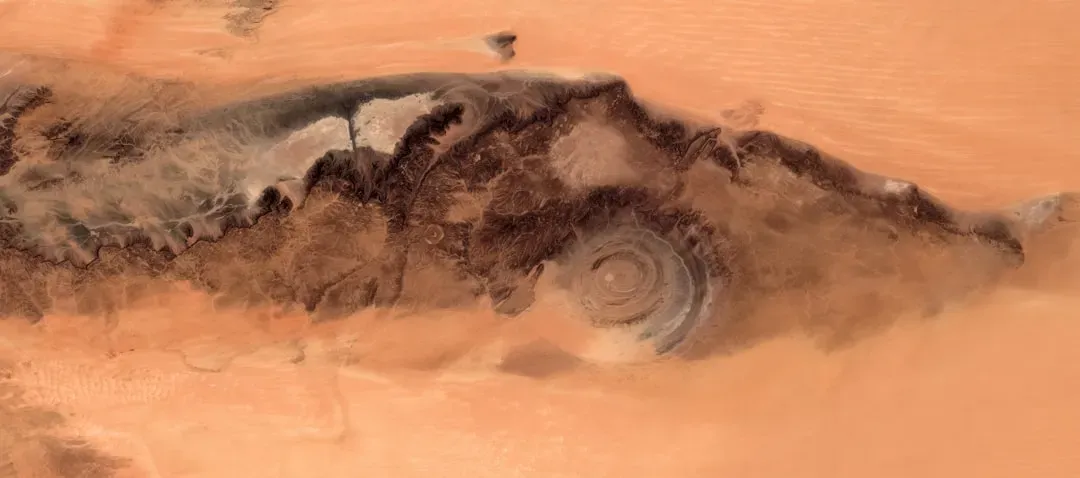
Imagine flying over the Sahara Desert and suddenly spotting what looks like a massive target drawn on the ground by some ancient giant. The Eye of the Sahara, also known as the Richat Structure, is a 28-mile-wide site of enormous concentric circles found in the western African nation of Mauritania. It is so impossibly large and perfectly shaped that the mysterious formation was large enough for early space missions to have used it as a landmark.
Here’s the thing: explaining how it formed has proven remarkably difficult. Geologists initially thought the site was created by an asteroid impact, but there isn’t enough melted rock among the rings to support this theory. Similarly, there’s no evidence to suggest a volcanic eruption. The leading current idea is that the Eye of the Sahara could be an eroded, collapsed geological dome formed some 100 million years ago when the supercontinent Pangea broke up, with ancient rocks found on the surface originating as much as 125 miles beneath the Earth’s crust. Research, as they say, continues.
2. The Sailing Stones of Death Valley: Rocks That Move on Their Own
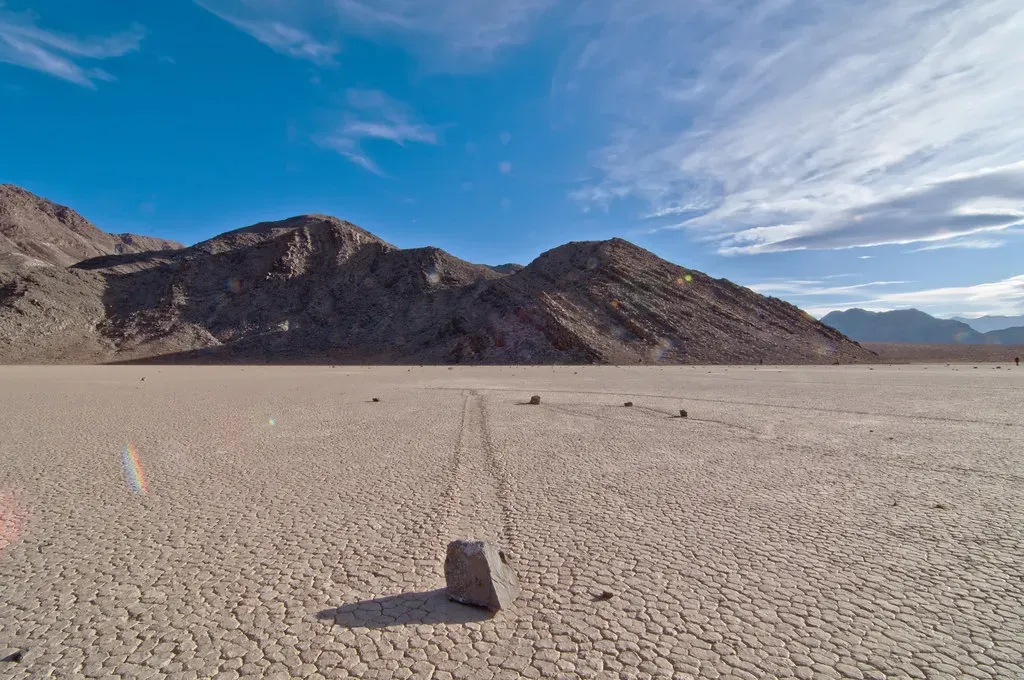
If you ever needed proof that geology can be utterly baffling, look no further than Death Valley. The phenomenon of the “Sailing Stones” is a mysterious geological occurrence that has puzzled scientists and intrigued visitors for years. Located in the Racetrack Playa of Death Valley National Park in California, these rocks appear to move across the desert floor on their own, leaving behind long tracks that can stretch for hundreds of feet. Some of these trails are so long, they span the length of four football fields.
I know it sounds crazy, but these rocks genuinely move without any visible hand pushing them. It is believed to be caused by a combination of factors, including strong winds, slick mud, and ice. During cold desert nights, a thin layer of ice can form on the surface of the playa, creating a slick surface that allows the rocks to move when pushed by even the slightest breeze. It wasn’t until 2014, when time-lapse photography finally captured the stones in motion, that scientists got their first hard evidence, discovering that rainfall formed a small pond that froze overnight when desert temperatures dropped, and in the early morning the ice sheet thawed and broke up, creating a slippery path that the sailing stone slid along, pushed by a light wind.
3. The Nastapoka Arc: A Perfectly Round Mystery in Hudson Bay
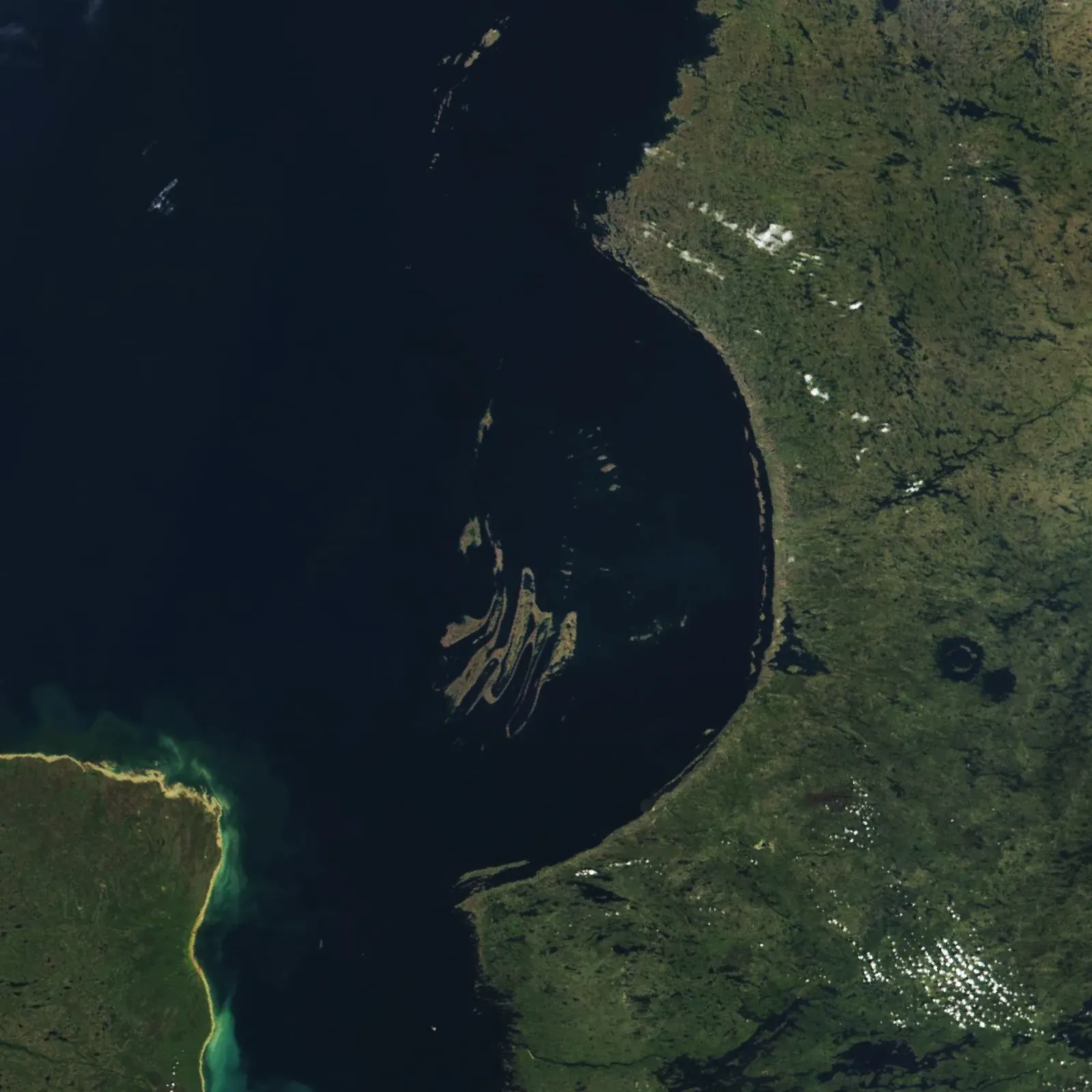
If you look at a map of Canada’s Hudson Bay closely enough, something remarkable jumps out. In the southeast corner of Hudson Bay, Canada, lies a near-perfect arc, also known as the Hudson Bay Arc. It was first thought to be an impact crater from a meteorite, but none of the usual confirming evidence, such as shatter cones or unusual melted rocks, has been found in the vicinity. The geometric precision of this arc is almost unsettling. Nature rarely draws in perfect circles like this.
So if not a meteorite, then what? The most commonly accepted theory, based on geological evidence collected in the 1970s and later, is that it is a boundary formed when one shelf of rock was pushed under another. That doesn’t explain how or why it’s so perfectly round, so the Nastapoka Arc remains subject to ongoing study. Think of it like finding a perfectly round cookie cutter pressed into the Earth’s surface, with no explanation for who was holding it. Scientists are still working on that answer.
4. The Mima Mounds: Ancient Bumps With No Convincing Explanation
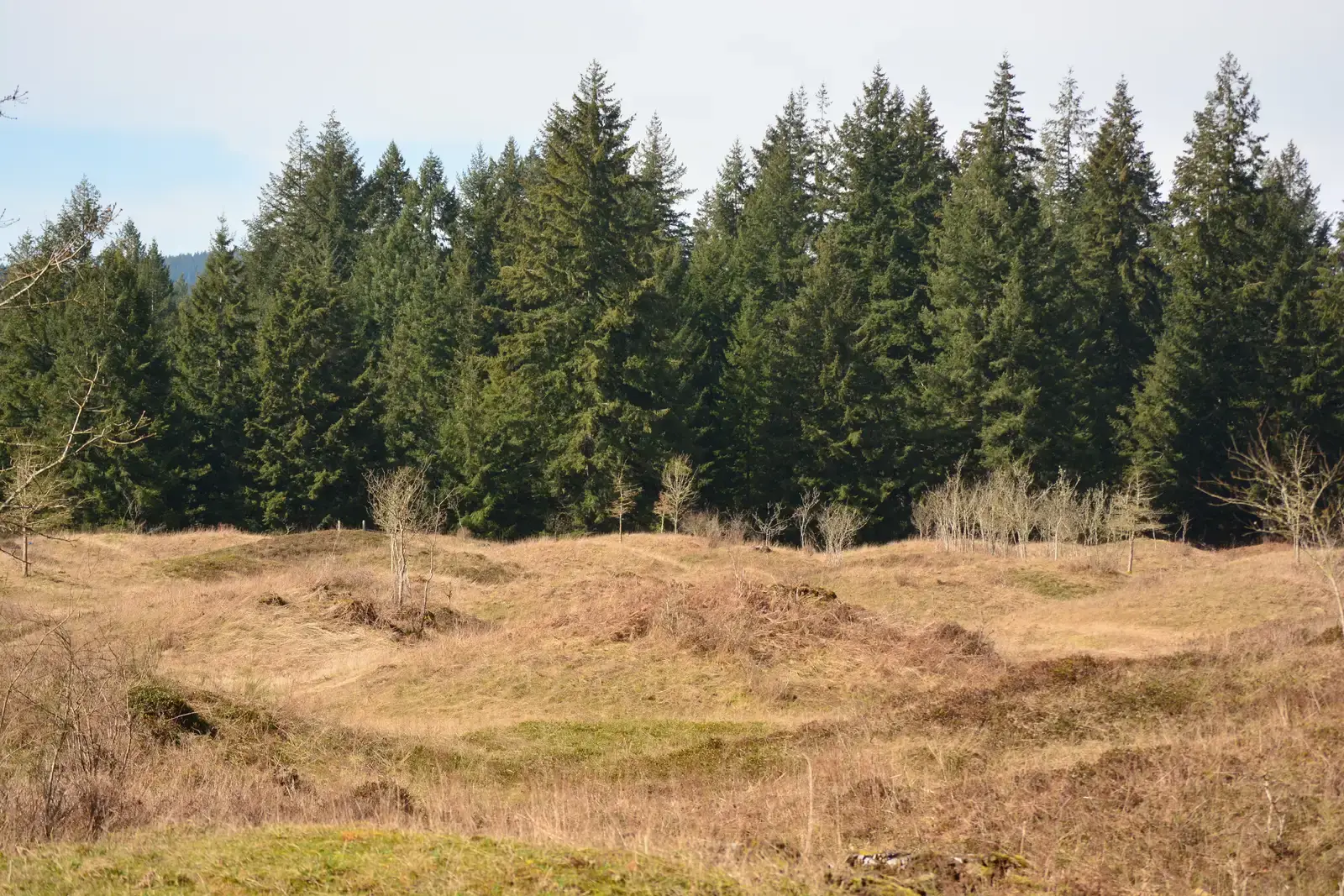
There is something quietly unsettling about the Mima Mounds of Washington State. These mysterious, uniform undulations in the grasslands near Olympia range from 10 to 164 feet in diameter and up to 6.5 feet tall. When American explorer Charles Wilkes set eyes on them in 1841, he believed they were human-made burial mounds and had three of them excavated, only to find them filled with loose stones. Loose stones. No burials, no treasures, no answers.
What makes them even more puzzling is their age and distribution. Similar mounds are found from California to Colorado and have puzzled naturalists for years. Scientists suggest that some of the mounds may be 30,000 years old, which makes decoding them complex, as humans are believed to have arrived in North America several thousand years later than that. In other words, these mounds predate any known human activity in the region. Whether wind, water, pocket gophers, or some other long-lost force built them remains genuinely unresolved.
5. Blood Falls, Antarctica: A Glacier That Bleeds Iron-Red
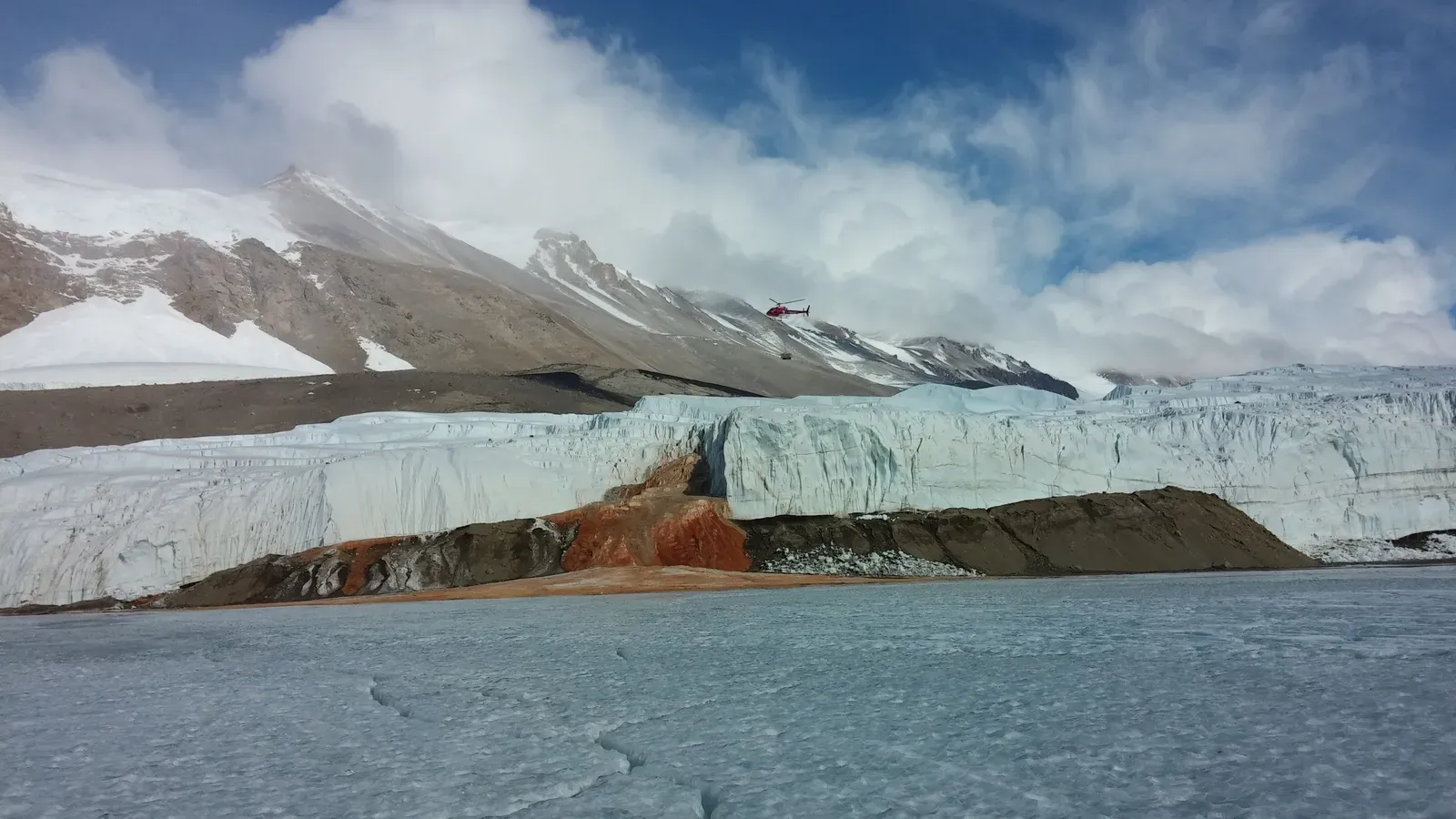
Picture stumbling across a glacier in one of the coldest, most remote places on Earth, only to discover it appears to be actively bleeding. Blood Falls is a geological phenomenon located in Antarctica’s Taylor Glacier. It gets its name from the outflow of iron-rich salty water that flows from the glacier, giving it the appearance of blood. The water that emerges is highly saline and contains a high concentration of iron, which reacts with oxygen in the air, causing the water to turn a deep red color. It is, without question, one of the most visually shocking things nature has ever produced.
The deeper you dig into Blood Falls, the stranger it gets. The water flows from an underground reservoir beneath the glacier, which is believed to have been sealed off from the outside world for millions of years. Scientists believe that the water in the reservoir is kept liquid due to geothermal heating from the Earth’s interior, which allows it to remain liquid even in the extremely cold temperatures of the Antarctic. What is particularly mind-bending is that this sealed, ancient brine may harbor microbial life that has survived in complete isolation for an almost incomprehensible stretch of time.
6. The Fairy Circles of the Namib Desert: Nature’s Perfect Polka Dots
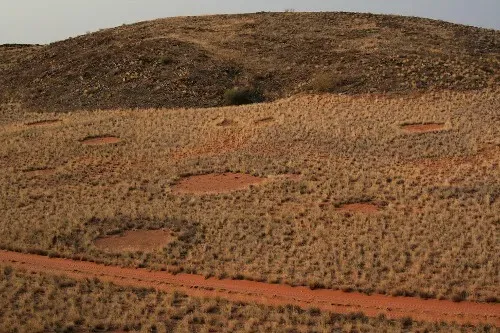
The Namib Desert has one of the strangest textures of any landscape on Earth. Up close, the fairy circles are just circular patches of bare red earth, surrounded by tufts of grass. From a bird’s-eye view, these spots stretch endlessly across the arid landscape, creating a regular polka-dot pattern. The regularity of the spacing is what makes scientists genuinely uneasy. Nature tends to be messy, not mathematically uniform.
Several competing theories have been floated over the years. Some researchers proposed that the circles are created when plants compete for water, with the root systems of successful vegetation dominating the ground while smaller plants are unable to compete, leaving bare patches of desert. A more recent and intriguing idea, however, emerged when excavations of several circles revealed termite nests under each one, implying the circles were created by the termites eating the vegetation above their territory, allowing desert grasses to flourish only between each nest. Honestly, neither theory has fully silenced the debate, and that’s what makes these circles so captivating.
7. Al Naslaa Rock: The Boulder That Was Split by an Invisible Blade
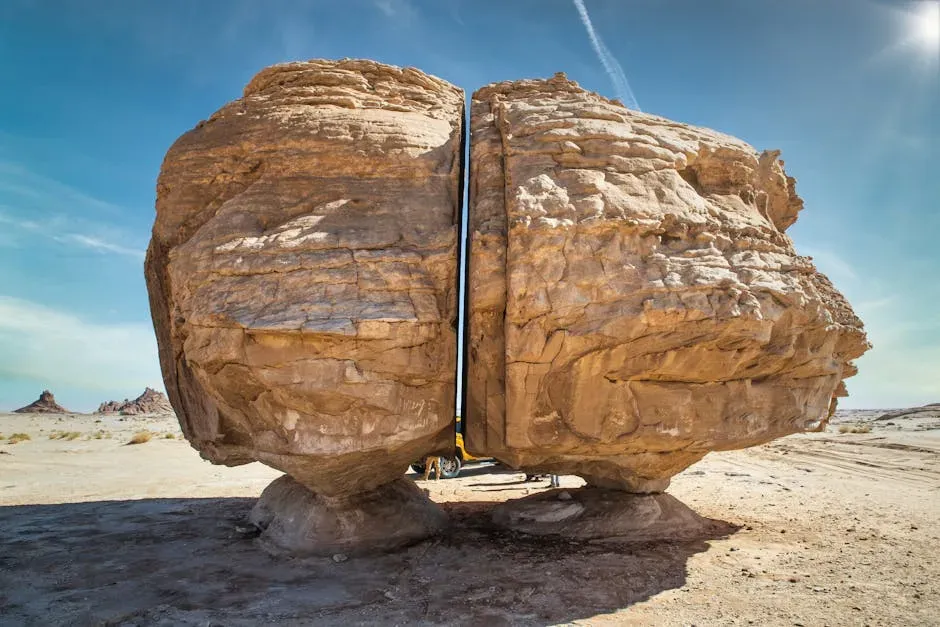
Deep in the Saudi Arabian desert, a rock sits quietly and drives scientists absolutely mad. The Al Naslaa rock formation is approximately 6 meters high and 9 meters across, with a central fissure that is its defining and most unique feature. Its most unusual feature is that it is actually split in two, down the middle, with each section of the rock balanced atop a thin, small pedestal. The cut is so perfectly straight, so impossibly smooth, that it genuinely looks like something sliced it with a laser beam.
So what actually happened? Many geologists argue the perfectly straight line is the result of a joint fracture. Joints are parallel cracks formed in a rock from internal pressure as the rock contracts during freezing winters, or external pressure from earthquakes. In this case, it is theorized that the Al Naslaa rock lay on a fault line, and tectonic motion caused the ground beneath the rock to lower slightly on one side, and the resulting strain caused it to split in two. It’s the most widely supported theory, though it still leaves a lot of people unconvinced when they’re standing in front of that unnervingly perfect divide.
Conclusion: The Planet That Keeps Its Secrets
What’s remarkable about all seven of these formations is not just their visual spectacle, it’s the humility they force upon science. We have mapped the ocean floors, sent rovers to Mars, and decoded the human genome, yet we still cannot fully explain why a few rocks in Washington State formed into perfect mounds thousands of years before humans even arrived. Or why a desert in Namibia looks like someone poked it with a cosmic stamp.
These geological mysteries remind us that the Earth is not a finished puzzle. It is a living, shifting, ancient system that has been running its own experiments for billions of years, and it is not always willing to share its notes. Every answered question tends to uncover three more, which is precisely what makes geology so endlessly thrilling.
The next time you walk across ordinary ground, consider for a moment what might be happening a mile beneath your feet. Which unexplained formation surprises you the most? Tell us in the comments below.