Imagine nearly every member of your species disappearing – quietly, without warning – while only a single thread of your lineage survives to carry on. That’s essentially what happened to Neanderthals around 65,000 years ago, and the implications are staggering. Researchers have uncovered evidence pointing to a catastrophic population collapse that reshaped the entire genetic story of our closest ancient relatives.
This isn’t just another dusty archaeological footnote. It’s a dramatic twist in human prehistory that forces us to rethink what we thought we knew about Neanderthals, their resilience, and ultimately, their fate. So let’s dive in.
A Genetic Bottleneck That Nearly Erased Neanderthals From History
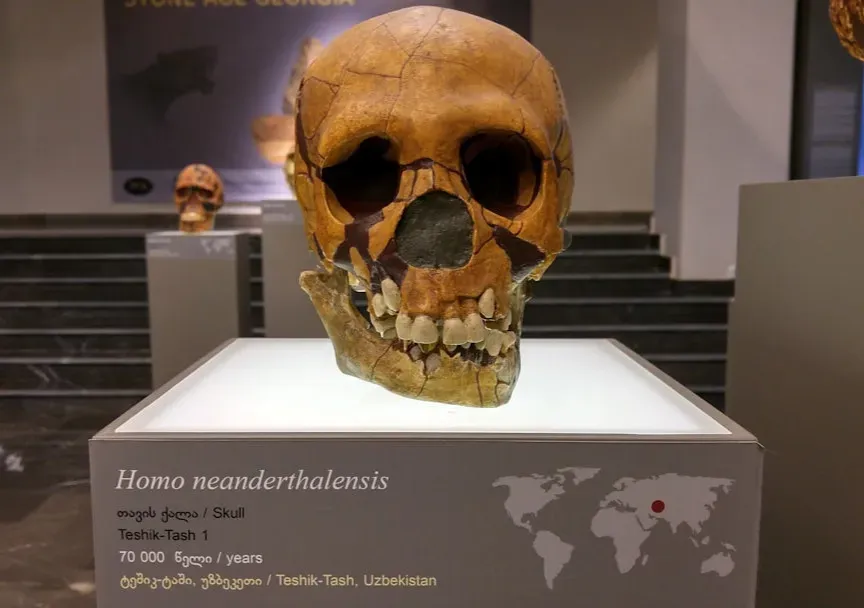
Here’s the thing most people don’t realize: Neanderthals weren’t just one continuous, stable population roaming Europe for hundreds of thousands of years. Recent genomic analysis of Neanderthal fossils has revealed something genuinely shocking – around 65,000 years ago, virtually all Neanderthal populations in Europe appear to have gone extinct. Every lineage, every regional group, wiped out. Except one.
That single surviving lineage then expanded to repopulate Europe, essentially becoming the ancestors of all later Neanderthals found on the continent. Think of it like a forest fire that burns everything to the ground, leaving just one stubborn tree standing at the edge. That tree becomes the parent of the entire next forest. Honestly, when you frame it that way, it sounds almost miraculous.
What the Ancient DNA Is Actually Telling Scientists
The evidence comes from a detailed study of Neanderthal genomes, comparing specimens from different time periods and locations across Europe. What researchers found was a dramatic reduction in genetic diversity among later Neanderthals – a clear signal of what geneticists call a population bottleneck. The genetic variety simply collapsed, as if someone hit a reset button on the entire European Neanderthal population.
Older Neanderthal specimens show much greater genetic diversity than their younger counterparts. That’s not what you’d expect from a thriving, stable species. Instead, it’s the genetic signature of near-total extinction followed by repopulation from a very small founding group. The data is, to put it plainly, pretty hard to argue with.
What Could Have Caused Such a Devastating Collapse?
Scientists are still piecing together the exact trigger, and I’ll be honest – it’s hard to say for sure what caused such a sweeping collapse. Several candidates have been proposed, including dramatic climate shifts, volcanic activity, disease, or ecological disruption that stripped away the resources Neanderthals depended on. Europe during this period was a volatile place, with temperatures swinging dramatically and landscapes transforming over relatively short timespans.
It’s worth noting that this event predates the arrival of modern humans in Europe, which means we can’t simply blame Homo sapiens for this particular catastrophe. That alone makes the story more complicated and far more interesting. Whatever struck Neanderthals 65,000 years ago was something they faced entirely on their own.
The Lone Surviving Lineage and Its Remarkable Expansion
After the collapse, that one surviving Neanderthal group did something remarkable – it bounced back. They spread across Europe, filling the ecological vacuum left by the extinct populations, and became the founding ancestors of every Neanderthal who came after them. It’s a survival story on an almost cinematic scale, though one that unfolded over thousands of years rather than a two-hour movie.
This expansion is visible in the genetics of later Neanderthal specimens, which all trace back to this single ancestral population. Researchers describe the genetic signal as unmistakably clear. The diversity that existed before 65,000 years ago simply doesn’t show up in specimens from after that point. It’s as if a library burned down, and only one book survived to be copied over and over again.
How This Changes What We Know About Neanderthal History
For decades, the popular image of Neanderthals was one of a slow, gradual decline – a species that simply couldn’t compete with modern humans and faded out over time. This new research completely upends that narrative. Neanderthals actually suffered a near-extinction event tens of thousands of years before Homo sapiens ever showed up on their doorstep in Europe.
That means Neanderthals were capable of dramatic population crashes and recoveries entirely independent of modern human influence. It also means the story of their eventual final extinction around 40,000 years ago is more layered than we previously thought. They were, in a sense, already a population operating on borrowed time by the time modern humans arrived – a species that had already survived one catastrophic brush with oblivion.
The Connection Between Neanderthals and Modern Humans
There’s a deeply personal dimension to this research that’s easy to overlook. Neanderthals didn’t just disappear into the void. They interbred with modern humans, and the genetic legacy of that interaction lives on today. Roughly a small but meaningful fraction of DNA in most non-African modern humans can be traced back to Neanderthal ancestors. That surviving lineage – the one that made it through the 65,000-year-ago collapse – is directly connected to the Neanderthals who later mixed with our own ancestors.
So in a strange, roundabout way, that single surviving group didn’t just save Neanderthal history. It preserved a genetic thread that eventually wove itself into the human genome we carry today. Let’s be real, that’s an astonishing thought. The descendants of a near-extinction survivor are, in a very small way, part of all of us.
Why This Discovery Matters Far Beyond Neanderthal Research
The implications of this finding stretch well beyond understanding one ancient species. It demonstrates that population bottlenecks – catastrophic collapses followed by recovery from a tiny founding group – can happen to intelligent, adaptable species living in complex environments. Neanderthals were not primitive brutes. They made tools, buried their dead, and survived ice ages. Yet they were still nearly wiped out in a single prehistoric event.
This should give us a new kind of respect for just how fragile even resilient populations can be in the face of rapid environmental change. It also raises important questions for researchers studying extinction risks in other species today. The Neanderthal story is, in its own way, a cautionary tale wrapped inside a survival story – and scientists are still reading the final chapters.
Conclusion: A Story That Reframes Everything
The discovery that all Neanderthals in Europe died out around 65,000 years ago – save for one surviving lineage – is one of the most profound revelations in recent paleoanthropology. It reframes Neanderthals not as a species in simple decline, but as survivors of a catastrophe we’re only now beginning to understand. They came back from the edge once, rebuilt their world, and lived on for another 25,000 years before finally vanishing for good.
I think what strikes me most is how contingent everything is. One lineage survives instead of zero, and the entire trajectory of Neanderthal history – and even a tiny sliver of our own – changes completely. That’s not just science. That’s something close to fate. What do you think: does this change how you see Neanderthals? Drop your thoughts in the comments.