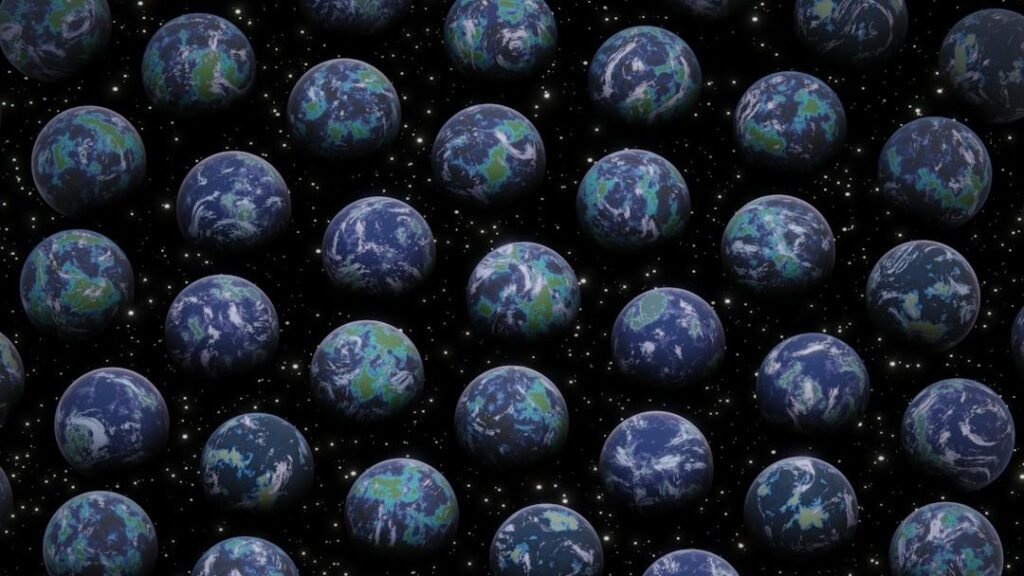

Somewhere out there, right now, there could be a universe where you made one different choice this morning and your entire life looks completely different. That idea sounds like science fiction, but it actually sits right at the edge of serious physics. The multiverse is no longer just a wild trope in movies and comic books; it has become a real, debated concept in modern cosmology and quantum theory.
At the same time, the word “multiverse” gets thrown around so loosely that it can mean wildly different things depending on who’s talking. Some versions are grounded in equations and models, others are basically philosophical speculation with a science flavor. Sorting out what’s actually on the table in 2026 means asking a tougher question than “Is it real?” – we have to ask what “real” even means when we may never be able to visit or directly see these other worlds.
The Strange Roots of the Multiverse: From Quantum Physics to Cosmology

If the multiverse idea feels weird, it’s because it grows out of two already strange pillars of modern physics: quantum mechanics and cosmology. Quantum mechanics describes the microscopic world where particles behave more like waves of possibility than tiny billiard balls. Instead of having one clear outcome, many quantum events are described as a superposition of possibilities that only look definite when we measure them. That idea alone already hints at “many could-have-beens” baked into reality.
Cosmology adds another layer: when we look at the universe on the largest scales, the leading theory for its early moments is cosmic inflation, an incredibly rapid expansion right after the Big Bang. In some versions of inflation theory, this process doesn’t just end nicely everywhere at once. Instead, it can keep going in different regions, producing countless “bubble universes” with potentially different physical conditions. This combination of quantum uncertainty and cosmic inflation is where many physicists first start taking the word “multiverse” seriously.
Many-Worlds: Does Every Quantum Event Create a New Universe?
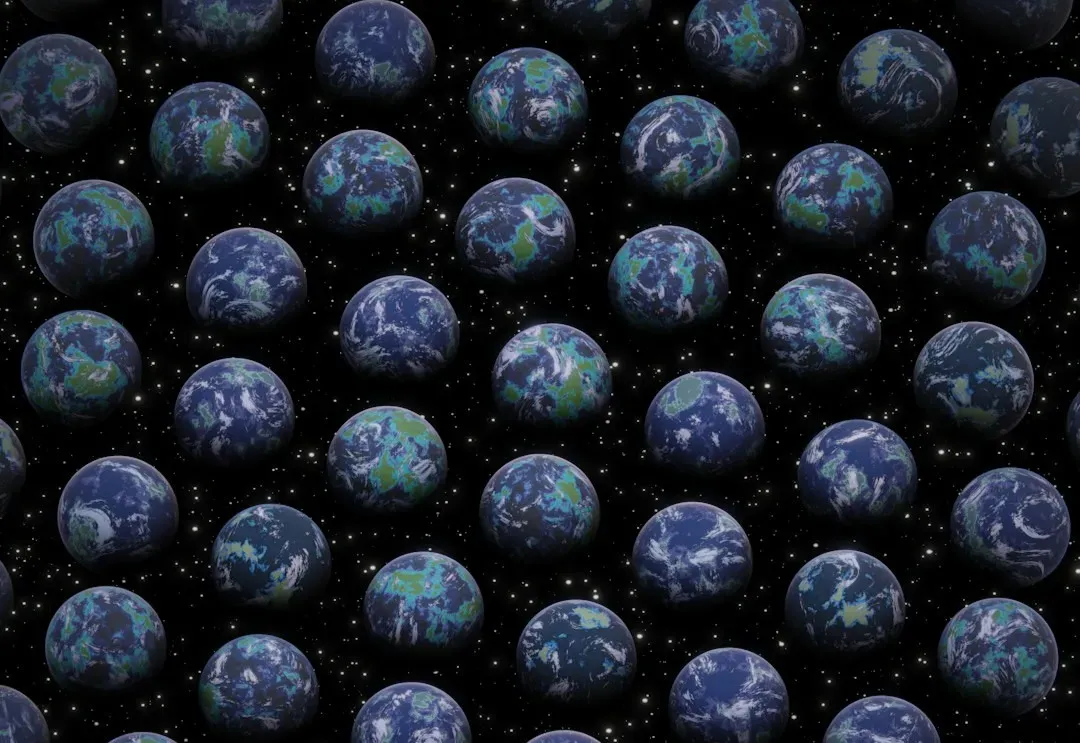
One of the most famous multiverse ideas is the Many-Worlds interpretation of quantum mechanics. In this view, when a quantum event can go multiple ways, reality does not pick just one outcome. Instead, the universe branches, and every possible result actually happens in a separate branch. There’s a branch where the coin comes up heads, another where it’s tails, and so on, extending this idea to vastly more complex events. Your life, in this picture, is just one path through an unimaginably huge tree of possibilities.
What’s striking is that Many-Worlds does not require new equations; it takes the standard math of quantum mechanics and assumes that the wave of possibilities never truly collapses. Some physicists like it because it avoids the mystery of how or why a measurement “chooses” a result. Others think it multiplies realities without giving us something we can ever test. Is it real, then, or just an elegant way of talking about probability? That’s where the science shades into philosophy, and different experts draw the line in very different places.
Cosmic Inflation and Bubble Universes: The Big Multiverse Picture
On the cosmology side, the multiverse comes from trying to explain why our universe looks the way it does. Inflation theory was originally designed to solve problems like why the universe appears so smooth and uniform on large scales. But once researchers worked through the details, they found that inflation could be “eternal”: it may stop in some regions but continue in others, endlessly creating new expanding bubbles of space. Each bubble could be its own universe, possibly with different fundamental constants or physical laws.
In this picture, our entire observable universe is just one bubble in a vast foam of universes we will never reach. Some models even suggest that certain features of our universe, like the strength of gravity or the amount of dark energy, might be partly a selection effect: only bubbles with life-friendly conditions ever get observers wondering “Why these numbers?” This is where the multiverse becomes not just a curiosity but a proposed explanation for why reality is so strangely tuned for complex structures and eventually conscious life.
Anthropic Reasoning: Are We in a “Just Right” Universe by Chance?
The so‑called “fine‑tuning” problem is one of the strongest motivations for some versions of the multiverse. A lot of the key numbers in physics – like the mass of the electron or the amount of dark energy – seem to fall into tiny ranges that allow stars, planets, and chemistry as we know it. Change them a little and you might get a universe that expands too fast for galaxies to form, or collapses again before life ever has a chance. It’s unsettling how delicate the balance seems to be.
An anthropic multiverse answer says: of course we find ourselves in a universe with life-friendly numbers, because we couldn’t exist in all the dead universes where the numbers are wrong. If there really are countless universes with different settings, then it’s not shocking that at least a few look “just right.” Critics argue this feels like giving up on deeper explanations and risks turning physics into a story about luck and selection. Supporters counter that, if the broader theory predicts a multiverse anyway, ignoring the anthropic angle is like refusing to use a clue that’s sitting right in front of us.
Can We Ever Test the Multiverse? The Hard Problem of Evidence
The biggest challenge for the multiverse isn’t imagination – it’s evidence. A scientific idea has teeth only if it can, in principle, be tested or at least constrained. The problem is that if other universes are forever out of causal contact with us, they may be unreachable even in theory. That pushes some multiverse models dangerously close to unfalsifiable speculation, which makes many scientists understandably nervous. At that point, is it still physics or just a grand story sitting on the edge of what the equations allow?
Despite that, researchers have tried to find possible observational fingerprints. For example, collisions between bubble universes in the early cosmos, if they happened, might leave faint patterns in the cosmic microwave background radiation. So far, no convincing smoking gun has shown up. What we do have is indirect support for underlying theories, like inflation, that naturally lead to a multiverse in some versions. That leaves us in an awkward middle ground: the multiverse is not proven, but simply ignoring it might mean ignoring what our best models are quietly hinting at.
The Multiverse in Pop Culture vs. Real Science

Movies and shows have grabbed the multiverse idea and run wild with it, often in ways that are fun but completely unmoored from actual physics. Characters hop between universes like catching a train, meeting alternate versions of themselves with different jobs, relationships, and personalities. Those stories tap into something very human: the “what if?” craving about our own lives. I catch myself doing it too sometimes, wondering about the version of me who stuck with a different career path or never moved cities.
Real multiverse theories, though, are usually colder and more remote. In Many-Worlds, for example, there might indeed be a vast number of branches where your life plays out differently, but no known mechanism lets you jump tracks. In inflationary models, other universes could be literally unreachable, separated by ever-growing expanses of space. The gap between pop culture’s playful multiverse and the hard-nosed mathematical versions is huge, and if we blur them together, we risk misunderstanding both the science and the real emotional weight of choice and chance in our own single visible world.
So Is the Multiverse Real, or Just a Useful Idea?

By 2026, the honest answer is uncomfortable: no one knows if the multiverse is real, and we don’t yet have decisive ways to settle it. Some parts of the concept emerge as side effects of serious theories that already explain a lot of what we see, which makes them hard to dismiss outright. Other versions are more like imaginative extensions that might never connect back to testable predictions. In that sense, the multiverse is a spectrum of ideas, not a single claim we can cleanly check off as true or false.
Personally, I think the most grounded stance is to treat the multiverse as a live possibility rather than a fact. It forces us to confront strange questions about probability, identity, and what counts as an explanation. Even if we eventually find out that our universe is alone, the journey of asking whether it could be one of many pushes physics, philosophy, and even our sense of meaning into new territory. When you look up at the night sky now, are you seeing the whole of reality – or just one bubble in a far larger cosmic sea?