
If you’ve ever stared up at the night sky and felt small, recent discoveries in astronomy and physics will make you feel even smaller… and strangely more connected. Over just the last few decades, we’ve gone from thinking the universe was mostly empty space to realizing it’s packed with invisible matter, roaring black holes, cosmic webs, and planets that make Earth look almost ordinary.
What’s wild is how fast our view is changing. Telescopes like James Webb and powerful simulations on supercomputers are tearing down old assumptions almost every year. Some of what scientists are finding sounds less like science and more like science fiction, yet the data keeps piling up. Once you see what’s actually out there, it’s hard to look at your own life in quite the same way.
The Universe Might Be Infinite… and Our Part Is Tiny
Here’s a brain twist: as far as we can tell, the observable universe is already staggeringly huge, but it might just be a tiny patch of something effectively infinite. The part we can see is limited by the speed of light and the age of the universe, so beyond that cosmic horizon, space could go on forever. When scientists map the large-scale structure, they see no clear edge, no obvious curve bending things back on themselves.
To make this less abstract, imagine standing in the middle of the ocean on a completely calm day. The water looks flat in every direction, and there’s no visible shore, but that doesn’t prove the sea is endless – it only means you can’t see the edge from where you are. Our situation in the universe is something like that. For me, this perspective is both humbling and freeing: our personal dramas play out in a tiny neighborhood of a cosmos that may have no boundary at all.
Most of the Universe Is Made of Stuff We Can’t See
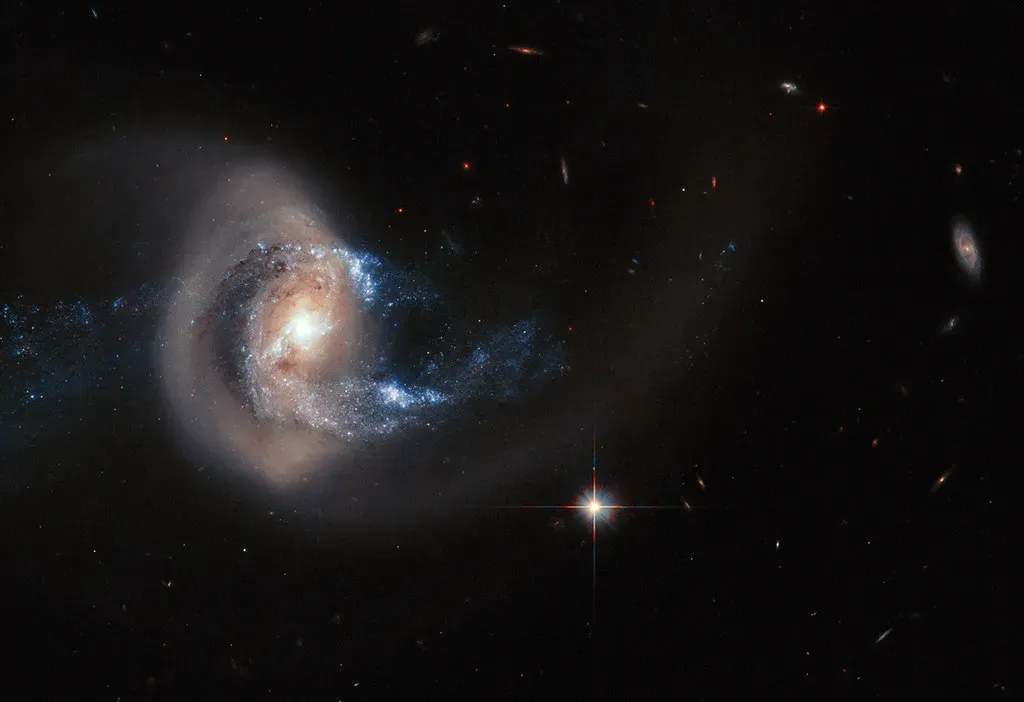
It feels natural to assume that planets, stars, and galaxies are what the universe is mostly made of, because that’s what we can see. The twist is that all of this visible matter – every atom in every star, every bit of gas and dust – adds up to only a small fraction of the total cosmic budget. The rest is dominated by dark matter and dark energy, invisible ingredients that do not shine, reflect, or absorb light in any way we can easily detect.
Dark matter reveals itself only by its gravity, holding galaxies together like an unseen skeleton. Dark energy seems to be pushing the universe apart faster and faster over time. Together, they make up the vast majority of everything that exists, and we still don’t know what they actually are. It’s a bit like realizing that nearly everything you thought you knew about your own body was only describing the skin, while the muscles and bones remained a mystery.
Black Holes Are Not Just Cosmic Vacuum Cleaners
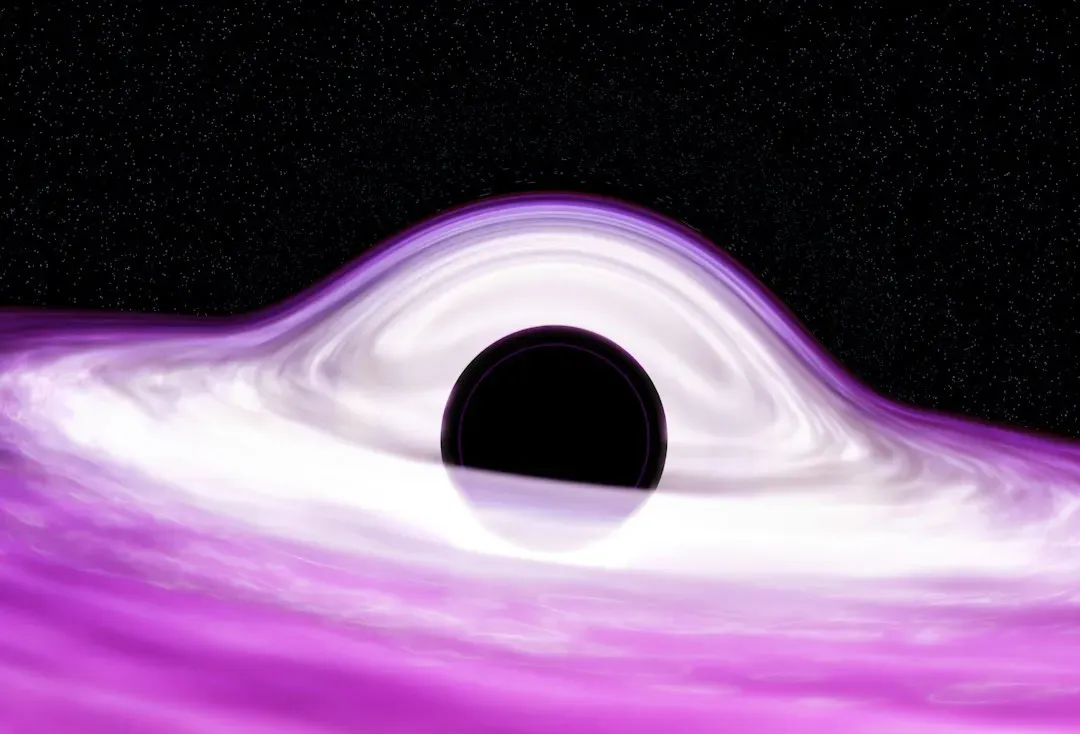
Black holes often get described like monstrous vacuum cleaners that just suck things in, but the reality is a lot more nuanced and honestly more fascinating. They’re regions where gravity becomes so intense that not even light can escape, yet around them form bright, swirling disks of gas and sometimes powerful jets that shoot matter out at nearly the speed of light. These jets can stretch for thousands of light-years, blasting through entire galaxies.
In the last few years, astronomers have even captured images of the “shadow” of black holes at the centers of galaxies, and watched them flicker in real time. Supermassive black holes seem to act as galactic regulators, influencing how many stars can form and how galaxies grow. Instead of being just cosmic destroyers, they’re more like extreme engines that shape their environments, a kind of dangerous but essential heart at the core of many galaxies – including our own.
Time Itself Flows Differently Across the Universe
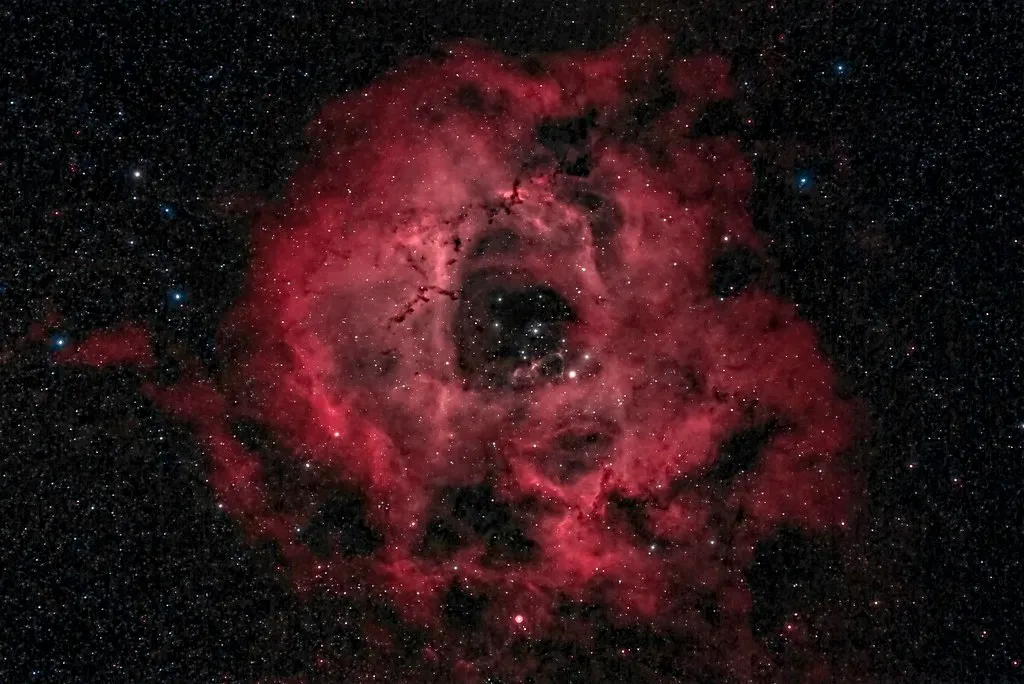
One of the strangest things modern physics tells us is that time is not universal. It doesn’t tick the same way for everyone, everywhere. Gravity and speed both distort the flow of time, so a clock near a massive object like a planet or a star runs slightly slower than a clock far away in empty space. This isn’t just theory; it’s measured with satellites and precise atomic clocks orbiting Earth.
On cosmic scales, the effect becomes mind-bending. Near the event horizon of a black hole, time for an observer could slow to a crawl compared to someone far away, making minutes by one measure stretch into ages by another. Even within the expanding universe, the way we define time depends on where we are and how we’re moving. Everyday life trains us to think of time as a single, shared river, but the universe behaves more like a network of twisting streams, each with its own flow.
There Are Probably More Planets Than Stars
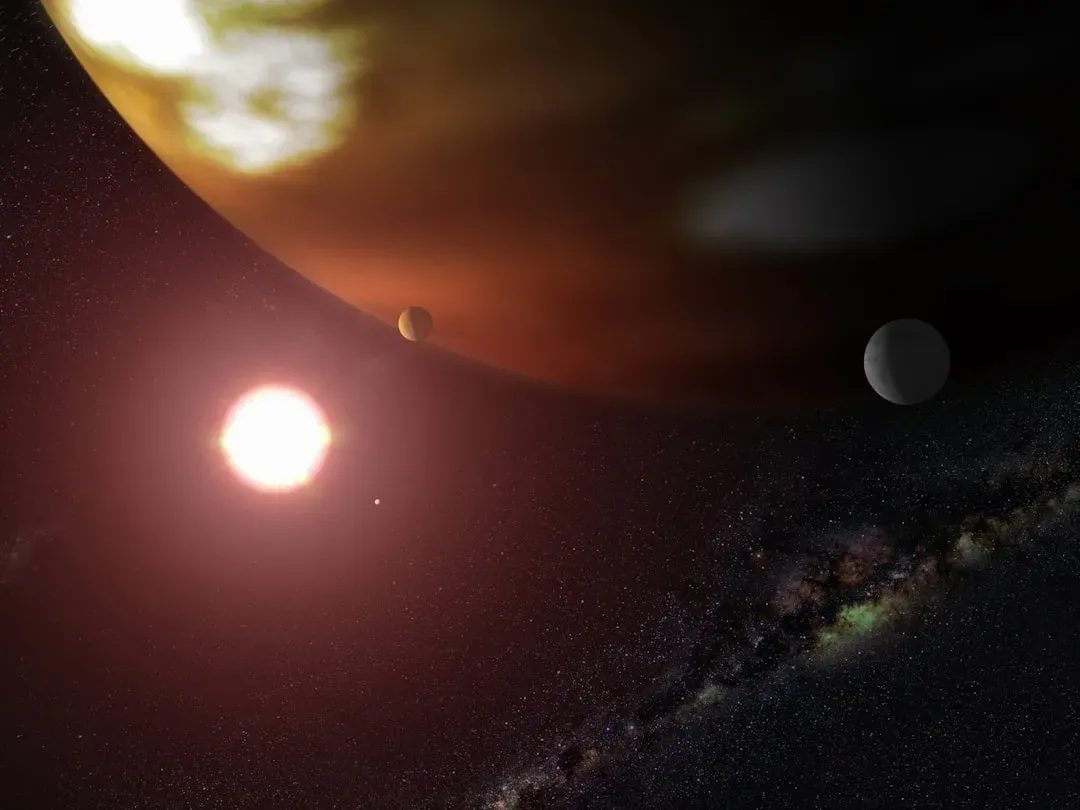
A few decades ago, the idea of planets around other stars was still unproven. Now we’ve confirmed thousands of exoplanets, with new ones being added regularly, and it looks like planets are the rule, not the exception. Many stars have whole systems of worlds, and some of these planets fall in the so-called habitable zone where liquid water could, in principle, exist on the surface.
We’ve found rocky planets larger than Earth, gas giants hugging their stars at blistering speeds, and worlds with orbits so wild they stretch our imagination. When you zoom out and picture the Milky Way with hundreds of billions of stars, and then realize that many of them probably have multiple planets, it’s hard not to feel a jolt. The night sky stops being just pinpricks of light and turns into a map of possible alien landscapes, each star a potential sun for unseen worlds.
The Cosmic Web Connects Galaxies Like a Giant Skeleton
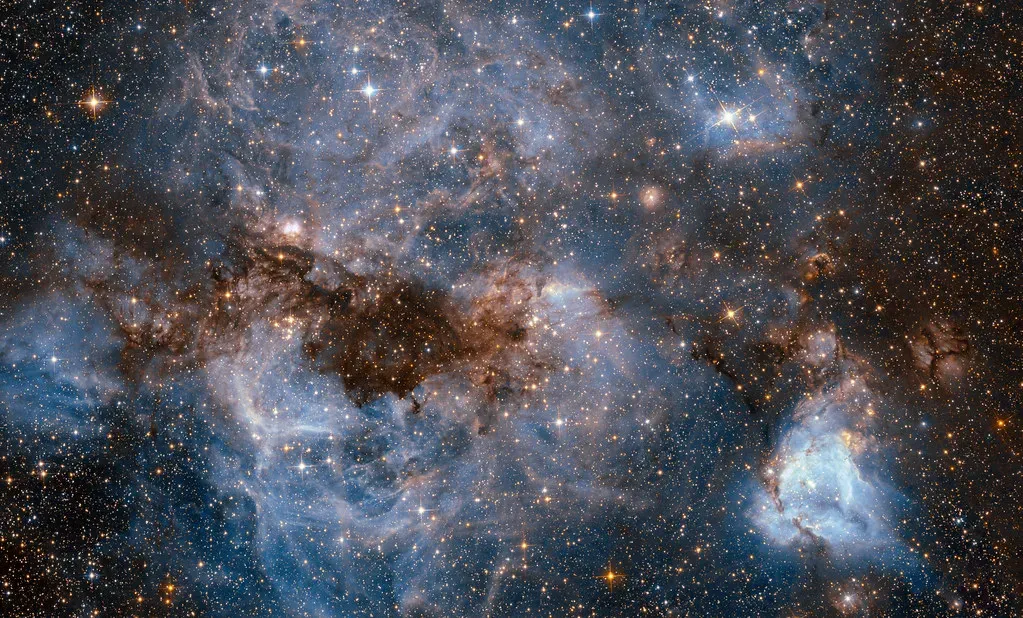
From our vantage point, galaxies look like separate islands floating in space, but on the largest scales, they trace out something much more structured. Computer simulations and giant sky surveys reveal that galaxies line up along vast filaments of dark matter and gas, forming what scientists call the cosmic web. Between these filaments lie enormous voids, regions so empty that only a few lonely galaxies drift through them.
If you could somehow step outside the universe and look down on it, the pattern might remind you of a three-dimensional spiderweb, or even the neural network of a brain. This web grew from tiny fluctuations in the early universe, amplified over billions of years by gravity. When I first saw visualizations of it, it felt like discovering the universe’s underlying skeleton, a hidden framework that everything else quietly hangs on.
The Universe Had a Beginning, but Its Future Is Still Up for Debate
Evidence from cosmic background radiation, galaxy motions, and the distribution of elements all point to a hot, dense beginning for the universe often called the Big Bang. That doesn’t mean there was a literal explosion into empty space, but rather that space itself has been expanding and cooling for billions of years. The light left over from that early phase still bathes the cosmos today, stretched into microwaves by the expansion of space.
What comes next, though, is still an open question. If dark energy keeps driving accelerated expansion, distant galaxies will drift farther away until their light never reaches us, and the universe will grow colder and darker over unimaginable timescales. Other ideas suggest different fates, but all of them force us to think in terms of time spans so long they almost lose meaning. Our entire human story so far is just a faint scratch on the surface of a cosmic timeline that stretches far behind and ahead of us.
Quantum Fluctuations Shaped Everything We See
On the smallest scales, reality doesn’t behave like solid, predictable clockwork. Instead, quantum physics tells us that even “empty” space seethes with temporary particles flickering in and out of existence. During the universe’s earliest moments, tiny quantum fluctuations in density were stretched to cosmic sizes by rapid expansion, seeding the pattern of structure we see today.
Those minuscule variations eventually grew into galaxies, clusters, and the grand architecture of the cosmic web. In a strange way, the vastness of the night sky traces its roots back to jittery randomness in the quantum world. It’s like learning that the layout of continents on Earth was decided by the random shake of a dice thrown at the beginning of time, only here the dice are the fundamental uncertainties baked into nature itself.
We Might Be One Universe in a Larger Multiverse
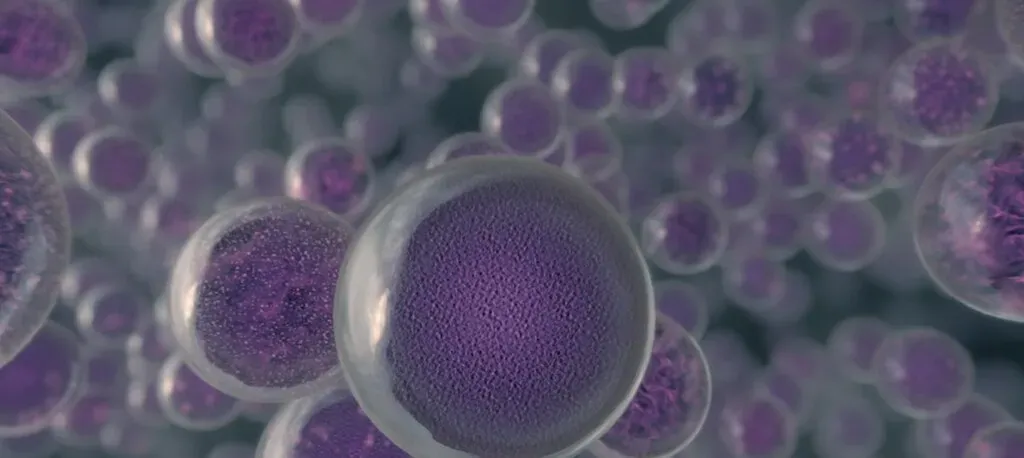
Some modern theories suggest that what we call “the universe” may just be one bubble in a far bigger, possibly infinite froth of universes. These ideas grow out of attempts to explain why our cosmos has the particular physical constants it does, and from some versions of cosmic inflation. In these scenarios, new universes could be budding off like soap bubbles, each with its own laws or different strengths of forces.
We don’t have direct evidence for this, and it might turn out to be wrong or untestable, but the possibility alone stretches the imagination. If multiple universes exist, then our entire observable cosmos becomes just one region in a sprawling landscape of realities. Personally, I find it both dizzying and strangely comforting: instead of being the single stage for everything that ever was or could be, our universe might be one chapter in an endless library.
Life May Be a Natural Outcome, Not a Cosmic Fluke
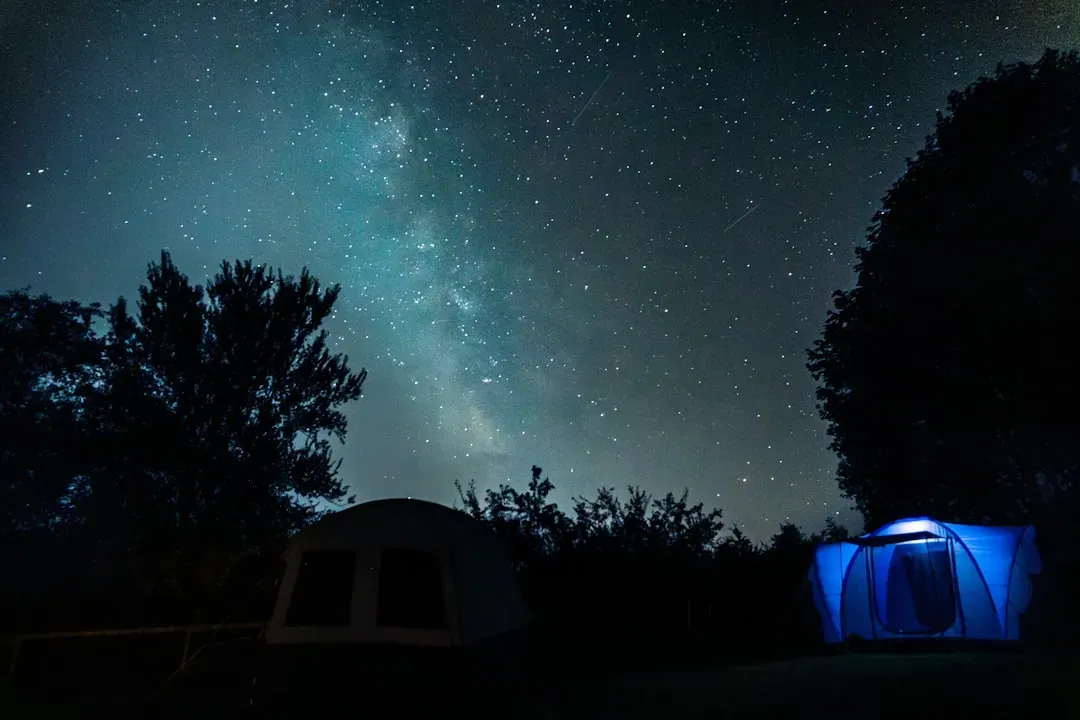
For a long time, it was easy to assume life on Earth was some bizarre accident in a hostile universe. But as we discover more planets, detect organic molecules in interstellar clouds, and find hardy microbes surviving in extreme conditions on Earth, that story starts to feel incomplete. Many of the building blocks of life appear surprisingly common, forming naturally around new stars and even in the cold depths of space.
This doesn’t prove that life is common, or that intelligent life is out there, but it shifts the question from “could it happen?” to “how often does it happen?” Some scientists now see life as something the universe might lean toward, given the right conditions and enough time. When I think about that, walking outside and seeing a patch of moss on a rock or a bird on a wire feels different – like these are not just random exceptions, but local expressions of a much deeper cosmic tendency.
Conclusion: A Vast, Strange Cosmos with Room for Us
All these discoveries point to a universe that’s bigger, weirder, and richer than most of us were ever taught in school. It’s a place where invisible matter holds galaxies together, time itself bends and stretches, and countless unseen planets circle distant suns. At the same time, the same physical laws that shape black holes and cosmic webs also shape the atoms in your body and the thoughts in your head.
Instead of making us insignificant, this connection can make our existence feel more meaningful, like we’re a way for the universe to look back at itself and ask questions. The more we uncover, the more obvious it becomes that our current understanding is just a rough draft. When you look up at the night sky now, knowing even a little of this, what do you find yourself wondering about first?