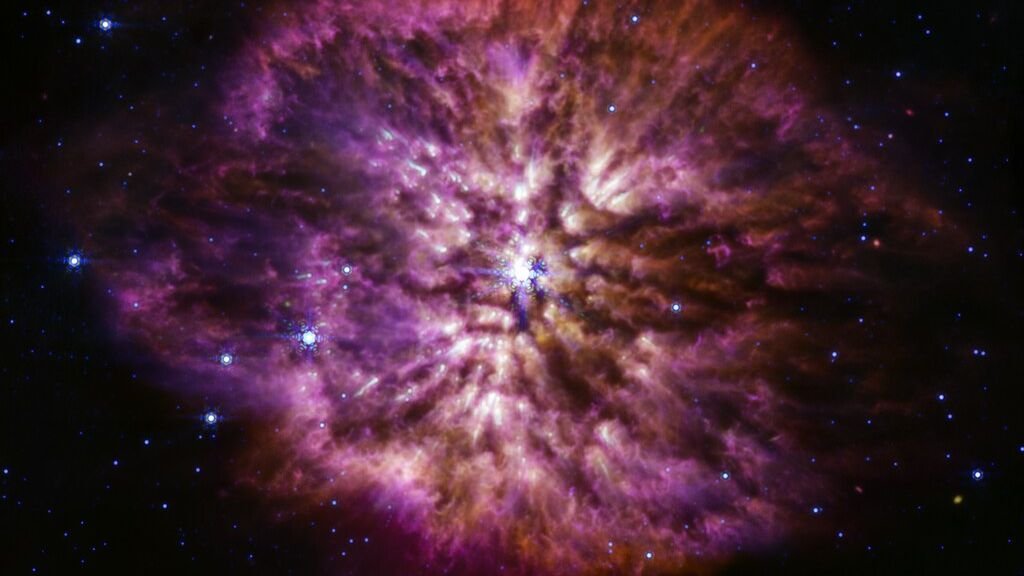

Most of us go through life without spending too much time worrying about how the universe ends. It feels like one of those questions reserved for late-night philosophy conversations or science fiction films. Yet here we are, and a serious physicist has put a number on it. A surprisingly specific, almost uncomfortably precise number.
The idea that everything we know, every galaxy, every star, every atom, could one day collapse back into a single point is not new. What is new is the timeline, and the reasoning behind it. This story is part mind-bending cosmology, part detective work through the fabric of spacetime itself. Let’s dive in.
The Bold Prediction That Has Everyone Talking
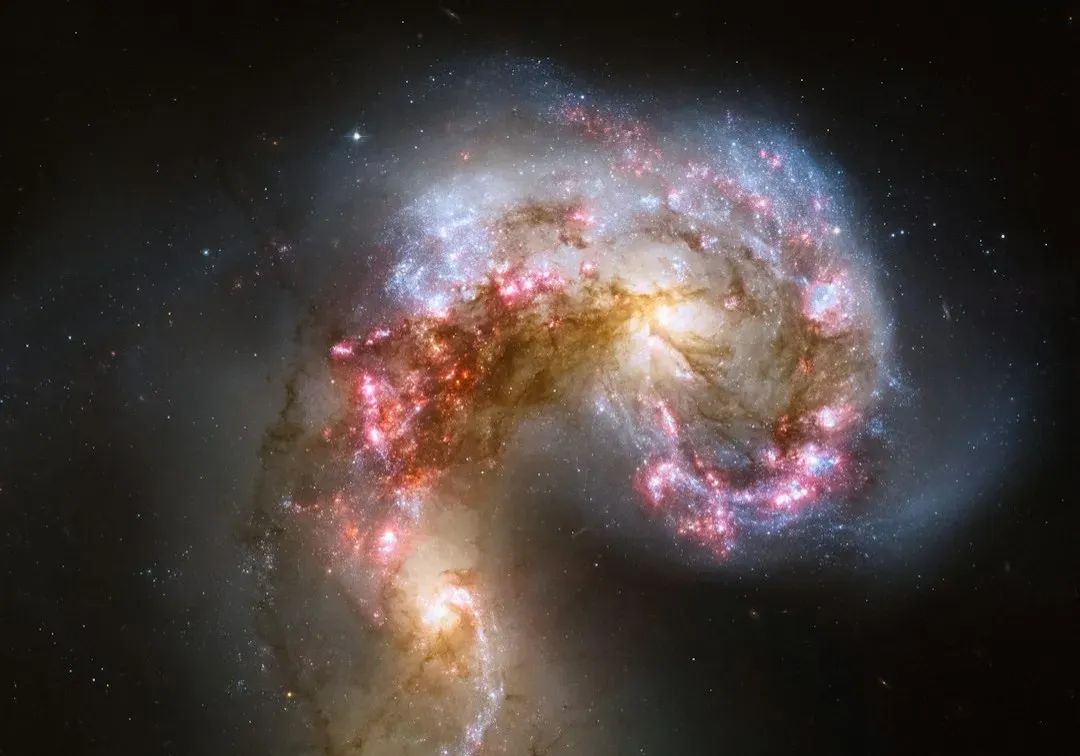
Let’s be real, most predictions about the end of the universe tend to be vague. “Eventually,” “trillions of years,” “someday.” Not this one. Cornell University physicist Tomasz Bulik has put forward a strikingly specific claim: the universe will end in approximately 33 billion years from now, collapsing inward in what cosmologists call a Big Crunch.
That number is not pulled from thin air. It comes from rigorous analysis of how dark energy, the mysterious force driving the universe’s expansion, may behave over vast timescales. The idea is that dark energy might not stay stable forever. If it weakens or reverses, gravity eventually wins.
Honestly, 33 billion years sounds like an eternity. Our entire universe is only about 13.8 billion years old. So we’re talking about more than double the current age of everything that exists. Still, in cosmic terms, that’s not quite forever either.
What Is the Big Crunch and Why Does It Matter
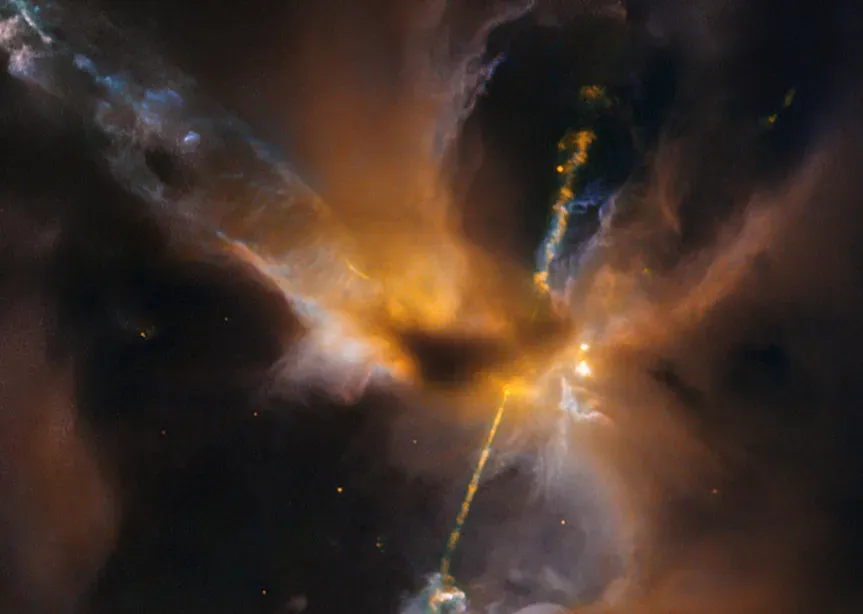
The Big Crunch is essentially the universe running the Big Bang in reverse. Instead of everything exploding outward from a single point, everything gets pulled back together until all matter, energy, and space itself is crushed into an impossibly dense singularity.
Think of it like blowing up a balloon and then slowly releasing the air. Except in this case, the balloon is the entire universe, and there’s no one holding it. Gravity, at a cosmic scale, becomes the ultimate force of reckoning.
This isn’t just a theoretical curiosity. Understanding how the universe might end tells us something profound about its fundamental structure, the nature of dark energy, and whether the laws of physics we know today will hold across all of time. It’s high-stakes science, even if the stakes are 33 billion years away.
The Role of Dark Energy in This Cosmic Countdown
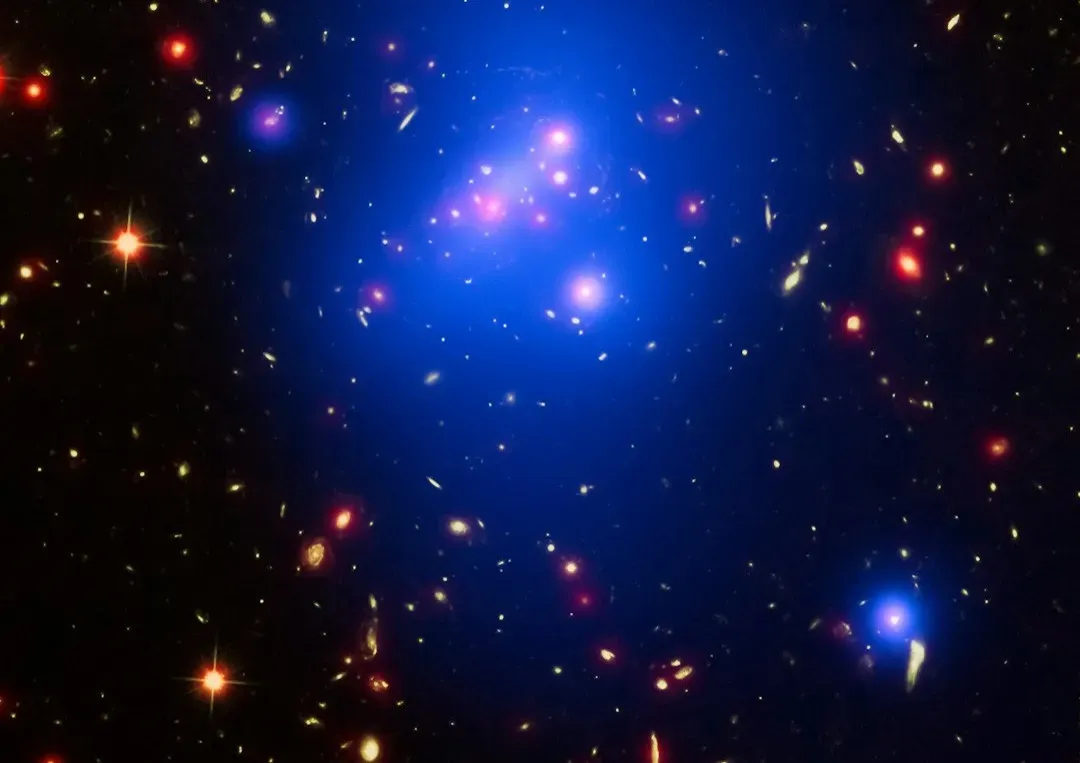
Here’s the thing about dark energy: we know it exists because of what it does, not because anyone has directly detected it. It accounts for roughly about two thirds of the total energy content of the universe, and right now, it’s pushing everything apart at an accelerating rate.
The standard model of cosmology treats dark energy as a constant, something called the cosmological constant. It doesn’t change, it doesn’t weaken, it just keeps pushing. Under that assumption, the universe expands forever and ends in a cold, dark “Heat Death.”
But what if that assumption is wrong? Recent cosmological data has hinted that dark energy might not be perfectly stable. If it starts to decrease or even flip sign over time, the expansion slows, stops, and then reverses. That reversal is the starting gun for the Big Crunch. It’s a small change in theory with absolutely enormous consequences.
How Scientists Actually Model the End of the Universe
Modeling something as abstract as the end of all existence sounds almost absurd, but physicists do it through highly sophisticated mathematical frameworks. They use equations derived from Einstein’s general relativity combined with observational data about how the universe is currently expanding.
The key variable here is something called the equation of state parameter for dark energy, often labeled “w.” If w equals negative one, dark energy is constant. If it drifts above that value over time, that could signal a weakening force. Bulik’s analysis explores exactly that drift, and what it implies over tens of billions of years.
It’s hard to say for sure, but the precision of 33 billion years comes from feeding current observational constraints into these models and asking: under what conditions does the expansion halt and reverse? The answer, given certain plausible behaviors of dark energy, consistently points toward that timeframe. That’s not guessing. That’s applied physics.
What Happens in the Final Moments of a Big Crunch
Imagine the last few billion years before the Big Crunch. At first, the universe starts contracting so slowly that no single civilization, if any even existed, would notice. Galaxies that were once rushing apart would gradually slow, stop, and then begin drifting back together.
Then things accelerate. Galaxies collide. Temperatures rise as the universe compresses. Stars are shredded. Eventually atoms themselves cannot hold their structure as the surrounding energy density becomes overwhelming. The closer you get to the final moment, the more chaotic and violent the conditions become.
In the very last instant, all of spacetime collapses into a singularity. Physics as we understand it breaks down completely. What happens at that boundary, whether there is a bounce, a new Big Bang, or simply nothing, is one of the genuinely open questions of cosmology. Some theories suggest the Big Crunch could be the seed of an entirely new universe. Others suggest it’s simply the end.
How This Challenges What We Thought We Knew
For roughly two decades, the dominant narrative in cosmology has been that the universe will expand forever. The discovery of accelerating expansion in the late 1990s, which earned its discoverers a Nobel Prize, seemed to seal the deal. A forever-expanding, ever-cooling universe felt like settled science.
Predictions like Bulik’s challenge that comfort zone. They remind us that our understanding of dark energy is genuinely incomplete. We’re working with a placeholder, a term in an equation that fits the data but doesn’t fully explain itself.
What’s fascinating is that this isn’t fringe science. The possibility of a Big Crunch has always remained open within mainstream cosmology. It was sidelined by observational evidence, but never fully ruled out. New data, particularly from missions analyzing large-scale structure and cosmic microwave background radiation, continues to probe whether dark energy is truly constant or subtly shifting. The jury is still technically out.
What This Means for Us, and for Everything
Let’s take a step back and appreciate the sheer strangeness of this. A physicist sitting at Cornell University has mathematically traced the likely end date of the entire universe. There’s something almost poetic about that. The universe itself has no awareness of its own deadline, yet here we are, figuring it out.
On a practical level, 33 billion years is so incomprehensibly distant that it has zero bearing on any decision any human will ever make. The sun will swallow the Earth in roughly five billion years. Humanity’s cosmic lease expires long before the Big Crunch becomes anyone’s problem.
Yet I think there’s real value in asking these questions. Understanding the ultimate fate of the universe forces us to confront deep truths about the nature of dark energy, the geometry of spacetime, and the ultimate rules governing everything. Science doesn’t just serve immediate utility. Sometimes it serves wonder.
A Universe With a Deadline: Final Thoughts
The idea that the universe has a specific, calculable end date is one of those concepts that lodges in your mind and refuses to leave. Thirty-three billion years from now, if this prediction holds, everything collapses back to nothing. Or maybe to everything again. Science hasn’t decided yet.
What strikes me most isn’t the number itself. It’s what that number represents: a shift in how we think about dark energy, a questioning of long-held assumptions, and the remarkable ability of human minds to peer billions of years into the future using nothing but mathematics and observation.
The universe has been around for nearly 14 billion years and is still going strong. We’re not even at the halfway point of its predicted lifespan, according to this research. In that sense, the cosmos is still very much in its prime. The Big Crunch, if it comes, is a distant chapter in a story we’re only beginning to understand. What do you think, does knowing the universe has an expiration date change the way you see it? Tell us in the comments.