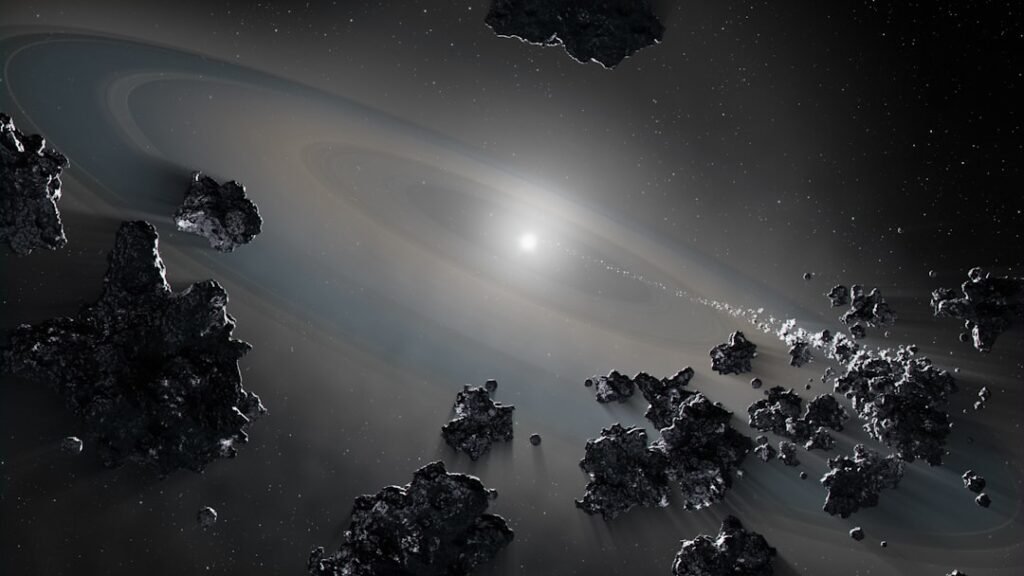

Physics has four fundamental forces. Gravity, electromagnetism, the strong nuclear force, and the weak nuclear force. For decades, that’s been the list – neat, tidy, and apparently complete. Except physicists have quietly suspected for a long time that something is missing.
The idea of a fifth force sounds like science fiction, honestly. Something operating beneath our current understanding, hiding in the gaps between what our equations can explain and what the universe actually does. Now, a new and genuinely exciting avenue of research points to asteroids – yes, asteroids – as a potential key to finally detecting it. Let’s dive in.
The Four Forces We Already Know

To understand why scientists are chasing a fifth force, it helps to appreciate just how fundamental the existing four are. Gravity pulls matter together across cosmic distances. Electromagnetism governs light, electricity, and chemical bonds. The strong force holds atomic nuclei together, and the weak force governs certain types of radioactive decay.
These four forces describe virtually everything we can observe and measure. They form the backbone of the Standard Model of particle physics, one of the most successful theoretical frameworks in all of science. So when researchers say something might be missing, that’s not a small claim. That’s a potentially earth-shattering one.
What Is the Fifth Force and Why Do Scientists Think It Exists
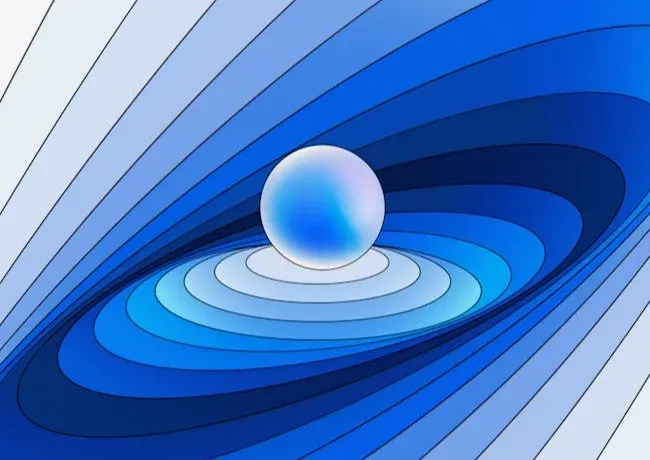
Here’s the thing – nobody has directly observed a fifth force. What scientists have observed are stubborn anomalies. Tiny, persistent discrepancies between what our current equations predict and what experiments actually measure. Those gaps keep showing up, and they refuse to go away.
One well-known example is the anomalous magnetic moment of the muon, a particle similar to an electron but heavier. Measurements from facilities like Fermilab have repeatedly suggested the muon behaves slightly differently than the Standard Model expects. It’s a small difference, but in physics, small differences sometimes rewrite entire textbooks.
The fifth force, if it exists, would likely interact with matter in some subtle, previously undetected way. Some theories suggest it could be tied to dark matter or dark energy, the mysterious components that make up the overwhelming majority of the universe’s total content. Honestly, that alone should make you sit up straighter.
The Unexpected Role of Asteroids in This Search
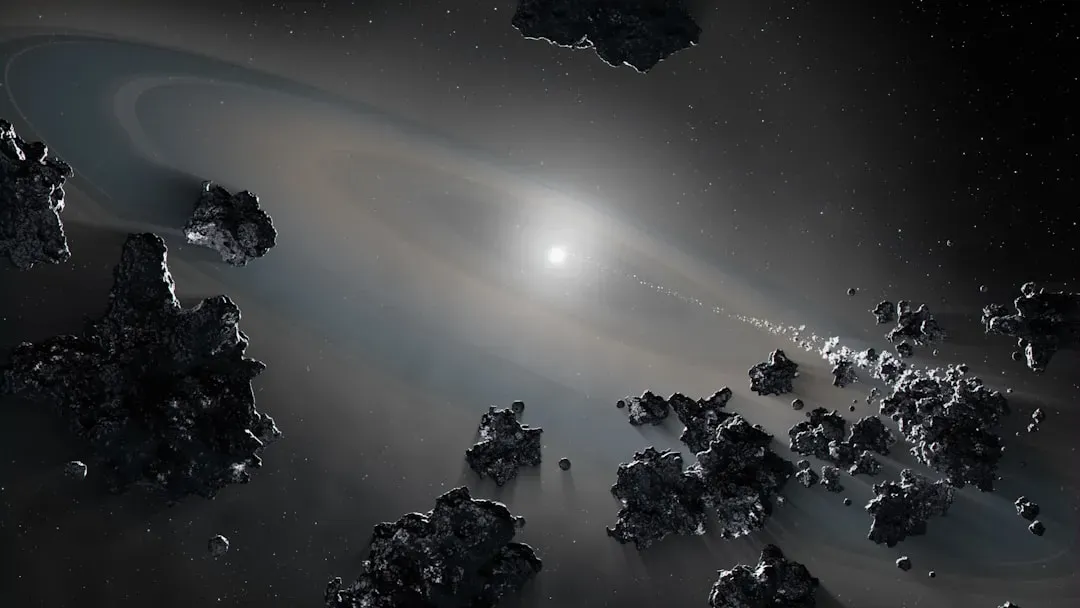
Most people think of asteroid research as a planetary defense concern. Track the rocks, make sure none of them are heading our way. That’s valid, but it turns out asteroids might offer something far more profound – a natural laboratory for testing physics at a fundamental level.
Researchers have proposed that certain forces, including a hypothetical fifth force, could cause asteroids to drift in ways that don’t perfectly match gravitational predictions. If an asteroid’s trajectory shows unexplained nudges that can’t be accounted for by the sun’s gravity, radiation pressure, or other known effects, something else might be at work. That something else is exactly what scientists are now looking for.
How the Yarkovsky Effect Plays Into This
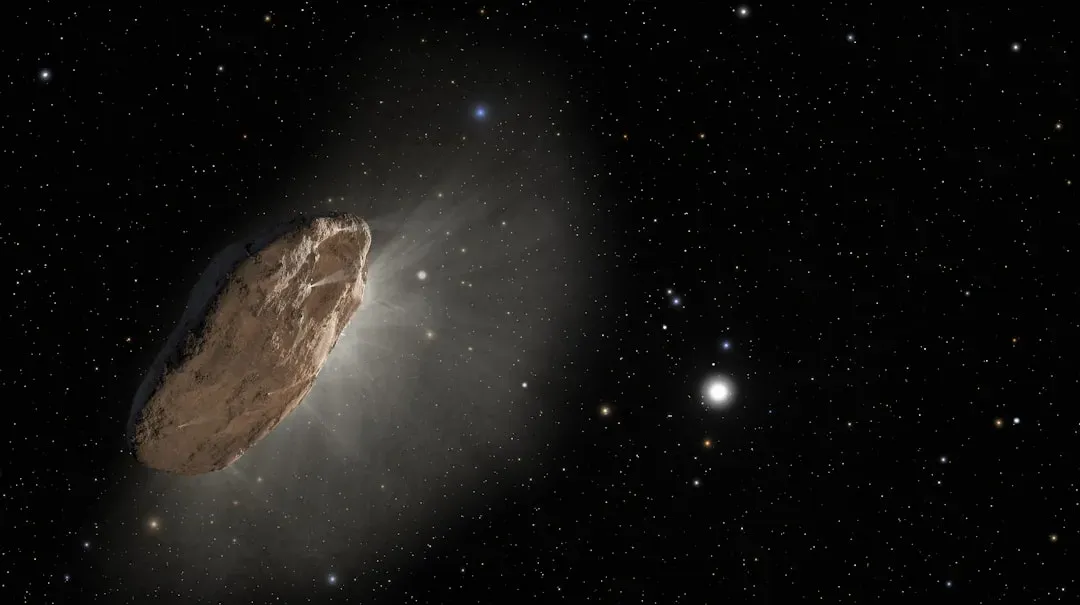
There’s already a known phenomenon called the Yarkovsky effect that causes small asteroids to drift slowly over time. It happens because sunlight warms one side of a rotating asteroid, and when that heat radiates away, it creates a tiny but real thrust. It’s like a minuscule rocket engine powered entirely by sunlight.
Scientists account for this when calculating asteroid orbits. The challenge is that measuring the Yarkovsky effect precisely is difficult, and any residual drift beyond what this effect explains becomes genuinely interesting data. That residual drift is now being examined as a potential signal of new physics, possibly a fifth force interacting subtly with matter over long distances. Let’s be real – using space rocks to probe the deepest questions in physics is about as cool as science gets.
The Search for Anomalous Orbital Drifts
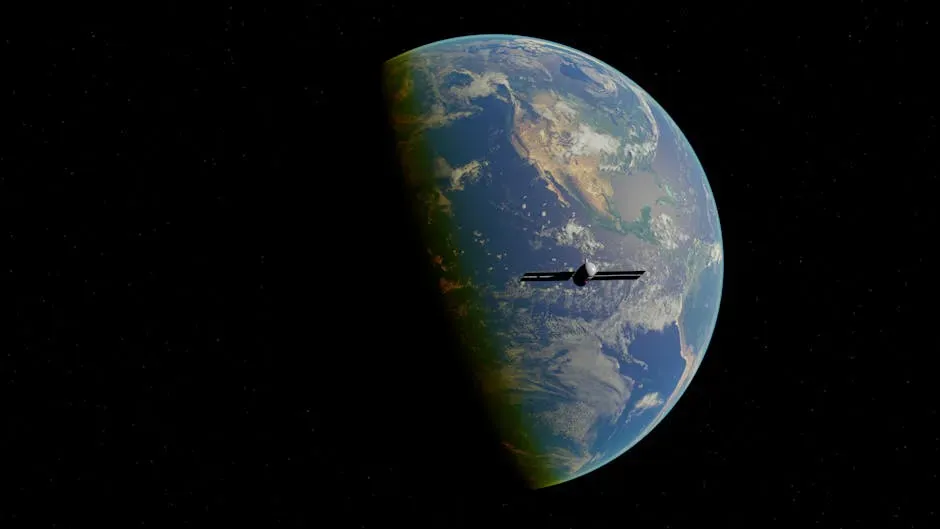
Researchers are systematically analyzing the orbital data of near-Earth asteroids, looking for objects that drift more than expected even after accounting for the Yarkovsky effect and every other known influence. It’s painstaking work. Enormous amounts of tracking data, careful modeling, and patient comparison of predictions against observations.
Some asteroids have already shown intriguing deviations. These aren’t dramatic enough to announce a discovery, and scientists are rightly cautious. The drift could come from unmodeled surface properties, outgassing from the asteroid, or measurement errors. Still, the methodology itself is a breakthrough – using naturally occurring objects as precision instruments to probe fundamental physics.
Why This Approach Could Be a Game Changer
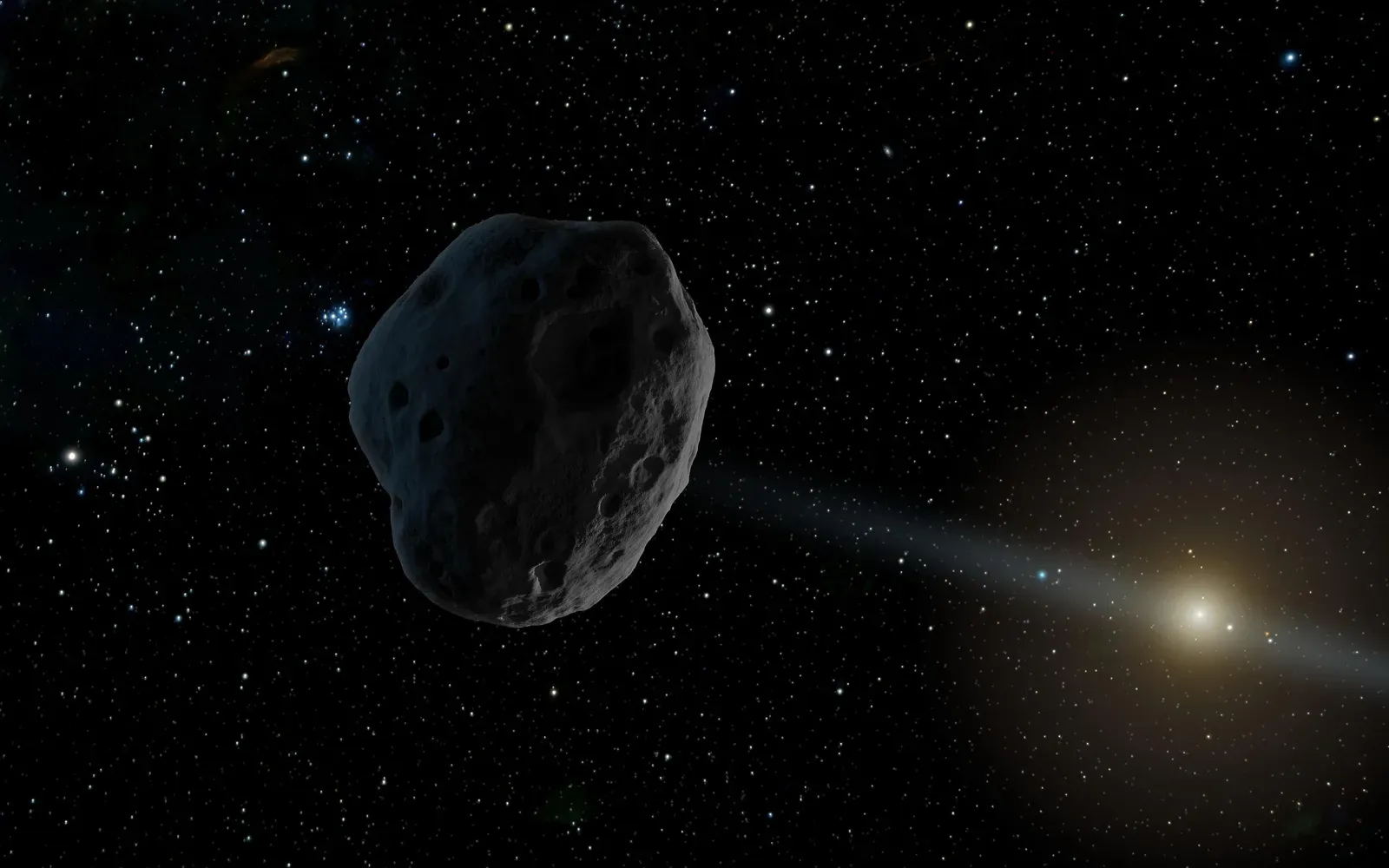
Traditional particle physics experiments require billion-dollar colliders and controlled laboratory conditions. The asteroid approach, by contrast, uses objects that already exist, orbiting quietly in space, accumulating years of precise tracking data from ground and space-based telescopes. It’s almost elegant in its simplicity.
I think what makes this particularly exciting is the scale. A fifth force that operates over longer distances would leave signatures in gravitational interactions at solar system scales, something a collider simply cannot test. Asteroids provide a completely independent and complementary way to search for new physics. That kind of methodological diversity in science is invaluable, and it’s hard to overstate how novel this approach really is.
What Comes Next for This Research
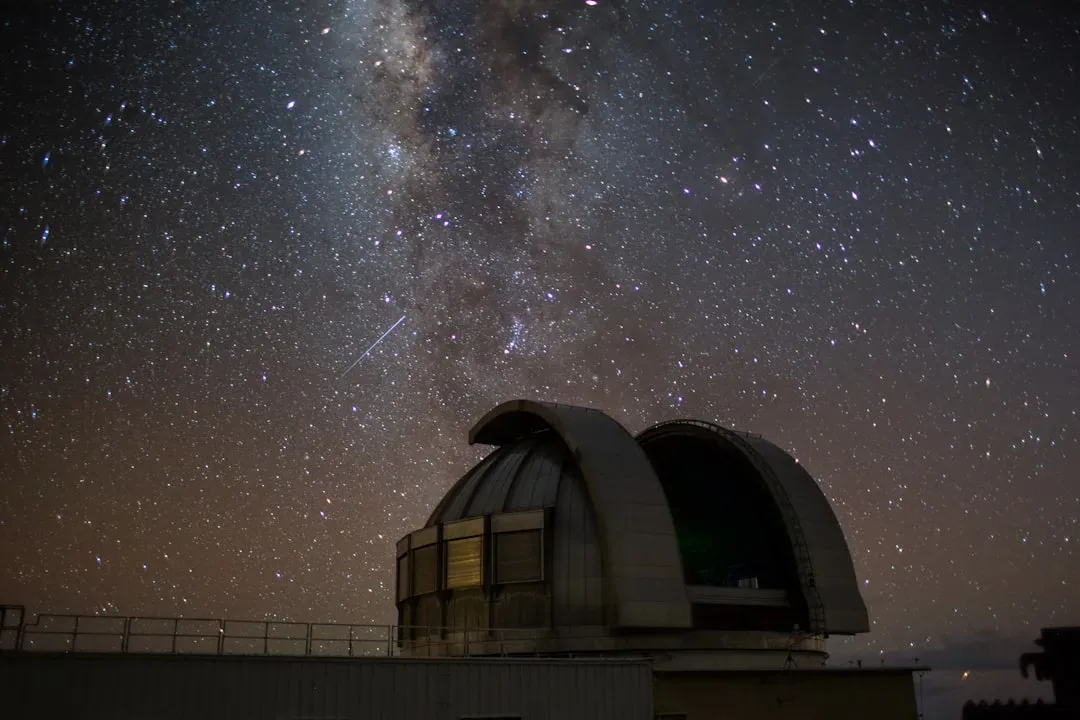
The next generation of sky surveys and space missions will generate vastly improved orbital measurements for thousands of asteroids. Facilities like the Vera C. Rubin Observatory, which has been scanning the sky with unprecedented detail, will provide data that researchers can comb through looking for those telltale unexplained drifts.
It’s hard to say for sure when or whether a clear fifth force signal will emerge. Science rarely delivers clean, sudden revelations. More likely, evidence will accumulate gradually, with anomalies growing more statistically significant over years of observation. The honest answer is that this could take a decade or more. Still, the direction of inquiry feels genuinely promising, and the scientific community is paying close attention.
A Universe That Still Has Secrets
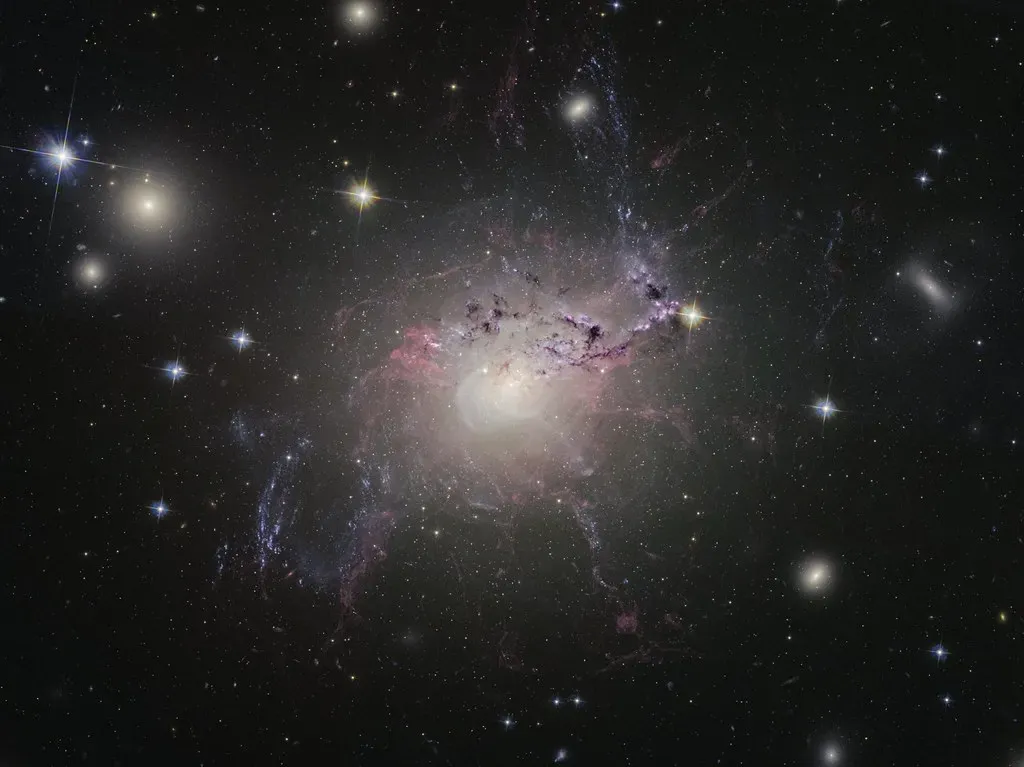
Physics has come an extraordinary distance. From Newton’s apple to quantum field theory, humans have built a staggeringly accurate picture of how reality works. Yet here we are, in 2026, still suspecting that picture might be incomplete.
The possibility of a fifth fundamental force isn’t fringe science. It’s a serious, mathematically grounded hypothesis pursued by credentialed researchers at major institutions worldwide. Asteroids as detection tools might sound unconventional, even quirky, but science has always advanced by asking unexpected questions and looking in unexpected places.
If a fifth force is eventually confirmed, it would rank among the most significant scientific discoveries in human history. Everything we think we know about matter, energy, and the structure of the universe would need to be revised. That’s not terrifying – it’s genuinely thrilling. The universe still has secrets, and we’re getting better at listening for them. What do you think – are we on the verge of rewriting the laws of physics? Share your thoughts in the comments.