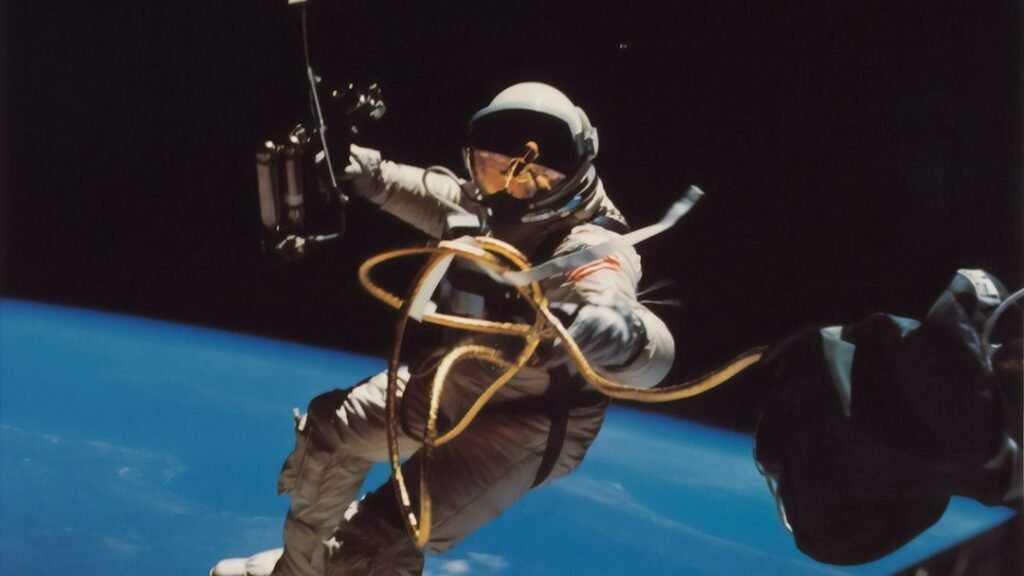
Space exploration has always carried risk. From the earliest rocket tests to the International Space Station, humans have willingly pushed into environments that were never designed to support life. The Moon is no different – except this time, NASA is planning something far more ambitious, and the health stakes are genuinely staggering.
What’s coming with the Artemis program isn’t just a quick flag-planting visit. It’s an extended human presence near and on the lunar surface, which raises questions that scientists are still struggling to answer. Some of those questions involve radiation. Others involve bone loss, isolation, and dust that could literally shred human lung tissue. Let’s dive in.
The Moon Is Not a Safe Place for Human Lungs

Here’s something most people don’t think about when they picture moonwalks: the dust. Lunar regolith, the fine powdery material that covers the Moon’s surface, is nothing like the soft dust you’d brush off a shelf at home. It’s sharp, jagged, and electrostatically charged, meaning it clings to everything and gets into everything.
On Earth, the atmosphere and water cycles slowly round off sharp particles over millions of years. The Moon has no such luxury. Its dust particles remain razor-edged, and when inhaled, they could cause serious respiratory damage similar to silicosis, a debilitating lung disease seen in miners. NASA engineers are working hard on suit and habitat filtration systems, but honestly, no one fully knows what repeated long-term exposure would do to a person.
Radiation on the Moon Is a Threat We Can’t Fully Shield Against
The Earth’s magnetic field and thick atmosphere do an enormous job protecting us from cosmic radiation and solar particle events. The Moon has neither. Astronauts on the lunar surface are exposed to radiation levels that are roughly two to three times higher than what astronauts experience aboard the International Space Station.
Over a longer mission, that kind of exposure accumulates fast. We’re talking about increased cancer risk, potential damage to the central nervous system, and even possible cognitive impairment. I think this is one of the most underreported dangers of the whole Artemis program. The suits offer some protection, but not nearly enough for extended surface operations, and building radiation shelters on the Moon in time for the planned missions is a massive logistical challenge.
Bone and Muscle Loss Happens Faster Than You’d Expect
The Moon’s gravity is about one sixth of Earth’s. That sounds like fun – bouncing around like the Apollo astronauts did – but prolonged exposure to low gravity is genuinely brutal on the human body. Muscles that constantly work against Earth’s gravity suddenly have far less resistance, and they start wasting away surprisingly quickly.
Bone density follows a similar pattern. Astronauts on the ISS, even with rigorous daily exercise routines, still experience significant bone loss during long-duration missions. The lunar environment would be different from microgravity, but one sixth gravity is still far from enough to maintain a healthy musculoskeletal system over months. There’s no magic pill for this yet, and exercise alone doesn’t fully solve the problem.
The Psychological Toll of Lunar Isolation Is Deeply Underestimated
Let’s be real: the Moon is far. Communication delays with Earth are manageable, running only a few seconds each way, but the psychological weight of being that isolated in that kind of environment is not something you can fully simulate in a training facility in Texas. The confinement, the monotony, the constant awareness of danger – it adds up.
Studies from long-duration ISS missions, Antarctic research postings, and submarine deployments have all shown that isolation and confinement cause measurable psychological deterioration over time, including depression, anxiety, interpersonal conflict, and cognitive fatigue. On the Moon, you can’t exactly step outside for a walk to clear your head. The mental health infrastructure NASA is planning is still being developed, and getting this right could matter just as much as the physical health challenges.
Astronauts Will Essentially Be Medical Test Subjects Whether They Like It or Not
This is the part that sits uncomfortably with a lot of bioethicists. NASA acknowledges openly that the data gathered from Artemis crew members will be invaluable for understanding how the human body responds to the lunar environment. That’s genuinely important science. However, it also means the astronauts themselves are, in a very real sense, the experiment.
Informed consent exists, and of course these are highly trained volunteers who understand what they’re signing up for. Still, when the full health picture of an environment isn’t yet known, the ethical lines get murky. It’s hard to say for sure, but there’s a reasonable argument that some of the risks being asked of these astronauts go beyond what current medical science can fully characterize or mitigate. That’s a conversation worth having loudly, not quietly behind closed doors at NASA headquarters.
The Timeline Is Aggressive and Science May Not Be Ready
NASA’s Artemis program has faced repeated delays, but the ambition remains enormous. The goal of establishing a sustained human presence near the Moon, including through the Gateway lunar space station, is being pursued on a timeline that many researchers privately feel is outpacing the science. Medical countermeasures for radiation, lunar dust toxicity, and long-duration low-gravity health effects are all still works in progress.
Think about it this way: you wouldn’t build a skyscraper if the structural engineering math wasn’t fully solved yet. Some critics in the scientific community feel NASA is doing something similar here, pressing forward with human missions before the biological safety manual has been written. The agency has openly admitted that astronauts on future lunar missions will provide data that helps fill in those very gaps. That’s either brave science or a calculated gamble, depending on how you look at it.
What NASA Is Doing to Address the Risks
To be fair, NASA isn’t walking into this blindly. The agency has entire divisions dedicated to human research, and the Human Research Program has been studying spaceflight health risks for decades. New suit designs aim to reduce dust infiltration. Habitat shielding concepts are being developed with radiation protection in mind. Pharmacological and nutritional countermeasures for bone and muscle loss are actively being tested.
There’s also a growing emphasis on personalized medicine approaches, looking at individual genetic factors that might make some astronauts more or less vulnerable to specific risks. Progress is real. Still, the gap between “we’re working on it” and “we’ve solved it” remains wide, and the missions are not waiting for that gap to close. The astronauts selected for these missions are undeniably courageous, and one thing is certain: they deserve every possible layer of protection science can provide.
The Bottom Line on Human Health and the Moon
There’s something deeply inspiring about humanity’s return to the Moon, and I don’t want to minimize that. The Artemis program represents a genuine leap forward in space exploration, and the science that comes from it will benefit generations to come. Honestly, the ambition is breathtaking.
The risks, though, are real and in several cases not yet fully understood. Astronauts heading to the lunar surface are stepping into an environment that will stress their bodies and minds in ways that ground-based testing can only partially simulate. The data they generate will advance human knowledge enormously, which makes their role both vital and vulnerable. What do you think – is the pace of these missions worth the human cost, or should science be given more time to catch up? Tell us your take in the comments.