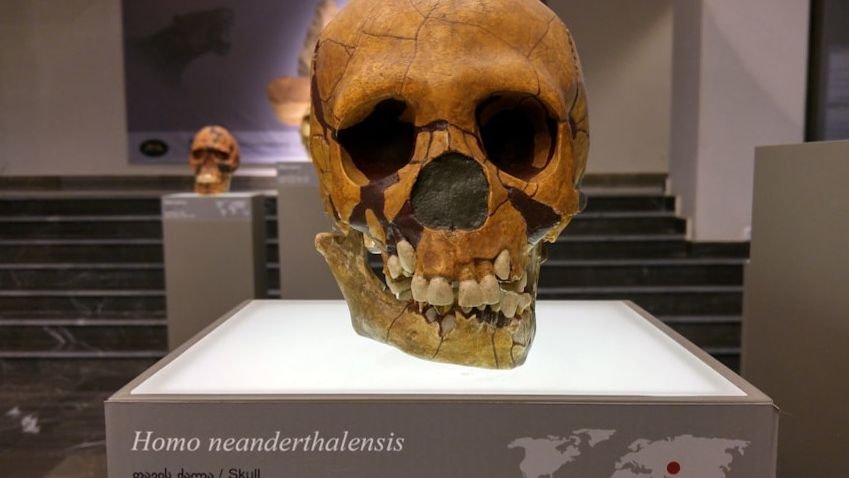
Imagine finding out that two people who never met, separated by ten thousand years, were distant cousins. That’s not science fiction. That’s exactly what researchers uncovered from a single fragment of ancient bone pulled from a cave in Siberia.
The discovery rewrites how we think about Neanderthal family ties, migration patterns, and the staggering depth of their social networks. There’s something deeply human about this story, honestly. Let’s dive in.
The Cave That Keeps Giving Up Secrets
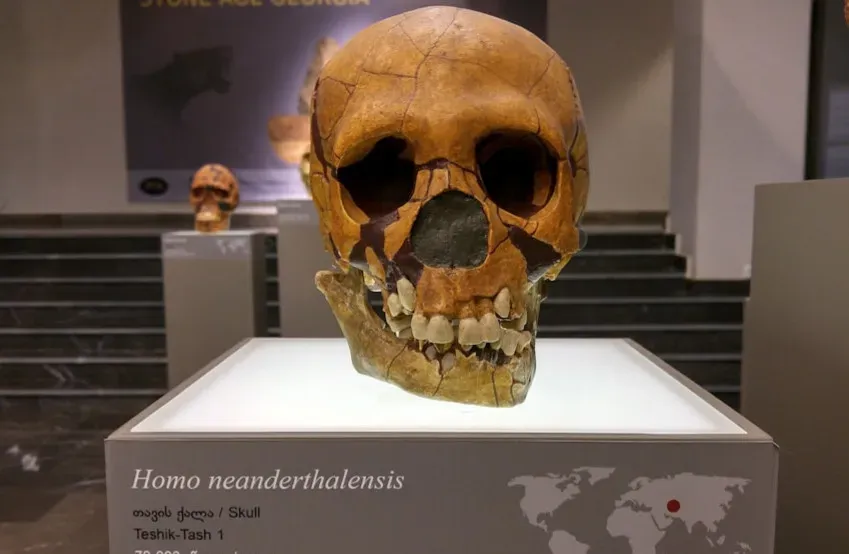
Chagyrskaya Cave in the Altai Mountains of Siberia has been a goldmine for paleoanthropologists for years. It’s the kind of site that seems almost too good to be true, layer after layer of ancient life preserved in the cold earth. Neanderthal remains have been recovered there in remarkable numbers, making it one of the richest sites for studying this ancient human species outside of Europe.
What makes this latest find so striking is not just what was found, but when. A bone fragment estimated to be roughly 110,000 years old was analyzed and matched genetically to another Neanderthal whose remains date to about 10,000 years later. Same cave. Different eras. Related individuals. That’s the kind of detail that gives you chills.
The Bone Fragment That Changed Everything
The fragment in question is small, almost easy to overlook. Yet modern ancient DNA extraction techniques have reached a point where even a tiny sliver of bone can yield enough genetic material to reconstruct meaningful family relationships. Researchers successfully sequenced DNA from this 110,000-year-old specimen and compared it to the growing genetic database of Chagyrskaya Neanderthals.
The results showed a clear genetic relationship between this older individual and a younger Neanderthal from the same cave, one who lived approximately 10,000 years after the first. To put that in perspective, that gap is roughly the same as the entire span of recorded human history. The fact that a family connection persisted across such a vast stretch of time is, to put it plainly, astonishing.
What “Distant Relatives” Actually Means Here
Here’s the thing about ancient DNA analysis – it doesn’t work like a family tree you’d sketch on paper. Researchers look at genetic markers, patterns of shared mutations, and chromosomal similarities to determine how closely two individuals were related. In this case, the two Neanderthals were not immediate family. They were distant relatives, the kind you might never meet at a modern family reunion.
Still, the fact that a detectable genetic link exists across 10,000 years is remarkable. It suggests that specific Neanderthal groups returned to the same locations across generations, possibly out of cultural habit, familiarity, or resource dependence. Think of it like a family homestead, a place your ancestors kept coming back to even when they didn’t know why, just because it felt like the right place to be.
A Window Into Neanderthal Social Structure
Scientists have long debated how Neanderthals organized their social lives. Were they solitary wanderers? Small tight-knit bands? Something more complex? This discovery adds a powerful data point to that conversation. The idea that related individuals were drawn to the same cave across an enormous time span suggests at least some form of inherited cultural or territorial behavior.
Previous genetic studies of Chagyrskaya Cave already hinted at surprisingly small, closely related community groups. The Neanderthals there showed signs of limited genetic diversity, suggesting they lived in relatively isolated populations with consistent internal mating. This new finding layers on another dimension, showing that even across thousands of years, the same bloodlines were moving through the same landscape. That’s not random. That’s something closer to tradition.
The Astonishing Timeline in Real Terms
Let’s be real about scale for a moment. Ten thousand years is genuinely hard to comprehend. The oldest known agricultural societies on Earth are roughly that old. The pyramids of Giza are younger than that gap by several thousand years. So when scientists say these two related Neanderthals were separated by ten millennia, they are describing a span of time that dwarfs the entirety of modern civilization.
And yet, across all of that time, a genetic thread connects them. It forces us to reconsider Neanderthal populations not as fleeting, scattered groups that wandered aimlessly, but as lineages with real continuity. It’s almost poetic in a way, that the mountains of Siberia silently held onto this secret for over a hundred thousand years, waiting for the right science to come along and finally ask the right questions.
How Ancient DNA Science Made This Possible
None of this would be possible without the extraordinary leaps in ancient DNA research over the past two decades. Early attempts to extract meaningful genetic material from fossils older than 50,000 years were largely considered impossible. Cold climates like Siberia changed that. Low temperatures dramatically slow the natural degradation of DNA in bone, essentially acting as a natural freezer for genetic information.
Chagyrskaya Cave sits in a region cold enough to have preserved DNA in exceptional condition for specimens well over 100,000 years old. Researchers now use highly sensitive sequencing tools capable of reading even badly fragmented genetic material, piecing together a picture from thousands of tiny overlapping fragments. It’s a bit like reconstructing a shredded document, painstaking, improbable, and occasionally breathtaking in what it reveals.
What This Means for the Bigger Neanderthal Story
Discoveries like this one don’t just fill in a single blank. They force a broader rethinking of how Neanderthal populations were structured across Eurasia. If a family line could be traced across 10,000 years in one Siberian cave, how many other sites hold similar dormant secrets? The Altai region alone has produced multiple species of ancient humans, including the mysterious Denisovans, discovered in a nearby cave. The area was clearly a crossroads of ancient humanity.
For Neanderthals specifically, this discovery reinforces a picture of populations that were geographically anchored, genetically constrained, and surprisingly persistent. It also adds emotional weight to a species we have long underestimated. These were not mindless brutes. They were beings with generational connections to places, with family histories that stretched across epochs we can barely imagine. Honestly, the more we learn about Neanderthals, the more they feel like us, just further back in time, living out their version of what it means to belong somewhere.
A Story Carved in Bone, Told 110,000 Years Later
It’s worth pausing to appreciate what this discovery really represents. A fragment of bone, small enough to fit in your palm, carried a genetic message across 110,000 years. That message quietly told the story of a family line, a cave, and a continuity of life that connects two individuals who never knew each other existed.
The Neanderthals of Chagyrskaya Cave are slowly becoming some of the best-documented ancient humans on Earth. Each new fragment adds to a portrait that is increasingly detailed, increasingly familiar, and increasingly moving. Science rarely offers moments this cinematic, and this one deserves to be appreciated fully.
What strikes me most is not the science itself, impressive as it is, but the sheer persistence of connection. Family, place, return. These are not modern human inventions. They are something far older. Something the bone remembers, even when the person is long gone.
What do you think this tells us about what it really means to be human? Drop your thoughts in the comments.