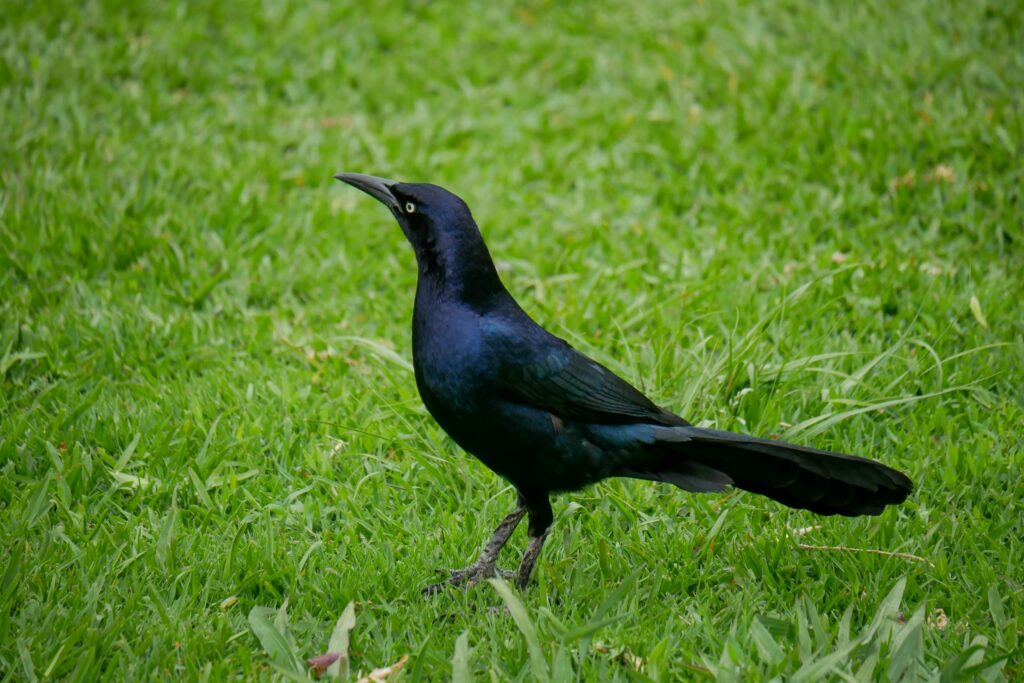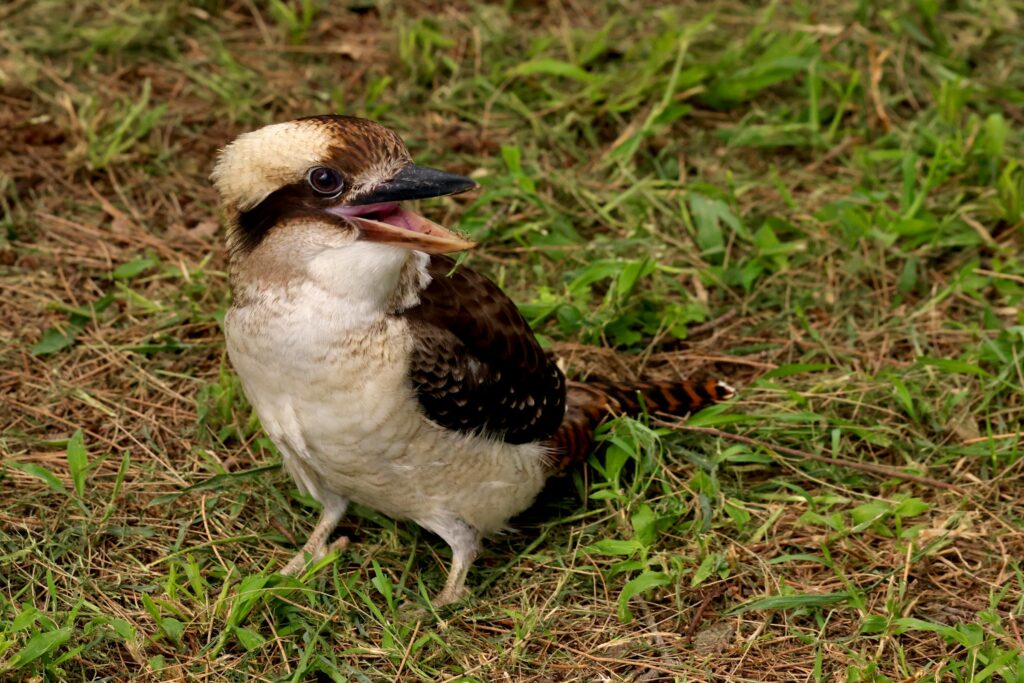
Imagine walking through a forest where every leaf, feather, and whisker is part of an invisible conversation. Birds are trading information across miles, bees are “talking” in patterns of electric fields, and whales are sending signals that seem to bend around the curvature of the Earth. Most of that communication sits far outside what our human senses can detect, like a radio station our brain just isn’t tuned to receive.
In the last few years, scientists have started using the word “quantum” more boldly when talking about life, not just in physics labs. It doesn’t mean animals are having mystical telepathic chats, but it does mean that subatomic effects like entanglement, tunneling, and quantum coherence might help explain some behaviors that used to look almost magical. The deeper we look, the more it feels like animals are tapping into layers of reality we barely understand yet.
Animal Senses: Living in a Different Reality

One of the most shocking things about animal communication is that many species quite literally live in a different sensory world. Dogs build their reality out of smells in a way we can’t truly imagine, detecting scent trails that are days old, stacked on top of each other like layers of invisible graffiti. Bats map the night sky through ultrasonic echoes, while elephants rumble to each other using sounds so low our ears never notice them, yet their feet and trunks can feel the vibrations through the ground.
If you and I walked through a field with a bee, a snake, and a whale (somehow), each of us would be experiencing almost completely different universes. Bees would be tracking polarized light and ultraviolet patterns on flowers; snakes would be “seeing” heat signatures from small mammals; whales, in their own habitat, would be following subtle pressure changes and infrasonic calls. When we talk about “beyond what we can hear or see,” we’re really talking about these parallel sensory realities that overlap in space but not in perception.
Quantum Biology: When Physics Slips Into the Wild

Quantum mechanics usually feels like it belongs in particle accelerators and sci-fi movies, not in bird wings and fish eyes. But over the last couple of decades, biologists and physicists have started to uncover hints that life might quietly exploit quantum effects to solve hard problems. In photosynthesis, for example, some experiments suggest that plants use quantum coherence to move energy more efficiently through their cells than classical physics alone would allow.
This idea naturally raises an eyebrow when we think about animal communication and navigation. If quantum physics can help plants handle energy, could animals be using similar tricks to process information? In the past, people would have dismissed that as too far-fetched or “woo,” but the tone is changing as actual lab data builds up. We’re still in the early days, and not every claim survives careful testing, yet the simple fact that quantum biology is a serious research field now should make us rethink how limited our old assumptions may have been.
Bird Navigation and the Quantum Compass

Uploaded by Snowmanradio, CC BY 2.0)
Migratory birds might be one of the clearest real-world examples of quantum weirdness sneaking into animal behavior. Many species manage to navigate thousands of kilometers across oceans and continents with a precision that outstrips what you’d expect from simple instinct or landmarks. A leading theory is that they sense Earth’s magnetic field using a quantum process in their eyes, involving special light-sensitive proteins called cryptochromes.
The idea is that when light hits these molecules, it creates pairs of electrons whose spins become linked, staying in a delicate quantum state long enough to be influenced by Earth’s weak magnetic field. That field would subtly alter the chemical reactions in the bird’s eye, possibly creating a sort of “magnetic pattern” overlaying its visual world. In other words, a bird might literally see a kind of ghostly compass baked into its vision, guided by quantum entanglement-like effects. If that’s true, then part of the message a bird sends when it calls from the sky is actually informed by a signal that starts at the subatomic level.
Whales, Infrasound, and the Invisible Ocean Network

Whales communicate using low-frequency sounds that travel enormous distances through water, sometimes across entire ocean basins. These infrasonic calls are below the range of human hearing, but the ocean carries them like a giant waveguide, refracting and bending the sound in ways that can feel almost uncanny. It’s easy to romanticize this as something mystical, but even sticking to straight physics, the level of coordination whales show can be hard to wrap your head around.
Some researchers have speculated whether tiny quantum-level effects might play a supporting role in how whales perceive these long-range signals, such as in how their inner ear structures convert mechanical vibrations into electrical signals with remarkable sensitivity. While most of whale communication can probably be explained without invoking quantum mechanics directly, the sheer scale and fidelity of their acoustic “internet” hints at biological systems pushed very close to physical limits. Their social lives, hunting strategies, and even cultural traditions ride on ripples we can’t hear, threading through an underwater soundscape that feels more like a living network than empty space.
Electric Fields, Magnetism, and Silent Conversations
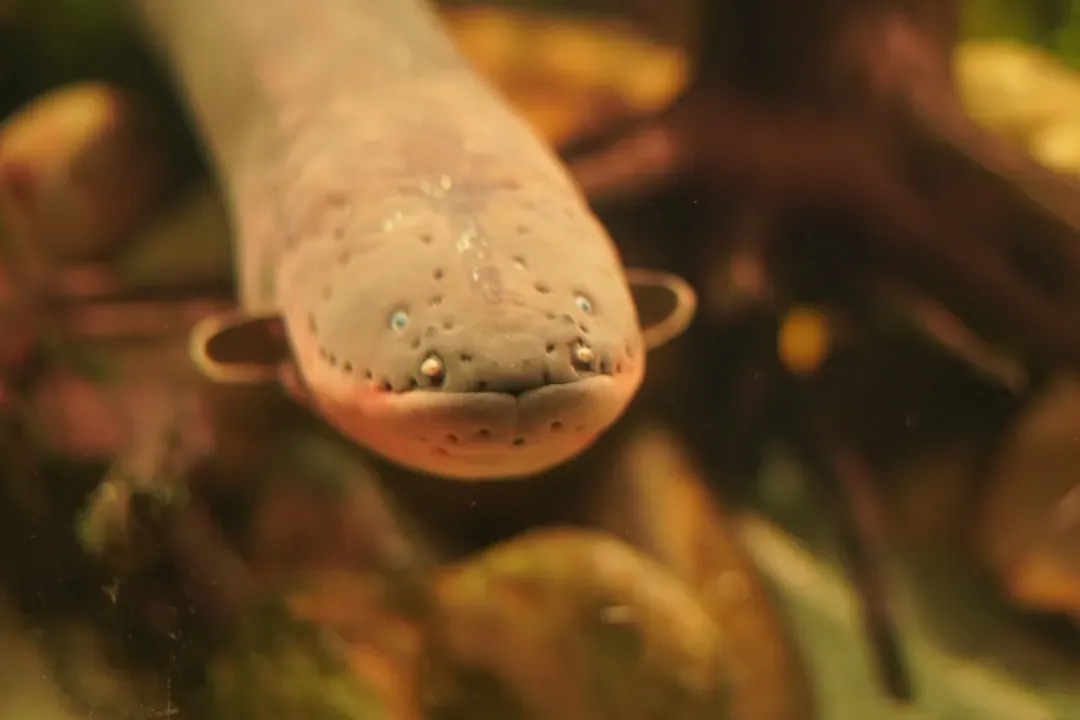
Some animals communicate using electric and magnetic fields that we just walk through blindly. Sharks, for instance, can detect tiny electrical signals given off by the muscles and nerves of prey, using special organs called ampullae of Lorenzini. Weakly electric fish generate small electric fields around their bodies and “talk” by modulating those fields, sending social signals and navigation cues through a medium that feels almost supernatural from a human point of view.
These electric and magnetic senses demand incredible sensitivity, to the point where they’re brushing against the fundamental noise limits of physics. That’s one reason quantum ideas keep drifting into the conversation: at such tiny scales, electrons and ions don’t always behave like neat, classical particles. When fish adjust their electric organ discharges to avoid jamming each other’s signals, or when migrating species appear to detect faint geomagnetic changes, you get the sense that these animals are tapping into a nearly invisible infrastructure we barely have the language to describe.
Are Animals Using Quantum Effects to “Know” More?

This is where things get controversial, and honestly, a bit thrilling. Some scientists and philosophers have wondered whether quantum processes might help animals pull off feats that look almost like intuition or premonition. Think of phenomena like birds changing behavior before major storms, or certain animals appearing to detect earthquakes before human instruments do. Most of these can probably be explained through heightened sensitivity to subtle environmental cues, but you can feel why people start asking whether quantum-level sensing is involved.
The more grounded version of this idea is that quantum effects could, in principle, let biological systems detect patterns or signals that would otherwise be buried in noise. That doesn’t mean telepathy or anything mystical, just that nature may use every physical trick available when survival is on the line. Personally, I’m skeptical of bold, sweeping claims, but I find it hard not to be fascinated by the hints. The line between “ordinary” biology and quantum phenomena may not be as sharp as textbooks made it seem when many of us were in school.
The Ethics of Listening In: Should We Decode Everything?

As our tools get better, we’re starting to pick up more of these hidden conversations, from AI models decoding whale calls to sensors that map the electric “chatter” of reefs and rivers. There’s an excitement that comes with that, but also a quiet unease. If animals are communicating using channels we’ve only just learned to detect, do we have the right to record, replay, and even mimic those signals on a massive scale? You can imagine ships blasting synthetic whale-like calls, or devices spoofing electric signals on coral reefs, in ways that could seriously scramble natural communication.
There’s also a deeper question: does understanding every signal strip away some of the mystery that keeps us humble? For most of human history, animals were seen either as resources or symbols, not as beings embedded in intricate information networks. Now that we’re catching faint glimpses of how rich those networks really are, maybe the respectful move is to admit we’re the clumsy newcomers. Just because we can interfere with those hidden channels doesn’t automatically mean we should.
Conclusion: Listening Beyond Our Senses

When you zoom out, the quantum realm of animal communication isn’t really about magic powers; it’s about how life pushes up against the edges of physical possibility. Birds may be reading magnetic whispers with quantum-tuned vision, whales may be weaving their societies across oceans with infrasound, and electric fish may be holding quiet conversations in fields of charge and current. Most of it passes right through us, undetected, like radio waves washing over a stone.
To me, the most humbling realization is that humans are not the default setting for perception or communication. We’re just one more animal, tuned to a narrow band of reality, trying to reverse-engineer a far larger conversation already in progress. Next time you step outside and it seems quiet, it might be worth remembering that it’s only quiet to you. How much of that hidden dialogue do you think we’ll truly learn to hear?