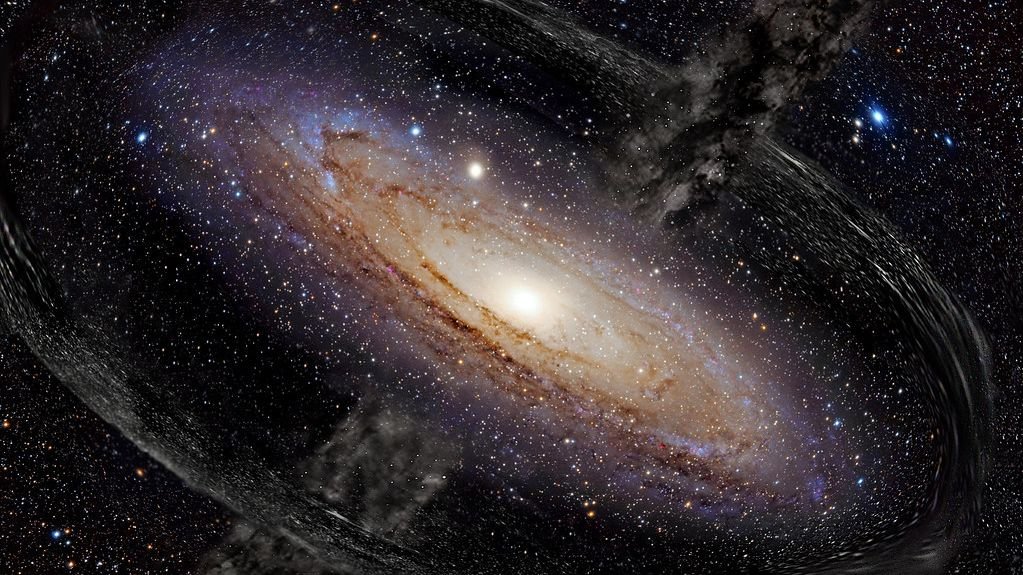

Look up at the night sky, and you’re seeing a lie of omission. The stars, galaxies, and glowing nebulae feel like the main show, but they’re not. All that glittering stuff is just the visible frosting on a cosmic cake that’s mostly invisible. The universe, as far as we can tell, is dominated by something we can’t see, can’t touch, and haven’t directly detected: dark matter.
This isn’t just a minor correction to our understanding of space; it’s a full-blown mystery sitting at the center of modern physics and cosmology. Dark matter quietly sculpts galaxies, steers cosmic evolution, and holds together structures across billions of light-years, yet we still don’t know what it actually is. The deeper scientists dig, the stranger and more fascinating the story becomes.
The Shocking Discovery That the Universe Is Mostly Invisible
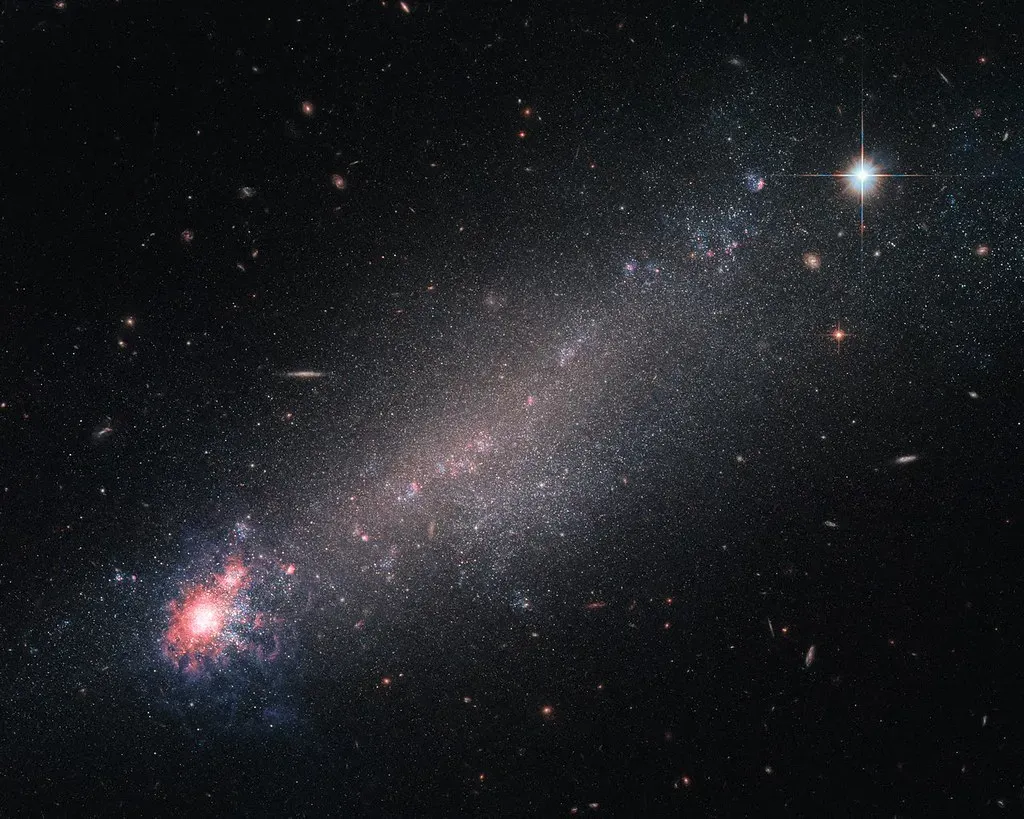
It’s a bit unsettling to realize that for most of human history, we’ve been completely wrong about what the universe is made of. For centuries, people assumed that what we can see with our eyes – or later with telescopes – is basically what exists. Then, in the twentieth century, astronomers began to notice that galaxies were not behaving the way they should if only visible matter existed. Stars on the outer edges of spiral galaxies were orbiting far too fast, as if some hidden mass was pulling them in.
When scientists crunched the numbers, they found that the visible matter – stars, gas, dust – couldn’t account for the strong gravitational pull required to keep galaxies from flying apart. It was like watching leaves orbit around an invisible whirlpool. To make the math work, astronomers had to accept a shocking idea: there must be a lot more matter out there that we can’t see. This unseen material was given a deceptively simple name: dark matter.
What Dark Matter Is (And What It Definitely Is Not)
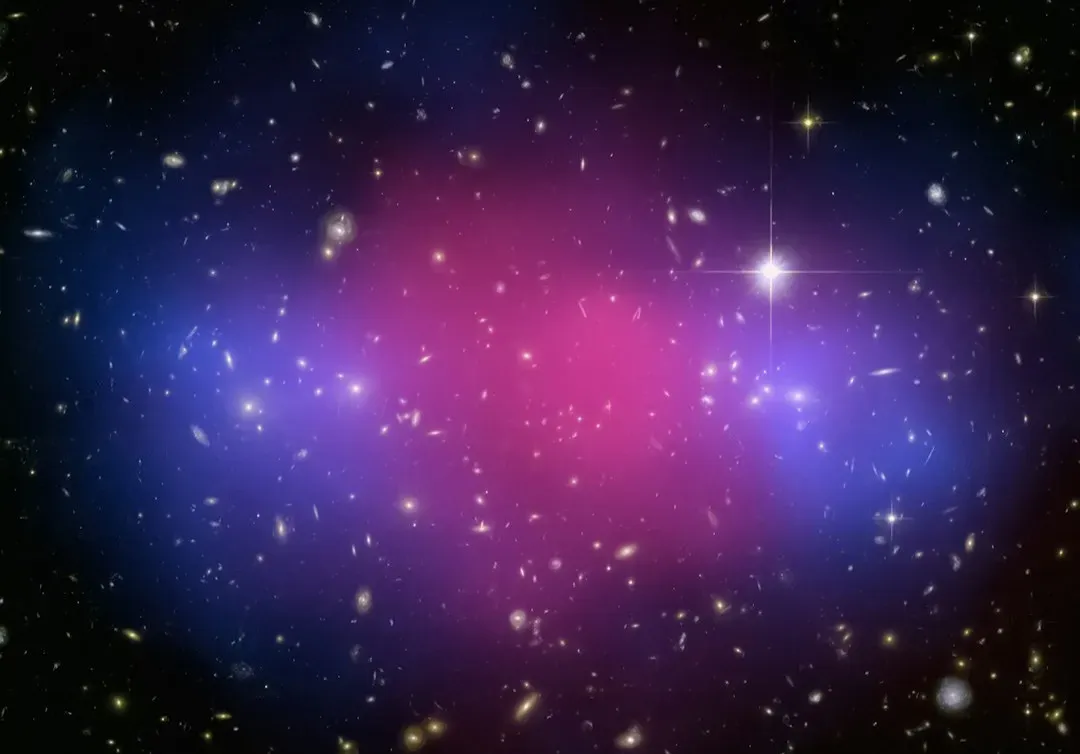
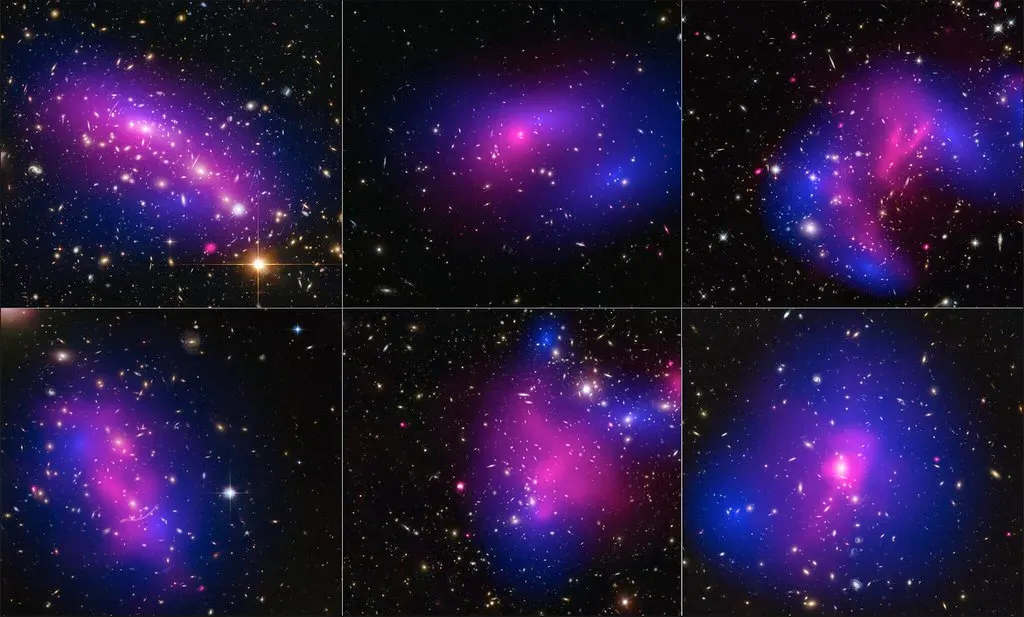
Despite the name, dark matter isn’t just normal matter hiding in the shadows. It’s not clouds of cold gas we haven’t detected yet, and it’s not just a bunch of black holes quietly floating around. Observations of how light bends around massive clusters of galaxies suggest that whatever dark matter is, it’s spread out in vast, invisible halos and doesn’t interact with light at all. It doesn’t glow, reflect, or absorb light in any noticeable way.
Dark matter also doesn’t behave like ordinary matter when it comes to collisions. Galaxies can smash through each other, and the dark matter seems to glide right along, barely interacting with itself, while the normal gas gets slowed and heated. That strange, ghost-like behavior rules out many simple explanations. At this point, the leading idea is that dark matter is made of some type of new particle that barely interacts with ordinary matter, except through gravity.
How We Know Dark Matter Is Really There (Even If We Can’t See It)
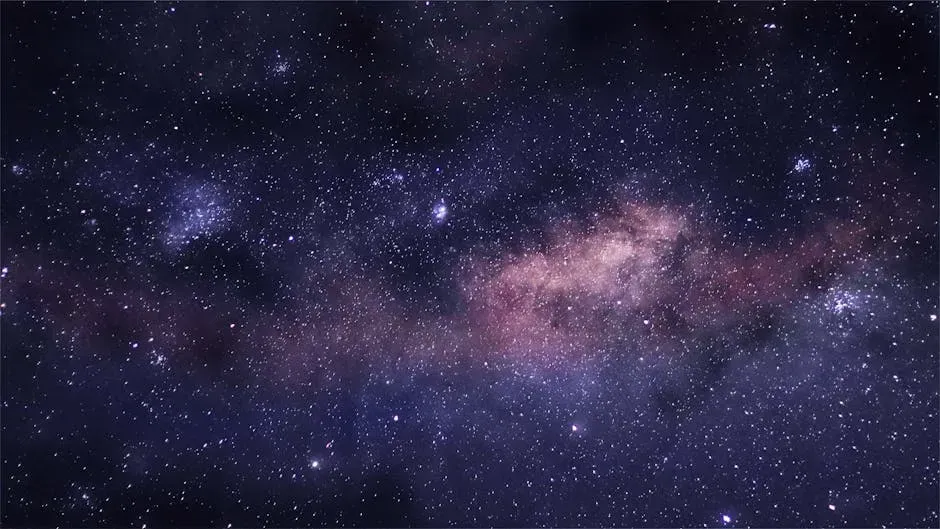
It might sound suspicious to believe so strongly in something we’ve never directly detected, but the evidence for dark matter shows up in multiple, independent ways. One of the clearest signs comes from the rotation curves of galaxies: when you measure how fast stars orbit at different distances from the center, the speeds stay high instead of dropping off, as they would if only visible matter were present. It’s like spinning a merry-go-round and finding that the outer horses are moving just as fast as the inner ones, which makes no sense unless there’s extra hidden weight.
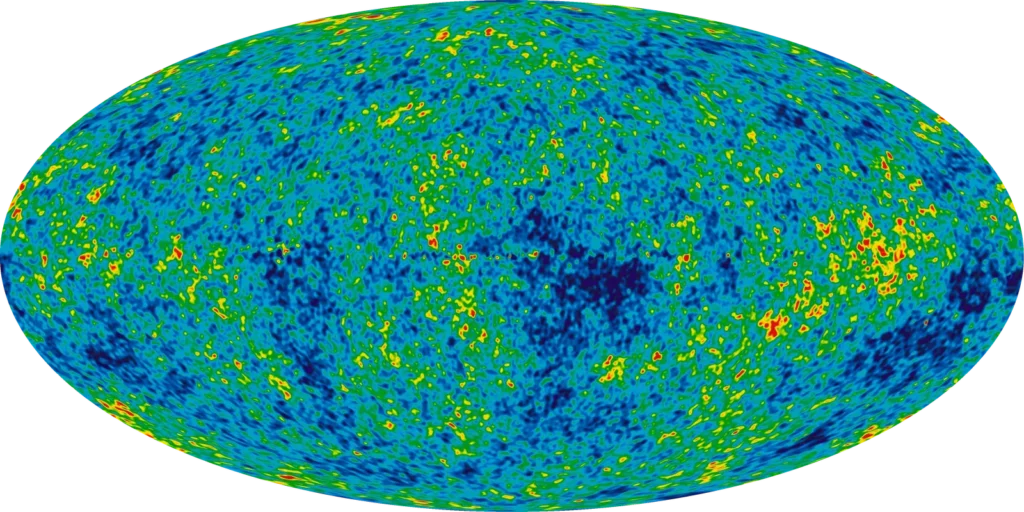
Another powerful clue comes from gravitational lensing, where the gravity of a massive object bends light passing near it. When astronomers map how light from distant galaxies gets distorted as it passes through galaxy clusters, they find far more mass than the visible matter can explain. On even larger scales, the pattern of tiny temperature variations in the cosmic microwave background – the faint afterglow of the Big Bang – also points to a universe where dark matter plays a major role in shaping structure. These different lines of evidence paint a consistent picture: dark matter is woven into the fabric of the cosmos.
Dark Matter’s Invisible Grip on Galaxies and Cosmic Structure
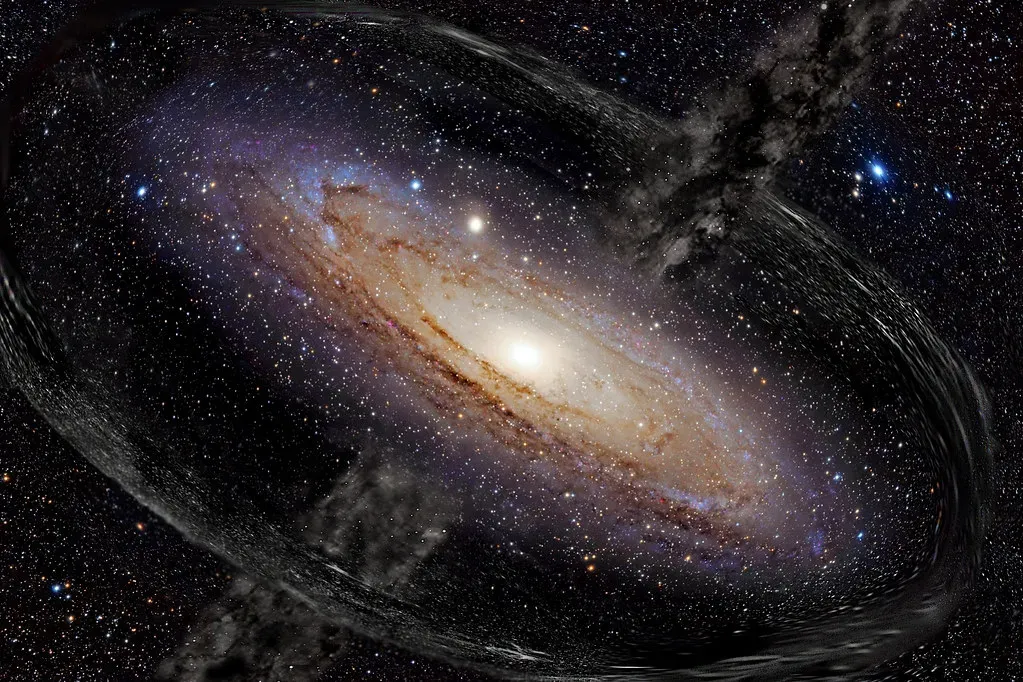
Without dark matter, our night sky would be almost unrecognizable. According to current simulations, dark matter began clumping together in the early universe long before normal matter could. These invisible clumps, or halos, acted like scaffolding, pulling in gas that eventually cooled and formed stars and galaxies. In a way, dark matter is the unseen architect of the cosmic web, the vast network of filaments and clusters that stretches across the universe.
When you see beautiful images of spiral galaxies from space telescopes, you’re really just looking at the thin, luminous disk at the center of a much bigger, invisible structure. The galaxy is embedded in a giant dark matter halo that extends well beyond the visible stars. That halo keeps the galaxy stable, shapes its rotation, and even influences how satellite galaxies form and move. The drama of galactic collisions, mergers, and long-term evolution is all choreographed, behind the scenes, by dark matter’s gravity.
The Leading Candidates: WIMPs, Axions, and Other Strange Ideas
If dark matter is made of particles, what kind of particles could they be? One widely discussed candidate has been WIMPs, short for weakly interacting massive particles. These hypothetical particles would have mass and interact through the weak nuclear force and gravity, but almost never with light or regular matter. For a long time, WIMPs were considered especially attractive because they fit naturally into some proposed extensions of known physics and would produce just about the right amount of dark matter in the early universe.
Another fascinating candidate is the axion, an ultra-light particle originally proposed to solve a different problem in particle physics but later embraced as a potential dark matter component. Some theories even suggest that dark matter might be something more exotic, like an entire hidden sector of particles that barely communicate with our own, or a smooth “field” pervading space rather than individual particles. The fact that we still have multiple serious contenders shows how open the mystery remains and how radical the eventual answer might be.
How Scientists Are Hunting for Dark Matter Right Now
Around the world, researchers are running a kind of cosmic detective story, using different strategies to corner dark matter. Deep underground, in old mines or beneath mountains, enormous detectors sit in ultra-clean, shielded rooms, waiting for the faintest possible bump from a passing dark matter particle. These experiments use ultra-pure crystals, liquid xenon, or other sensitive materials in the hope that, once in a very long while, a dark matter particle will collide with an atomic nucleus and leave a tiny, detectable signal.
At the same time, particle accelerators like those at major physics laboratories smash protons together at extreme energies, trying to produce dark matter particles directly. If they appear, they’d be inferred from missing energy and momentum in the debris of these collisions. Other searches scan the sky for unusual signals, like excess gamma rays or radio waves, that might be produced when dark matter particles interact or decay. It feels a bit like trying to find an invisible animal in a dark forest by listening for footsteps and broken twigs.
What If We’re Wrong? Alternative Theories and Bold Challenges
There’s always a chance that the entire dark matter concept is a sign we’re missing something deeper about gravity itself. Some physicists argue that instead of filling the universe with invisible matter, we should rethink how gravity works on large scales. Modified gravity theories, for example, try to tweak the laws we use to describe how objects attract each other, so galaxy rotation and other effects can be explained without extra mass. It’s a bold move, because it means questioning equations that have worked extremely well in most situations.
So far, dark matter does a better job of explaining the full range of observations, especially on the largest scales and in galaxy clusters. But the fact that we still haven’t directly detected dark matter keeps those alternative ideas alive. In a way, this tension is healthy. It forces scientists to test every assumption and push experiments and observations to the limit. Whether dark matter turns out to be a new kind of particle or evidence that we’ve misunderstood gravity, the outcome is going to reshape our understanding of reality.
Why Dark Matter Matters for Our Place in the Cosmos
It might be tempting to think of dark matter as some distant, abstract topic that only concerns astrophysicists, but it actually strikes at the heart of why the universe looks the way it does – and why we’re even here. The way dark matter clumped and pulled normal matter together after the Big Bang played a crucial role in forming galaxies, stars, and eventually planets where life could evolve. In that sense, every atom in your body owes its current home, at least partly, to the invisible skeleton of dark matter that shaped cosmic structure.
There’s also something deeply humbling about realizing that most of the matter in the universe is still a complete mystery. We’ve built smartphones, explored Mars, mapped DNA, and yet we’re in the dark – literally – about the bulk of the cosmos. That mix of ignorance and curiosity is strangely beautiful. It reminds us that even in 2026, with all our technology and knowledge, we’re still just beginning to understand the universe we live in. And it leaves an open question hanging over all of us: what else is out there that we haven’t even thought to look for yet?