
Imagine you’re an ant crawling along a garden hose. From far away, that hose looks like a simple, one-dimensional line. Get closer, though, and you’ll realize the hose actually curves around on itself in a second dimension you simply couldn’t see before. Now stretch that analogy to the entire fabric of reality, and you start to glimpse one of the most mind-bending questions in all of modern science: could the universe we live in be hiding entire dimensions that are completely invisible to us?
This isn’t science fiction. Some of the world’s most brilliant physicists have spent decades wrestling with this very idea, building elaborate mathematical frameworks that only work if extra dimensions actually exist. What they’ve found is simultaneously thrilling and deeply humbling. So let’s dive in, because the answer to this question could change everything you thought you knew about space, matter, and the nature of existence itself.
How the Idea of Extra Dimensions Actually Got Started

It all began with Albert Einstein’s general theory of relativity in 1915, which reshaped our understanding of space-time as a four-dimensional fabric warped by matter. That was already radical enough for most people to absorb. Yet almost immediately, other thinkers began asking whether four dimensions were really the end of the story.
In 1926, Swedish physicist Oskar Klein suggested that an extra dimension could be “compactified,” meaning curled up on itself at a scale so tiny it’s completely unobservable. This Kaluza-Klein theory laid the groundwork for every multidimensional model that followed. Think of it like rolling a piece of paper into a tube so tightly that from a distance it still looks flat. The hidden curve is real, but you’d never know it without getting impossibly close.
The concept of dimensions beyond our familiar four has captivated physicists, mathematicians, and dreamers alike for over a century. What began as mathematical curiosities evolved into sophisticated theories sitting at the very frontier of our understanding of the universe. These higher dimensions might hold the keys to reconciling quantum mechanics with gravity, explaining the weakness of gravity compared to other forces, and potentially offering pathways for revolutionary technologies.
String Theory and the Demand for More Dimensions
String theories actually require extra dimensions of spacetime for their mathematical consistency. In bosonic string theory, spacetime is 26-dimensional, while in superstring theory it is 10-dimensional, and in M-theory it is 11-dimensional. Let that sink in for a moment. These aren’t wild guesses. These numbers emerge as strict mathematical requirements from some of the most rigorous physics ever written down.
Much as different vibrational patterns of a violin string play different musical notes, the different vibrations of the tiny strands in string theory yield different particles of nature. According to the theory, the strings are so small that they appear to be points, but in reality they have length; the mass and charge of a particle is determined by how a string vibrates. For example, string theory posits that an electron is a string undergoing one particular vibrational pattern, while a quark is a string undergoing a different one. It’s honestly one of the most poetic ideas in all of physics, and I think that’s part of why it refuses to go away.
Physicist Edward Witten proposed M-theory, a unifying framework that works in 11 dimensions. One of the most fascinating parts of string theory lies in how it “hides” those extra dimensions. To reconcile theory with our observable universe, those dimensions must be compactified into incredibly precise shapes, known as Calabi-Yau manifolds, intricate six-dimensional spaces developed by mathematicians Eugenio Calabi and Shing-Tung Yau.
Why You Can’t See These Hidden Dimensions
According to string theory, the three dimensions of common experience are large and manifest, while the other six are crumpled so small that they have so far evaded detection. It’s not that these dimensions are invisible because they’re ghostly or otherworldly. They’re just unbelievably, almost incomprehensibly small. Here’s the thing: the scale involved makes even an atom look enormous by comparison.
If the size of the compact space is of order the string scale, we wouldn’t be able to detect the presence of these extra dimensions directly – they’re just too small. The end result is that we get back to our familiar three-plus-one-dimensional world, but there is a tiny “ball” of six-dimensional space associated with every single point in our four-dimensional universe. Every point in the room you’re sitting in right now is theoretically threaded through with a tightly wound ball of hidden geometry. That’s not a metaphor. That’s what the math actually suggests.
Strings are so small that they vibrate within the tiny extra dimensions. Studies showed that, much as the shape and size of a French horn affect the vibrational patterns of airstreams coursing through it, the exact shape and size of the extra dimensions would affect how strings vibrate. Since the strings’ vibrations determine quantities such as particle masses and charges, predictivity requires knowledge of the geometric form of the extra dimensions.
Gravity’s Strange Weakness and What It Might Reveal
Let’s be real: gravity feels powerful when you drop your phone on a tile floor. Yet compared to the other fundamental forces of nature, gravity is extraordinarily, almost embarrassingly weak. A simple fridge magnet can fight Earth’s entire gravitational pull and win. This fact has puzzled physicists for generations, and hidden dimensions might finally explain it.
In 1998, the ADD model – named after physicists Arkani-Hamed, Dimopoulos, and Dvali – proposed that gravity might be “leaking” into large extra dimensions. This could explain why gravity seems so much weaker than other fundamental forces: it’s being diluted across additional dimensions we can’t access. Imagine pouring the same amount of water into progressively larger bowls. The water level drops even though the total amount of water hasn’t changed. Gravity could be spreading itself across hidden spatial dimensions, leaving only a trickle for our three-dimensional world to experience.
A new theoretical study by Professor Dieter Lüst of Ludwig-Maximilians-Universität München and collaborators proposes that space contains two additional dimensions, each about a micron in size. The researchers suggest that these hidden dimensions could help explain why the fundamental forces and energy scales in the universe differ so dramatically, and why the vacuum energy of the cosmos is so extraordinarily small.
Could Hidden Dimensions Explain Dark Matter and Dark Energy?
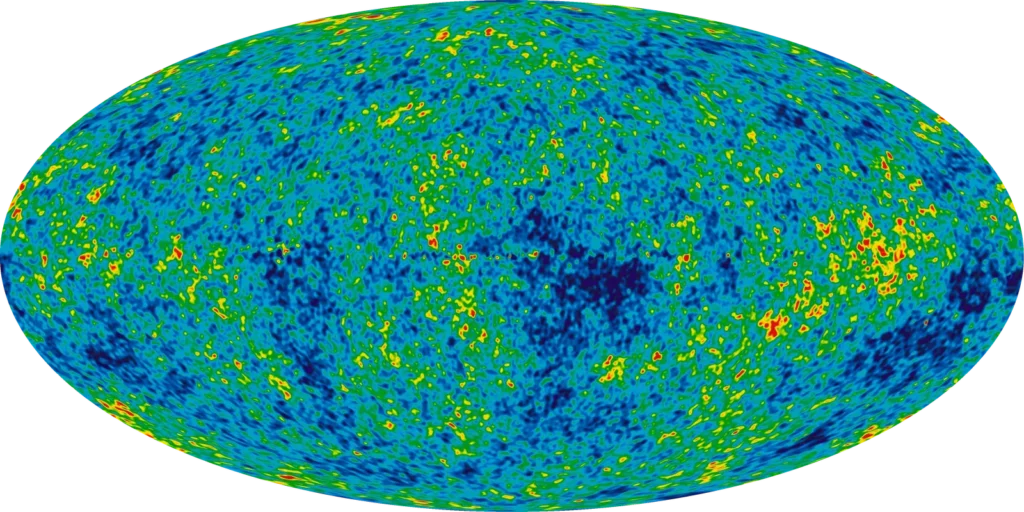
Here’s where things get truly exciting. Roughly speaking, the vast majority of the universe is made up of things we cannot directly see or detect: dark matter and dark energy. Scientists know they exist because of the gravitational effects they produce. Yet their nature remains one of the biggest open questions in all of science. Extra dimensions might be the missing piece of this puzzle.
Dark matter might consist of particles that exist in higher dimensions, interacting with our 3D world only through gravity. Picture them as shadows – present, but untouchable. It’s a wild thought, but it’s grounded in real theoretical physics. Some theorists also suggest dark energy could be a higher-dimensional force spilling into our universe, stretching space and accelerating cosmic expansion. If you’ve ever wondered why the universe is expanding faster and faster rather than slowing down due to gravity, this could be your answer.
Beyond the weakness of gravity, extra dimensions could open a new route to understanding dark matter, the invisible substance that outweighs normal matter in the universe by more than five to one. Extra dimensions may offer the key to understanding these elusive components, suggesting that what we perceive as “missing” matter and energy could be the gravitational fingerprints of phenomena unfolding in dimensions beyond our perception. Honestly, that idea alone should keep you up at night in the best possible way.
How Scientists Are Actually Trying to Find Them
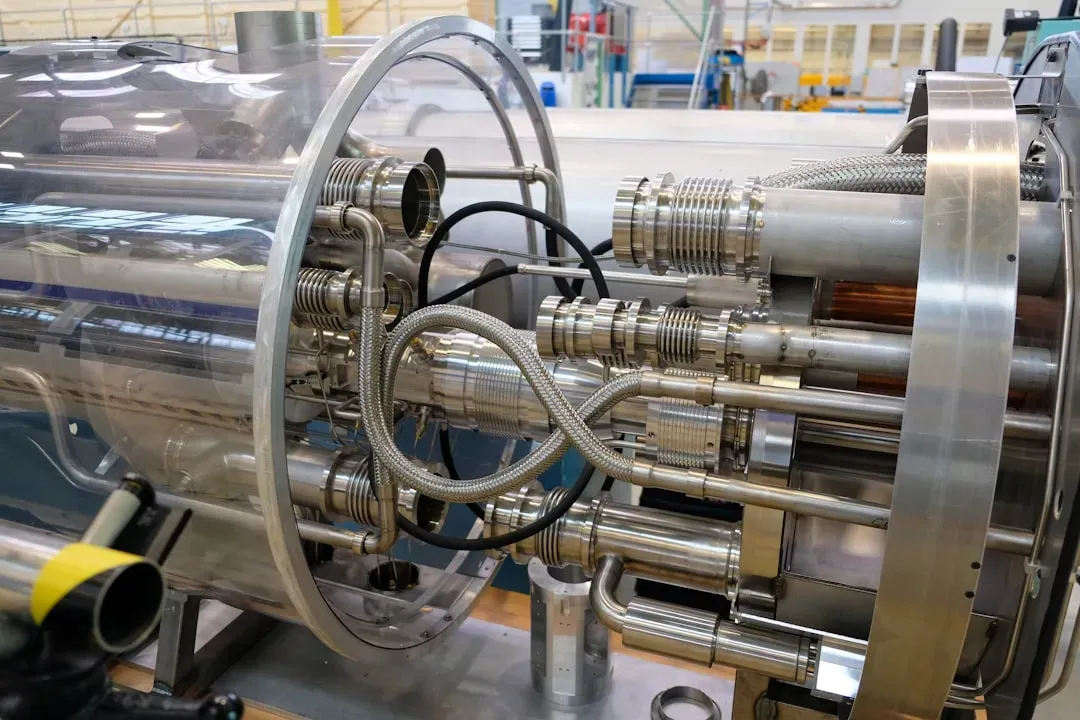
You might be wondering: if these dimensions are so tiny and invisible, how on earth could anyone ever prove they exist? It turns out scientists have come up with some surprisingly creative approaches. Theories that postulate extra dimensions predict that, like an atom having a low energy ground state and then more energetic states, there must be heavier versions of standard particles recurring at higher and higher energies as they navigate smaller dimensions. These have been called Kaluza-Klein recurrences. If the CMS detector at CERN were to find a Z-like particle at 2 TeV, for instance, this might suggest the presence of extra dimensions.
As gravity is thought to be a force able to probe extra dimensions, another way to find evidence is through the disappearance of gravitons, the hypothesized carrier of gravity, into these dimensions. Another spectacular yet speculative way of revealing extra dimensions would be through the production of microscopic quantum black holes, which, if there are extra dimensions, might be produced at the LHC. Gravitational waves might also behave differently if extra dimensions are real, offering another possible way to detect their influence.
If physicists don’t find evidence of extra dimensions using colliders such as the LHC, they’ll come up with something else, such as experiments using cosmic rays, which have much higher energies and may have the capacity to discover these extra dimensions. The search, in other words, is very much alive and ongoing.
The Latest Breakthroughs Pushing the Boundaries Even Further
Science never sits still, and in just the last year or two, some genuinely remarkable findings have emerged. A study published in Nuclear Physics B and led by Richard Pincak examines the possibility that the fundamental forces of nature and the characteristics of particles arise from the geometry of hidden extra dimensions. The researchers propose that the universe may include unseen dimensions shaped into complex seven-dimensional forms called G2-manifolds. These structures were typically viewed as fixed, but Pincak and his team treat them as evolving systems that change over time through a process known as the G2-Ricci flow.
Their research proposes that the universe includes additional dimensions that are not directly observable. These dimensions may be compact and folded into complex seven-dimensional shapes called G2-manifolds. Even more intriguingly, the team speculates about the existence of a previously unknown particle linked to torsion, which they call the “Torstone,” which, if real, could potentially be detected in future experiments. A brand-new particle hiding in a hidden dimension. I know it sounds crazy, but this is where the physics is actually pointing right now.
Researchers at the University of the Witwatersrand also recently reported a major advance: using only one property of light, known as orbital angular momentum, to make a topology. Because orbital angular momentum is high-dimensional, so too is the topology, allowing the team to report the highest topologies ever observed. The hidden complexity of dimensions is showing up in quantum light itself, right here in our own laboratories.
Conclusion
The question of whether hidden dimensions exist beyond our three-dimensional reality is no longer purely the domain of science fiction or philosophical musing. It sits at the very cutting edge of experimental and theoretical physics, backed by serious mathematics and increasingly sophisticated attempts at detection. The existence of extra dimensions remains unconfirmed, and the constraints on their properties grow tighter with each new experiment. Yet the persistence of these ideas in our most sophisticated physical theories suggests they merit continued exploration, both theoretical and experimental.
We once believed the Earth was flat. We once believed the atom was the smallest thing in existence. Every time humanity thought it had reached the edge of understanding, reality turned out to be far stranger and more magnificent than anyone had imagined. Higher dimensions remain a theoretical mystery, but they are more than just science fiction. They offer potential explanations for fundamental physics puzzles, from the weakness of gravity to the nature of dark energy.
The universe you inhabit may be a thin slice of something vastly larger, richer, and more complex, folded in ways your mind can barely imagine. What do you think: are you ready to accept that everything you can see, touch, and measure might only be a fraction of what actually exists? Share your thoughts in the comments below.