
Everything you thought you knew about the universe might be slightly, or perhaps dramatically, wrong. That is not a dramatic overstatement – it is the honest takeaway from what physicists and astronomers have been discovering at a breathtaking pace over the last few years. The cosmos is stranger, richer, and far more puzzling than even our best textbooks currently suggest.
From the arrow of time running in two directions simultaneously to mysterious dark energy that might be quietly losing its grip on reality, science is in the middle of what can only be called a golden age of cosmic rethinking. If you have ever gazed at a night sky and wondered what it all means, you are going to want to read every word of what follows.
The Arrow of Time Might Not Point Just One Way
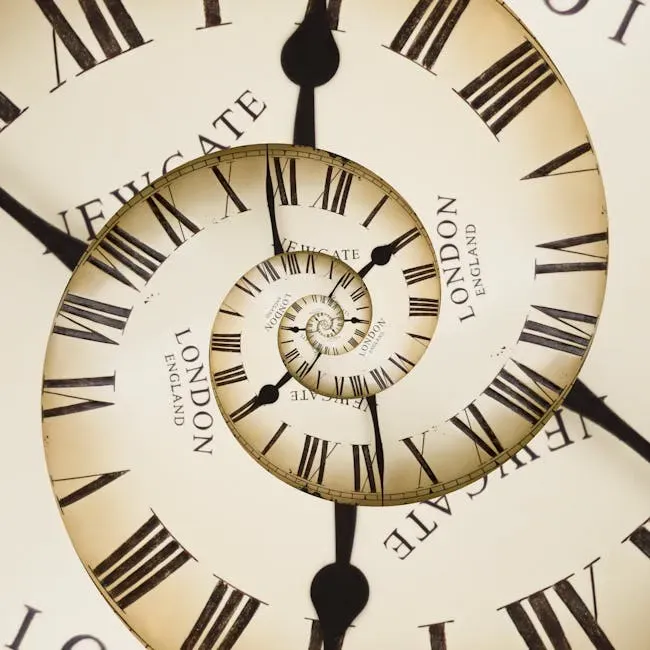
You have always experienced time as a one-way street, haven’t you? Yesterday happened, today is happening, and tomorrow hasn’t arrived yet. It feels so obvious that we rarely stop to question it. But here’s the thing – at the quantum level, that certainty is starting to crack.
Researchers from the University of Surrey have uncovered evidence that in the strange world of quantum physics, time could theoretically run both forward and backward. This is not science fiction. Researchers suggest that at the quantum level, the “arrow of time” may not be fixed, and their findings indicate time could theoretically flow both forwards and backwards, opening new avenues for understanding one of the universe’s deepest mysteries.
This groundbreaking discovery could have profound implications for various fields of physics, including quantum mechanics, cosmology, and thermodynamics. Think of it like a river that somehow manages to flow both upstream and downstream at the same time, depending on how closely you look at it. Bizarre? Absolutely. It opens new avenues for exploring one of the universe’s deepest mysteries and may reshape our understanding of reality itself.
The Fabric of Space-Time Gets a Quantum Makeover
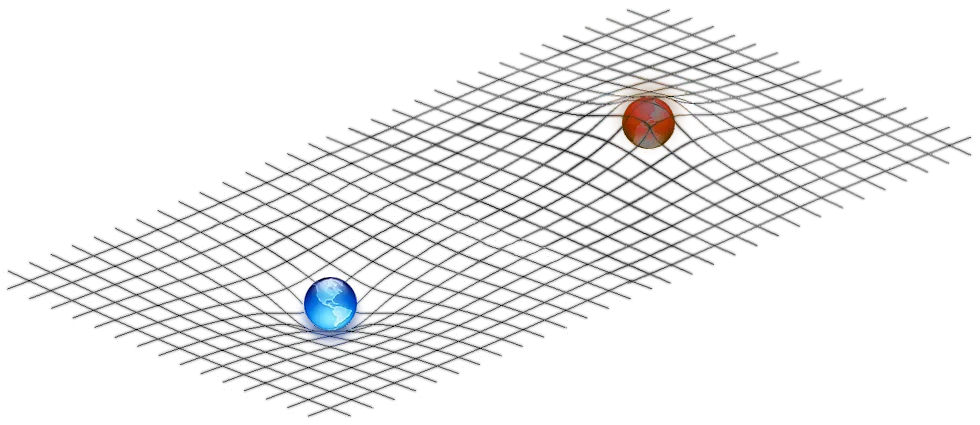
Few ideas in modern science have reshaped our understanding of reality more profoundly than space-time – the interwoven fabric of space and time at the heart of Albert Einstein’s theory of relativity. For over a century, that framework has held firm. Now, researchers are nudging it into quantum territory, and the results are surprising.
A novel quantization of the spacetime metric yields a “q-desic” equation, predicting that particle trajectories in a quantum gravitational field can deviate from classical geodesics. To put that plainly: even the paths that objects take through curved space might behave differently once you factor in the quantum fuzziness of space-time itself. While differences are negligible at small scales, significant deviations arise at cosmological distances, offering a potential observable to test quantum gravity theories. That is remarkable – the universe itself may be the testing ground.
Gravity and Quantum Physics Are Finally Starting to Talk to Each Other
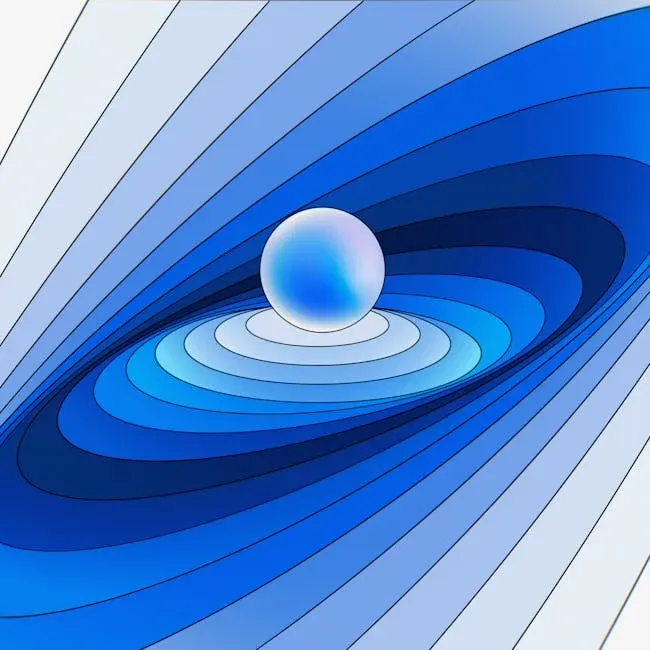
Honestly, the fact that quantum mechanics and general relativity have stubbornly refused to merge for over a hundred years is one of the most embarrassing open secrets in science. Without a unifying theory, physicists cannot reconcile our two most powerful frameworks. Quantum theory describes the world of the very small – tiny particles interacting in probabilistic ways – while general relativity describes the chunkier world of familiar objects and their gravitational interaction. They are descriptions of our universe from different perspectives, and both theories have been confirmed to extraordinary precision, yet they are incompatible with each other.
Researchers at Aalto University have developed a new quantum theory of gravity which describes gravity in a way that’s compatible with the standard model of particle physics, opening the door to an improved understanding of how the universe began. Meanwhile, scientists introduced the Alena Tensor, a mathematical object that may unify key areas of physics, including general relativity, quantum mechanics, and electrodynamics. Two separate research teams, two powerful approaches, both pointing toward the same impossible-sounding goal. We might be closer than ever.
Dark Energy May Be Losing Its Grip on the Universe
Here is a genuinely mind-bending situation. The universe is expanding, driven by a mysterious force called dark energy. Scientists assumed for decades that this force was a cosmological constant – steady, unchanging, and eternal. New data is making that assumption look shaky. Very shaky.
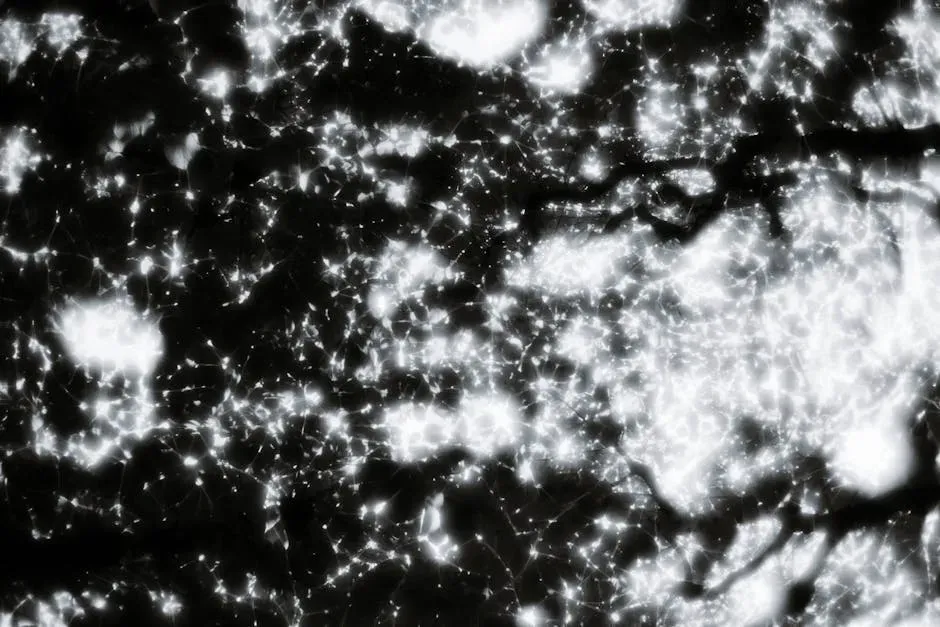
New results from the Dark Energy Spectroscopic Instrument (DESI) collaboration use the largest 3D map of our universe ever made to track dark energy’s influence over the past 11 billion years. Researchers see hints that dark energy, widely thought to be a “cosmological constant,” might be evolving over time in unexpected ways. The scale of that survey is hard to overstate – the new analysis uses data from the first three years of observations and includes nearly 15 million of the best measured galaxies and quasars. If dark energy continues weakening, the universe’s expansion could eventually stop or even collapse. That is quite a plot twist for something we considered settled science.
Black Holes in the Early Universe Are Breaking All the Rules
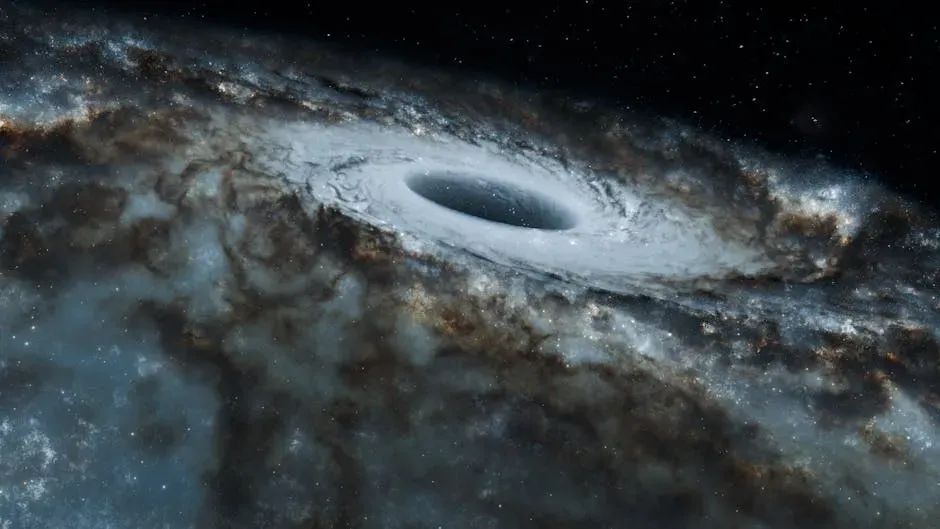
If you thought black holes were strange enough on their own, the James Webb Space Telescope has found some that are actively defying everything we thought we understood about how they form. Researchers using the NASA/ESA/CSA James Webb Space Telescope have confirmed an actively growing supermassive black hole within a galaxy just 570 million years after the Big Bang. That is astonishingly early in the universe’s 13.8 billion year history.
What makes this even more compelling is that the galaxy’s black hole is overmassive compared to its stellar mass. This suggests that black holes in the early universe may have grown much faster than the galaxies that host them. Think of it like finding an enormous skyscraper on a plot of land barely big enough for a cottage. Thanks to the extraordinary capabilities of the JWST, groundbreaking discoveries about early galaxies and supermassive black holes have been made, challenging the current galaxy formation models. The old rulebook? Scientists are drafting a new one.
Light Itself Is Revealing Hidden Dimensions of Space-Time
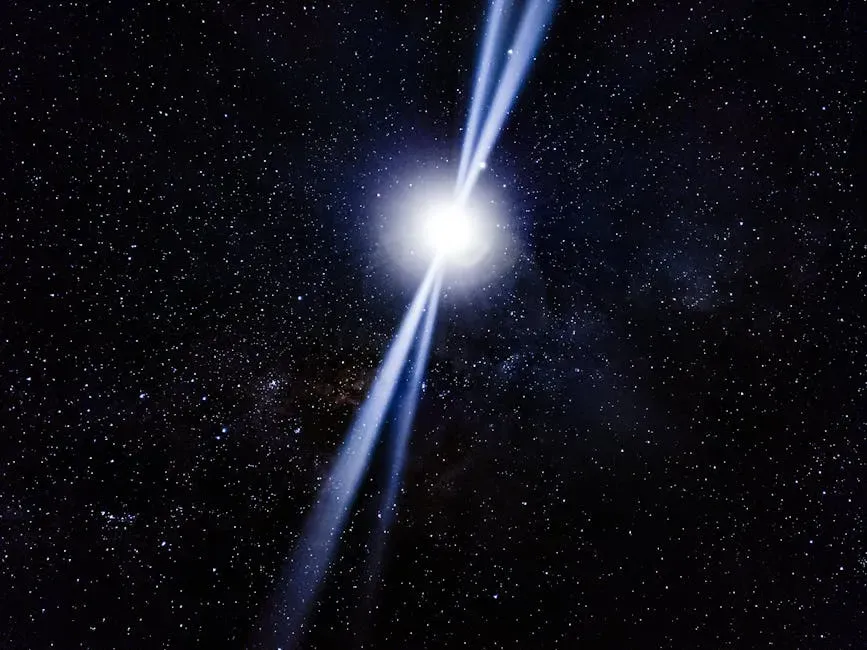
You might not expect a flash of light to rewrite physics, but that is exactly what researchers from the University of Rostock and University of Birmingham recently managed to stumble upon. By breaking a decades-old paradigm and rethinking the role that the dimension of time plays in physics, researchers discovered novel flashes of light that come from and go into nothingness – like magic at first glance but with deep mathematical roots that protect against all kinds of outside perturbations. That is the kind of discovery that makes physicists lose sleep in the best possible way.
Novel light flashes localized at singular space-time points have been observed, arising from topological properties linked to the time dimension. The time dimension, it turns out, is not just a passive backdrop against which things happen. It appears to be an active participant. Among 2025’s most surprising computational revelations was a new fundamental relationship between time and space, suggesting that science is steadily lifting the veil on a universe far more geometrically intricate than we previously imagined.
The “Naked” Black Hole That Rewrote Cosmic History
Let’s be real – finding a black hole is one thing. Finding a black hole with no surrounding galaxy, just sitting in the early universe completely alone, is a whole different level of strange. The James Webb Space Telescope has found a lonely black hole in the early universe that’s as heavy as 50 million suns – a major discovery that confounds theories of the young cosmos.
This new black hole, which is dubbed QSO1, clashes with the old, provisional account of the galaxy formation process, which did not start with black holes. Black holes were thought to have come along only after a galaxy’s stars gravitationally collapsed into black holes that then merged and grew. So the entire sequence of events that scientists assumed drove the formation of cosmic structure may need a serious rethink. The James Webb Space Telescope has spotted hundreds of strange black holes and galaxies in the early universe, revealing a chaotic first billion years of cosmic history. Chaotic, yes. Fascinating, without question.
A Theory of Everything Is Closer Than It Has Ever Been
For generations of physicists, a unified theory explaining all forces in nature has been the holy grail. It has sat tantalisingly out of reach, like a word on the tip of your tongue that you simply cannot bring forward. That frustration may be easing. At long last, a unified theory combining gravity with the other fundamental forces – electromagnetism and the strong and weak nuclear forces – is within reach. Bringing gravity into the fold has been the goal of generations of physicists, who have struggled to reconcile the incompatibility of two cornerstones of modern physics: quantum field theory and Einstein’s theory of gravity.
The Alena Tensor helps bridge the gap between curved and flat space-time concepts from general relativity and quantum mechanics, respectively. In simple terms, curved space-time describes the bending of space around massive objects, like planets or black holes, while flat space-time is the idealized, simplified version used in many quantum equations. It is a bit like finally finding the translation dictionary between two languages that were never supposed to overlap. The physics breakthroughs of 2024 and 2025 represent more than incremental progress – they signal a fundamental shift in our understanding of reality, and from the quantum realm to the cosmic scale, these discoveries are reshaping our worldview and opening unprecedented possibilities for human advancement.
Conclusion
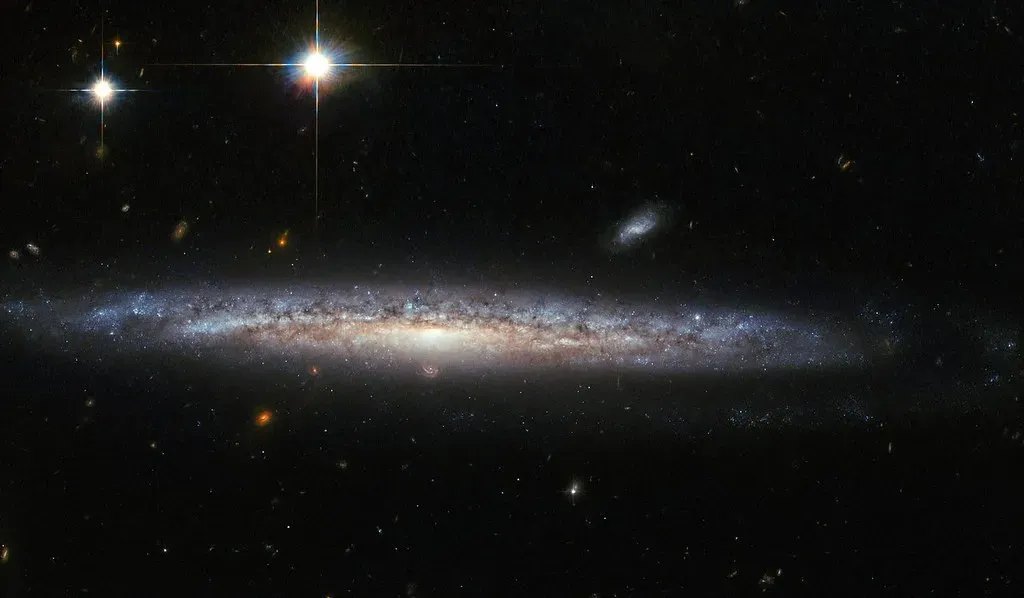
Science does not hand you certainty. It hands you better and better approximations of the truth, and right now, those approximations are changing faster than at almost any other point in human history. The universe you think you live in – with its fixed arrow of time, its constant dark energy, its orderly black holes forming tidily after galaxies – is quietly being replaced by something stranger and far more wonderful.
What is truly exciting is that you are alive to witness it. Every new JWST image, every DESI data release, every quantum experiment at a university lab somewhere in Europe or Asia is adding a piece to a puzzle that is bigger than any one generation of scientists. The picture forming is humbling and exhilarating at once. So keep watching the sky, keep asking questions, and never assume the textbook has the final word. What part of our cosmic understanding surprises you the most? Share your thoughts in the comments – the conversation is just getting started.