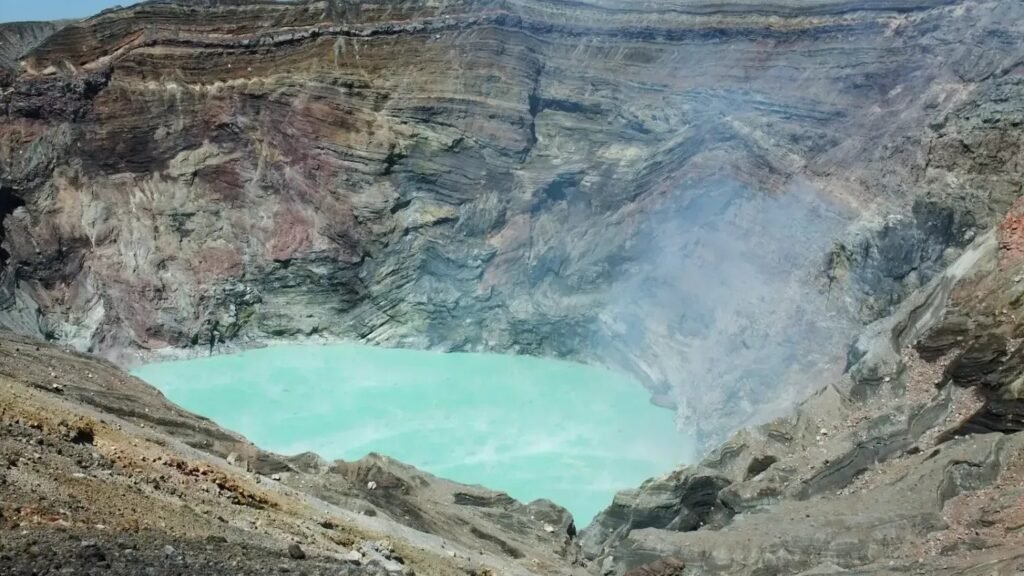
Somewhere beneath the lush, scenic landscape of southern Japan, something enormous is stirring. Deep underground, one of the planet’s most powerful volcanic systems is slowly, steadily filling back up with molten rock. It’s not breaking news in the dramatic, run-for-your-lives sense. It’s something far more unsettling – a slow, geological clock ticking away beneath millions of people.
What makes this story so fascinating is not just the science involved, but what it reveals about how little we truly understand about the timescales these systems operate on. Researchers are now piecing together a clearer picture of what’s happening beneath the Aso caldera in Japan, and honestly, the findings are both impressive and a little humbling. Let’s dive in.
What Exactly Is the Aso Caldera?
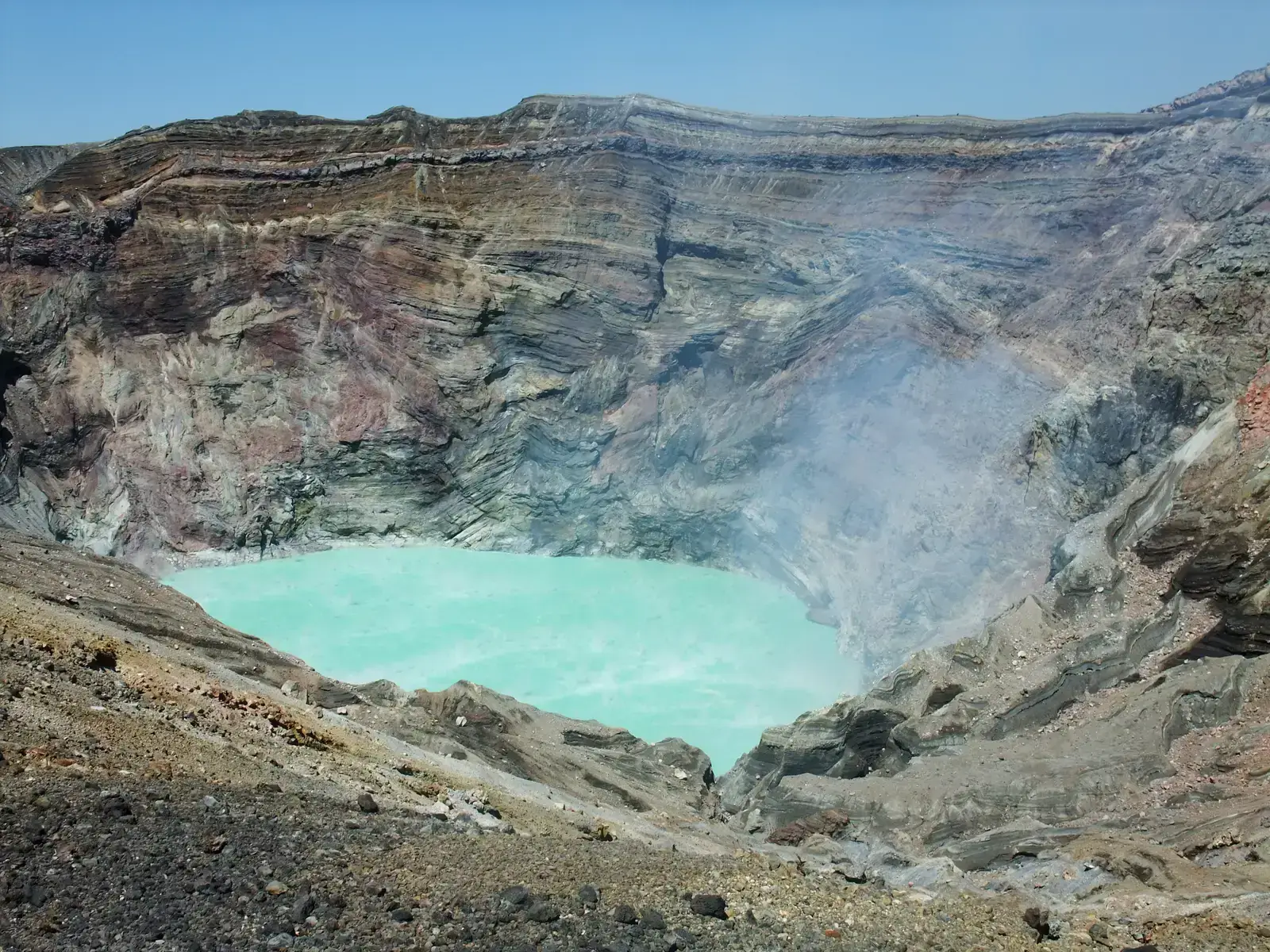
Let’s be real – most people have never heard of the Aso caldera, and that’s a shame, because it’s one of the largest volcanic calderas on Earth. Located in Kumamoto Prefecture on the island of Kyushu, it spans roughly 25 kilometers from east to west and about 18 kilometers from north to south. That’s not a crater. That’s basically a geographic region.
The caldera formed through a series of catastrophic eruptions over the past 300,000 years or so, each one powerful enough to reshape the surrounding landscape dramatically. Today, more than 50,000 people actually live inside the caldera itself, which puts this story in a very different category from your average geology update. Mount Aso remains one of Japan’s most active volcanoes, with smaller eruptions happening fairly regularly even in recent decades.
The Discovery: Magma Is Moving Back In
Here’s the thing that got scientists genuinely excited – and a little concerned. New research has confirmed that the magma reservoir beneath the Aso caldera is refilling. Using a combination of GPS ground deformation data and seismic analysis, researchers detected subtle but unmistakable signs that molten rock is accumulating in the chamber below.
The inflation of the ground surface, even if measured in millimeters, is a significant signal in volcanology. Think of it like a balloon being slowly inflated from the inside. The pressure builds gradually, almost imperceptibly at first, until the system reaches a tipping point. Scientists emphasize this process has been ongoing over years, not days, but the direction of the trend is what demands attention.
How Scientists Are Tracking the Changes
Monitoring a supervolcano sounds like something out of a science fiction film, but the tools being used are very much real and increasingly sophisticated. Japan’s extensive network of GPS sensors can detect ground movement at the millimeter scale across wide regions, which makes it one of the best-monitored volcanic zones on the planet.
Seismological data adds another layer, tracking tiny earthquakes – many too small to feel – that occur as magma forces its way through rock. Researchers also use satellite-based radar interferometry, known as InSAR, which can measure how the ground surface deforms over time from space. It’s genuinely remarkable that we can watch a volcano breathe from orbit. The combination of these tools is giving scientists an unprecedented window into what’s happening kilometers below the surface.
What the Refilling Process Actually Means
It’s important not to catastrophize here, but it would be equally wrong to dismiss what’s happening. Magma refilling does not automatically mean an eruption is imminent. These systems can accumulate magma over centuries before anything dramatic happens, and sometimes the pressure dissipates through smaller venting events rather than a full eruption.
That said, the historical record of Aso is not exactly reassuring. The caldera’s four major eruptive cycles produced pyroclastic flows and ash deposits that blanketed enormous areas of Japan and beyond. The largest of these events, which occurred roughly 90,000 years ago, is thought to have deposited volcanic material as far as the Korean Peninsula. Understanding whether the current refilling follows a pattern similar to pre-eruption periods in deep geological history is exactly what researchers are trying to determine.
Why Japan Is Uniquely Vulnerable – and Uniquely Prepared
Japan sits on one of the most tectonically active regions on Earth, straddling the meeting point of multiple tectonic plates. This is both a curse and a kind of strange national identity marker. Volcanic activity, earthquakes, and tsunamis are woven into Japanese culture, infrastructure planning, and disaster policy in ways that most other nations simply haven’t had to develop.
The Japan Meteorological Agency maintains one of the world’s most rigorous volcanic alert systems, and Aso specifically has been under continuous professional monitoring for decades. Evacuation plans exist, warning systems are tested, and local communities have protocols in place. Still, the sheer scale of what a major caldera eruption would mean for a densely populated island nation is difficult to fully wrap your head around. I think that tension – between preparation and the raw enormity of nature – is what makes this story genuinely gripping.
The Broader Scientific Implications
Research into the Aso caldera’s behavior isn’t just relevant to Japan. It contributes to a growing global effort to understand how large caldera systems cycle through inflation and deflation phases, and what thresholds might trigger an eruption versus a quieter release of pressure. Calderas like Yellowstone in the United States and Campi Flegrei in Italy face similar scientific scrutiny.
One of the core challenges in volcanology is that truly massive eruptions are geologically rare, meaning scientists have very few observed examples to build predictive models from. Aso’s ongoing activity offers real-time data on a system that has demonstrably erupted catastrophically in the past. Every data point collected now is, in a sense, a page being added to a manual that humanity has never fully written. That’s not a small thing.
Conclusion: A Slow Story With Enormous Stakes
The Aso caldera isn’t going to make tomorrow’s headlines with a dramatic explosion – at least, that’s not what the current science is suggesting. What it is doing is something more quietly profound. It’s reminding us that the Earth operates on timescales that make human lifespans feel almost laughably brief, and that the forces shaping our planet’s surface never truly stop.
For scientists, this is a rare opportunity to watch a giant system evolve in near real-time. For the rest of us, it’s a sobering reminder that some of the most significant things happening on this planet are happening slowly, invisibly, and far beneath our feet. The ground we stand on has a pulse. It’s just beating very, very slowly. What would you do if you found out you lived inside a caldera? Tell us in the comments.