
There’s something quietly unsettling about realizing that everything you see, touch, and feel is built from particles that don’t behave anything like the solid world around you. The deeper physicists push into the quantum realm, the more reality starts to look like a magic trick that refuses to explain itself. And yet, buried in that strangeness, we keep finding astonishingly precise rules that seem to govern everything from atoms to galaxies.
In the last few decades, quantum physics has shifted from an abstract, almost philosophical field into the engine behind lasers, smartphones, MRI scanners, and now a looming revolution in computing and communication. What once sounded like science fiction – particles being in many places at once, distant objects mysteriously linked, information stored in something that’s neither 0 nor 1 – is now being engineered in labs and slowly moving into the real world. The more we uncover, the more it feels like the universe has been hiding its most powerful tricks in plain sight, waiting for us to ask the right questions.
The Strangest Rules of Reality: Superposition and Uncertainty
Imagine tossing a coin and, until you look, it’s not just spinning but genuinely both heads and tails at the same time. That’s roughly what superposition is like: at the quantum level, particles exist in a blend of possible states instead of choosing only one. Only when we measure them does the system “pick” a definite outcome, as if nature waits to commit until we force its hand. This isn’t just a weird idea from a dusty textbook; it’s been tested again and again in labs with electrons, photons, and even larger molecules.
Hand in hand with superposition comes the unsettling idea of uncertainty. The more precisely you try to pin down where a particle is, the less you can know about how fast it’s moving, and vice versa. This isn’t due to bad instruments or human error; it’s baked into the structure of reality itself. When I first learned about this, it felt almost like the universe was protecting its own secrets, refusing to let us see every detail at once. Our common-sense picture of particles as tiny billiard balls simply breaks down here, replaced by probabilities and wave-like behavior that challenge every intuition we have.
Entanglement: When Particles Share a Hidden Connection
Entanglement is the quantum phenomenon that makes people say things like “spooky” without feeling dramatic. When two particles become entangled, their properties become linked so deeply that measuring one instantly tells you something about the other, even if they’re light-years apart. If you tweak one, the other’s state seems to fall into place at the exact same moment, with no signal traveling between them that we can detect. This doesn’t let you send messages faster than light, but it does suggest that our idea of separateness in space is more fragile than we thought.
Experiments over the past few decades have consistently confirmed this strange connection, closing more and more loopholes and leaving less room for “hidden” explanations. Today, entanglement isn’t just a philosophical headache; it’s a working resource. Physicists are using it to design ultra-secure communication systems, more powerful sensors, and the internal wiring of quantum computers. It’s wild to think that what once sounded like a plot device in a sci-fi novel is now something you can measure, tune, and build into real devices on a lab bench.
Quantum Computing: Turning Weirdness into Power
Traditional computers think in bits: zero or one, on or off. Quantum computers use qubits, which harness superposition to be both zero and one at the same time, at least until you measure them. Link many qubits together with entanglement, and you get a kind of information processing that scales in a completely different way from normal computing. Instead of trying one possibility after another, a quantum computer can explore a landscape of possibilities in parallel, then interfere those possibilities to amplify the right answers.
In practice, this could transform fields that rely on exploring huge numbers of combinations: drug discovery, chemical design, logistics, cryptography, and certain areas of AI. The catch is that qubits are absurdly fragile, easily thrown off by tiny vibrations, stray heat, or electromagnetic noise. Companies and research labs are racing to build more stable systems, correct their errors, and scale from a few dozen qubits to thousands or millions. We’re not there yet, but the progress in just the past decade makes it feel less like a dream and more like a countdown.
Quantum Communications and Unbreakable Codes
One of the most practical gifts of the quantum world is the possibility of nearly unbreakable communication. Quantum key distribution uses single photons and the laws of measurement to create encryption keys between two parties in such a way that any eavesdropping attempt leaves a clear trace. Because measuring a quantum system disturbs it, a spy cannot copy the key unnoticed. This is not just clever engineering; it’s a direct exploitation of how reality works at the smallest scales.
Several countries have already tested quantum communication networks, including satellite links that beam quantum-encrypted signals between distant cities. It’s still early, and the infrastructure is far from widespread, but the writing is on the wall for some of today’s “unbreakable” codes, especially with quantum computers looming in the background. In a way, the same quantum tricks that threaten modern cryptography are also providing the tools to build something stronger. It’s like the universe handed us a lockpick and the blueprint for a better safe at the same time.
Quantum Fields, Vacuum Energy, and the Fabric of Space

Dig deeper than particles and you land in the realm of fields: invisible, continuous entities that fill all of space. In modern physics, particles are seen as tiny ripples or excitations in these underlying quantum fields. Even what we call empty space is not truly empty; it’s teeming with fluctuating fields that can momentarily create and destroy particle-antiparticle pairs. This so-called vacuum energy might sound abstract, but it shows up in very real effects, like the tiny forces measured between metal plates in a vacuum chamber.
What’s really mind-bending is that this quantum vacuum may be linked to some of the biggest puzzles in cosmology, including dark energy and the accelerated expansion of the universe. Our best calculations wildly overshoot the observed value, hinting that something deep about quantum fields and gravity is still missing. To me, this is one of the most humbling parts of modern physics: we use quantum field theory to build technologies with astonishing precision, yet we still don’t fully understand what the “nothing” between stars is really made of.
Quantum Clues to the Origin and Fate of the Cosmos
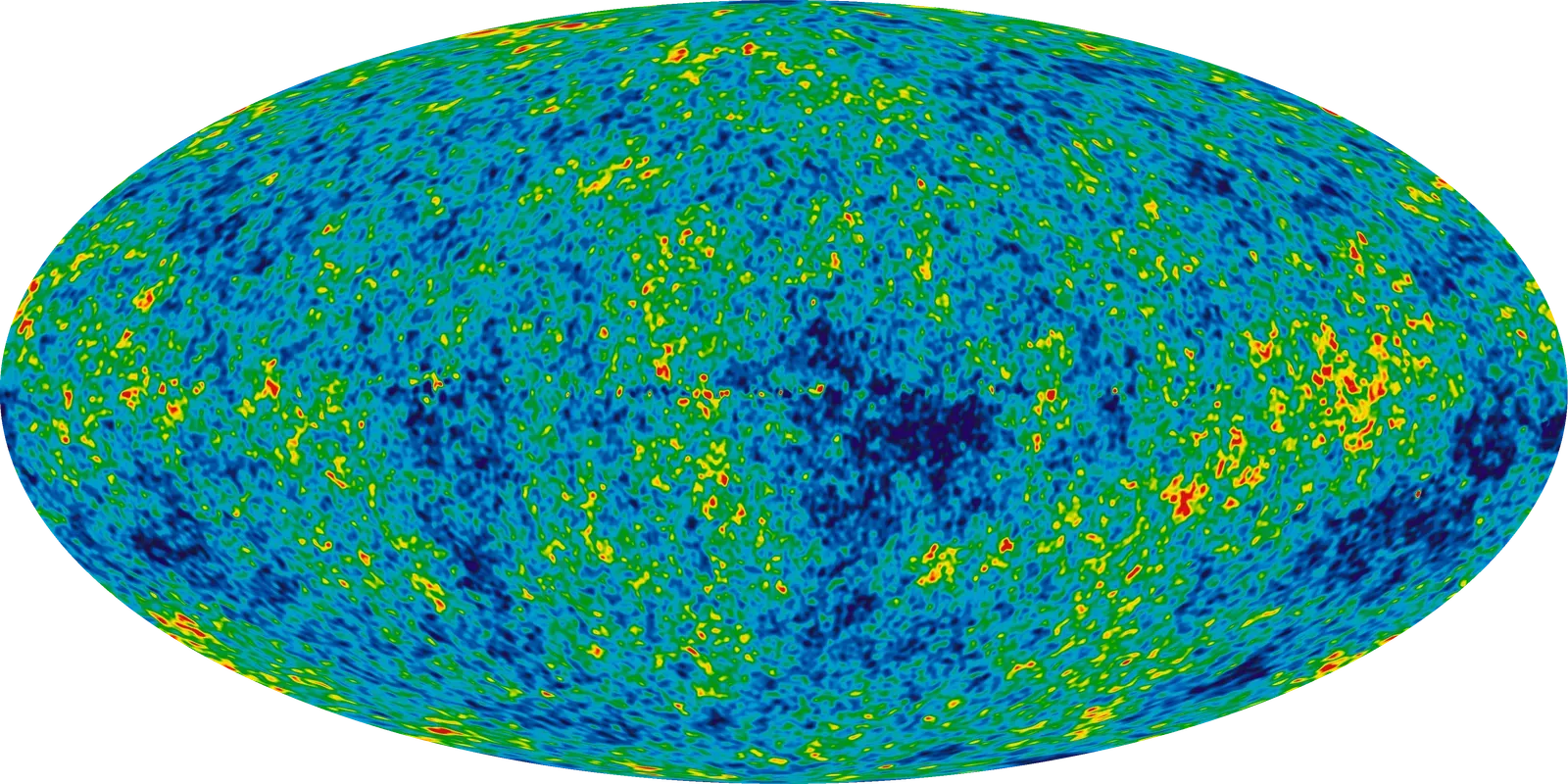
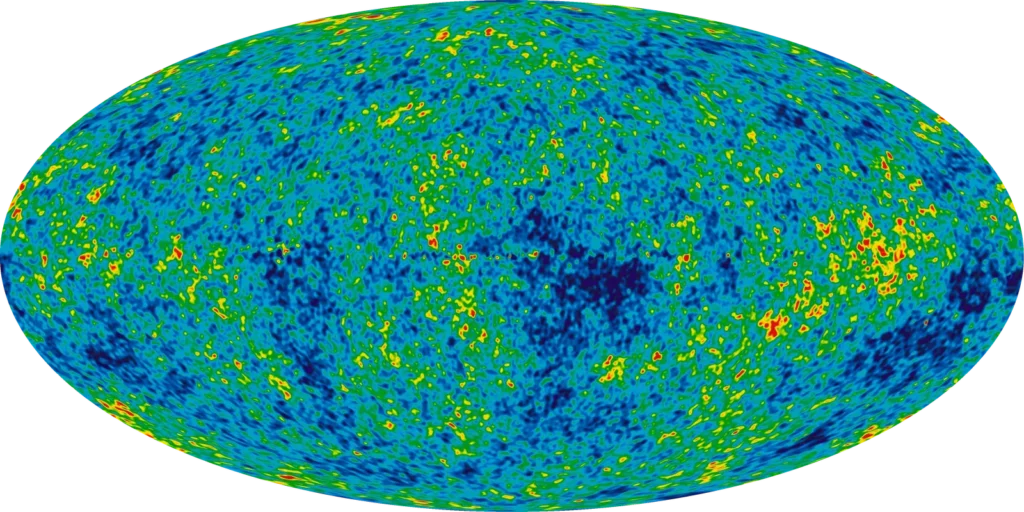
The quantum realm isn’t just about small things; it reaches all the way back to the beginning of time. In the first fractions of a second after the Big Bang, quantum fluctuations in the early universe were stretched across cosmic scales, seeding the clumps of matter that would later become galaxies. The faint patterns we see in the cosmic microwave background radiation today carry the fingerprints of those quantum jitters. It’s a bit like reading tree rings, except the rings were written by microscopic fluctuations nearly fourteen billion years ago.
Physicists are now probing how quantum mechanics might mesh with gravity, which is still described by Einstein’s general relativity. Black holes sit at the center of this struggle, raising questions about what happens to information that falls in and how space and time behave at their most extreme. Various ideas, from holographic principles to quantum gravity models, suggest that spacetime itself might emerge from deeper quantum connections. If that’s true, then the universe as we experience it could be a large-scale echo of the same weird rules that govern electrons and photons.
The Human Side of Quantum: From Confusion to Intuition
For most people, including a lot of scientists, the quantum world initially feels like a personal attack on common sense. You grow up trusting that objects have definite positions, causes lead to effects, and you can, in principle, know everything about a system if you just measure carefully enough. Quantum mechanics calmly walks in and shreds all of that. When I first wrestled with these ideas, I remember a mix of fascination and mild annoyance, as if reality had quietly changed the rules without telling us.
Over time, though, the strangeness can start to feel oddly natural, like learning a new language where the grammar is different but internally consistent. Engineers now design devices around superposition and entanglement the way previous generations treated electricity and magnetism. High-school students are seeing quantum ideas earlier than ever, often through interactive simulations and visual tools that make the abstract feel more concrete. The universe didn’t get weirder; we just got brave enough to look more closely and honest enough to admit what we found.
Conclusion: Living in a Quantum Universe
The more we explore the quantum realm, the clearer it becomes that this is not a niche corner of physics but the operating system of reality. From the way matter holds together, to the glow of stars, to the future of computing and communication, quantum rules are everywhere, quietly shaping both the cosmos and our technologies. It’s almost ironic that the same mathematics that describes electrons in atoms is now guiding the design of machines that may transform medicine, security, and materials.
At the same time, some of the most basic questions remain stubbornly open: how quantum mechanics truly fits with gravity, what spacetime is made of, and whether our familiar world of definite things is just one layer of a deeper, probabilistic structure. We’re building practical tools out of a theory we still do not fully grasp, and there’s something strangely beautiful about that. As we keep pushing into this invisible domain, the real surprise might not be how weird the quantum world is, but how much of our everyday reality has been secretly quantum all along. What part of that would you have guessed first?