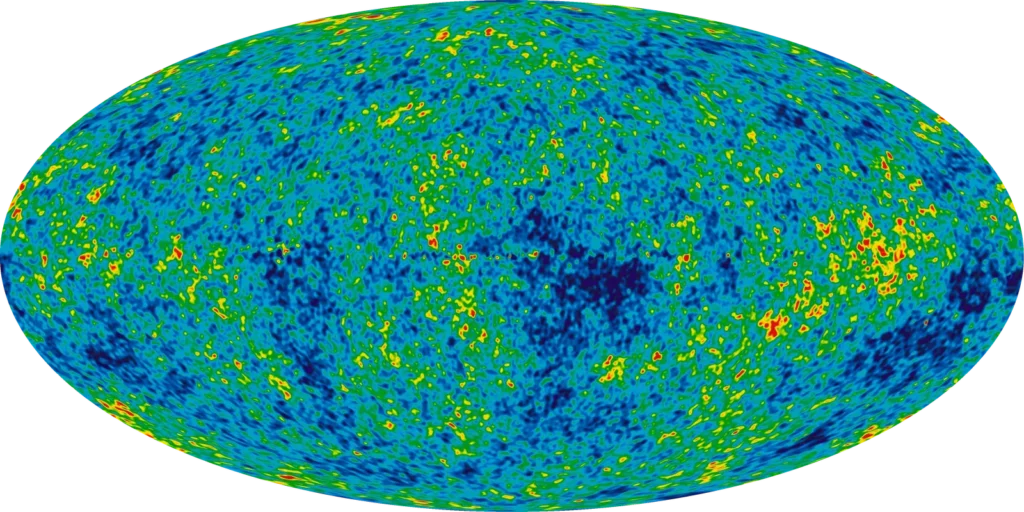

If you’ve ever had the strange feeling that everything is somehow connected – that your thoughts, your body, the people around you, even the stars overhead are part of one big something – you’re not alone. That sense of hidden connection used to sound mystical or vague, but more and more, science and spirituality are starting to talk in surprisingly similar ways about a universe made of relationships instead of separate things.
I still remember lying on my back as a kid, staring at the night sky and suddenly feeling like I wasn’t just looking at the universe, I was inside it – like a cell inside some gigantic cosmic body. That feeling never fully left. Over the years, physics, neuroscience, and even everyday life experiences have nudged that childhood intuition into a stronger idea: maybe reality really is an immense, vibrating web of energy and awareness, and we are strands inside it, not spectators outside it.
The Quantum Roots of an Interconnected Universe
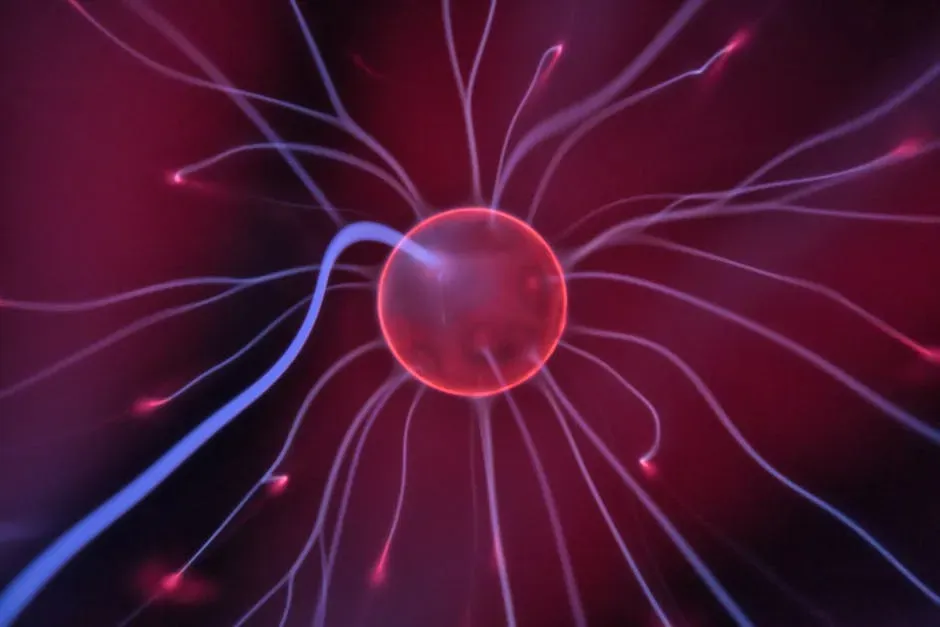
One of the most surprising clues that everything might be connected comes from quantum physics, especially the phenomenon known as entanglement. When two particles become entangled, what happens to one seems instantly linked to what happens to the other, even when they’re separated by huge distances. Experiments have repeatedly shown this weird behavior, challenging the old idea that the universe is built from strictly separate, independent pieces. It’s as if the particles are not two things, but different expressions of one deeper underlying reality.
Physicists now talk less about solid objects and more about fields, probabilities, and relationships. Matter itself is increasingly understood as condensed or organized energy, and at the smallest scales, the universe begins to look less like a machine and more like an intricate pattern of interactions. That doesn’t prove consciousness is everywhere, but it does crack open the door. When reality at its foundation behaves like a single, inseparable system, it becomes easier – and more honest – to see yourself as woven into that system rather than standing apart from it.
Energy, Matter, and the Dance of Form
Modern physics teaches that matter and energy are two sides of the same coin, constantly transforming into each other in a cosmic dance. Your body, your phone, the chair you’re on, and the air you’re breathing are all patterns of energy temporarily held in place. Even what we call “solid” is mostly empty space with tiny energetic excitations whirling around, held together by invisible forces. Look closely enough at anything, and you watch it dissolve from object into motion, from thing into process.
That simple realization can be strangely liberating. The boundaries we’re used to – you versus me, mind versus body, self versus world – start to look more like convenient labels than absolute truths. You are a flowing pattern of energy embedded in a larger flow, like a whirlpool in a river that seems separate but is made entirely of the river itself. Once you see yourself as a process rather than a fixed thing, the idea that consciousness might also be part of that ongoing flow stops feeling like fantasy and starts to sound almost obvious.
Consciousness as a Field, Not Just a Brain Product
For a long time, the dominant story said that consciousness is just what happens when the brain’s machinery gets complicated enough. But there’s a growing sense among some neuroscientists, philosophers, and physicists that this explanation feels incomplete. We can measure brain activity during thoughts and feelings, map regions that light up for pain or joy, and even nudge mood with electrical stimulation. Yet the raw fact of being aware – that simple “I am here, experiencing this” – still sits just out of reach, like we’re describing the mechanics of a song while never hearing the music.
This has led to a provocative idea: maybe consciousness isn’t created by the brain, but filtered or shaped by it, the way a radio doesn’t create the broadcast but tunes into it. On this view, consciousness might be more like a fundamental quality of reality, a kind of background field that everything participates in to greater or lesser degrees. Your brain would then be an incredibly sophisticated instrument for focusing and organizing that field, giving rise to your personal sense of self. You’re not a tiny flashlight producing its own light in a dark universe; you’re a lens shaped by biology, culture, and experience through which the wider light of awareness shines.
How Everything Is Linked: From Ecosystems to Emotions

You don’t need advanced physics to see how deeply everything is connected; you can see it in a forest, a city, or your own family. In nature, every species is part of a network: plants depend on soil microbes, animals depend on plants, predators shape the behavior of prey, and even the climate reflects countless intertwined systems. When one part of that web is damaged – a single keystone species wiped out, a large forest cleared – ripples spread in directions no one fully predicted. It’s like plucking one string of a spiderweb and watching the whole geometry tremble.
Human relationships work the same way, just in a more emotional language. You know firsthand how someone’s mood can lift or crush a room, how a single act of kindness or cruelty can echo through people’s lives for years. Neuroscience has shown that our nervous systems synchronize when we interact closely; our hearts, breathing, and even brainwaves begin to subtly mirror each other. At some level, we’re constantly “tuning” into one another. If everything is energy and consciousness is a shared field, then every thought, word, and action is like a small vibration traveling through the web, reshaping it as it goes.
The Inner Web: Nervous System, Heart, and Mind

Inside your own body, the theme of interconnectedness shows up in a surprisingly literal way. Your brain, heart, gut, and immune system are in constant two-way conversation through electrical signals, hormones, and subtle biochemical messengers. When you feel anxious, your heart races, your stomach tightens, your muscles brace – and those bodily changes then loop back to reinforce the feeling in your mind. The idea that there’s a strict separation between mental and physical starts to crumble the more we learn; it’s all one integrated system, expressing stress or calm, fear or safety, as a full-body state.
In the last few years, research has increasingly highlighted the role of the heart and the “gut-brain axis” in emotional experience and decision-making. That old cliché about “listening to your heart” or “trusting your gut” turns out to be grounded in real physiology. To me, that’s one of the clearest hints that consciousness isn’t locked in a tiny brain cage. Your awareness spreads through your whole body, and your body, in turn, is bathed in the larger environment. You are a living bridge between inner signals and outer world, constantly translating energy into experience and experience back into energy.
Practical Implications: Living Like Everything Is Connected

When you take seriously the idea that , everyday life starts to look different. Your choices stop being isolated private moves and become small but real interventions in the wider field you share with everything around you. The way you speak to your partner, the food you choose, the media you consume, the work you do – all of it is like feeding certain vibrations into the system. It sounds dramatic, but anyone who has watched a single person’s courage, cruelty, or creativity change a whole community knows how real that effect can be.
This perspective doesn’t require magical thinking; it just invites responsibility and curiosity. If your inner state ripples outward, then practices that stabilize and clarify your own energy – meditation, time in nature, honest conversations, creative work – become less like self-indulgence and more like hygiene for the shared atmosphere we all breathe. You don’t have to fix the whole world or unlock some cosmic secret. You can start by tending the piece of the web you can actually touch: your own mind, your relationships, your daily footprint. The rest of the net responds, often in ways you’ll never fully see.
A Personal Reflection on Belonging to the Cosmic Web

For me, the idea that the universe is a web of energy and consciousness isn’t just an abstract theory; it’s a way of feeling less alone. On rough days, when life shrinks down to bills, notifications, and small frustrations, remembering that I am literally made of stardust – recycled atoms forged in ancient stars – pulls my perspective wider. Those same atoms are flowing through trees, rivers, and other people right now. I’m not a stranger in this universe; I’m family, sharing matter and mystery with everything that exists.
That sense of belonging comes with a quiet, stubborn hope. If reality at its core is relationship, then separation is never the final truth, only a surface appearance. Underneath the disagreements, the fear, and the noise, there’s a shared field holding us all, the way an ocean holds every wave. We might never fully understand what consciousness is or why the universe exists at all, but we can participate in it more deliberately, more gently, with a bit more awe. And maybe that’s enough: to live like the web is real, to treat each encounter as a meeting of currents in the same vast sea, and to keep asking ourselves, again and again, what kind of energy we want to add to it.