
There was a time when reading about teleportation, mind-controlled machines, or editing human DNA felt like a purely imaginative exercise. You would close the book, smile to yourself, and think, “well, that’s never going to happen.” Fast-forward to 2026, and that smile feels a little embarrassed in hindsight.
The truth is, the distance between the pages of a science fiction novel and the walls of a research laboratory has never been shorter. Technologies that once lived exclusively in the realms of imagination are quietly, sometimes shockingly, becoming part of everyday scientific conversation. So let’s dive in.
When Science Fiction Writers Were Accidentally Writing Blueprints

Here’s the thing most people don’t fully appreciate: science fiction was never just entertainment. The parallels between science fiction and modern technology are not mere coincidence, as sci-fi has long been inspiring inventors to push the limits of reality. Think about that for a moment. Writers dreaming up wild stories about space travel and talking computers were essentially handing engineers a wish list.
According to research, science fiction writers often consult with scientists, and what they write influences tech research and provides ideas in a number of ways. It is a two-way conversation, a feedback loop between imagination and ambition. Ideas like video communication, artificial intelligence, and space exploration have transitioned from fictional stories into everyday technology through years of development and breakthroughs. You use video calls every single day without stopping to think that a cartoon show called The Jetsons imagined them decades before they existed.
Humanoid Robots: The Westworld Moment Is Getting Uncomfortably Close

In warehouses and construction sites, robots are not just automating repetitive tasks. They are reshaping entire workflows, enhancing precision, and addressing critical labor shortages. This transformation is fueled by a convergence of breakthroughs: foundation models that enable generalization across tasks, edge AI that unlocks real-time autonomy, and increasingly modular software infrastructure. Still, it gets even more specific than that.
According to robotics expert Brett Adcock, humanoids will work autonomously, electric vertical takeoff and landing vehicles will undergo city tests, AI will shift to multimodal memory agents, and schools will beta-test 20-foot standoff weapon-detection systems in 2026. These machines will be capable of performing unsupervised, multi-day tasks in homes they have never encountered before. Honestly, that sounds less like an engineering update and more like the opening act of a science fiction film you have already seen.
Brain-Computer Interfaces: Controlling the World With Your Thoughts
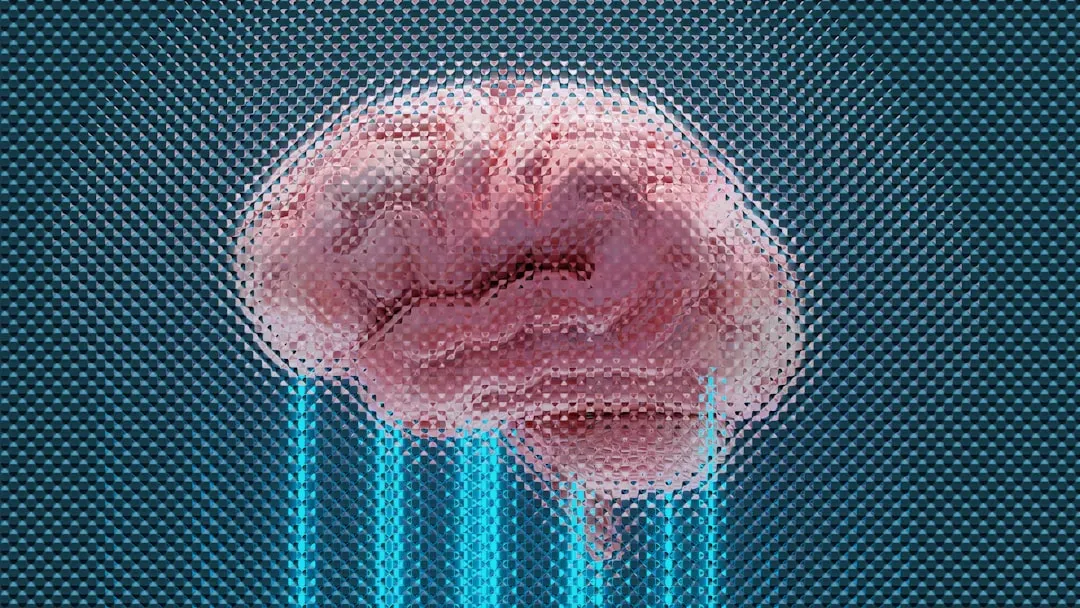
Brain implants are already enabling people with paralysis to control devices with their thoughts, with trials underway for speech and robotic movement. It sounds extraordinary because it is. Brain-computer interfaces have crossed a threshold from laboratory curiosity to clinical deployment. Over a dozen individuals are now living with Neuralink implants across the US, Canada, and the UK, with the first UK patient controlling a computer within hours of surgery, while approximately 90 active clinical trials run globally.
Synchron’s minimally invasive Stentrode implant enabled ALS patients to control robotic assistants through thought alone, while consumer products like Neurable’s EEG headphones brought neural control to everyday devices. The strategic opportunity lies primarily in healthcare: enabling communication for locked-in patients, restoring motor function for those with spinal cord injuries, managing epileptic seizures, and potentially recovering speech and vision. These applications address real, unmet medical needs, and the market reflects this, projected to grow from approximately $2.4 billion in 2025 to over $6 billion by 2032. It is hard to say for sure just how fast this will all scale, but the trajectory is unmistakable.
Quantum Teleportation: Not the Starship Enterprise, But Still Mind-Bending

Quantum teleportation is very different from the teleportation of matter you see in fiction. It involves transferring a quantum state without moving any matter. While experts say it will not lead to Star Trek-style beaming, it could help bring about a new era of computing that revolutionizes our understanding of the subatomic world. Let’s be real though, just saying the word “quantum teleportation” in a real scientific context is wild enough on its own.
In December 2024, researchers at Northwestern University teleported the quantum state of a photon through 30.2 kilometers of live, internet-carrying fiber-optic cable. Then, in February 2025, a team at Oxford University used teleportation to link two physically separate quantum processors, performing a real logic operation across machines. Just weeks later, in April 2025, scientists at the University of Illinois demonstrated single-photon teleportation using a miniaturized photonic chip, bringing quantum hardware down to a scalable size. Three separate breakthroughs in roughly six months. That is not a slow drip. That is a flood.
Rewriting the Code of Life: CRISPR Steps Into Its Superhero Era
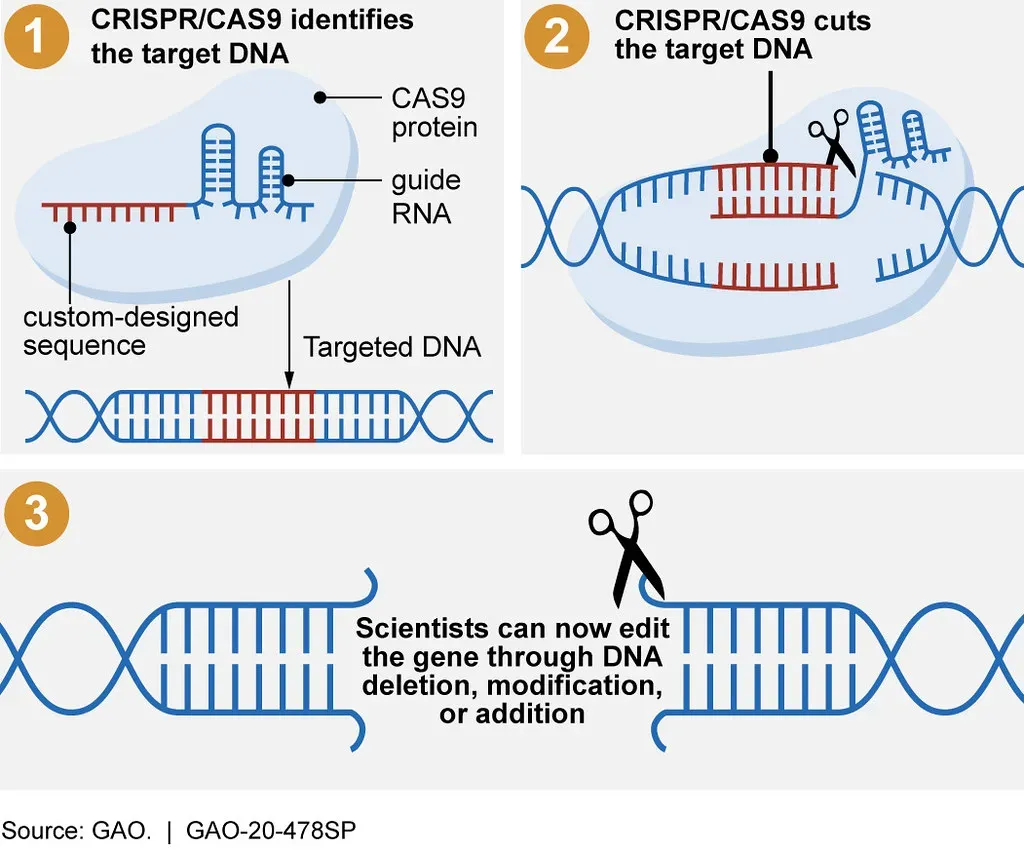
In 2025, we entered the era of CRISPR 2.0, a next-generation leap that builds on the foundation of CRISPR-Cas9 but goes much further in precision, efficiency, and safety. CRISPR-Cas9 was revolutionary, but it had limitations: off-target effects, delivery challenges, and concerns over long-term impacts. Researchers around the world worked to evolve this tech into what is now known as CRISPR 2.0, a system that integrates base editing, prime editing, and advanced delivery platforms.
In a remarkable medical breakthrough, the first personalized CRISPR treatment was administered to a patient. A team of physicians and scientists created a bespoke in vivo CRISPR therapy for an infant, developed and delivered in just six months. This landmark case paves the way for a future with on-demand gene-editing therapies for individuals with rare, until-now untreatable genetic diseases. Think about it this way: if your body’s DNA is like a document full of typos causing life-threatening illness, CRISPR 2.0 is finally beginning to function like a very precise spell-checker. Base editing and prime editing have achieved levels of precision that seemed like science fiction five years ago.
Nuclear Fusion: The “Too Good to Be True” Energy Source Is Now Just… True

For decades, fusion energy was the punchline of a tired joke among scientists. Always thirty years away. Always just beyond reach. In early 2026, the WEST reactor in France maintained a stable, high-confinement plasma for over 20 minutes. This is a monumental jump from the few seconds of stability achieved only a few years prior. It signals that we are moving from pulsed fusion to steady-state fusion, meaning continuous power.
In late 2025, researchers at China’s EAST reactor achieved a breakthrough that many physicists thought impossible: they surpassed the Greenwald limit. Historically, if you tried to pack too much plasma into a tokamak, it would become unstable, and the reaction would collapse. By exceeding this limit by nearly 70%, the EAST team proved that we can build fusion reactors that are significantly more powerful without increasing their physical size. Meanwhile, in 2025, Helion completed its Polaris machine, which successfully demonstrated the ability to recover magnetic energy directly. While 2028 remains an aggressive target for grid connection, the construction of their first commercial site in Washington state is currently ahead of schedule. The promise of nearly limitless clean energy is, for the first time in history, starting to feel like a genuine deadline rather than a distant dream.
Living Computers and Bio-Machines: Where Biology Meets the Circuit Board
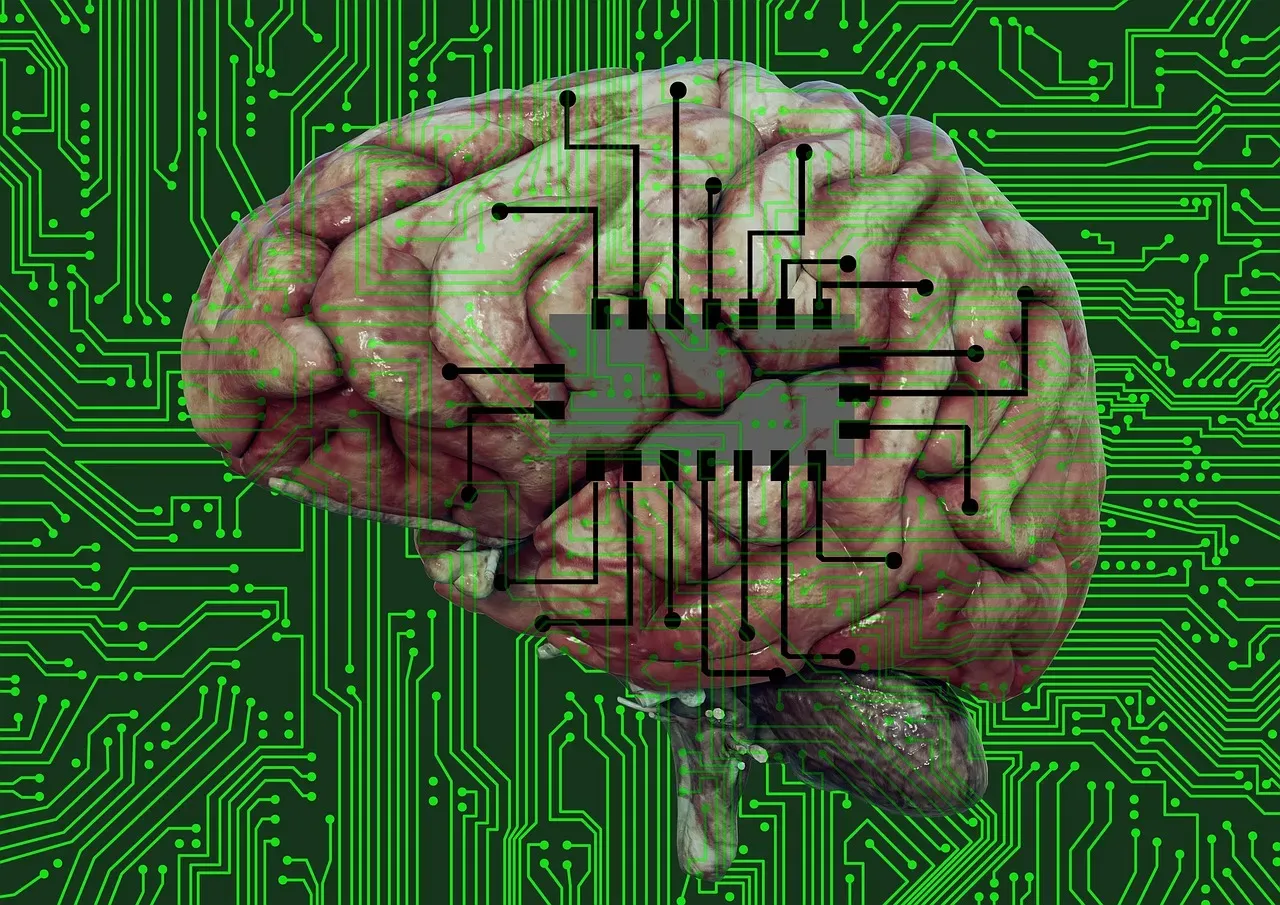
At first glance, the idea sounds implausible: a computer made not of silicon, but of living brain cells. It is the kind of concept that seems better suited to science fiction than to a laboratory bench. Yet in a few research labs around the world, scientists are already experimenting with computers that incorporate living human neurons. Such computers are now being trained to perform complex tasks such as playing games and even driving robots.
These systems are built from brain organoids: tiny, lab-grown clusters of human neurons derived from stem cells. Though often nicknamed “mini-brains,” they are not thinking minds or conscious entities. Instead, they are simplified neural networks that can be interfaced with electronics, allowing researchers to study how living neurons process information when placed in a computational loop. Even though these organoid systems differ, they point to the same idea, which is that biological networks can generate adaptive behaviors that rigid machines struggle to mimic. I know it sounds crazy, but this is happening right now, in real laboratories, not on a Netflix screen.
Conclusion: You Are Living Inside Tomorrow’s Science Fiction

Step back and look at the full picture. You live in a world where quantum information teleports through internet cables, where someone paralyzed can control a robotic arm with thought alone, where scientists rewrite the genetic code of human infants, where fusion reactors sustain plasma longer than ever before, and where living brain cells are being used as computational material. Each of those sentences would have comfortably fit inside a science fiction novel just twenty years ago.
The line between “imagined” and “real” is not disappearing overnight. There are still enormous technical, ethical, and social hurdles ahead. Science fiction is no longer just fiction. It is becoming prophecy, blueprint, and warning. As we hurtle forward, dreaming new dreams and breaking old boundaries, we must remember that the future, for all its wonder, still depends on the values we carry with us. The question is no longer whether the impossible can become possible. The question is whether humanity is wise enough to handle it when it does.
What technology from this list surprises you the most? Tell us in the comments below.