
Time has always been the universe’s most mysterious currency. You spend it constantly, yet you can never earn it back. Philosophers have wrestled with its nature for millennia, and now, in 2026, physicists are doing something far more audacious: they are trying to bend it, loop it, and maybe even reverse it.
What was once the exclusive domain of H.G. Wells and Hollywood screenwriters has become a genuine area of serious scientific inquiry. From quantum laboratories to the chalkboard-filled offices of theoretical physicists, the question is no longer “is time travel possible?” but rather “how would it actually work?” The answers, it turns out, are stranger and more exciting than any science fiction writer ever dared to imagine. Buckle up, because things are about to get wonderfully weird.
1. Einstein’s Time Dilation: The Time Travel You’re Already Experiencing

Here’s a fact that tends to stop people mid-conversation: you are already, right now, technically a time traveler. According to Einstein’s special theory of relativity, time’s flow depends on how fast you are moving – the quicker you travel, the slower seconds pass. It sounds almost too clean to be true, like a magic trick with equations.
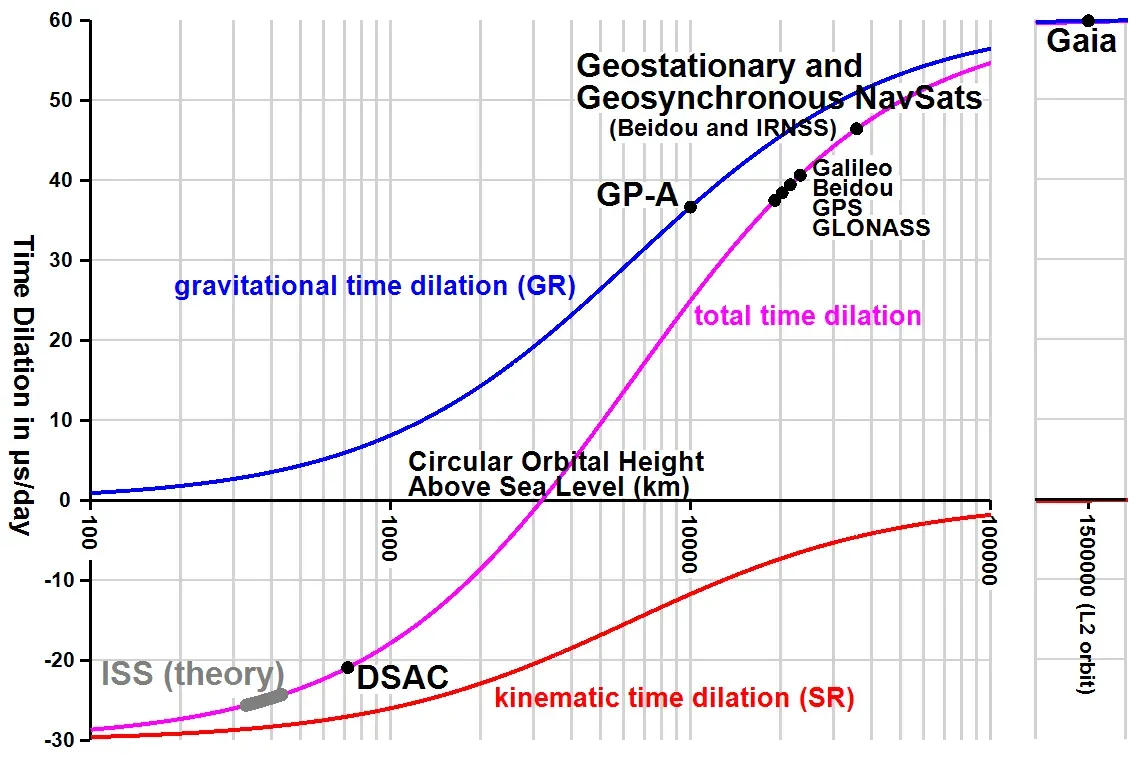
The twin paradox describes this beautifully: one twin remains on Earth, while the other undergoes acceleration to relativistic speed as they travel into space, turn around, and return to Earth – and the traveling twin ages less than the twin who stayed behind. Think of it like a cosmic cheat code for aging. Astronauts aboard the International Space Station experience time slightly slower than people on Earth due to their speed, meaning they are technically traveling into the future, even if only by fractions of a second.
2. Gravitational Time Dilation: Clocks That Tick Differently Near Black Holes
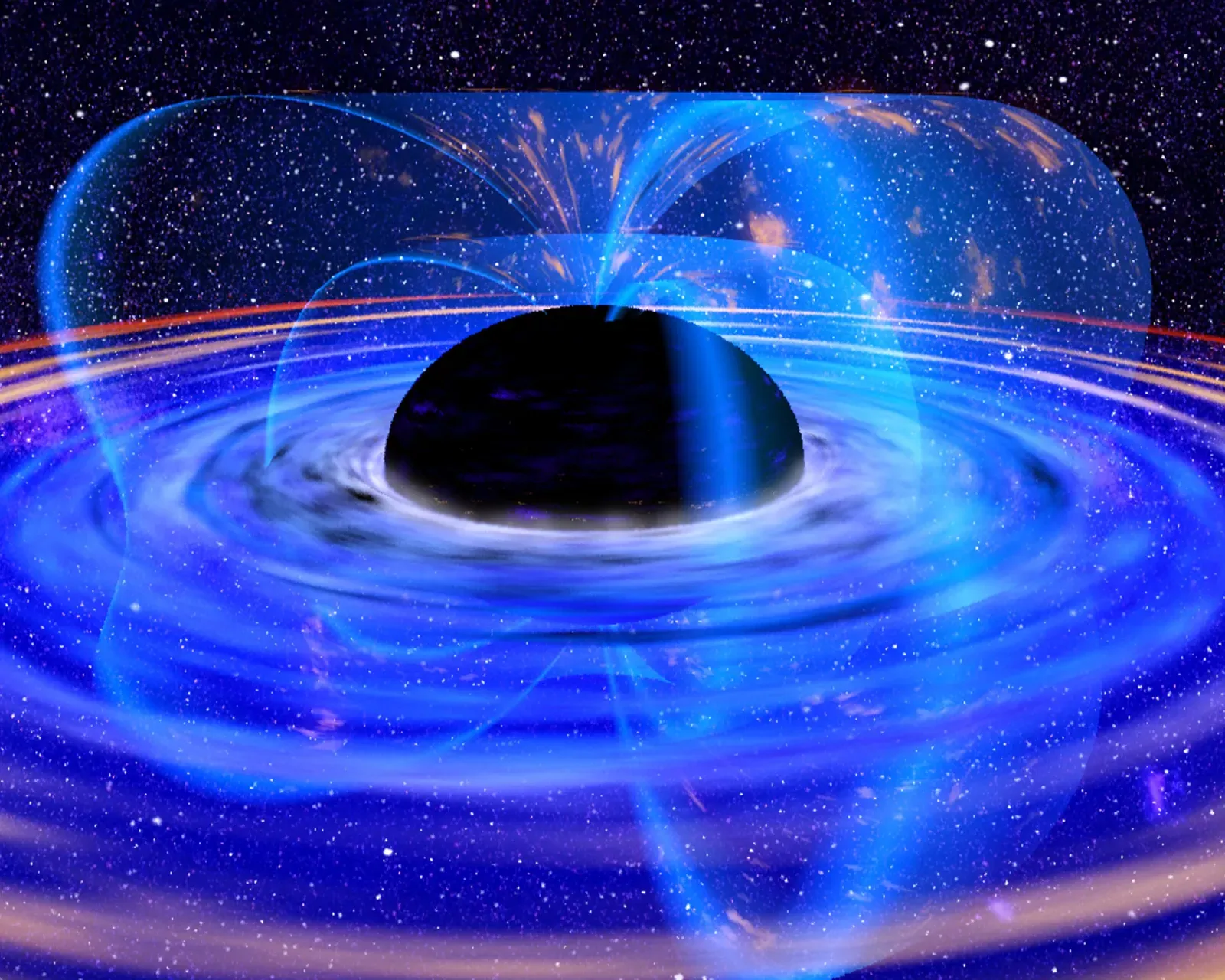
According to Einstein’s general theory of relativity, gravity also affects clocks: the more forceful the gravity nearby, the slower time goes. This is not a theoretical curiosity sitting in a textbook gathering dust. It has real, measurable consequences right here on Earth, in systems you use every single day.
GPS satellites experience time dilation due to their high-speed motion and altitude, which would cause their clocks to run faster than those on Earth by about 38 microseconds per day. To compensate for this effect, the GPS system must be adjusted regularly to maintain accurate timing. Honestly, if that doesn’t blow your mind, I don’t know what will. Every time your phone’s navigation tells you to “turn left in 300 feet,” it is quietly accounting for Einstein’s century-old theory of time warp.
3. Wormholes: The Universe’s Hypothetical Shortcuts Through Time
Past time travel might rely on a passage or tunnel between two space-time locations, a “wormhole.” One idea is that, under certain conditions, an astronaut could enter a wormhole and emerge at another point in space and time, which could be in the past. The visual metaphor scientists love to use is folding a piece of paper so that two distant dots touch. A wormhole is a hypothetical structure that connects disparate points in spacetime – it can be visualized as a tunnel with two ends at separate points in spacetime, at different locations, different points in time, or both.
The catch, and it is a significant one, involves stability. The problem with using wormholes to travel in space or time is that they are inherently unstable – when a particle enters a wormhole, it creates fluctuations that cause the structure to collapse in upon itself. There are theories that a wormhole could be held open by some form of negative energy, and if a sufficient quantity could be employed, it might continue to hold the wormhole open while objects pass through it. Scientists are still searching for that exotic ingredient.
4. Closed Timelike Curves: When Spacetime Loops Back on Itself
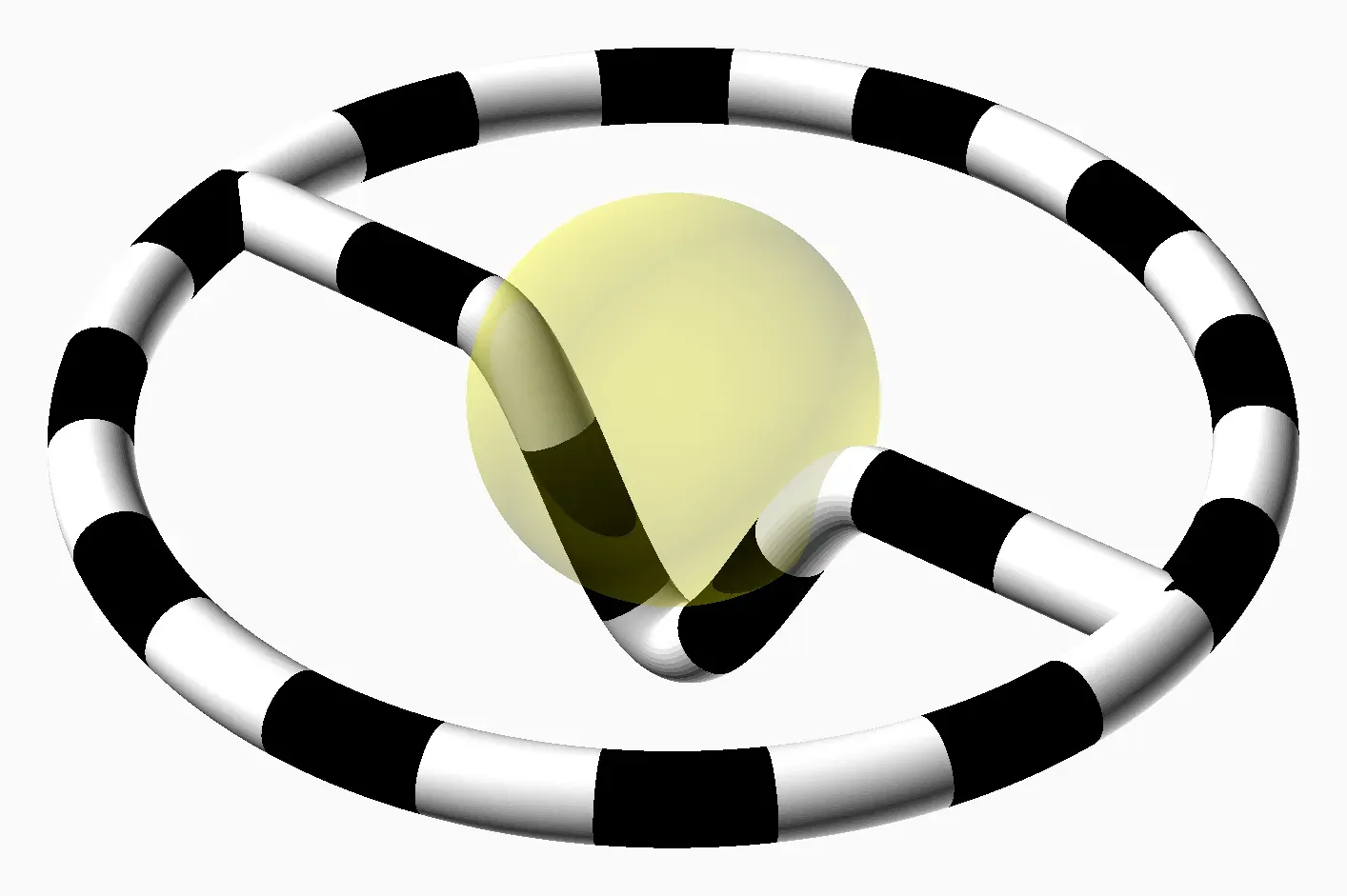
Imagine following a path in spacetime so curved that you eventually arrive back at the exact moment you started. Under certain extreme conditions, spacetime might bend so dramatically that it loops back on itself, creating what physicists call a “closed timelike curve” – and though these loops are mathematically allowed by Einstein’s equations, they spark a series of complex questions. These are not fictional constructs. They emerge naturally from the math of general relativity.
One classic example is the Gödel universe, discovered by Kurt Gödel in 1949, who found a solution corresponding to a rotating universe in which closed timelike curves exist for all observers. Gödel’s cosmos allowed for time travel into the past, which made Einstein deeply uneasy. In Gödel’s cosmos, space travelers could set out and eventually reach a point in their own past, as if the travelers had completed a circuit around the surface of a giant cylinder. Even Einstein could not entirely shake what his own equations implied.
5. The Novikov Self-Consistency Principle: No Paradoxes Allowed
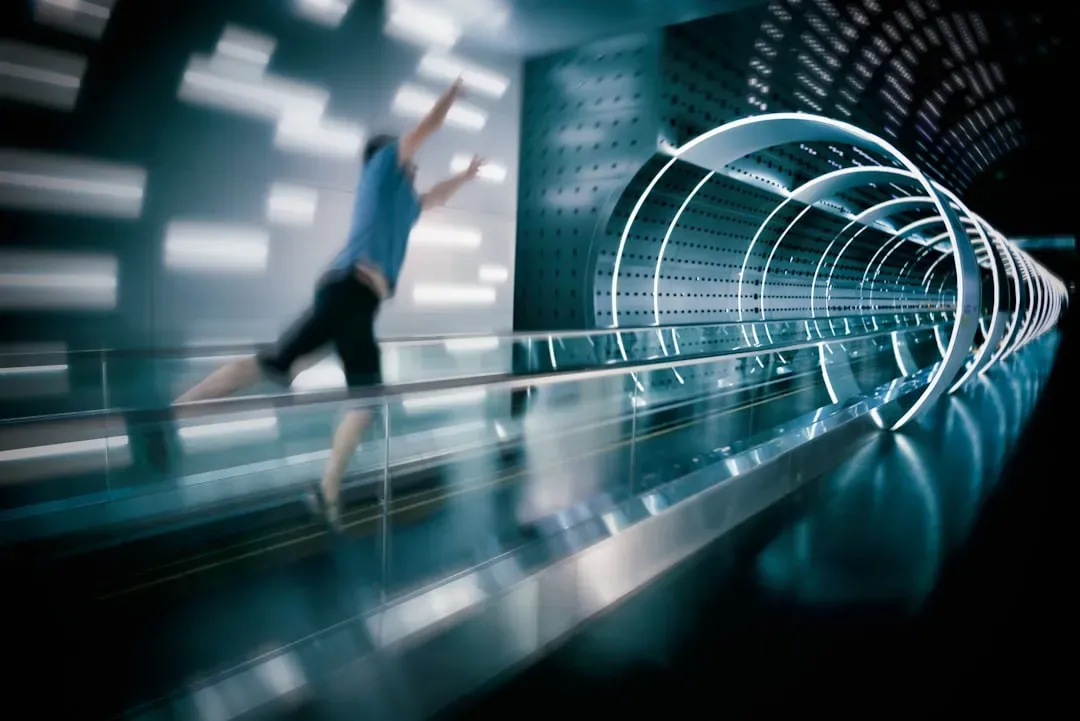
One of the biggest fears surrounding time travel is the grandfather paradox. You go back in time, accidentally prevent your grandparents from meeting, and suddenly you were never born to travel back in the first place. The logical headache is enormous. The Novikov self-consistency principle, developed by Dr. Igor D. Novikov in the mid-1980s to solve the problem of paradoxes in time travel, states simply: if an event exists that would give rise to a paradox, then the probability of that event happening is zero.
Think of it like the universe acting as its own editor, quietly deleting any storyline that contradicts itself. For example, a billiard ball could knock itself only slightly astray, resulting in its going into the past slightly off course, which winds up causing it to knock its past self only slightly astray – a sequence of events that is completely consistent and does not result in a paradox. The Novikov self-consistency principle offers a potential resolution to time paradoxes, suggesting that the universe operates in a way that prevents paradoxical events from occurring. It’s a surprisingly elegant answer to a very messy problem.
6. Hawking’s Chronology Protection Conjecture: The Universe Forbids Time Machines
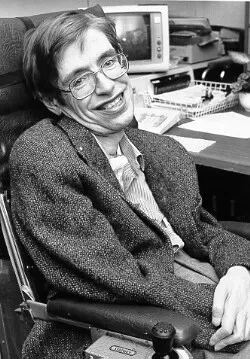
Not everyone in physics is optimistic about time travel. Stephen Hawking, one of the most brilliant minds of the modern era, proposed a concept that essentially acts as a cosmic veto. The chronology protection conjecture is a hypothesis first proposed by Stephen Hawking that laws of physics beyond those of standard general relativity prevent time travel, even when the latter theory states that it should be possible. It is as if the universe has its own internal security system.
In a 1992 paper, Hawking uses the metaphorical device of a “Chronology Protection Agency” as a personification of the aspects of physics that make time travel impossible at macroscopic scales, thus apparently preventing temporal paradoxes. Hawking’s idea was not just a hunch. These semiclassical arguments led Stephen Hawking to formulate the chronology protection conjecture, but physicists cannot come to a definitive judgment on the issue without a theory of quantum gravity to join quantum mechanics and general relativity into a completely unified theory. So, for now, the jury is still genuinely out.
7. The Alcubierre Warp Drive: Bending Space to Cheat Time

In 1994, a Mexican physicist named Miguel Alcubierre asked a tantalizing question: what if a spacecraft didn’t move through space, but instead made space move around it? Alcubierre proposed a method for changing the geometry of space by creating a wave that would cause the fabric of space ahead of a spacecraft to contract and the space behind it to expand. It is a bit like being on a cosmic treadmill, where the floor moves but you technically stay still.
Objects cannot accelerate to the speed of light within normal spacetime; instead, the Alcubierre drive shifts space around an object so that the object would arrive at its destination more quickly than light would in normal space without breaking any physical laws. The energy problem, however, is staggering. The Alcubierre warp drive, while theoretically plausible, demands immense quantities of energy, possibly equivalent to the mass-energy of entire stars or galaxies. It is permitted by general relativity’s math, but currently sits far, far beyond the reach of any imaginable technology.
8. Quantum Mechanics and Time Reversal: Turning Back the Clock at the Smallest Scale
Here’s the thing that surprises most people about physics: at the quantum level, the fundamental equations work just as well running forward in time as backward. Some studies have found that time movement may not necessarily be one way only. Time is normally regarded as flowing from past to future, coupled with an increase in entropy, but even at the microscopic scale, the equations of physics may be time-reversal symmetrical. Nature, it seems, doesn’t have a strong preference for which direction time flows at the tiny scales.
In quantum metrology experiments, photons are shone onto a sample and then registered with a special camera. Researchers have shown that even if they learn how to best prepare the photons only after the photons have reached the sample, they can use simulations of time travel to retroactively change the original photons. It is worth noting this is not physical time travel in the Hollywood sense. Reversing time at the quantum level is about changing states, not transporting matter – and while the idea of a human traveling back one second in time remains fiction, the implications for quantum computing, data security, and future simulations are very real.
9. The Many-Worlds Interpretation: Time Travel Without Paradox, Into a Parallel Universe
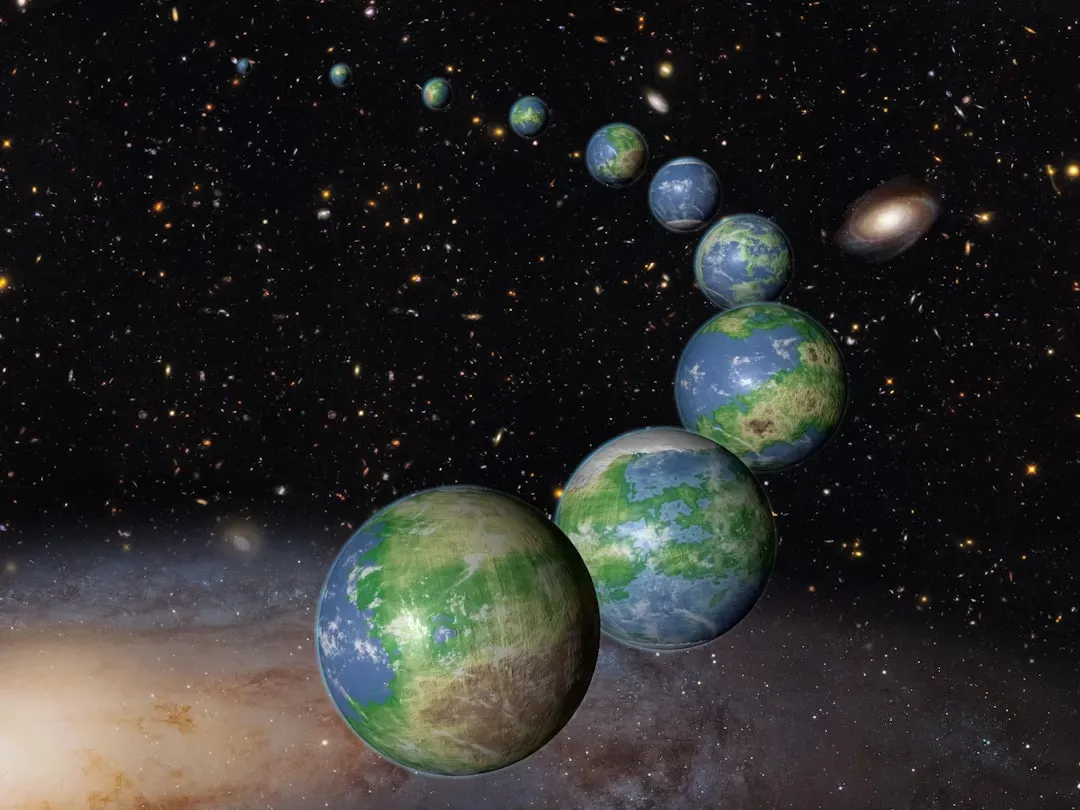
What if the reason time travel paradoxes don’t destroy reality is because the time traveler doesn’t return to their own timeline at all? This is the provocative idea offered by the many-worlds interpretation of quantum mechanics. The many-worlds interpretation of quantum physics proposes that all possible quantum events can occur in mutually exclusive histories, and a variation called interacting many-worlds may involve time travelers arriving in a different universe than the one they came from.
A possible resolution to the paradoxes resulting from wormhole-enabled time travel rests on the many-worlds interpretation of quantum mechanics. In 1991, David Deutsch showed that quantum theory is fully consistent in spacetimes with closed timelike curves. So you could go back in time, and even if you accidentally disrupted a major historical event, you’d simply be reshaping a parallel branch of reality. A particle returning from the future does not return to its universe of origination but to a parallel universe. It sounds wild, but the mathematics genuinely supports it.
10. Quantum Post-Selection and the Self-Consistent Time Loop: The Future Talks to the Past
Lloyd’s model of post-selected closed timelike curves treats a closed timelike curve as a communication channel from the future to the past. This idea, developed by physicist Seth Lloyd and colleagues, is one of the more quietly stunning concepts in modern quantum theory. It doesn’t require a machine or a wormhole. It frames time travel as a feature of quantum information itself. The theory conceptualizes time travel as a form of quantum teleportation, where the post-selection of a specific quantum state ensures self-consistency, in line with the Novikov self-consistency principle.
A study by Lorenzo Gavassino, a Vanderbilt University physicist, explores how quantum mechanics and thermodynamics might resolve time travel paradoxes, offering a theoretical glimpse into how time travel could actually work without breaking reality. What’s remarkable is that research like this doesn’t just speculate. Attempts to model time-travel paradoxes can yield surprising discoveries relevant to other domains, such as the thermodynamics of black holes and the structure of quantum fields – and in some cases, research into hypothetical time loops has sparked ideas for quantum computing and cryptography. Even theoretical dead ends turn out to be surprisingly productive for science as a whole.
Conclusion: Science Is Just Getting Started With Time
What strikes me most about all of this is that none of these theories are fringe science. They emerge from the very same equations that gave us GPS, nuclear energy, and a working understanding of black holes. Time travel is a serious scientific topic, far more grounded in physical law than most people imagine. Relativity proves time can stretch and warp. Quantum mechanics suggests time is not linear. Cosmology reveals a universe where the past and future may already coexist.
We are nowhere near building a time machine. Let’s be real about that. Although no empirical evidence supports the existence of time travel, the field remains an exciting frontier in physics, with future advancements in quantum theory and cosmology possibly providing further insights – though time travel may be theoretically permissible, it remains speculative and faces significant physical constraints. Still, the fact that serious, credentialed physicists are working on these questions every single day says something profound about how far our understanding of reality has come.
Time, it turns out, is not the simple, ticking, one-way river we once imagined. It bends, it stretches, it loops, and at the quantum level, it might not even have a preferred direction. The universe is stranger than we thought – and that strangeness may one day become our greatest scientific frontier. Which of these ten theories surprised you the most? Let us know in the comments below.