Deep in the Blue Mountains of New South Wales, there is a tree so ancient, so impossibly rare, that scientists once thought its kind had been extinct for over 200 million years. It survived dinosaurs, ice ages, and continental drift. Now, it faces something far more immediate and arguably far more dangerous: a spreading fungal disease with no known cure.
The Wollemi pine is one of the most extraordinary plants on Earth. Its story reads like something out of a science fiction novel. Yet the threat it now faces is devastatingly real, and the race to save it is becoming one of the most urgent conservation battles in modern botany. Let’s dive in.
A Living Fossil Rediscovered by Accident
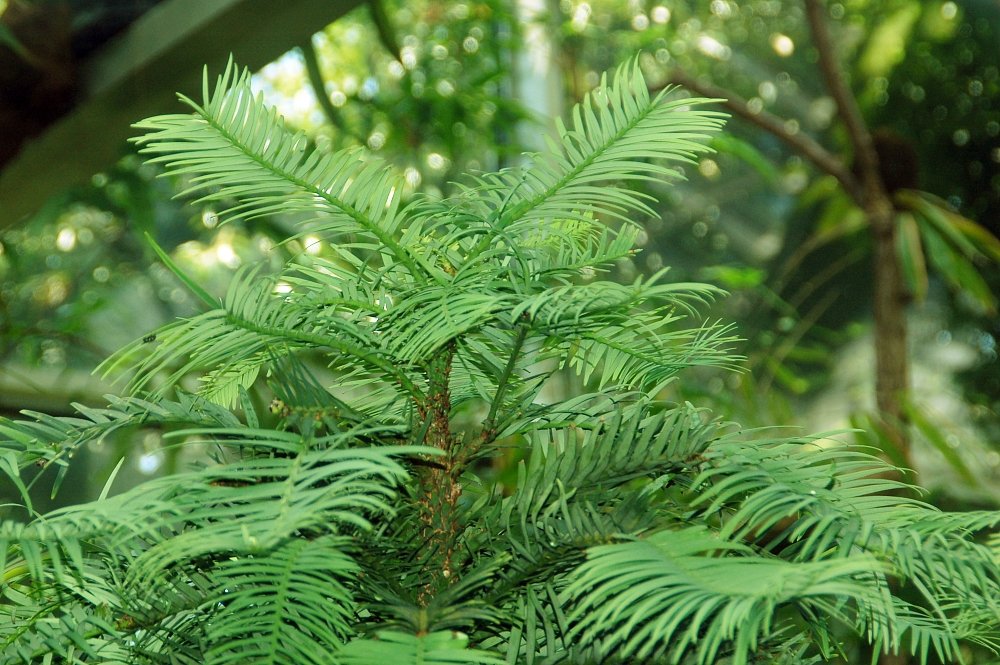
In 1994, a national parks officer named David Noble was hiking through a remote canyon in the Blue Mountains when he stumbled upon a small grove of trees he didn’t recognize. What he had found turned out to be the Wollemi pine, a species previously known only from fossils dating back more than 200 million years. It was like discovering a living dinosaur hiding in your backyard.
The entire wild population consisted of fewer than 100 adult trees, all clustered in a single, secret gorge. The location is so protected that even today, its exact coordinates remain classified. Honestly, I think that level of secrecy is completely justified when you’re talking about a species this irreplaceable.
The Fungal Threat That Came Out of Nowhere
Here’s the thing about Phytophthora cinnamomi: it sounds technical, but what it does is devastatingly simple. It invades root systems, cuts off water and nutrient flow, and essentially starves the tree from the inside out. Scientists have nicknamed it the “plant destroyer,” and in Australia, it has already devastated vast swaths of native bushland.
The disease was detected in the wild Wollemi pine population, and scientists immediately recognized it as a potential extinction-level event for the species. Phytophthora spreads through soil movement, contaminated water, and even the boots of hikers. The fact that this pathogen found its way into such a remote and guarded location is both alarming and deeply sobering.
The Urgent Race to Develop a Treatment
Scientists at the Royal Botanic Garden Sydney and several partner institutions are working against the clock to find an effective treatment. One approach involves injecting phosphonate compounds directly into tree trunks, a method that has shown some success against Phytophthora in other plant species. It’s not a cure, but it may buy time.
The challenge is that treating trees in a remote, near-inaccessible gorge is logistically nightmarish. Researchers must carefully control what enters and leaves the area to avoid spreading the pathogen further. Every boot, every piece of equipment, every soil sample carries potential risk. The margin for error is essentially zero.
Cultivated Trees as a Backup Population
One of the smarter decisions made after the Wollemi pine’s rediscovery was to propagate it in cultivation. Today, hundreds of thousands of Wollemi pines have been grown and sold globally as garden plants, creating a kind of distributed backup population. If the wild trees are lost, the species technically survives in gardens from Sydney to Stockholm.
But let’s be real: a garden tree is not the same as a wild population with genuine ecological function. Cultivated specimens don’t reproduce naturally, don’t interact with wild soil communities, and can’t fill the evolutionary or ecological role of their wild counterparts. Survival in pots is survival, but it’s a pale shadow of what this tree represents in its natural gorge.
What the Disease Tells Us About Broader Ecosystem Threats
Phytophthora cinnamomi is not unique to the Wollemi pine situation. It’s been described by some ecologists as one of the most destructive plant pathogens in the world, affecting thousands of plant species across multiple continents. Australia is particularly vulnerable because so much of its native flora evolved without exposure to this pathogen and therefore has no natural resistance.
The Wollemi pine crisis is in many ways a mirror held up to a much bigger problem. Climate change is shifting rainfall patterns, creating the kind of warm, moist conditions in which Phytophthora thrives. It’s hard to say for sure how much of the spread is climate-driven versus human-facilitated, but the honest answer is probably both. This isn’t just one tree’s problem; it’s a warning sign.
Conservation Efforts and What Comes Next
Authorities have implemented strict biosecurity protocols around the wild population, including decontamination stations and restricted access. Genetic material from the wild trees has been preserved through seed banks and tissue culture collections as a long-term insurance policy. These efforts are genuinely impressive, though they feel a little like building a firebreak after the fire has already started.
Researchers are also exploring whether resistant cultivated lineages could eventually be used to supplement or even partially restore the wild population. The science is complex and the timeline is long, but there are cautious reasons for hope. The Wollemi pine has survived 200 million years of planetary chaos. Whether it can survive this particular century, and this particular pathogen, is a question that a lot of dedicated scientists are working very hard to answer.
Conclusion
The story of the Wollemi pine is genuinely one of the most astonishing conservation narratives of our time. A species older than the continents we know, rediscovered by accident, and now fighting for survival against a microscopic invader. The ironies pile up almost poetically.
What strikes me most is how fragile “ancient and resilient” actually turns out to be when modern threats arrive at the doorstep. A tree that outlasted the dinosaurs may ultimately be undone by a root pathogen spreading through contaminated mud on a hiker’s boot. That should make all of us pause. What do you think it says about our responsibility to protect the natural world? Tell us in the comments.