
Almost everyone has had that eerie chill: you walk into a place you’ve never been, hear someone say a sentence you swear you’ve heard before, and your brain whispers, “This has happened already.” Déjà vu feels mystical, like a glitch in the universe, but scientists are steadily pulling back the curtain on what’s really going on inside the brain when it hits.
What’s fascinating is that déjà vu seems totally ordinary and totally strange at the same time. It doesn’t usually last more than a few seconds, there’s no real consequence, and yet it can leave you thinking about it for hours. Underneath that brief, uncanny flicker is a surprisingly complex blend of memory, perception, prediction, and even tiny brain errors that happen in otherwise healthy people. The magic is that you get to feel the glitch, instead of it just staying hidden in the wiring.
The Brain’s Memory System: Where Déjà Vu Begins
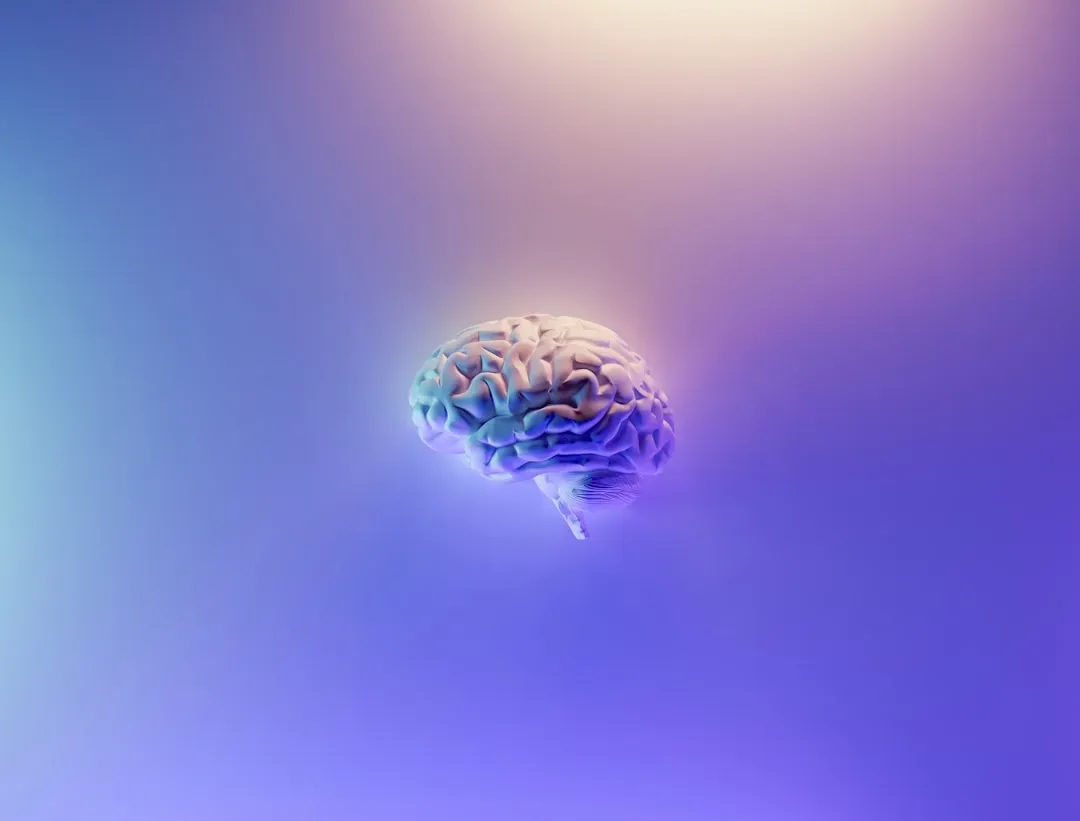
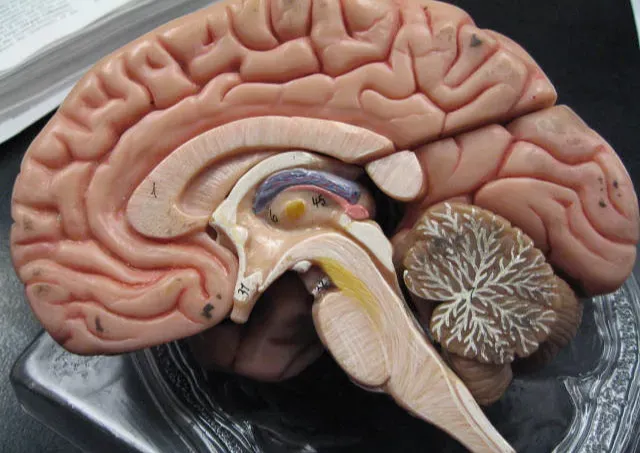
One of the most grounded explanations for déjà vu starts in the hippocampus, the brain structure deeply involved in forming and retrieving memories. When you walk into a new room, your brain rapidly compares what you’re seeing to a vast library of stored scenes and experiences, like a search engine trying to find a match. Déjà vu seems to happen when this comparison system temporarily misfires, giving you the feeling of recognition without an actual memory to back it up.
Researchers who study memory often talk about two things: familiarity and recollection. Familiarity is that gut sense that something “rings a bell,” while recollection is the detailed memory – when, where, with whom. In déjà vu, familiarity kicks in strongly, but recollection is empty; your brain screams “I know this,” and at the same time admits, “I have no idea from where.” That broken pairing – strong familiarity, zero detail – is at the heart of the experience.
Pattern Recognition and the Brain’s Shortcuts
Our brains are obsessive pattern machines, constantly scanning for similarities between the present and the past. They take shortcuts all the time, using rough matches rather than perfect ones so we can react quickly instead of slowly analyzing every scene. Déjà vu is likely one of the rare moments when this shortcut becomes visible to us, like catching a magician halfway through a trick.
Picture walking into a new café that has the same layout as a place you visited years ago: the counter on the left, the smell of coffee, a certain kind of music in the background. Your visual system and memory networks might rapidly flag this as familiar because enough pieces overlap with an older memory, even if the place is objectively new. This incomplete match can generate a strong sense of “I’ve been here,” even though your conscious mind can’t connect it to any real trip in your past, which creates that eerie tension.
Timing Glitches: When Perception Feels Like Memory

Another powerful idea is that déjà vu can come from tiny timing errors in how the brain processes what you’re sensing. Normally, your brain integrates incoming information so smoothly that you experience the world as one continuous present. But if two neural pathways that carry the same information fire slightly out of sync, the first can feel like a “memory” when the second arrives, even though both are actually happening in the moment.
Think of it like an echo in a canyon: you shout once, but you hear your voice twice, separated by a moment. In the brain, if one pathway reports what you see a fraction of a second before another pathway catches up, your system might tag the first as “already processed.” Then, when the near-identical second signal hits, it feels strangely familiar, not new. You experience this micro-delay as déjà vu, even though nothing truly repeated in real life.
The Role of the Temporal Lobe and Epilepsy Clues
Some of the strongest clues about déjà vu come from people with temporal lobe epilepsy. Many of them report intense déjà vu right before a seizure, almost like a flashing warning light from the brain. When doctors stimulate specific areas of the temporal lobe during surgery, patients sometimes spontaneously report that strange “this has happened before” feeling, even in a bare operating room with nothing special going on.
This does not mean that people who get typical déjà vu have epilepsy, but it suggests that similar circuits are involved. The temporal lobe, especially near the hippocampus, seems to be crucial for that mix of familiarity and memory. In healthy brains, these circuits normally keep things clear: what’s new, what’s old, what’s similar. When they briefly misfire – not enough to be dangerous, just enough to be noticeable – you might end up with a short, harmless echo of the kind of strange familiarity that in epilepsy can be much more intense.
Attention, Distraction, and “Split Perception”

There’s another, more everyday theory that doesn’t need any deep brain malfunction: split perception. The idea is that you might see or hear something twice in quick succession, but only fully pay attention the second time. The first time, your brain registered it just enough to store a faint trace, but you were distracted and didn’t consciously notice. When your attention locks in the second time, that weak trace fires, and it feels like a memory.
For example, you might glance at a hallway while checking your phone, barely noticing the details. A few seconds later, you look up and really see it, but your brain has already done a dry run. Now the second, clearer perception feels uncannily familiar, even though it’s technically just the first time you fully see it. That overlap between a half-noticed and a fully-noticed moment can create a smooth, believable déjà vu without needing any mysterious time loops.
Why Déjà Vu Happens More in Youth and Stressful Times

People tend to report more déjà vu in their teens, twenties, and thirties, with it often tapering off over time. One reason might be that these years are intense for memory: you’re seeing new places, meeting new people, constantly updating your mental map of the world. When your memory system is in overdrive, racing to encode and compare, there’s simply more room for odd overlaps and glitches to surface into awareness.
Stress and lack of sleep can also tweak how attention and memory work. When you’re tired, anxious, or overloaded, your brain relies even more on shortcuts and familiar patterns to get through the day. That can boost the chances of misfiring familiarity signals. I’ve noticed that my own strongest déjà vu moments tend to show up when I’m traveling, jet-lagged, and trying to process too much new information all at once – it’s like my brain is copying and pasting scenes a little too quickly.
Why Déjà Vu Feels So Uncanny – And What It Says About Us

Part of what makes déjà vu so powerful is that it exposes a crack between how we think memory works and how it actually works. We like to believe our minds are crisp timelines: events happen once, we file them neatly, and when we recognize something, it’s because we truly did it before. Déjà vu shows that recognition can be manufactured by the brain’s circuitry even when there’s no real event to anchor it, and that realization can be a bit unsettling.
At the same time, it’s a kind of quiet proof that your brain is constantly predicting, testing, and comparing in the background. Déjà vu is like accidentally walking backstage during a performance and seeing the ropes, pulleys, and half-finished props that create your smooth sense of reality. It’s eerie, yes, but also oddly reassuring: even the weirdest mental blips are grounded in real, physical processes. The mystery isn’t that your brain sometimes glitches – it’s that, almost all of the time, it doesn’t.
Conclusion: A Glitch That Makes Us More Human

When you strip away the myths about past lives, time loops, or psychic visions, déjà vu becomes something even more interesting: a rare glimpse of the machinery of memory in motion. Between pattern recognition, timing quirks, temporal lobe activity, and moments of divided attention, researchers are building a picture of déjà vu that’s less supernatural and more about how a fast, complex system occasionally stumbles. The feeling is real, even if the “memory” behind it isn’t.
In a way, déjà vu reminds us that our experience of reality isn’t a raw live feed; it’s a carefully stitched-together story, constantly updated, sometimes revised on the fly. Every now and then, the stitching shows, and for a few seconds we feel the seams. So the next time déjà vu hits you out of nowhere, you’ll know it’s not the universe winking – it’s your own brain, accidentally letting you see how the trick is done.