
If you have a gut feeling that the world is stranger than it looks, modern science is basically standing behind you whispering, “You have no idea.” The deeper researchers dig into the universe – down to subatomic particles, out to distant galaxies, and even into the math behind reality – the more it all starts to feel less like a simple machine and more like a very weird, very elaborate magic trick.
What’s wild is that many of the most mind-bending ideas are not just late-night stoner thoughts or sci‑fi concepts, but serious scientific theories that respected physicists and cosmologists spend their lives working on. Most of them might turn out to be wrong or incomplete. But if even one of them is right, it doesn’t just tweak our worldview; it flips the table. Let’s walk through seven such theories that could force us to rethink what “real” even means.
1. The Simulation Hypothesis
Imagine discovering that everything you’ve ever touched, loved, feared, or dreamed about is running on someone else’s computer. The simulation hypothesis suggests that our entire universe might be a kind of advanced virtual reality created by a super‑intelligent civilization – maybe not even “alien” in the way we think, just unimaginably far ahead of us. The basic argument goes like this: if it’s possible to simulate conscious beings in hyper‑realistic worlds, and a civilization survives long enough to develop that tech, then simulated worlds could vastly outnumber original “base reality” worlds.
That leads to a deeply uncomfortable but serious question: statistically, are we more likely to be in base reality, or in one of the huge number of simulations? Some researchers have even proposed tests, like looking for “pixelation” in space or tiny anomalies in physical constants that might hint at an underlying digital grid. Others think that, if we are in a simulation, it might explain certain cosmic coincidences or why physics seems so elegantly mathematical. Whether or not it’s true, this theory forces a brutal kind of humility: if reality is code, then the rules can change – and we might not be the ones in charge.
2. The Multiverse: Infinite Worlds, Infinite Yous
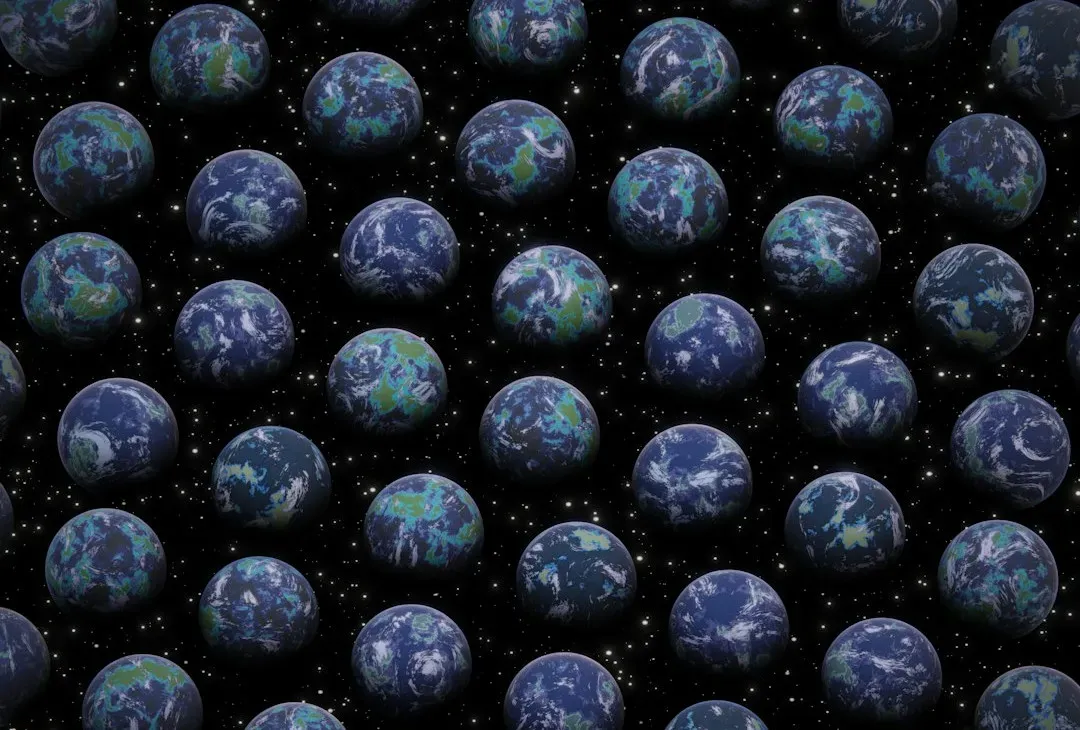
It sounds like comic‑book fan fiction, but the multiverse is taken surprisingly seriously in modern physics. In one version, called the “many‑worlds” interpretation of quantum mechanics, every time a quantum event can go in more than one direction, reality splits. In one branch, the particle goes left; in another, it goes right. Scaled up, that means there could be countless versions of you reading this sentence in countless slightly different universes, each with a slightly different history.
Another version of the multiverse comes from cosmology: our universe may just be one “bubble” in a vast cosmic foam, with other bubbles having different physical laws, constants, and outcomes. We might live in a rare universe where conditions just happen to allow stars, planets, and life, which would explain why the laws of nature seem so perfectly tuned for us. If any multiverse picture is correct, it wrecks our intuitive sense of uniqueness. Your choices still matter to you, but in a multiverse, the idea of “the” universe collapses; there’s just a sprawling landscape of realities, and we’re in one very small, very particular corner of it.
3. The Holographic Universe
One of the strangest ideas to come out of theoretical physics is that our three‑dimensional world might be like a cosmic hologram. In a regular hologram, a two‑dimensional surface encodes information that appears three‑dimensional when light hits it. The holographic principle suggests something similar could be true of the universe: all the information about what happens in a volume of space might actually be stored on a lower‑dimensional boundary, like the “surface” of the universe.
This idea grew out of attempts to understand black holes, where the amount of information they can store seems to scale with their surface area, not their volume. If this principle holds more broadly, then what we experience as 3D reality, including space itself, might be an emergent illusion, like a projection from a deeper, more fundamental layer. It’s not that the world is fake; it’s that what feels like the most basic thing – space stretching out around you – could be a kind of high‑resolution special effect produced by underlying information. That takes “reality is not what it seems” to a whole new level.
4. Quantum Consciousness and the Mind–Matter Question
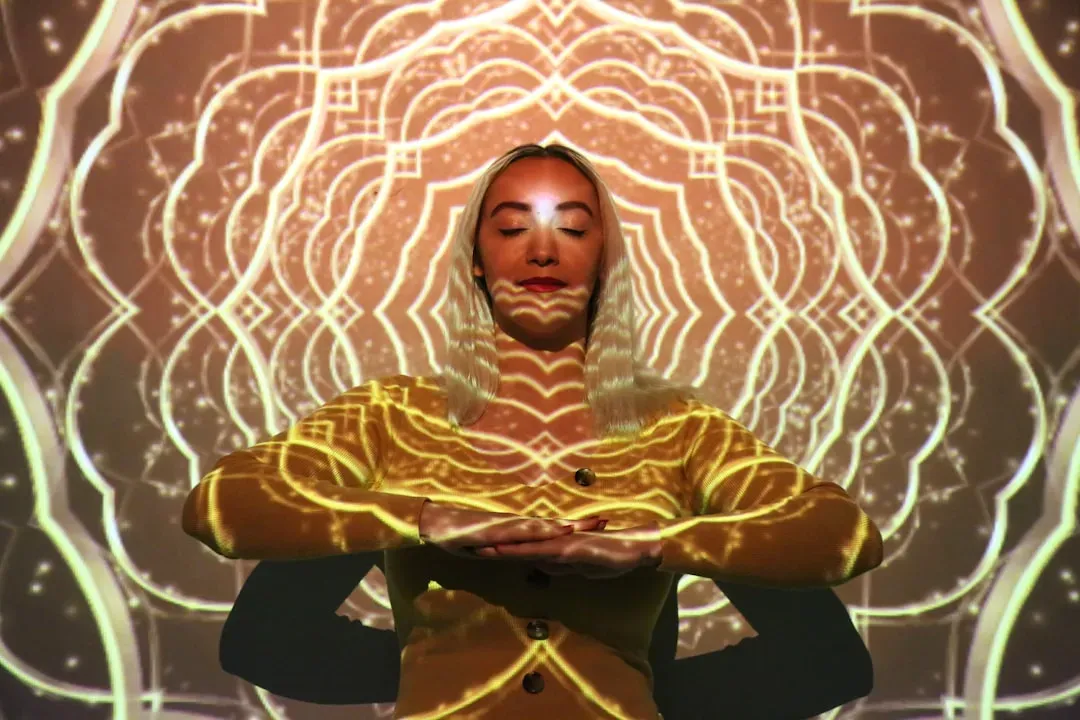
Consciousness is the thing we all have and all struggle to explain. Some scientists argue that the brain is just a very complicated biological machine and that consciousness emerges from neurons firing in huge networks. Others suspect that this story might be missing something deep, and that quantum mechanics could play a fundamental role in how we experience awareness. In some speculative models, quantum states inside brain structures could influence how information is processed, making mind and matter more entangled than we usually assume.
There’s also a bolder idea that flips the usual script: instead of consciousness being produced by matter, maybe consciousness is a basic ingredient of reality, like space and time. In this view, called panpsychism, even very simple systems might have extremely basic, primitive forms of experience, and complex brains like ours just organize it in rich, elaborate ways. If anything like this turns out to be true, we’d have to completely rewrite the boundary between “inner” mental life and “outer” physical reality. The universe would not just be a cold machine; it would, in some sense, be awake all the way down.
5. Emergent Space-Time: When Reality Is Not Fundamental
We grow up thinking space and time are the stage on which everything happens. Modern physics is increasingly flirting with the idea that the stage itself might be built out of something deeper and more abstract. According to some cutting‑edge theories, space-time could be an emergent phenomenon, like temperature. No single molecule has a “temperature,” yet when you get a lot of them together, temperature appears as a collective property. In a similar way, space and time may arise from more fundamental building blocks of information or quantum entanglement.
Researchers have even found mathematical hints that the geometry of space – its curves, stretches, and warps – might be directly tied to patterns of entanglement between underlying quantum bits. If that picture holds up, asking “Where are these bits located?” might not even make sense, because location itself would be something that only appears at a higher level. That would overturn one of our deepest assumptions: that space is the canvas on which reality is painted. Instead, space-time would be more like a painting that only appears when enough hidden brushstrokes line up the right way.
6. Retrocausality: When the Future Influences the Past

Our everyday experience screams that cause comes before effect: you flip the switch, then the light turns on. But some interpretations of quantum mechanics open the door to something far stranger: the possibility that future conditions can influence present or even past events. This idea, called retrocausality, doesn’t mean you can casually send a text message back to last week, but it hints that the time order we take for granted might not be fundamental.
In certain quantum experiments, the way you choose to measure a particle now seems to “decide” how that particle behaved earlier, as if the universe only fills in details when forced to. One way to make sense of that is to let influences run both forward and backward in time at the quantum level, creating a kind of handshake between past and future. If a retrocausal view of physics is right, then our usual picture of a one‑way arrow of time might be more like a convenient illusion, a story we tell ourselves because it fits how we live. Underneath, reality could be weaving past, present, and future together in ways that defy our common sense.
7. Dark Matter, Dark Energy, and the Unknown Majority
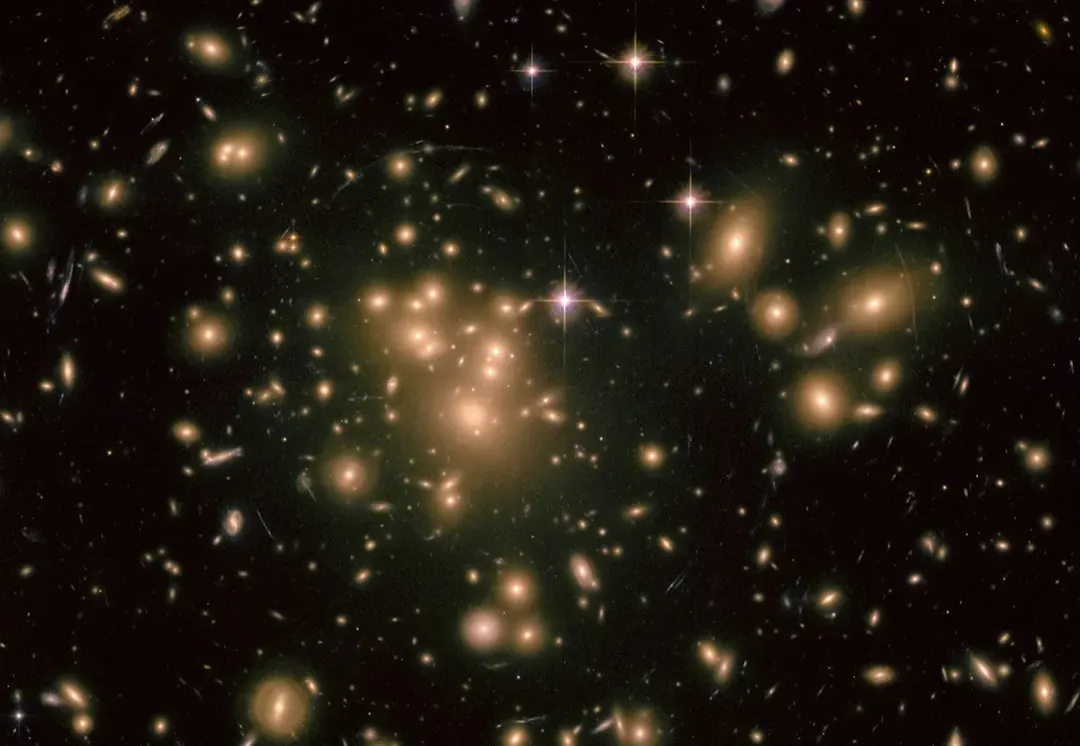
Here’s a humbling fact: everything we’ve ever directly seen – stars, planets, dust, gas, you, me – appears to be only a tiny fraction of what’s really out there. Observations of galaxies and the expansion of the universe strongly suggest that most of the cosmos is made of mysterious components called dark matter and dark energy. Dark matter seems to act like an invisible scaffolding, holding galaxies together and shaping large‑scale cosmic structures, while dark energy appears to be driving the accelerated expansion of space itself.
We call them “dark” not because they’re evil, but because we simply don’t know what they are. They don’t emit light, they don’t interact in familiar ways, and yet they dominate the universe’s behavior. Some theories say dark matter could be made of undiscovered particles; others suggest we might have to fundamentally change our understanding of gravity. Dark energy could be a property of empty space, or a hint that our cosmological model is incomplete. Either way, it’s a bit like realizing that nearly everything you thought you knew about your house describes only the furniture in one room, while the rest of the building remains in shadow.
Conclusion: Living in a Stranger World Than We Think
What all these theories share is a willingness to challenge the stories we tell ourselves about what is solid, obvious, and certain. Whether it’s the possibility that we’re living in a simulation, that the universe is a holographic projection, or that time itself doesn’t work the way we think, each idea forces us to loosen our grip on “common sense.” That can feel unsettling, even a bit vertigo‑inducing, like looking over the edge of a cliff and realizing there’s far more empty space beneath you than you expected.
But there’s also something deeply energizing about it. We’re living at a moment when serious scientists can openly question whether space, time, and even reality as we perceive it are truly fundamental. Most of these theories will likely be refined, replaced, or discarded, yet the process of pushing against the edges is exactly how our understanding grows. The universe clearly isn’t obligated to match our intuitions – so the real question is, which of these strange possibilities, if any, would you be most willing to bet your reality on?